
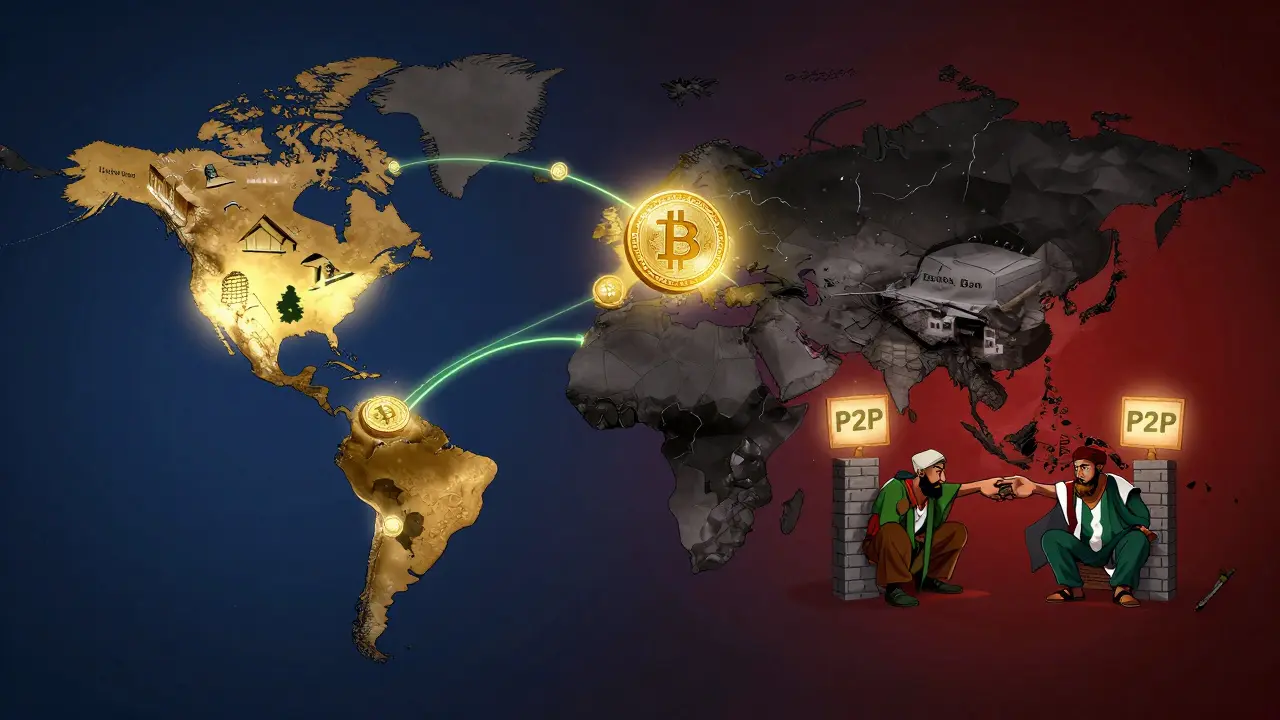
Want to trade crypto but can’t get a bank account? You’re not alone. In 2026, your ability to move money between crypto and real cash depends almost entirely on where you live. Some countries make it smooth-others make it nearly impossible. This isn’t about regulation theory. It’s about your bank account getting shut down, your transfers being blocked, or paying 20% premiums just to buy Bitcoin through peer-to-peer deals.
Why Banking Access Matters More Than You Think
Crypto isn’t just digital gold. It’s money. And money needs banks. Without a way to deposit fiat currency or withdraw profits into your local currency, trading crypto becomes a high-risk gamble. You can hold Bitcoin all you want, but if you can’t turn it into rent, groceries, or payroll, it’s not practical money.The difference between a country that supports crypto banking and one that doesn’t isn’t subtle. Countries with clear rules see 3.2 times more crypto activity than those that block it. In Nigeria, where banks are banned from dealing with crypto, traders pay huge premiums on P2P platforms. In Liechtenstein, where the law guarantees banking access, crypto firms open accounts in weeks.
This isn’t about freedom or ideology. It’s about liquidity. Banks are the bridge between crypto and the real economy. No bridge? No market.
Countries Where Crypto Traders Can Bank Easily
Some places have built clear, functional systems for crypto businesses and traders. These aren’t tax havens with loose rules-they’re jurisdictions with strong oversight and real banking partnerships.
- Liechtenstein: The global leader. Its Blockchain Act (TVTG) from 2020 legally requires banks to work with licensed crypto firms. Over 90% of licensed companies get banking access. The process takes 2-4 weeks. You need a license (cost: $15K-$25K), but once you have it, banks can’t refuse you.
- Germany: Crypto is classified as a financial instrument under BaFin. Major banks like Solaris Bank now offer business accounts to licensed crypto firms. About 82% of compliant traders secure accounts. It takes 4-6 months to get approved, but once you’re in, you can move euros freely.
- Switzerland: FINMA allows crypto firms to operate under strict AML rules. 87% of licensed entities get banking access. Swiss banks like Sygnum specialize in crypto services and offer multi-currency accounts with stablecoin integration.
- Singapore: MAS requires licensing, but once approved, banks are obligated to serve regulated firms. 75% of applicants get accounts. The catch? Singapore just adopted the strictest version of the BCBS crypto risk rules-1,250% capital reserve requirements. That means only the biggest, best-funded firms qualify now.
- Bermuda: The Digital Asset Business Act (DABA) gives clear licensing paths. 89% of licensed exchanges get banking access. Banks here are used to dealing with crypto, and compliance is well-defined.
These places don’t just tolerate crypto-they’ve built infrastructure around it. You’ll still need paperwork: business plans, AML certifications, proof of licensing. But the path exists.
Countries Where Banks Actively Block Crypto Traders
Other countries have taken a hardline stance. No gray area. No exceptions. If you trade crypto, your bank will close your account-and they’re legally allowed to.
- Nigeria: Since 2017, the Central Bank of Nigeria has banned banks from servicing crypto businesses. In 2021, they doubled down, warning of “stiff penalties.” Over 97% of Nigerian crypto traders report bank account closures. Many now rely on P2P platforms like Paxful, paying 15-20% extra just to buy Bitcoin. The result? Nigeria still ranks #1 globally for crypto adoption-but it’s all underground.
- Egypt: The Central Bank of Egypt prohibits crypto transactions through banks. In 2024, they fined several fintechs for facilitating crypto payments. 92% of traders can’t access traditional banking. Many use foreign bank accounts or crypto debit cards, but those are risky and expensive.
- Algeria: Crypto is illegal under banking law. No licenses. No exceptions. 89% of traders report no access to banking services. The government has seized wallets and arrested individuals for crypto-related activity.
- Tanzania: The Bank of Tanzania says the shilling is the only legal tender. Banks are told not to process crypto-related transactions. No official ban, but no banking either. Traders are left in limbo.
- China: While not mentioned in the data, it’s critical to note: China banned all crypto transactions in 2021. Banks freeze accounts instantly if they detect any crypto activity. No exceptions. No appeals.
In these countries, you’re not just inconvenienced-you’re operating outside the system. Your money is vulnerable. Your identity is at risk. And if you try to use a foreign bank account, you could face legal trouble.
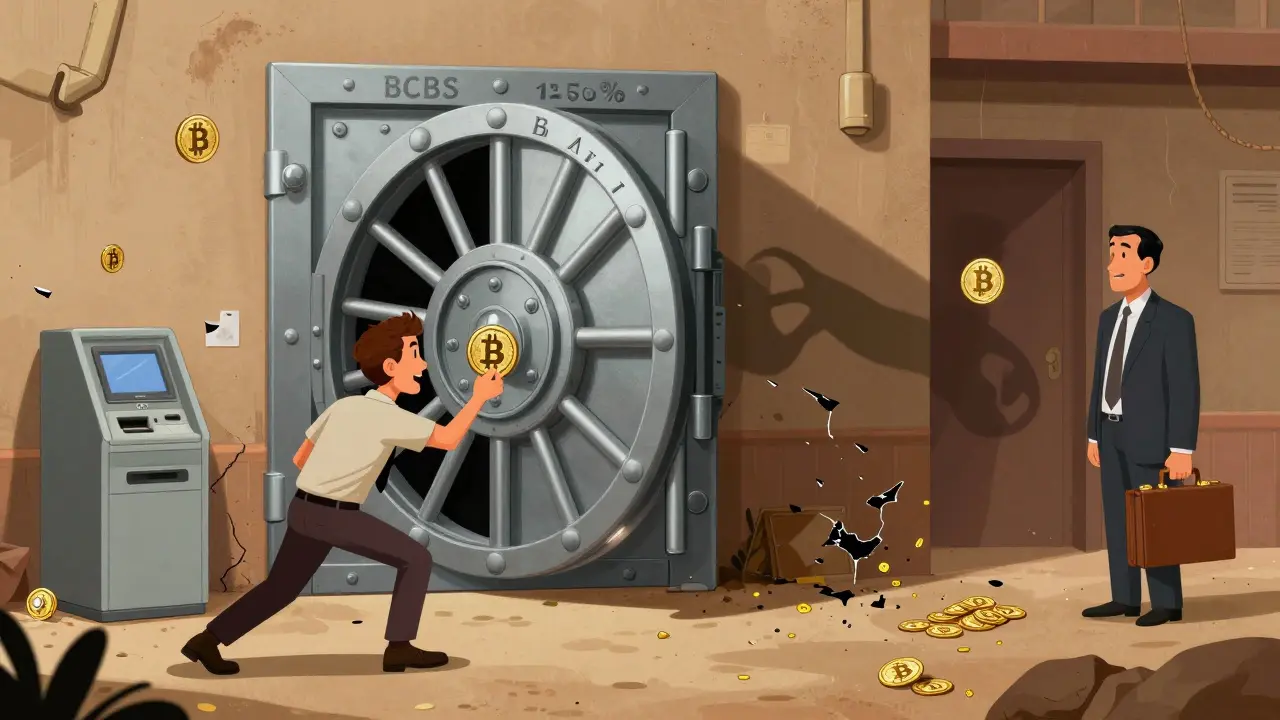
The Coming Shift: BCBS Rules Will Change Everything in 2026
Starting January 2026, a new global standard kicks in: the Basel Committee on Banking Supervision’s (BCBS) crypto risk rules. These aren’t suggestions-they’re binding for over 60 countries.
The rule? Banks must hold 1,250% capital reserves against unbacked crypto assets. That means for every $100 in Bitcoin deposits, they need $1,250 in cash reserves. It’s a financial death sentence for most banks.
Here’s what this means in practice:
- Most banks will stop serving crypto clients. They can’t afford the capital burden.
- Only highly regulated entities will survive. Think licensed exchanges, institutional traders, or firms with tokenized assets.
- Unregulated traders will be locked out. If you’re buying Bitcoin on Binance and withdrawing to your local bank, you’re at risk.
Some countries are adapting. Switzerland’s FINMA allows 800% risk-weighting for certain tokenized assets-keeping their banks competitive. The UAE uses 800-1,000%. But Singapore and Australia are going full 1,250%. That means even licensed firms there will struggle.
The result? A two-tier system. One for the well-funded, regulated few. Another for everyone else-cut off from the banking system.
What You Need to Get a Bank Account (If You’re in a Friendly Country)
Even in crypto-friendly places, getting a bank account isn’t automatic. You need to prove you’re legit. Here’s what works:
- Get licensed. Whether it’s Malta’s VFA license, Germany’s BaFin registration, or Liechtenstein’s TVTG approval-you need official status.
- Prove AML/CFT compliance. Banks will ask for KYC records, transaction monitoring logs, and risk assessments. 47% of rejections happen because of weak AML docs.
- Have a clear business description. Don’t say “crypto trading.” Say “licensed digital asset exchange providing fiat on-ramp services.” Vague language gets you flagged.
- Prepare for high minimum balances. Some banks require €50,000+ in initial deposits. Others want proof of 6 months of cash flow.
- Use a specialist lawyer. Most successful applicants hire a crypto legal firm. Expect to pay $15K-$30K in setup fees.
It’s expensive. It’s slow. But it’s the only way to avoid getting locked out.
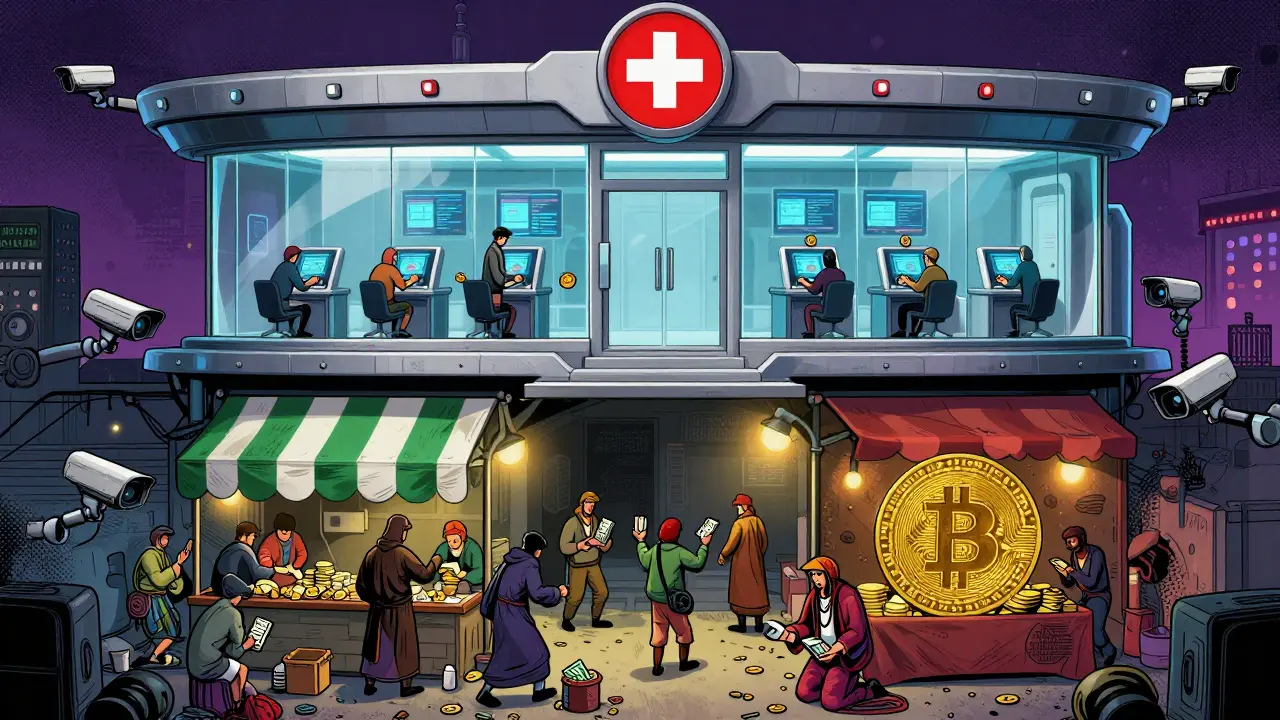
What Happens If You Can’t Get a Bank Account?
If you’re stuck in a restrictive country or can’t meet the new BCBS standards, you have options-but they come with trade-offs.
- P2P trading: Platforms like LocalBitcoins or Paxful let you trade directly with others. But premiums are 10-25%. You’re exposed to scams. And in places like Nigeria, even P2P is under surveillance.
- Crypto debit cards: Cards from Nexo, BitPay, or Crypto.com let you spend crypto like cash. But they rely on partner banks-and those banks can shut them down at any time.
- Foreign bank accounts: Opening an account in Switzerland or Estonia might work. But if your home country bans foreign crypto accounts (like Algeria or Egypt), you could face fines or worse.
- Decentralized finance (DeFi): Use protocols like Aave or Compound to earn interest or borrow without a bank. But you’re on your own-no FDIC insurance, no recourse if something goes wrong.
None of these are replacements for a real bank account. They’re workarounds. And workarounds break.
The Future: A Fractured Crypto World
By 2027, the global crypto market will split into two distinct ecosystems.
One group-about 35% of countries-will have seamless banking. Think Europe, Singapore, Bermuda, Australia. Traders here can move money in and out of crypto like any other asset. Institutions will dominate. Liquidity will be high.
The other group-47% of countries-will be locked out. Nigeria, Egypt, Algeria, and others will see crypto pushed further underground. P2P markets will grow, but so will fraud, volatility, and financial exclusion.
This isn’t just about money. It’s about economic freedom. The countries that embrace regulated crypto banking will attract talent, investment, and innovation. The ones that don’t will fall behind.
If you’re a crypto trader, your location isn’t just a detail. It’s your biggest risk factor.
Can I open a bank account for crypto trading in the United States?
It’s possible, but extremely difficult. There’s no federal ban, but banks face conflicting state rules and FDIC guidance requiring 1,250% capital reserves for crypto deposits. Most banks avoid crypto entirely. A few, like Silvergate (before its collapse) and Mercury, offered services-but now only large, regulated firms with institutional backing get approved. For individual traders, it’s nearly impossible without a registered business and legal counsel.
Which countries have the highest success rate for crypto banking?
Liechtenstein leads with 98% success for licensed entities, followed by Bermuda (89%), Switzerland (87%), and Germany (82%). These countries have clear laws, dedicated regulators, and banking systems built to handle crypto. Success here isn’t luck-it’s by design.
Why can’t I use Revolut or Nexo as my main bank for crypto?
Revolut and Nexo are neobanks, not traditional banks. They rely on partner banks to hold your money-and those partners are tightening rules under the 2026 BCBS standards. Many have already stopped offering fiat on-ramps for crypto traders. Even if your account works today, it could be frozen tomorrow with no warning. They’re convenient, but not reliable for long-term use.
Is Bitcoin legal tender in El Salvador, so why is banking access worse than Panama?
Legal tender doesn’t mean banks will work with you. El Salvador made Bitcoin legal tender in 2021, but its banking system didn’t adapt. Most banks still refuse crypto-related transactions due to fear of regulatory backlash and lack of clear rules. Panama, meanwhile, passed a clean 2023 Digital Assets Law that defines crypto as property and encourages bank cooperation. Result? Panama has 81% banking access success-nearly double El Salvador’s 45%.
What should I do if my bank closes my account for crypto activity?
First, stop using that bank. Second, document everything-emails, transaction records, closure notices. Third, if you’re in a restrictive country, consider moving funds to a crypto debit card or P2P platform. If you’re in a crypto-friendly country, apply for a license and reapply to a bank that specializes in crypto, like Solaris or Sygnum. Never lie on applications. Most rejections come from mismatched business descriptions, not the crypto activity itself.
Will the BCBS rules hurt small crypto traders?
Yes, badly. The 1,250% capital rule is designed for institutions, not individuals. Small traders who buy and sell crypto for personal use won’t qualify for licenses. Banks will see them as high-risk and cut them off. This isn’t about safety-it’s about control. The system is being rebuilt to favor big players. If you’re a small trader, you’ll need to adapt to P2P, DeFi, or crypto cards-or leave the market.

Comments
Robert Mills
This is wild. Banks are becoming the new gatekeepers of freedom. 😤
Akhil Mathew
In India, we’re stuck between a rock and a hard place. RBI says no, but everyone’s still trading. P2P premiums are insane-sometimes 25% just to buy BTC. No one talks about how this hurts regular people trying to save.
josh gander
Man, I’ve been trying to open a crypto-friendly account for months. I filled out 17 forms, hired a lawyer, spent $20K, and got rejected because my business description said 'crypto trading' instead of 'licensed digital asset on-ramp service.' 😭 They literally want you to sound like a corporate robot. And don’t get me started on the 1,250% reserve rule-it’s not about risk, it’s about keeping the little guys out. We’re building the future, and they’re building walls. 🤖💸
Andrea Demontis
It’s funny how we call this 'financial freedom' while the system is engineered to exclude anyone without capital or legal counsel. The BCBS rules don’t protect consumers-they protect banks from having to innovate. If crypto is money, then why does access require a PhD in compliance? We’ve turned a tool for liberation into another elitist club where you need a private jet just to get in the door. The real question isn’t 'can I bank?' but 'who gets to decide what money is?'
Jack Petty
1,250% reserves? That’s not regulation. That’s a coordinated takedown. The Fed, ECB, and IMF are scared. They know crypto is the endgame for fiat. This is the beginning of the Great Financial Purge. You think your bank account is safe? It’s a trap. They’re setting up the surveillance state with KYC and blockchain tracking. Wake up. 🚨
Rico Romano
Nigeria? Egypt? Please. These countries can’t even manage their own currency. Why should we let them dictate global finance? The real winners are the countries with real institutions-Switzerland, Liechtenstein, Singapore. The rest are just economic backwaters clinging to outdated ideas. If you can’t play by the rules, don’t complain when you get left behind.
Kevin Thomas
You guys are overcomplicating this. If your bank shuts you down, get a crypto debit card. If they freeze that, use DeFi. If they come after you? Move to Portugal. Easy. Stop whining. The system’s rigged? Good. Then outsmart it. Stop asking for permission and start building your own lane.
Tressie Trezza
I think the real tragedy isn’t the banks-it’s how we’ve stopped seeing each other as people. In Nigeria, someone’s selling Bitcoin to pay for their kid’s medicine. In Switzerland, someone’s trading it to buy a yacht. We all want the same thing: security, dignity, a chance. But the system only sees 'risk profiles' and 'capital reserves.' It’s dehumanizing.
Aaron Poole
Just want to add: if you’re in the US and trying to get a bank account, don’t even bother with Chase or Bank of America. Try Mercury or Brex if you have a registered LLC. But honestly? The real game-changer is getting a crypto-native bank like Sygnum or SEBA. They don’t treat you like a criminal. They treat you like a client. And yes, it’s expensive-but cheaper than getting your life turned upside down by a bank freeze.
Devyn Ranere-Carleton
wait so revolut is dead now?? i thought they were cool?? 😭
Sunil Srivastva
Yeah, Revolut’s been quietly cutting off crypto users since Q3 last year. My friend got locked out of his account for 'suspicious activity' after buying $500 worth of ETH. No warning. No appeal. Just gone. They’re not your friend-they’re a middleman who answers to bigger banks that now see crypto as toxic.
Christopher Michael
The BCBS rule is a disaster... and yet... it’s also a filter. It’s going to kill the scams, the rug pulls, the anonymous wallets. Maybe it’s ugly, but it’s cleaning house. The real crypto future belongs to regulated, transparent, accountable players-not anonymous degens. We need this. Even if it hurts.
Gary Gately
i just bought btc on p2p for 18% over spot and my friend got arrested for it in algeria last month. why do we keep pretending this is about finance and not control??
Mark Ganim
The world is splitting... into two castes: the Banked and the Unbanked. The Banked live in glass towers with Swiss accounts and tokenized bonds. The Unbanked? They’re in basements trading Bitcoin for airtime credits, praying their phone doesn’t get seized. This isn’t evolution-it’s a new feudalism. And we’re all just serfs now. 🏰💔
Gustavo Gonzalez
You think this is bad? Wait till they start linking your crypto activity to your credit score. They’re already testing it. Your Bitcoin purchases will lower your FICO. Your DeFi yields? Classified as 'unstable income.' Soon, you won’t be able to rent an apartment or get a loan unless you’re 'approved' by the crypto bureaucracy. Welcome to the Panopticon Economy.
Pamela Mainama
I just hope people remember that behind every statistic is someone trying to feed their family. Let’s not forget that.
Joseph Pietrasik
liechtenstein my ass they just have better lawyers and less democracy