
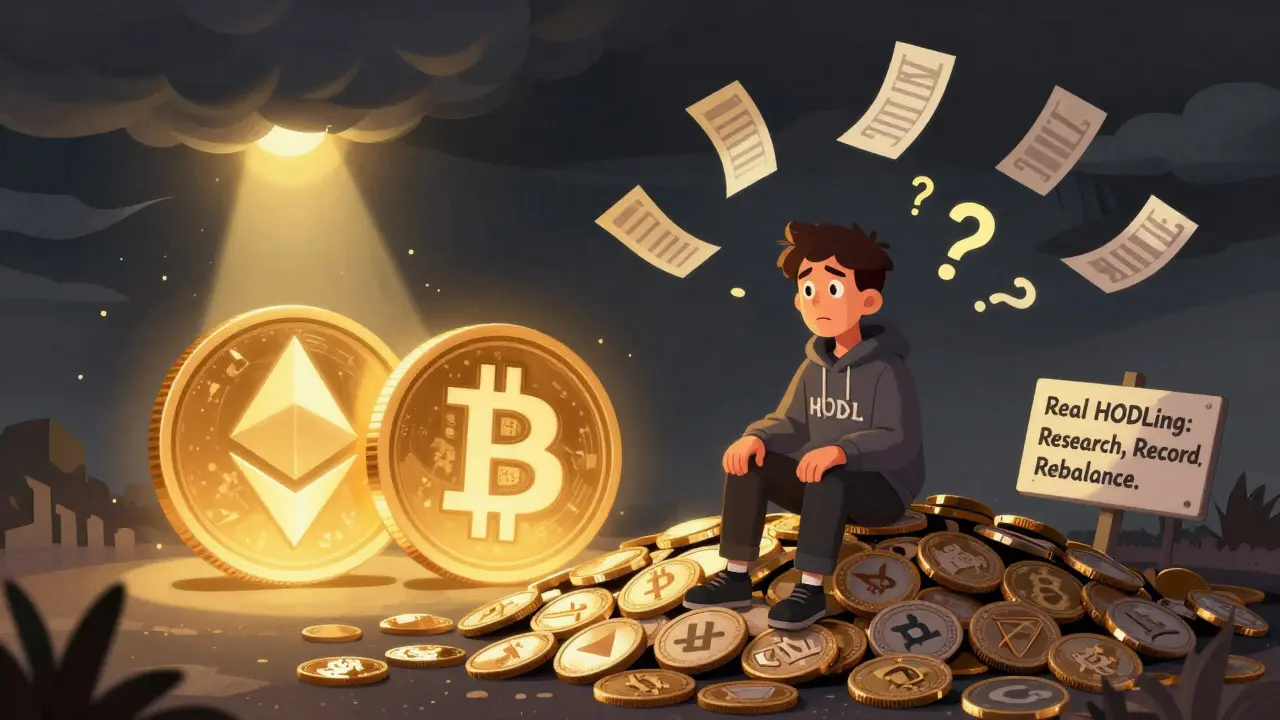
People think HODLing is simple: buy crypto, forget about it, and wait for the moon. But if you’ve held Bitcoin through three bear markets and still lost money, you’re not alone. HODL isn’t a magic spell. It’s a strategy that works only when you avoid the traps most investors don’t even know they’re falling into.
You’re Holding the Wrong Coins
The biggest HODL mistake? Assuming that holding any crypto is enough. HODL doesn’t fix bad choices. If you bought a token because a Reddit thread called it the "next Bitcoin," you’re not HODLing-you’re gambling with a long timeout. Look at what actually survived. Bitcoin and Ethereum are the only two cryptocurrencies that have consistently maintained market dominance over a decade. Why? They have real networks, active developers, and clear use cases. Most altcoins? They vanish. In 2021, over 1,200 new tokens launched. By 2025, more than 80% of them had zero trading volume. Holding those isn’t HODLing. It’s just waiting for a dead asset to go to zero. Ask yourself: Does this coin solve a real problem? Is there active development on GitHub? Are major exchanges still listing it? If not, you’re not a HODLer. You’re a tombstone investor.You Think HODL Means Never Checking Again
Some HODLers treat their portfolio like a time capsule. They bought Bitcoin in 2017, locked it in a hardware wallet, and haven’t looked at it since. That’s not discipline. That’s neglect. Crypto evolves fast. Ethereum’s shift to proof-of-stake in 2022 changed how staking rewards work. Bitcoin’s Lightning Network made microtransactions viable. If you’re still holding a coin that stopped updating its protocol five years ago, you’re not benefiting from innovation-you’re just sitting on outdated tech. HODL doesn’t mean blind faith. It means staying informed. Check in every six months. Read the project’s official blog. See if the team is still active. If the core team disbanded or the codebase stopped updating, it’s time to reconsider. Holding forever only works if the asset still has value.You’re Ignoring Taxes
In New Zealand, crypto is treated as property. If you bought Bitcoin in 2020 for $10,000 and sold it in 2025 for $80,000, you owe tax on the $70,000 gain. But if you just held it? No tax yet. Sounds great, right? Except many HODLers forget that taxes don’t disappear. They just get delayed. And when you finally sell, the bill can be brutal. Some people hold so long they forget how much they bought for. Others don’t track which coins they sold when, leading to messy tax filings. The IRS and Inland Revenue (New Zealand) are getting better at tracking crypto. Exchanges now report transactions. If you can’t prove your cost basis, they’ll assume it’s zero. That means you pay tax on 100% of your sale amount. Keep simple records: date bought, price paid, wallet address. Use free tools like Koinly or CoinTracker. Don’t wait until April to scramble. Tax time isn’t the moment to learn what HODL really costs.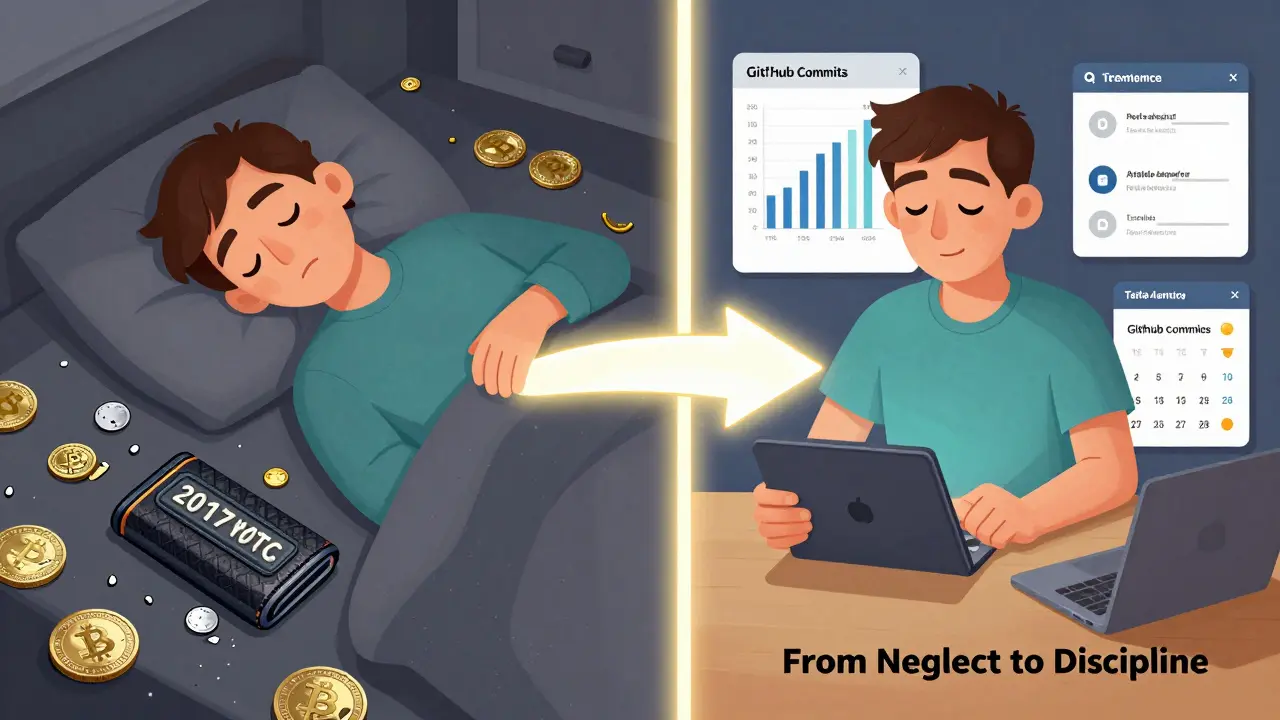
You’re Holding Because Everyone Else Is
Crypto communities love HODL memes. "To the moon!" "Diamond hands!" "Never sell!" It feels good to be part of the tribe. But social pressure isn’t a financial plan. I’ve seen people hold onto tokens that dropped 95% because their Discord group said "it’s just a dip." One guy held a meme coin he bought for $5,000 even after the devs vanished and the website went offline. He told me, "Everyone else is still holding. I can’t be the one who sells." That’s not conviction. That’s fear of being wrong. Real HODLers don’t follow the crowd. They follow their own research. If your reason for holding is "because I saw it on Twitter," you’re not a long-term investor. You’re a follower. And followers get left behind when the trend dies.You’re Not Rebalancing Your Portfolio
HODL doesn’t mean ignoring your asset allocation. If you put 80% of your portfolio into Bitcoin in 2020 and it went up 600%, now you’re 80% exposed to one asset. That’s not diversification. That’s a single bet with a bigger name. In 2024, Bitcoin’s volatility spiked again. One bad news cycle wiped out 30% of its value in a week. If you had 80% of your net worth in it, you felt that. But if you’d rebalanced back to 50% in 2022 after the rally, you’d have locked in gains and reduced risk. Rebalancing isn’t trading. It’s adjusting. Sell a little of what’s grown too big. Buy more of what’s underperforming. You’re not timing the market. You’re managing your exposure. A simple rule: if any single crypto makes up more than 40% of your portfolio, it’s time to trim. HODL doesn’t mean ignoring risk. It means controlling it.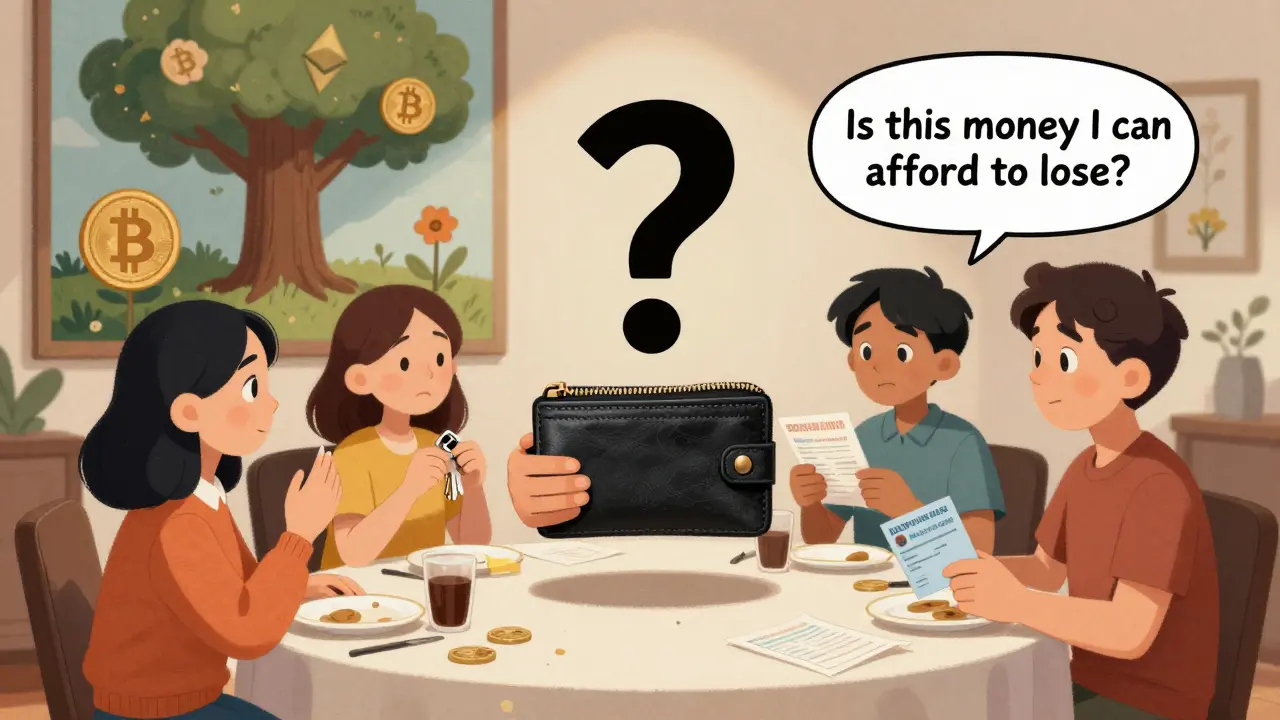
You’re Not Planning for Life Changes
People forget: crypto isn’t a retirement plan. It’s a volatile asset class. If you HODL because you think it’ll fund your kid’s college or your retirement, you’re setting yourself up for disaster. In 2022, a friend in Auckland lost his job. He had $120,000 in crypto-mostly Bitcoin and Ethereum. He didn’t want to sell, so he kept HODLing. Six months later, prices were down 50%. He couldn’t pay rent. He had to sell at a loss. HODLing should only be done with money you can afford to lose for 5-10 years. If you might need cash for emergencies, medical bills, or a house down payment, don’t lock it in crypto. Even Bitcoin can drop 60% in a year. That’s not a risk you take with money you need soon. Ask yourself: If I lost 70% of this investment tomorrow, would it ruin my life? If yes, you’re not HODLing. You’re gambling with your safety net.You Think HODLing Is the Only Way
The crypto world acts like HODLing is the only true path. But it’s not. Some people make money by trading. Others use dollar-cost averaging. Some stake. Some lend. Some build on-chain businesses. HODLing works for people with steady income, high risk tolerance, and long time horizons. But it’s not the only way. If you’re stressed every time Bitcoin dips, maybe HODLing isn’t right for you. There’s no shame in selling. There’s no virtue in holding a dead asset. The goal isn’t to be the toughest HODLer. The goal is to end up with more money than you started with.What HODLing Actually Requires
Real HODLing isn’t about ignoring the market. It’s about knowing why you bought in the first place-and sticking to that reason, even when the noise gets loud. Here’s what works:- Buy only coins with real utility and active development
- Keep records of every purchase and wallet address
- Rebalance once a year to control risk
- Only use money you won’t need for at least five years
- Check in every six months-not to trade, but to verify the project is still alive
- Understand your tax obligations in your country
Is HODLing still a good strategy in 2026?
Yes-but only if you’re doing it right. HODLing worked for Bitcoin and Ethereum because they became foundational parts of the crypto ecosystem. But holding random tokens just because they’re cheap won’t make you rich. The best HODLers focus on quality, not quantity. They hold because they believe in the tech, not because they’re scared to sell.
Can I HODL crypto without paying taxes?
No. In most countries, including New Zealand, you only pay tax when you sell or trade crypto. But holding doesn’t erase the tax liability. If you sell later at a profit, you owe capital gains tax. Many people forget this and get hit with big bills. Keep records of your purchase price and dates. Use tax tools like Koinly to stay ahead.
How long should I HODL crypto?
At least five years. Crypto markets move in 4-7 year cycles. Shorter than that, and you’re likely to sell during a downturn and lock in losses. The real gains come from riding through multiple bear markets. If you’re not prepared to hold through at least one 80% drop, you’re not ready to HODL.
Should I HODL altcoins or just Bitcoin and Ethereum?
Start with Bitcoin and Ethereum. They’re the only two with proven long-term survival. Altcoins are riskier. Many disappear. If you want to hold altcoins, limit them to 10-20% of your portfolio. And only pick ones with active teams, real use cases, and liquidity. Don’t chase hype.
What’s the difference between HODLing and investing?
HODLing is a type of investing-but not all investing is HODLing. Investing means putting money into something with the expectation of future value. HODLing means holding through volatility without selling. You can invest by trading, staking, or lending. HODLing is just one way to invest. The key is knowing why you’re doing it-and sticking to your plan, not the noise.
If you’re holding crypto, ask yourself: Am I doing this because I believe in the future of blockchain? Or because I’m afraid of missing out? The first leads to wealth. The second leads to regret.

Comments
Heather Crane
Wow, this is such a needed reality check! I used to think HODL meant just buying and then ignoring everything-turns out I was just procrastinating on due diligence. Now I check GitHub every 6 months, track my cost basis with Koinly, and only hold coins with real devs pushing code. It’s not sexy, but it’s how you actually win.
Chidimma Catherine
So true about altcoins i bought one called moonbeam because it had a rocket emoji on twitter now its just a ghost chain no updates no team no nothing i feel so dumb but learned hard lesson dont chase hype only hold what solves real problems
katie gibson
OMG I CRIED WHEN I READ THIS LIKE I HODLED A TOKEN CALLED FROGCOIN AND NOW ITS WORTH 0.000001 BTC AND MY DISCORD IS STILL SENDING MEMES LIKE "TO THE MOON" BUT THE WEBSITE IS A 404 AND THE DEV GONE I JUST WANT TO CRY AND LAUGH AT THE SAME TIME
Tselane Sebatane
Let me tell you something-HODLing isn’t about being stubborn, it’s about being strategic. I held Bitcoin through the 2018 crash, the 2022 Terra implosion, and the FTX collapse. But I also rebalanced every year. Sold 10% when it hit 50K, bought more when it dipped below 30K. That’s not trading. That’s smart HODLing. If you’re not adjusting your exposure, you’re not investing-you’re gambling with your future.
Melissa Contreras López
Thank you for writing this. I’ve been telling my friends for years: HODL isn’t a personality trait. It’s a financial discipline. If you’re holding because you’re scared to admit you made a mistake, you’re not a HODLer-you’re in denial. And that’s okay. But don’t pretend it’s strategy. Real HODLers sleep well because they did the work.
Jonny Lindva
Man I used to be that guy who bought every new coin just cause it had a cool logo. Now I only hold BTC and ETH. I check the dev activity once every few months. I use Koinly. I don’t touch my portfolio unless I’m rebalancing. It’s boring. But my bank account ain’t.
Paru Somashekar
As a financial analyst from India, I must emphasize: HODLing without tax planning is financial negligence. In India, crypto gains are taxed at 30% + cess, regardless of holding period. Many investors assume that holding long-term exempts them from tax-this is dangerously incorrect. Maintain records of every transaction, including wallet addresses and timestamps. Use tools like Koinly or CoinTracker. Ignorance of tax law does not absolve liability. Discipline in holding must be matched by discipline in compliance.
Julene Soria Marqués
Okay but can we talk about how some people HODL for 7 years and then sell at a 200% profit… and still complain they didn’t make enough? Like… you literally bought at $5k and sold at $15k and you’re still mad? Maybe you’re not meant for crypto. Maybe you’re just mad you didn’t get rich fast enough.
Margaret Roberts
They say HODLing is smart… but what if the whole system is rigged? What if the government is tracking every wallet and waiting for you to sell so they can seize your gains? What if Bitcoin is just a Ponzi scheme designed to funnel money from the middle class to Wall Street? I’m not saying you’re wrong… I’m just saying… are you REALLY sure?
Anna Topping
I think HODLing is the modern version of praying to a god you can’t see. You don’t know if it works, but you feel better doing it. Maybe the real HODL is not holding crypto… but holding onto your sanity while everyone else is screaming about moon missions and diamond hands.
Adam Lewkovitz
Why are we even talking about this? Only Americans and Europeans think crypto is an investment. In the real world, people use money to buy food, pay rent, and feed their kids. You think HODLing makes you smart? I’ve seen people lose their homes because they bet on Bitcoin. That’s not wisdom. That’s arrogance. Stop glorifying gambling.
Taylor Mills
you think you're so smart holding btc but what if the us just bans it next year? what if they freeze all wallets? you think your hardware wallet is safe? nah bro. the gov owns everything. you're just a sheep holding a shiny rock while they count your gains.
Jeffrey Dufoe
Yeah I just hold BTC and don’t check it. I bought it when it was 30k and now it’s 70k. I don’t care if it goes to 100k or 10k. I’m not selling. I’m not buying more. I just leave it alone. That’s HODL.