

Choosing the right index crypto exchange isn’t about picking the one with the most coins or the flashiest app. It’s about finding a platform that matches how you trade, how much you care about security, and whether you’re just starting out or already managing a portfolio. In 2025, the crypto exchange landscape has changed dramatically. The wild west days of unregulated platforms are over. Now, it’s a game of compliance, liquidity, and execution quality - not just volume.
What an Index Crypto Exchange Actually Means
When people say "index crypto exchange," they usually mean a platform that lets you buy and hold a diversified basket of cryptocurrencies - like a crypto version of the S&P 500. But most exchanges don’t offer true index funds. Instead, they give you access to a wide range of coins so you can build your own index manually. The real question isn’t whether an exchange has an index product - it’s whether it gives you the tools, security, and liquidity to build and manage one efficiently.Top 5 Exchanges for Building a Crypto Index in 2025
Coinbase: Best for Beginners
Coinbase is the go-to for people who want to get started without getting lost. Its interface is clean, intuitive, and designed for people who don’t know what a limit order is. You can buy Bitcoin, Ethereum, Solana, and over 200 other assets with a few clicks. The platform also has a solid learning hub with free courses on blockchain basics, staking, and portfolio management. Fees are the downside. If you use the Instant Buy feature, you’ll pay between 0.5% and 4% per trade. That’s steep compared to professional platforms. But if you’re buying $100 a month and holding long-term, the convenience often outweighs the cost. Coinbase also offers a crypto debit card and custody services backed by insurance - something you won’t find on most offshore exchanges.Kraken: Best for Serious Investors
Kraken isn’t flashy, but it’s reliable. Founded in 2011, it’s one of the oldest exchanges still operating and the only one with a 100% audit trail for its cold storage. In Q3 2025, it handled $102 billion in trading volume - third globally - but ranked #1 in spot trading quality by Kaiko, thanks to deep order books and tight spreads. Kraken Pro gives you advanced charting, stop-limit orders, and margin trading. Its API is used by hedge funds and institutional traders. Fees start at 0.16% for makers and go down to 0.00% for high-volume traders. The catch? Customer support can take 3-5 days during market spikes. But if you’re building a long-term index portfolio, you don’t need live chat - you need security and execution.Gemini: Best for Security and Regulation
Gemini is regulated by the New York Department of Financial Services (NYDFS), which means it follows stricter rules than most global exchanges. All user funds are held in cold storage, and 95% are insured against theft. In January 2025, Tokenmetrics called it "the preferred platform for institutional investors and users who prioritize regulatory transparency." It doesn’t have the widest selection - only about 80 coins - but it’s enough to build a solid index. You can also earn yield on your holdings through Gemini Earn, though APY dropped from 7.4% to 3.2% in Q2 2025 due to new SEC rules. If you care about legal compliance and want to avoid exchanges that might shut down overnight, Gemini is your safest bet.Binance.US: Best for Volume (With Caveats)
The global Binance platform is the largest crypto exchange in the world, handling $1.8 trillion in spot volume in Q3 2025. But you can’t use it in the U.S. That’s why Binance.US exists - a stripped-down version built to comply with American regulations. It offers over 100 coins and lower fees than Coinbase, with maker-taker rates starting at 0.10%. But users complain it lacks features: no advanced charting, no margin trading, and limited educational resources. Reddit threads like "Binance.US feels like a stripped-down version" have over 1,200 upvotes. If you’re using it just to buy and hold, it’s fine. If you want to actively manage your index, you’ll feel limited.OKX: Best for Derivatives and Advanced Tools
OKX isn’t your typical index builder - it’s a derivatives powerhouse. In Q3 2025, it led the world in crypto futures trading with $1.3 trillion in monthly volume. That means it’s ideal if you want to hedge your index position with leverage or short Bitcoin without selling it. It supports over 200 cryptocurrencies and offers advanced tools like grid trading bots, copy trading, and staking with APY up to 8%. But it’s not beginner-friendly. The interface is complex, and the platform has faced regulatory scrutiny in the U.S. and Canada. If you’re an experienced trader looking to protect or amplify your index, OKX gives you the tools. If you’re just buying and holding, you don’t need this.Decentralized Exchanges: Can You Index on Uniswap or dYdX?
Decentralized exchanges (DEXs) like Uniswap and dYdX let you trade directly from your wallet without handing over your keys. That’s appealing for privacy and control. But they’re not ideal for building an index. Uniswap, the largest DEX, trades over $22 billion monthly. But gas fees on Ethereum averaged $4.87 per trade during peak hours in August 2025. That makes buying small amounts of multiple coins expensive and impractical. dYdX is great for derivatives but doesn’t support most altcoins you’d want in a diversified index. DEXs are great for specific trades or DeFi yield farming. But for a true index strategy - buying and holding a mix of Bitcoin, Ethereum, Solana, Cardano, and others - centralized exchanges still win on cost, speed, and simplicity.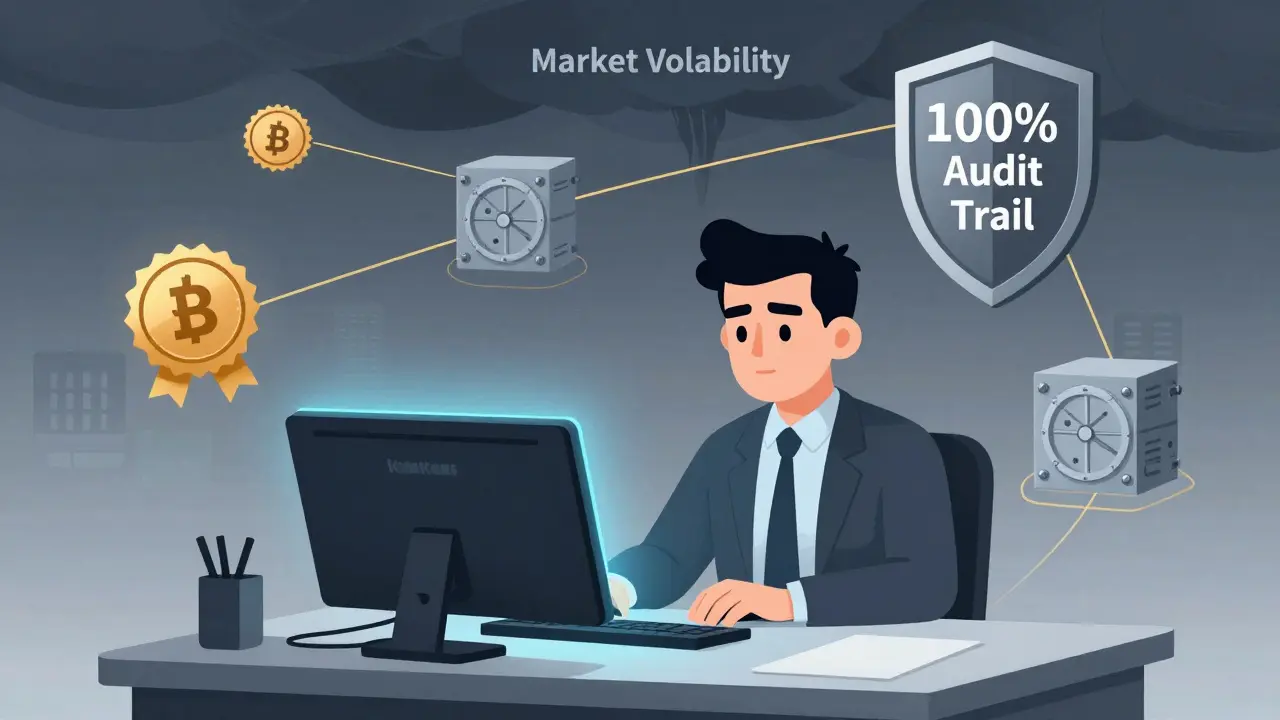
What to Look for in a Crypto Index Exchange
Here’s what separates good exchanges from bad ones in 2025:- Regulation: Does it follow U.S., EU, or other strict rules? Platforms under NYDFS or MiCA are safer.
- Liquidity: High volume means tighter spreads and less slippage when you buy or sell.
- Security: Cold storage, insurance, two-factor authentication, and regular audits are non-negotiable.
- Fees: Look at maker-taker fees, not just Instant Buy rates. High fees eat into long-term returns.
- Asset selection: You need at least 50+ coins to build a meaningful index. Avoid platforms with under 30.
- Support: Can you get help quickly if something goes wrong? Live chat is a plus.
Real User Experiences: What People Are Saying
On Reddit, users on r/CryptoCurrency praise Kraken’s security but complain about slow withdrawals during volatility. On Trustpilot, Gemini users love its compliance but wish it had more coins. Coinbase users give it 4.6/5 stars for ease of use but hate the fees. And on Binance.US forums, people are frustrated by the missing features compared to the global version. One user summed it up: "I started on Coinbase because it was easy. Now I’m moving to Kraken because I’m buying more and the fees are killing me. I don’t need a fancy app - I need reliability."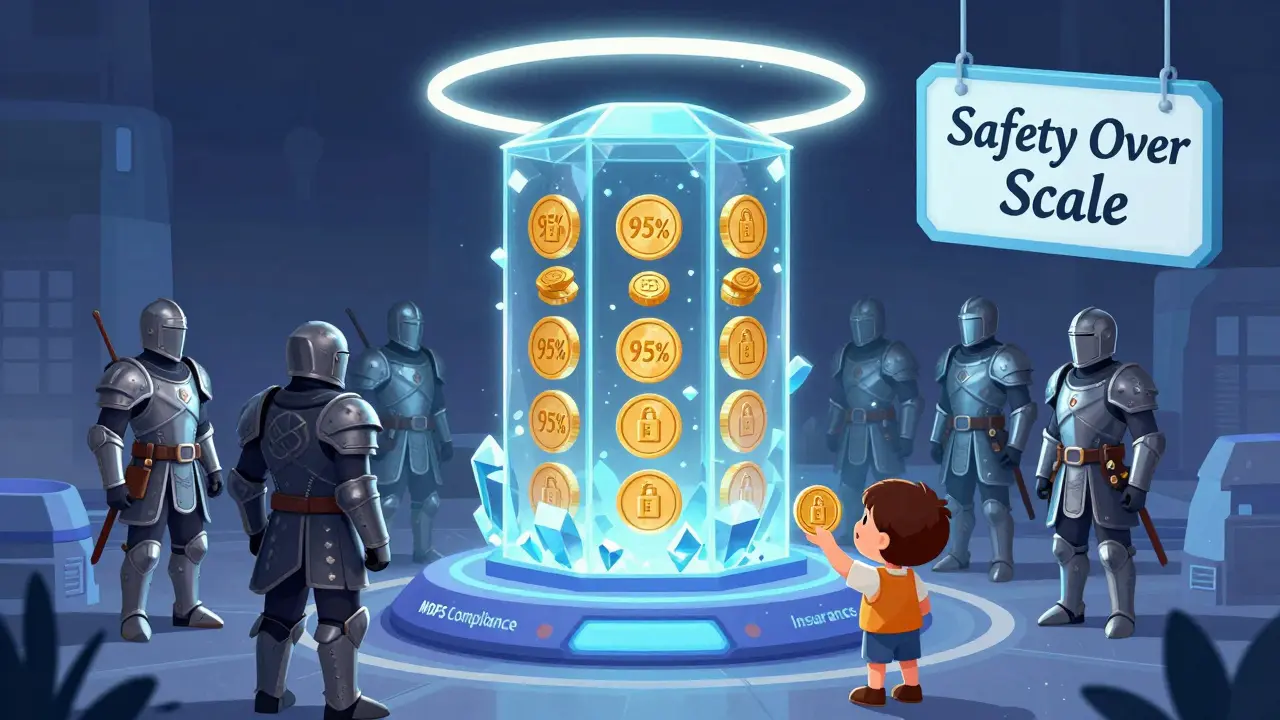
Final Recommendation: Who Should Use What
- Beginners: Start with Coinbase. Learn the basics. Build a small portfolio. Don’t overthink it.
- Long-term investors: Move to Kraken or Gemini. Lower fees, better security, regulatory backing.
- Advanced traders: Use OKX for hedging or derivatives, but keep your core index on Kraken or Gemini.
- Security-first users: Gemini is your best bet. No compromises on compliance.
- Anyone avoiding U.S. regulation: Avoid offshore exchanges. They’re risky. The SEC is cracking down - and they’re not playing around.
What’s Next for Crypto Exchanges?
The industry is consolidating. Gartner predicts 30% of exchanges will vanish or merge by 2027. Only the ones with strong regulation, deep liquidity, and real security will survive. In 2025, the winners aren’t the ones with the most users - they’re the ones you can trust when the market crashes. The next big shift? Zero-knowledge proofs. Kraken already rolled out ZK-Rollups for select pairs in August 2025, cutting transaction costs and boosting privacy. Expect more exchanges to follow. But for now, the basics still matter most: security, fees, and access to the coins you want.What is the safest index crypto exchange in 2025?
Gemini is the safest for most users. It’s regulated by the NYDFS, insures 95% of user funds, and undergoes regular audits. While it has fewer coins than Binance or Kraken, its compliance and security protocols make it the top choice for those prioritizing safety over variety.
Can I build a crypto index on Binance?
You can build a crypto index on Binance.US, but not on the global Binance platform if you’re in the U.S. Binance.US offers over 100 coins and low fees, but lacks advanced tools and has a limited selection compared to the global version. For serious index building, Kraken or Coinbase offer better long-term reliability.
Are decentralized exchanges good for index investing?
No. While Uniswap and dYdX offer non-custodial trading, Ethereum gas fees are too high for frequent small purchases - averaging $4.87 per trade in peak hours. DEXs are better for specific trades or DeFi yield, not for building a diversified crypto index.
Which exchange has the lowest fees for buying crypto?
Kraken Pro offers the lowest fees for active traders, starting at 0.16% for makers and dropping to 0.00% with high volume. For casual buyers, Binance.US has competitive maker-taker rates at 0.10%. Avoid Instant Buy features on Coinbase or Robinhood - they charge up to 4%.
Should I use Coinbase or Kraken for long-term holding?
Start with Coinbase if you’re new. Once you’re comfortable and buying more than $500/month, switch to Kraken. Its lower fees, deeper liquidity, and institutional-grade security make it far better for long-term holding. Coinbase’s 0.5%-4% fees will cost you thousands over time.
What’s the difference between a crypto exchange and a crypto wallet?
An exchange lets you buy, sell, and trade crypto - but you don’t control the keys. A wallet (like Ledger or MetaMask) stores your crypto and gives you full control. For index investing, use an exchange to buy, then move your coins to a non-custodial wallet for long-term safety.
Is it safe to keep crypto on an exchange long-term?
No. Even the best exchanges can be hacked or shut down. While Coinbase and Kraken have strong security, you’re still trusting a third party. For long-term holdings, transfer your coins to a hardware wallet. Use exchanges only for trading or short-term access.

Comments
Dan Dellechiaie
Let’s be real - if you’re still using Coinbase for anything over $500/month, you’re literally throwing money into a black hole with a UX painted like a toddler’s crayon drawing. Kraken’s 0.00% maker fees aren’t a perk, they’re a necessity. Stop paying 4% for convenience - that’s not investing, that’s donating to Wall Street’s crypto wing.
And don’t get me started on Binance.US. It’s like buying a Ferrari with no engine - looks sleek, but you’re just pushing it downhill. If you want to build an index, you need liquidity, not a stripped-down app that feels like a 2018 Android app.
Gemini? Fine for paranoid retirees. But if you’re not using Kraken or OKX for hedging, you’re leaving alpha on the table. ZK-Rollups are here. Stop living in 2021.
And no, DEXs aren’t ‘decentralized freedom’ - they’re $5 gas fee traps for people who think ‘self-custody’ means not using a password manager. Get real.
roxanne nott
Gas fees on Uniswap are $4.87? Bro that’s a joke. I did a 3-coin rebalance last week and paid $22 in fees. That’s not indexing, that’s financial suicide. Stick to centralized. No debate.
Lloyd Yang
Hey, I’ve been in this space since 2017 and I’ve seen exchanges rise and fall like tide pools. What people forget is that crypto isn’t about the platform - it’s about your strategy. If you’re buying $100 a month and holding for 5+ years, Coinbase’s fees? They’re a tax on ignorance. But if you’re just starting? Yeah, go there. Learn. Then move.
I switched from Coinbase to Kraken after my first $10k portfolio. The difference in slippage? Like driving a Prius vs. a Tesla on a highway. Kraken’s order book depth means your buy order doesn’t instantly spike the price. That’s not luck - that’s infrastructure.
And Gemini? I respect it. But if you’re only holding 80 coins, you’re missing the whole point of an index. Diversification isn’t about safety - it’s about exposure. Cardano, Polygon, Solana - these aren’t ‘altcoins,’ they’re the new S&P 500 components. If your exchange doesn’t carry them, you’re not building an index - you’re collecting tokens.
And yes, I keep 90% of my holdings in a Ledger. Exchanges are for trading. Not storage. Never storage. Even Kraken.
Also - OKX’s grid bots? Game-changer. Set it, forget it, let it scalp 0.5% daily while you sleep. That’s passive income with teeth. Not ‘yield farming’ nonsense. Real algorithmic edge.
And for the love of Satoshi - stop calling Binance.US ‘the same as Binance.’ It’s like comparing a Honda Civic to a Lamborghini with the engine removed. Same body. Zero soul.
Radha Reddy
Thank you for this comprehensive breakdown. As someone from India, I appreciate the clarity on regulatory differences. In our context, many are lured by offshore platforms promising higher yields - but the risk is real. I’ve seen friends lose everything because they trusted an exchange without KYC. Your emphasis on NYDFS and MiCA is spot-on.
For beginners, I often recommend starting with Coinbase - not because it’s perfect, but because the interface reduces fear. Fear is the biggest barrier to entry in crypto. Once confidence builds, migration to Kraken or Gemini becomes natural.
Also, thank you for highlighting ZK-Rollups. In India, we’re still catching up on Layer-2 awareness. This is the future - faster, cheaper, private. The exchanges that ignore this will vanish.
Sarah Glaser
There’s a deeper truth here: crypto exchanges are becoming financial infrastructure. Not gambling dens. Not meme factories. Not speculative casinos. They’re evolving into regulated, institutional-grade custody platforms - and that’s a good thing.
When you think of an index, you’re not just buying coins. You’re buying exposure to a technological shift. Bitcoin as digital gold. Ethereum as programmable money. Solana as scalable infrastructure. Cardano as academic research in motion.
Choosing an exchange isn’t about which one has the most coins - it’s about which one lets you participate in this evolution without getting burned.
And yes - holding on an exchange long-term is like keeping your will in a public library. Technically accessible. Practically reckless.
Hardware wallets aren’t optional. They’re the ethical default.
Dusty Rogers
I started on Coinbase in 2021. Paid $200 in fees on $1k worth of trades. Felt like I was getting robbed. Switched to Kraken Pro last year. Fees dropped to $2.50. Same trades. Same portfolio. Same peace of mind.
Don’t overthink it. Buy low. Hold. Move to Kraken when you hit $500/month. Simple. No drama. No influencers. Just math.
Sheila Ayu
Wait - so you’re saying Binance.US is ‘stripped down’? But it’s still the #1 exchange by volume in the U.S.? And you’re comparing it to Kraken? Kraken has less than 1/3 the U.S. users! And you’re calling it ‘institutional-grade’? What about the 2024 SEC subpoena? And the $30M fine? And the fact that their CEO still doesn’t know what a stablecoin is? You’re glorifying a company that’s barely legal! And Gemini? 95% insured? What about the other 5%? Who pays for that? YOU DO! And you’re telling people to ‘trust’ them? What about the 2023 hack where $20M vanished and they blamed ‘third-party vendors’? That’s not security - that’s PR!
Melissa Black
Zero-knowledge proofs aren’t a feature - they’re the next regulatory battleground. Exchanges that adopt ZK-Rollups now are positioning themselves as compliant-by-design. The SEC doesn’t care about your UI. They care about audit trails. Kraken’s implementation means they can prove solvency without exposing user balances. That’s not innovation - that’s survival.
DEXs? Still irrelevant for indexing. Gas fees are a tax on liquidity. And Uniswap’s token list is a graveyard of dead projects. If you’re building a portfolio, you need curation - not chaos.
Tyler Porter
Look. I’m not smart. I just know this: if you’re paying more than 0.2% in fees to buy crypto, you’re doing it wrong. Coinbase? Too expensive. Binance.US? Fine. Kraken? Best. Gemini? Safe. OKX? Only if you know what you’re doing. DEXs? No. Hardware wallet? Yes. That’s it. Done.
Rebecca F
Everyone’s so obsessed with ‘security’ and ‘regulation’ like it’s 2015. Crypto was never meant to be safe. It was meant to be free. If you’re using an exchange regulated by the NYDFS, you’re not investing in crypto - you’re investing in Wall Street’s version of it. You want freedom? Use a DEX. Pay the gas. Own your keys. Or stay in the system and pay the tax. But don’t pretend you’re building a revolution while using a bank that’s on the same block as JPMorgan.
Ashley Lewis
It’s astonishing how many people still treat crypto like a mutual fund. You don’t ‘build an index’ on an exchange. You build it in your brain. The platform is irrelevant. If you’re relying on Coinbase’s ‘learning hub’ to understand blockchain, you’re already behind. The market doesn’t care about your emotional comfort. It cares about liquidity, depth, and execution. Kraken wins. End of story.
vaibhav pushilkar
From India: Binance.US is useless here. But Kraken? Works. Gemini? Works. Coinbase? Too slow. I use Kraken for buying, Ledger for holding. Simple. No drama. No fees on withdrawals. And yes - ZK-Rollups are coming to Asia fast. Watch for OKX’s upcoming L2 launch. It’ll be a game-changer.
Janet Combs
Okay but like… what if I just want to buy BTC and ETH and chill? Do I really need Kraken? Can’t I just… use Coinbase and not think about it? Like… is this overkill? I’m not trying to be a trader. I just want my money to not vanish. Also, is a Ledger worth it? My cousin said it’s like buying a safe for your socks.
Shubham Singh
Let me tell you something about ‘regulation’ - it’s a trap. The NYDFS doesn’t protect you. It protects the state. The moment the government decides crypto is a threat, your ‘safe’ Gemini account gets frozen. Your ‘secure’ Kraken holdings? Seized. Your ‘trusted’ exchange? Just another bank with a blockchain logo. True decentralization isn’t found in compliance - it’s found in self-custody. Or nothing.
Charles Freitas
Oh wow, another ‘crypto guru’ telling people to move from Coinbase to Kraken like it’s some holy pilgrimage. Newsflash: Kraken had a $30M fine for AML failures. Gemini got sued for unregistered securities. Binance.US? Still under investigation. And you’re all acting like these are saints? You’re not investing. You’re gambling with a different set of rules. And you call yourselves ‘smart’? Wake up. The only safe exchange is the one you control. Everything else is a fantasy.
Rachel McDonald
Okay but like… why is everyone ignoring the fact that OKX has 8% APY on staking? That’s more than my savings account! I’m using OKX for my index + staking. Why would I move to Kraken and lose that? 😭 Also, their copy trading is wild - I copied a guy who made 40% in 3 weeks. I’m not ‘advanced,’ I’m just smart. 😎
Vijay n
They’re all controlled by the Fed. You think Kraken is independent? HA. They use the same banking partners as Chase. Gemini? Owned by the same VCs that fund BlackRock. DEXs? Still on Ethereum - which is just a permissioned chain now. This whole ‘crypto revolution’ is a lie. The real power is in the SWIFT network and the Federal Reserve. Your ‘index’ is a distraction. They want you to think you’re free while you’re still in the system. Buy gold. Or cash. Or nothing.
Collin Crawford
Let’s be clear: if you’re using anything other than Kraken for an index, you’re doing it wrong. Period. Coinbase? For kids. Gemini? For grandmas. Binance.US? For people who don’t read the fine print. OKX? For gamblers. DEXs? For masochists. Only Kraken has the liquidity, the audit trail, the institutional backing, and the ZK-Rollups. Anyone who says otherwise hasn’t looked at the order book depth data. I’ve run the numbers. It’s not even close.
Jayakanth Kesan
Hey, I’ve been buying crypto since 2019. Started with $50 on Coinbase. Now I have a portfolio. I moved to Kraken last year. Didn’t need a PhD. Just read the fees. Switched. Done. Keep it simple. Don’t overthink. Crypto’s hard enough without making it a religion.
Megan O'Brien
‘Index crypto exchange’ is a marketing term. There’s no such thing. You’re just buying a basket of tokens. Any exchange with 50+ coins works. The rest is noise. Stop pretending this is finance. It’s retail speculation with better UI.
Kevin Karpiak
Why are we even talking about US exchanges? The real winners are Binance, OKX, Bybit - global platforms. The U.S. is a regulatory graveyard. If you’re in America, you’re already at a disadvantage. Stop pretending your ‘compliant’ exchange is better. It’s just slower, pricier, and less innovative. Move your money offshore. Or don’t bother.
Amit Kumar
From India - I use Kraken and Binance.US side by side. Kraken for BTC, ETH, SOL. Binance.US for smaller alts like AVAX, DOT. I keep 90% in Ledger Nano S. Fees? Kraken is cheaper. But Binance.US has more coins. So I split. Simple. No drama. No guru talk. Just buy, hold, secure. And yes - ZK-Rollups are coming. But I’m not waiting. I’m already moving.
Helen Pieracacos
Author here - thanks for the feedback. I’ve been overwhelmed by the responses. One thing I didn’t emphasize enough: if you’re new, don’t wait for the ‘perfect’ exchange. Start somewhere. Learn. Then move. The biggest mistake? Doing nothing because you’re afraid of making the wrong choice. Any of these platforms will get you started. The real win is starting.
Dan Dellechiaie
Author just admitted it - ‘start somewhere.’ That’s the real truth. The rest is just noise from people who think crypto is a religion. You don’t need Kraken on day one. You need discipline. And patience. And a damn hardware wallet. The exchange is just the door. The real journey starts when you hold your own keys.
Also - ZK-Rollups aren’t magic. They’re math. And math beats marketing. Always.