
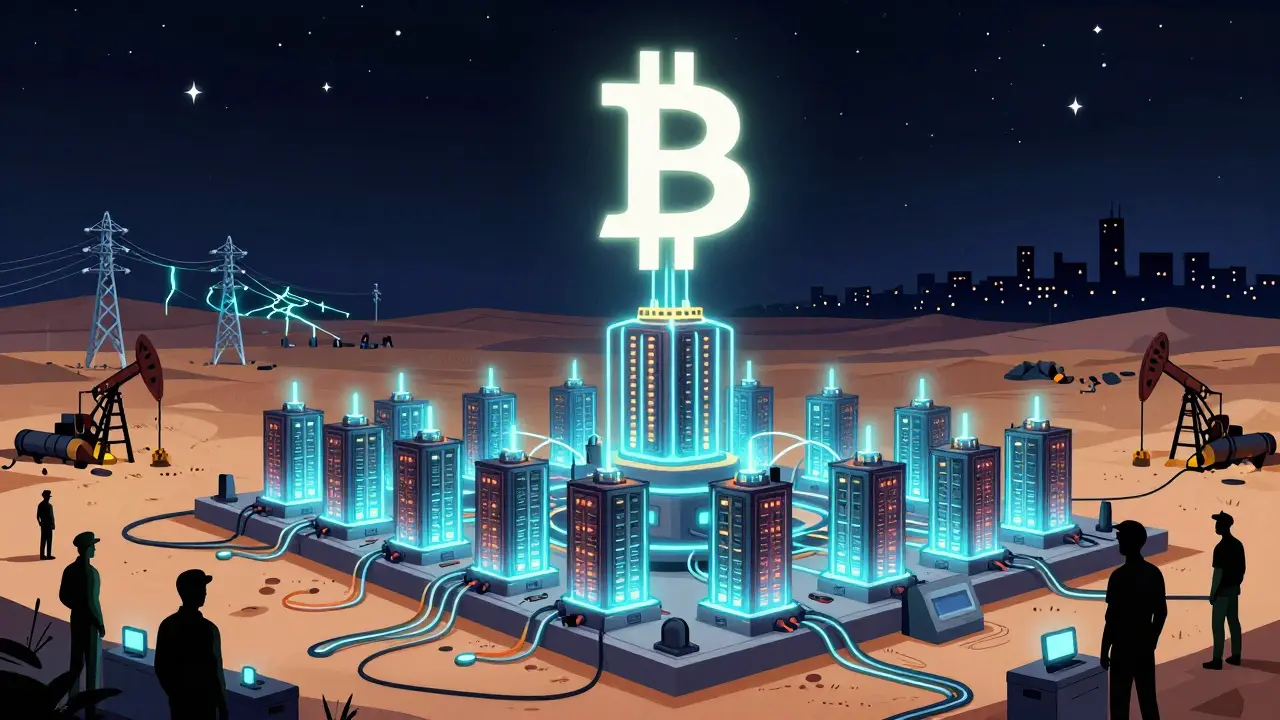
When international sanctions cut Iran off from the global banking system, the country didn’t just sit still. It built a parallel financial network-one powered by electricity, silicon chips, and Bitcoin. Today, BTC mining isn’t just a side hustle in Iran; it’s a state-backed strategy to keep the economy alive.
Why Bitcoin? Because It Can’t Be Blocked
Sanctions hit Iran hard after the U.S. pulled out of the 2015 nuclear deal. Banks froze accounts. Oil sales dropped. Dollars vanished. But Bitcoin? It doesn’t need a bank. It doesn’t care about borders. All you need is power and an internet connection. Iran’s solution was simple: mine Bitcoin. Not a little. Not just for profit. But as a way to turn surplus energy into hard currency. By 2025, Iran accounted for 4.5% of the world’s Bitcoin mining. That’s more than Russia, and close to Kazakhstan. For a country under sanctions, that’s massive.The Energy Advantage
Iran has some of the cheapest electricity in the world-thanks to vast natural gas reserves and state subsidies. While miners in the U.S. pay between $0.03 and $0.08 per kWh, Iranian facilities often pay next to nothing. Some even get free power through political connections. One of the biggest mining farms sits in Rafsanjan, Kerman province. It’s a 175-megawatt facility, run by a joint venture between the Islamic Revolutionary Guard Corps (IRGC) and Chinese investors. It’s not just a business. It’s infrastructure. And it runs 24/7. This isn’t about efficiency. It’s about survival. The electricity used by Iranian miners equals the output of 10 million barrels of oil per year. That’s roughly 4% of Iran’s total oil exports in 2020. But instead of selling oil to China or India, Iran turned that energy into Bitcoin.From Illegal to Official Policy
In 2018, Bitcoin mining was technically banned. By 2020, it was legalized. By 2022, the government had issued licenses to over 10,000 mining operations. The Central Bank of Iran now regulates crypto exchanges. Nine of them operate legally inside the country. The shift wasn’t accidental. A think tank linked to the president’s office published a report in 2021 calling cryptocurrency a "key tool" for sanctions evasion. The message was clear: if you can’t use SWIFT, use Bitcoin. Iran even made its first official import purchase using crypto in August 2022-a $10 million order for medical equipment. No banks. No intermediaries. Just a wallet transfer.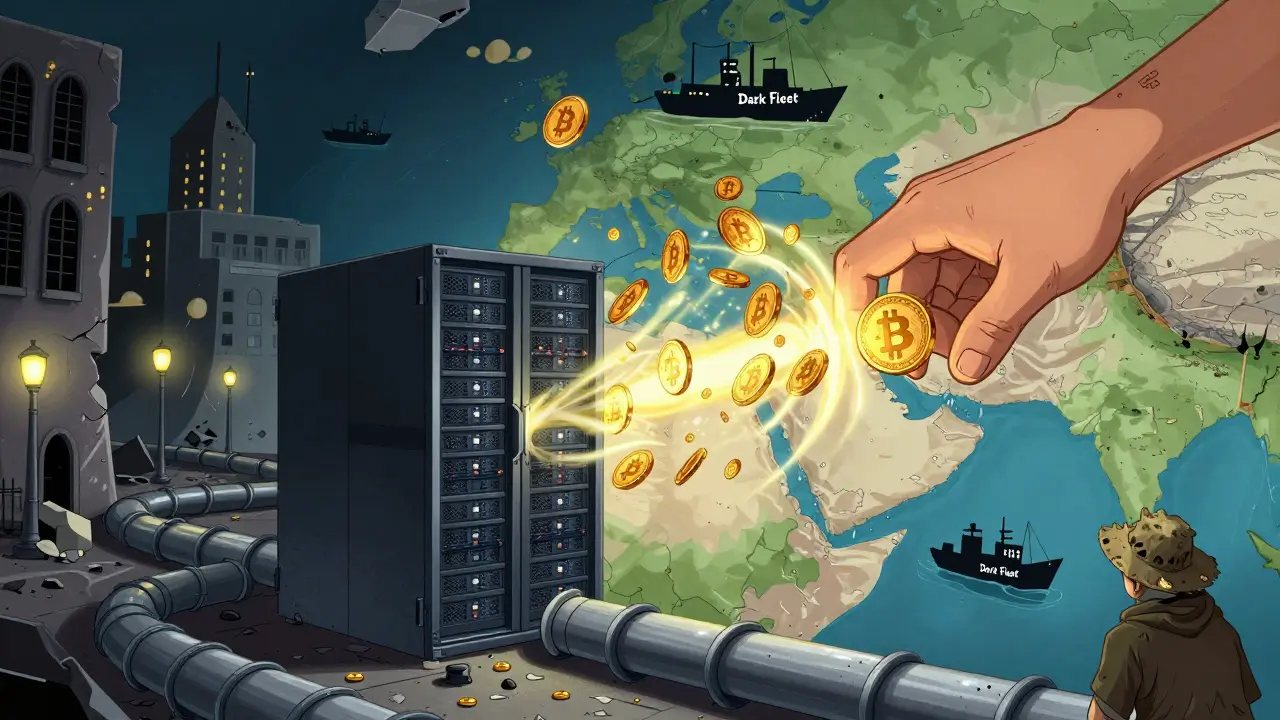
The Crypto Cartel
Not all miners are equal. The biggest operations are tied to the IRGC or powerful religious foundations like Astan Quds Razavi. These groups get priority access to power grids, protection from regulators, and even help importing mining hardware through smuggling networks. Independent miners? They struggle. Equipment is hard to get. Internet connections are unstable. And if you don’t have the right connections, your license gets delayed-or revoked. This creates a two-tier system: state-backed giants with unlimited power, and small operators left to fend for themselves. The result? Bitcoin mining isn’t democratizing finance. It’s consolidating wealth among regime-aligned elites.How the Money Moves
Bitcoin mined in Iran doesn’t stay in Iran. It’s converted into other cryptocurrencies-often stablecoins like USDT or TRON tokens-and sent through exchanges outside the country. Binance alone handled over $8 billion in Iranian-linked transactions since 2018, according to blockchain forensics firms. To hide the trail, Iran uses "teapot" refineries in China, shell companies in the UAE, and crypto mixers that scramble transaction histories. FinCEN’s 2025 advisory flagged these methods as the primary channels for Iranian crypto flows. The money then buys essentials: medicine, food, machinery. Or it’s converted into cash and used to fund military programs. Analysts estimate Iranian crypto revenues directly support IRGC missile development and proxy groups like Hezbollah and the Houthis.Bigger Than Just Mining
Iran’s crypto strategy doesn’t stop at Bitcoin. It’s part of a wider sanctions-evasion machine that includes:- A "dark fleet" of over 320 tankers smuggling oil
- Barter deals with Russia and China using crypto as a middleman
- Bilateral crypto cooperation agreements with countries like Russia, Austria, and South Africa
- Plans to launch its own blockchain-based import-export platform by 2027
Why It Works-And Why It’s Dangerous
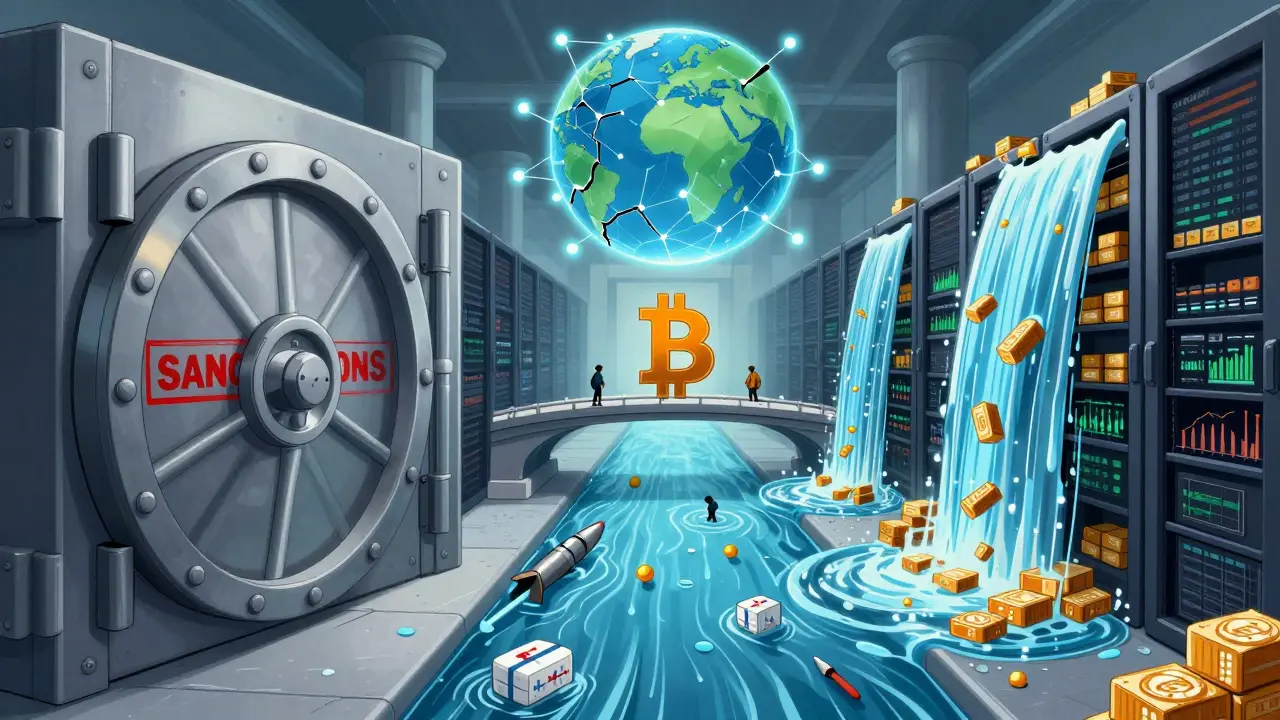
Bitcoin’s design makes it nearly impossible to block. You can’t shut down a network. You can’t freeze a wallet without the private key. And since mining is decentralized, even if one farm is taken down, hundreds more keep running. But there’s a cost. Iran’s power grid is crumbling. Blackouts are common. Cities go dark so mining farms can stay online. In 2024, a major blackout in Tehran lasted 18 hours-while mining operations kept running on backup generators. International banks are terrified. If you process a transaction that traces back to an Iranian miner-even unknowingly-you risk sanctions violations. That’s why some exchanges now block Iranian IPs. Others don’t bother. Bitcoin’s anonymity makes enforcement messy.Will It Last?
Iran’s model works because it’s brutal, efficient, and state-controlled. But it’s not sustainable. New mining hardware is hard to get. Sanctions block access to the latest ASIC chips. Equipment ages. Failures pile up. And as global mining shifts toward renewable energy, Iran’s reliance on cheap gas becomes a liability. Still, as long as sanctions stay in place, Iran has no choice. Crypto mining is the only reliable way to generate foreign currency without banks. Even if it drains the grid. Even if it funds war machines. Even if it turns Bitcoin into a tool of the state instead of a tool of the people.What This Means for the Rest of the World
Iran isn’t alone. North Korea hacks exchanges. Venezuela tried its own crypto currency and failed. But Iran built something real: a functioning, large-scale, state-backed crypto economy. It’s a warning. If sanctions can’t stop Bitcoin mining, what can they stop? And if other sanctioned nations copy Iran’s playbook-Russia, Syria, Venezuela-how long before the global financial system is flooded with crypto flows that no bank can trace? Bitcoin was meant to be decentralized. But in Iran, it’s become the most centralized tool of state survival.Is Bitcoin mining legal in Iran?
Yes. Since 2020, Bitcoin mining has been officially legal in Iran, and the government issues licenses to mining operations. However, using Bitcoin as a payment method within Iran is still restricted. The focus is on mining for export, not domestic use.
How much Bitcoin does Iran mine each year?
Iran accounts for about 4.5% of the world’s total Bitcoin mining hash rate. In 2025, this translated to roughly $4.18 billion worth of cryptocurrency being sent out of the country-up 70% from the previous year. The exact amount of Bitcoin mined isn’t public, but analysts estimate it’s in the tens of thousands of BTC annually.
Why is electricity so cheap for Iranian miners?
Iran has massive natural gas reserves and heavily subsidizes energy for industrial use. Mining farms tied to the IRGC or religious foundations often receive electricity at near-zero cost. Some don’t even pay bills-power is allocated directly through political channels, not market rates.
Do Iranian miners use imported hardware?
Yes, but mostly through smuggling and gray-market channels. Sanctions block direct imports of advanced ASIC miners from China and the U.S. So miners rely on intermediaries, false shipping labels, and third-country hubs like the UAE to get equipment. Older, less efficient machines are common.
Can international exchanges block Iranian Bitcoin?
Technically, yes-but it’s difficult. Bitcoin transactions are pseudonymous. While blockchain analytics firms like Chainalysis can flag wallets linked to Iranian mining, blocking them would require identifying every single miner’s output. Most exchanges avoid the issue by not doing business in Iran directly, but they can’t fully stop Iranian BTC from entering the global network.
Is Iran’s crypto strategy effective?
It’s effective at generating foreign currency and bypassing banking restrictions. Since 2018, Iran has moved over $20 billion in crypto assets out of the country. But it hasn’t replaced oil revenue. It’s a stopgap. And it comes at a high cost: blackouts, infrastructure strain, and international isolation.
What happens if sanctions are lifted?
If sanctions are lifted, Iran’s incentive to mine Bitcoin for survival drops. But the infrastructure is already in place. Experts believe Iran will keep mining-not for sanctions evasion, but as a long-term revenue stream. The country now has a functioning crypto economy. It won’t abandon it easily.

Comments
Jeremy Lim
This is wild. 😅 I mean... mining Bitcoin just to bypass sanctions? Sounds like a sci-fi movie. But also... kinda genius? Or just desperate. Either way, I’m not touching crypto now. Too much drama.
John Doyle
Honestly? I’m impressed. Iran’s not playing fair, sure-but they’re playing smart. When the system shuts you out, you build your own. Power to the people who adapt. 🚀
Donna Patters
This is not innovation. It is institutionalized criminality cloaked in technological euphemisms. The state has weaponized decentralization. This is not freedom. It is extortion with hash rates.
Michelle Cochran
I feel so sad for the people in Tehran who lose power so some guy with IRGC connections can mine coins. This isn’t capitalism. It’s feudalism with servers. And it’s disgusting.
monique mannino
I just love how tech adapts. 💖 Even in the most oppressive systems, people find ways to connect, to survive. Bitcoin’s not perfect-but it’s giving folks a lifeline. Hope that changes soon!
Peggi shabaaz
Kinda makes you think, huh? Like... what if the real revolution isn’t in protests but in code?
Holly Perkins
i read this and i still dont get why they dont just use paypal or something? like... why bitcoin? its so complicated
Ben Pintilie
So Iran mines BTC to buy medicine... but also to fund Hezbollah? That’s a real moral gray zone. 😐 I don’t know whether to cheer or cry.
Sakshi Arora
in india we also have mining but its small scale and expensive. iran is crazy smart using gas for this. no wonder they dont care about blackouts
Christopher Wardle
The irony is that Bitcoin, designed to escape centralized control, has become the most centralized tool of state power in modern history. A paradox wrapped in SHA-256.
Gaurav Mathur
this is all a cia operation. they want to destabilize iran by making them rely on crypto. then when it crashes, they blame iran. its a trap. i know this for a fact
kelvin joseph-kanyin
YESSSS! 🤖🔥 Iran’s turning energy into digital gold. That’s next-level hustle. If you can’t beat the system, mine it. I’m proud of them. Power to the underdogs!
Elizabeth Choe
I mean... imagine being a mom in Mashhad and your lights go out because some dude’s rig is hogging the grid. But then again... maybe her kid gets insulin because of it. Life’s messy.
Crystal McCoun
I’ve been following crypto for years, and this is the most chilling example of how tech can be co-opted. It’s not just about money-it’s about survival, control, and power. And it’s terrifying.
Elijah Young
The fact that the Central Bank of Iran now regulates exchanges shows this isn’t underground anymore. It’s policy. And that changes everything.
Beth Trittschuh
Bitcoin was supposed to be a rebellion. Now it’s a state asset. The revolution didn’t come with guns-it came with ASICs. 🤔
Benjamin Andrew
Let’s not romanticize this. This isn’t "innovation." It’s a kleptocracy with a server rack. The IRGC is laundering state funds through blockchain. That’s not freedom. That’s fraud with better PR.
bala murali
The energy arbitrage is fascinating. Iranian mining operates at near-zero marginal cost due to subsidized gas. This creates a structural advantage that cannot be replicated in energy-constrained economies.
Santosh kumar
You know what? I think this could actually work long-term. If they keep improving the grid and get better hardware, this could be a real economic engine. Don’t count them out.
Claire Sannen
I appreciate the complexity here. It’s not black and white. There’s suffering. There’s ingenuity. There’s exploitation. And there’s survival. We need to hold all of it at once.
Will Lum
Honestly, I’m just glad someone’s figuring out how to make tech work for real people, even if the context is messed up. The system failed them. They built something. That’s worth respecting.
Sanchita Nahar
why do westerners act like this is shocking? weve been using crypto for sanctions since 2016. iran is just better at it. get over it
Tammy Chew
This is the future of geopolitics. Not tanks. Not treaties. But algorithms. And we’re all just watching as the world becomes a blockchain ledger controlled by the most ruthless actors.
Lindsey Elliott
I knew this was happening but seeing the numbers-$20B out? That’s insane. And they’re using USDT? Of course they are. It’s the duct tape of crypto.
Joe Osowski
Iran’s doing what any nation would do if they were strangled. But don’t pretend this isn’t evil. They’re funding terrorists. And you’re cheering it because it’s "cool tech." Wake up.
John Doyle
To the person who said this is evil-I get it. But what’s the alternative? Let them starve? Let their kids go without medicine? Sometimes survival isn’t pretty. And yeah, it funds bad actors. But it also saves lives. That’s the tradeoff.