

Bitcoin used to be simple. You bought it, you held it, and you waited for the price to go up. That era is effectively over. Today, Bitcoin is a bustling ecosystem of digital collectibles, fungible tokens, and complex financial instruments. If you are looking to trade these new assets, specifically Runes, you have likely heard of Magic Eden. But is this platform, originally famous for Solana NFTs, actually the right place for your Bitcoin token trading in 2026?
The short answer is yes, but with caveats. Magic Eden has aggressively pivoted from its roots as an NFT marketplace to become a dominant force in the Bitcoin Layer 1 space. It currently holds over 80% of the Ordinal and Rune trading volume in the ecosystem. However, it is not a traditional centralized exchange like Coinbase or Binance. Understanding what Magic Eden actually is-and how its Runes beta works-is crucial before you connect your wallet.
What Are Runes and Why Does Magic Eden Matter?
To understand the platform, you first need to understand the asset class. Runes are a protocol for creating fungible tokens on the Bitcoin blockchain. Unlike older standards like BRC-20, which relied on inscriptions that cluttered the blockchain and were slow to process, Runes use the Unspent Transaction Output (UTXO) model. This means they inherit Bitcoin’s native security and efficiency. They are cheaper to create, faster to transfer, and significantly more secure because they don’t require complex smart contracts that can be hacked.
Magic Eden entered this space early. While many platforms were still debating the viability of Bitcoin-based tokens, Magic Eden launched its Runes beta on April 22, 2024. By integrating directly with the Bitcoin network, they allowed users to swap BTC for Runes seamlessly. This wasn't just a feature addition; it was a strategic shift. Magic Eden realized that while NFTs were their bread and butter, Bitcoin's expanding utility offered a larger, more stable market. Today, if you want to buy, sell, or launch a Rune, Magic Eden is arguably the most liquid venue available.
Platform Overview: From Solana King to Bitcoin Hub
Magic Eden started life in 2022 as a Solana-focused NFT marketplace. It quickly became the undisputed leader there, capturing over 90% of Solana’s NFT trade volume. But the team didn't stop there. In November 2022, they added Polygon support. In March 2023, they integrated Ethereum and Bitcoin. This multi-chain approach is rare. Most exchanges stick to one or two networks to keep development costs low. Magic Eden chose complexity to offer users a single dashboard for all their digital assets.
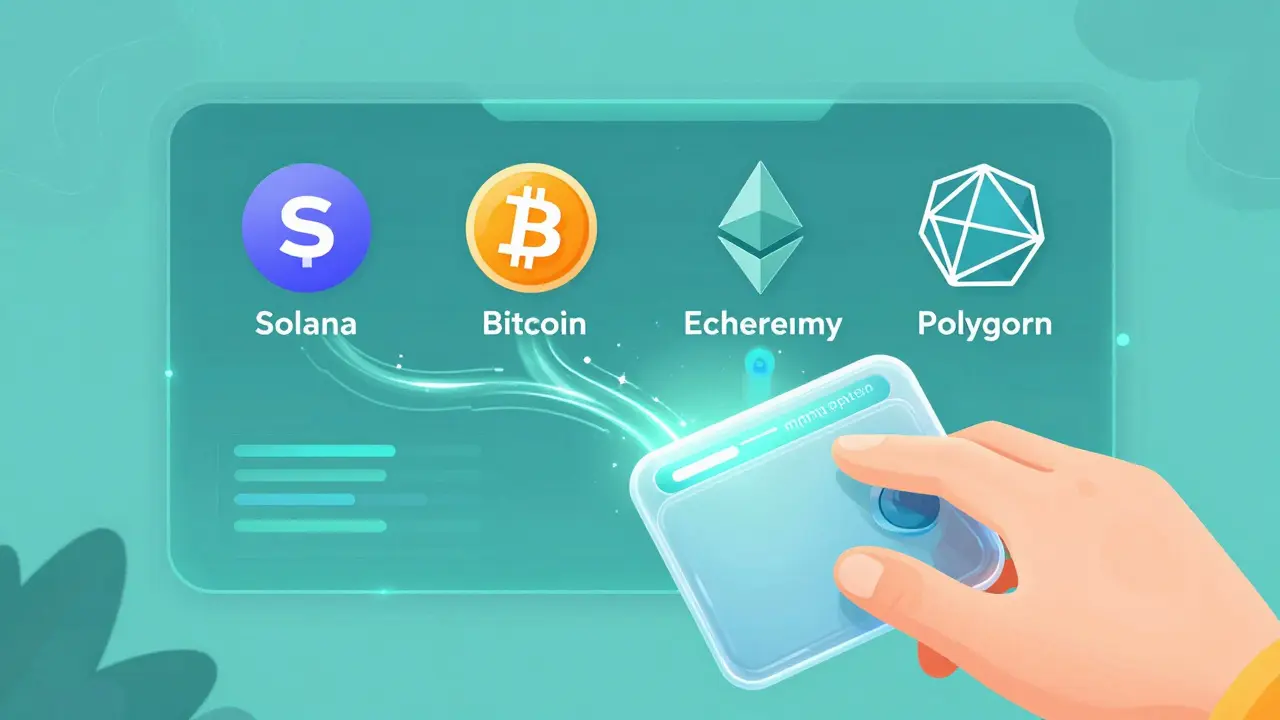
As of mid-2026, the platform supports four major networks: Solana, Bitcoin, Ethereum, and Polygon. For the average user, this means you don’t need three different wallets and three different websites to manage your portfolio. You can check your Solana monkey NFT and your Bitcoin Runes in the same interface. The UI remains intuitive, avoiding the cluttered dashboards typical of professional trading terminals. This accessibility is key to why they’ve maintained such high user retention rates across different blockchain communities.
| Metric | Value | Context |
|---|---|---|
| Supported Chains | 4 | Solana, Bitcoin, Ethereum, Polygon |
| Runes Trading Volume Share | >80% | Dominant position in Bitcoin token trading |
| Transaction Fee | 2% | Flat fee on completed sales only |
| Listings & Offers | 0% | No cost to list or make offers |
| Margin Trading | Not Available | Spot trading only |
Fees, Costs, and Hidden Traps
Let’s talk money, because fees eat into profits faster than bad trades do. Magic Eden charges a flat 2% transaction fee on sales. Compare this to OpenSea, which often charges higher percentages plus gas fees, or other NFT platforms that add hidden surcharges. Crucially, Magic Eden charges zero fees for listing items and zero fees for making offers. You only pay when a sale goes through. This structure favors buyers and sellers who want to test the waters without upfront costs.
However, there is a catch. Since Magic Eden operates on multiple chains, you still need to pay network gas fees. On Bitcoin, this means paying the miner fees for the transaction. During peak congestion, Bitcoin gas fees can spike dramatically. While Magic Eden doesn’t charge extra for this, you might find yourself waiting hours for a transaction to confirm if the network is busy. Always check the current mempool status before executing large trades. Additionally, the platform honors creator royalties. This is a double-edged sword. On one hand, it supports artists. On the other, it means you pay slightly more than you would on royalty-free platforms. If you are a whale buying high-value assets, those percentage points add up.
User Experience: How Easy Is It to Trade Runes?
I tested the Runes interface recently to see how smooth the experience really is. The process starts with connecting your Magic Eden wallet. Unlike MetaMask, which requires browser extensions and seed phrase management, the Magic Eden wallet is designed for simplicity. It handles multi-chain keys under one hood. Once connected, navigating to the Runes section is straightforward. There is a dedicated tab for Bitcoin assets.
One standout feature is the ability to preset the amount of BTC you intend to spend. When buying Runes, prices can fluctuate rapidly due to low liquidity on some pairs. Magic Eden allows you to set a maximum BTC spend limit. This protects you from slippage. If the price moves against you during the transaction window, the trade simply fails rather than draining your wallet. This is a small detail, but it shows a deep understanding of trader psychology and risk management.
The search functionality is robust. You can filter by volume, market cap, and creation date. For beginners, the "Popular Collections" feed is a great starting point. It highlights trends without requiring you to dig through obscure charts. However, advanced traders might miss some of the deep-charting tools found on platforms like TradingView. Magic Eden is built for execution and discovery, not technical analysis. If you need complex indicators, you will need to export data to another tool.
Security and Trust: Is Your Bitcoin Safe?
In crypto, trust is earned, not given. Magic Eden is a decentralized exchange (DEX), which means they do not hold your funds. Your assets stay in your wallet until you sign a transaction. This eliminates the risk of exchange hacks where the company itself gets robbed. However, it shifts the responsibility to you. If you lose your private key, your money is gone forever. There is no customer support to reset your password.
The Runes protocol itself adds a layer of security. Because Runes use the UTXO model, they are less prone to the reorg attacks that plagued earlier Bitcoin token standards like BRC-20. The transactions are immutable once confirmed. Magic Eden also conducts regular audits on their smart contracts and interfaces. While no system is perfect, their track record since 2022 has been relatively clean compared to smaller, newer competitors. Always verify the URL you are visiting. Phishing sites mimicking Magic Eden are common. Bookmark the official site and never click links from unsolicited emails.

Who Should Use Magic Eden for Runes?
Magic Eden isn’t for everyone. If you are a day trader looking to leverage positions with 10x margin, look elsewhere. Magic Eden does not offer derivatives or margin trading. It is a spot-only platform. If you want to bet on the direction of Bitcoin price movements using futures, you need a centralized exchange like Binance or Bybit.
However, if you are an investor interested in long-term holding of Bitcoin-native tokens, Magic Eden is ideal. It is perfect for:
- NFT Collectors: Those who already own Solana or Ethereum NFTs and want to diversify into Bitcoin assets without learning a new interface.
- Runes Speculators: Users looking to buy newly launched Runes with minimal friction and competitive fees.
- Creators: Artists and developers who want to launch their own token collections. The Launchpad feature provides marketing support and white-listing tools that are hard to find elsewhere.
For casual users, the barrier to entry is low. For institutional players, the lack of API depth and advanced order types might be limiting. But for the vast majority of retail investors entering the Bitcoin token economy, Magic Eden strikes the best balance between ease of use, security, and market access.
Alternatives to Consider
While Magic Eden dominates, competition is heating up. OKX has made significant inroads into the Bitcoin Ordinals and Runes market, offering deeper liquidity for certain high-volume pairs. Tensor remains strong for Solana NFTs but has limited presence in the Bitcoin space. For pure BRC-20 trading, platforms like UniSat Wallet offer specialized tools that might appeal to hardcore Bitcoin maximalists who prefer non-custodial, browser-based interactions.
If you are primarily focused on Bitcoin and want the absolute lowest fees, you might consider using a direct peer-to-peer protocol via a lightweight client, but this requires significant technical knowledge. For most people, the convenience of Magic Eden outweighs the marginal savings of DIY methods. Just remember to compare slippage settings before confirming any trade, regardless of the platform.
Is Magic Eden safe for storing Bitcoin Runes?
Yes, but with a caveat. Magic Eden is a non-custodial platform, meaning your assets remain in your personal wallet, not on Magic Eden's servers. This makes it immune to exchange hacks. However, you are responsible for securing your private keys. If you lose your recovery phrase, your funds are unrecoverable. Always use a hardware wallet for large holdings.
What is the difference between Runes and BRC-20 tokens?
BRC-20 tokens rely on inscriptions stored in the OP_RETURN field of Bitcoin transactions, which can be slow and expensive. Runes use the Unspent Transaction Output (UTXO) model, making them more efficient, cheaper to transfer, and inherently more secure as they integrate directly with Bitcoin's core mechanics rather than relying on complex scripts.
Can I trade Runes on Magic Eden without owning Bitcoin?
No. To trade Runes, you must have Bitcoin (BTC) in your wallet to pay for the transaction and the network gas fees. Magic Eden does not support fiat-to-Rune direct purchases. You will need to buy BTC on a centralized exchange first, then transfer it to your Magic Eden wallet.
Does Magic Eden charge fees for listing Runes?
No. Magic Eden charges a 0% fee for listing assets and a 0% fee for making offers. A 2% transaction fee is only charged when a sale is successfully completed. This makes it cost-effective for creators and traders to experiment with pricing strategies.
Why did Magic Eden expand from Solana to Bitcoin?
Magic Eden recognized the growing importance of Bitcoin beyond just store-of-value. With the rise of Ordinals and Runes, Bitcoin became a hub for digital assets. By expanding to Bitcoin, Ethereum, and Polygon, Magic Eden positioned itself as a multi-chain leader, capturing market share in emerging ecosystems while maintaining its dominance on Solana.

Write a comment