
Smart Contracts: The Backbone of Modern Crypto Projects
When working with smart contracts, self‑executing code that runs on a blockchain without a middleman. Also known as programmable agreements, it lets developers lock in business logic, enforce rules, and transfer value automatically. Because the code lives on an immutable ledger, anyone can audit the terms, and the contract will trigger exactly as written. This fundamental building block fuels everything from token launches to complex financial products.
One of the biggest ecosystems built on smart contracts is decentralized finance, a suite of financial services that run without banks. In DeFi, smart contracts replace traditional intermediaries, letting users lend, borrow, or earn yield directly from their wallets. Another key player is the decentralized exchange, a platform where users trade tokens peer‑to‑peer. DEXs rely on smart contracts to match orders, settle trades, and manage liquidity without a central order book. Within many DEXs you’ll find automated market makers, algorithmic pools that price assets based on supply and demand curves. AMMs use smart contracts to keep pools balanced, handle swaps, and distribute fees to liquidity providers. Finally, smart contracts are the engine behind DAOs, organization structures where token holders vote on proposals. DAOs encode governance rules in code, so proposals are executed automatically once they hit the required quorum.
All these pieces—DeFi, DEXs, AMMs, and DAOs—share a simple truth: they need reliable, secure smart contracts to function. When a contract is poorly written, the whole system can be exposed to flash‑loan attacks, logic bugs, or total loss of funds. That’s why developers spend weeks auditing code, running testnets, and using formal verification tools before a contract goes live. For investors, understanding the contract’s audit status, upgradeability mechanism, and fee structure can be the difference between a solid opportunity and a hidden trap. Below you’ll find a curated list of articles that break down tokenomics, audit case studies, airdrop safety, and real‑world use cases—all focused on the smart‑contract landscape. Dive in to see how each concept plays out in practice and to pick up actionable tips for assessing contracts before you commit capital.

DAOs in 2026: Real Benefits, Hard Limitations, and What Actually Works
Explore the real benefits and limitations of DAOs in 2026. From transparency and global access to slow decisions and legal risks, learn what works and what doesn't in decentralized autonomous organizations.
read more
Blockchain Banking Services Explained: How Distributed Ledgers Are Changing Finance
Blockchain banking services use distributed ledgers to make payments faster, cheaper, and more secure. Smart contracts, tokenized assets, and real-time settlements are replacing outdated systems-here's how it works today.
read more
Future of Decentralized Finance: How DeFi Is Reshaping Money in 2026
By 2026, DeFi is no longer experimental - it’s a faster, cheaper, and more accessible way to move money. Small businesses, developing nations, and everyday users are adopting it to bypass banks, cut fees, and earn interest without middlemen.
read more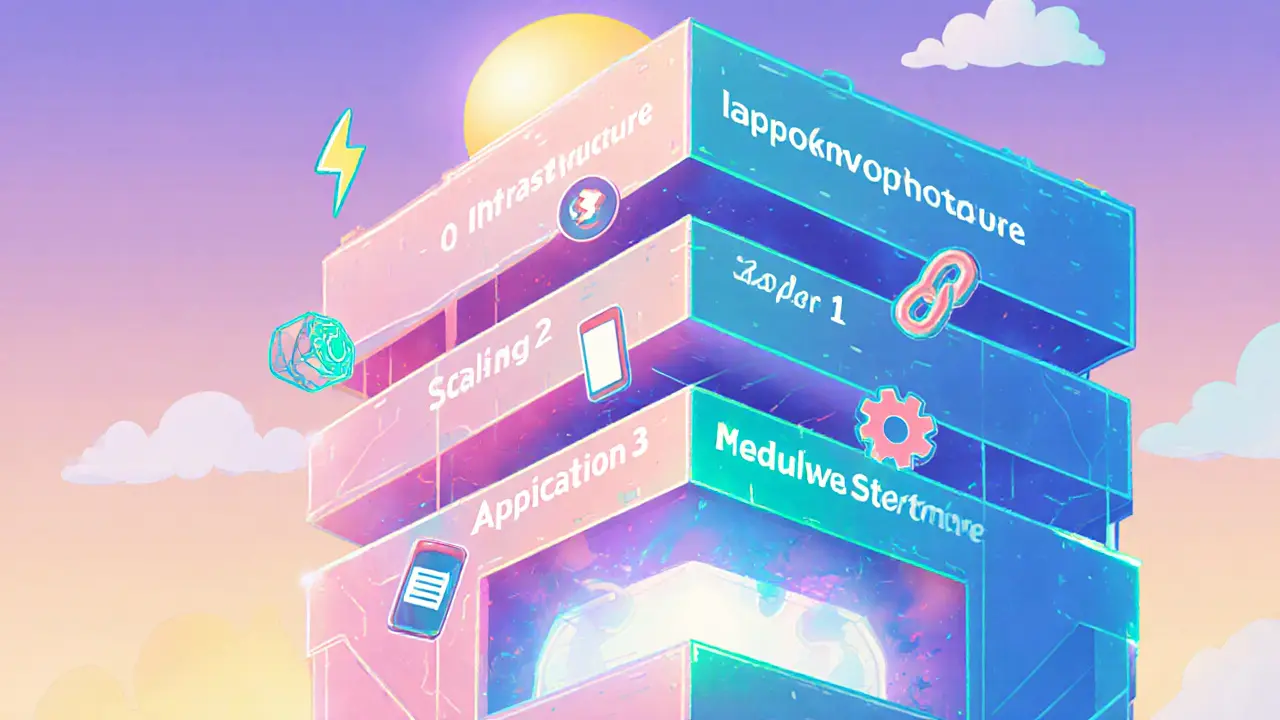
Web3 Technology Stack Explained: Layers, Tools & How to Build dApps
Explore the full Web3 technology stack-from infrastructure to dApp front‑ends. Learn each layer, key tools, and a step‑by‑step guide to building your first decentralized app.
read more