
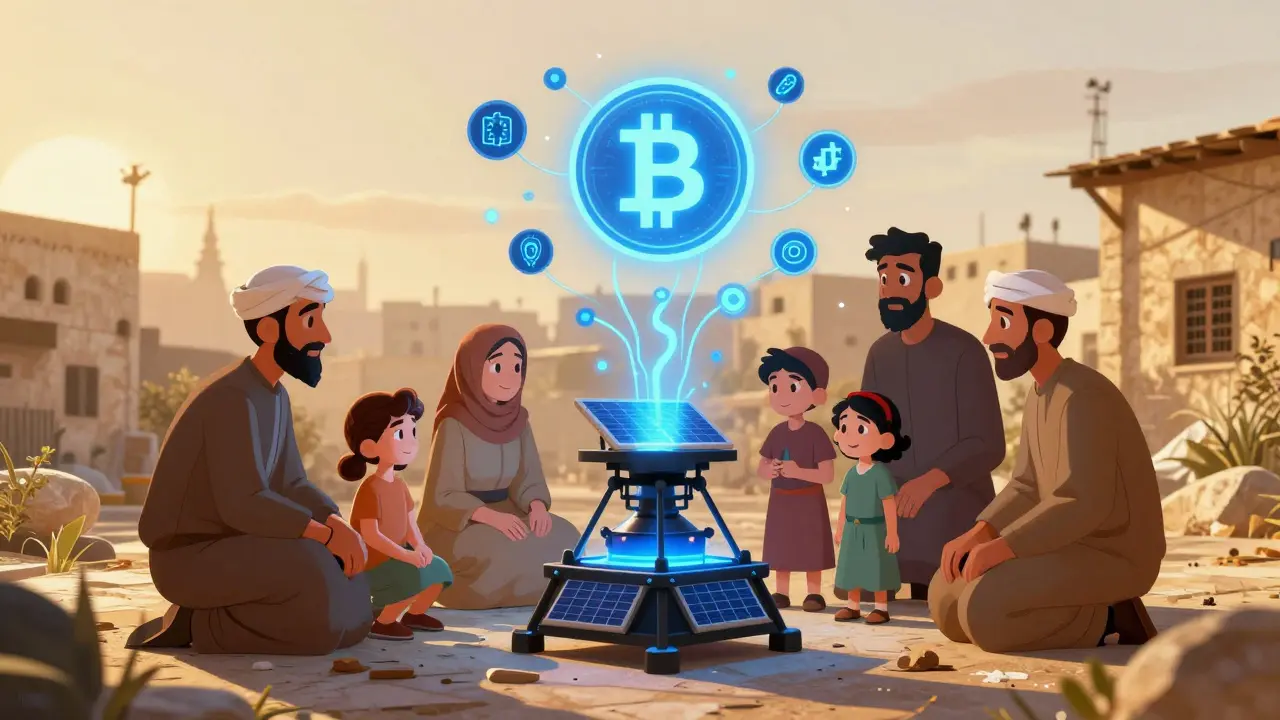
Before June 2025, Syrian crypto users lived in a legal gray zone. If you wanted to send Bitcoin from Damascus to a U.S. exchange, you were breaking U.S. law. Not because the U.S. cared about your personal transactions, but because a blanket sanctions regime had been in place since 2004 - one that treated every Syrian citizen, business, or wallet as a potential threat. That changed. On July 1, 2025, the most sweeping sanctions relief in over two decades took effect, and for the first time in 21 years, ordinary Syrians could legally use cryptocurrency without fear of U.S. penalties.
What Exactly Did OFAC Lift?
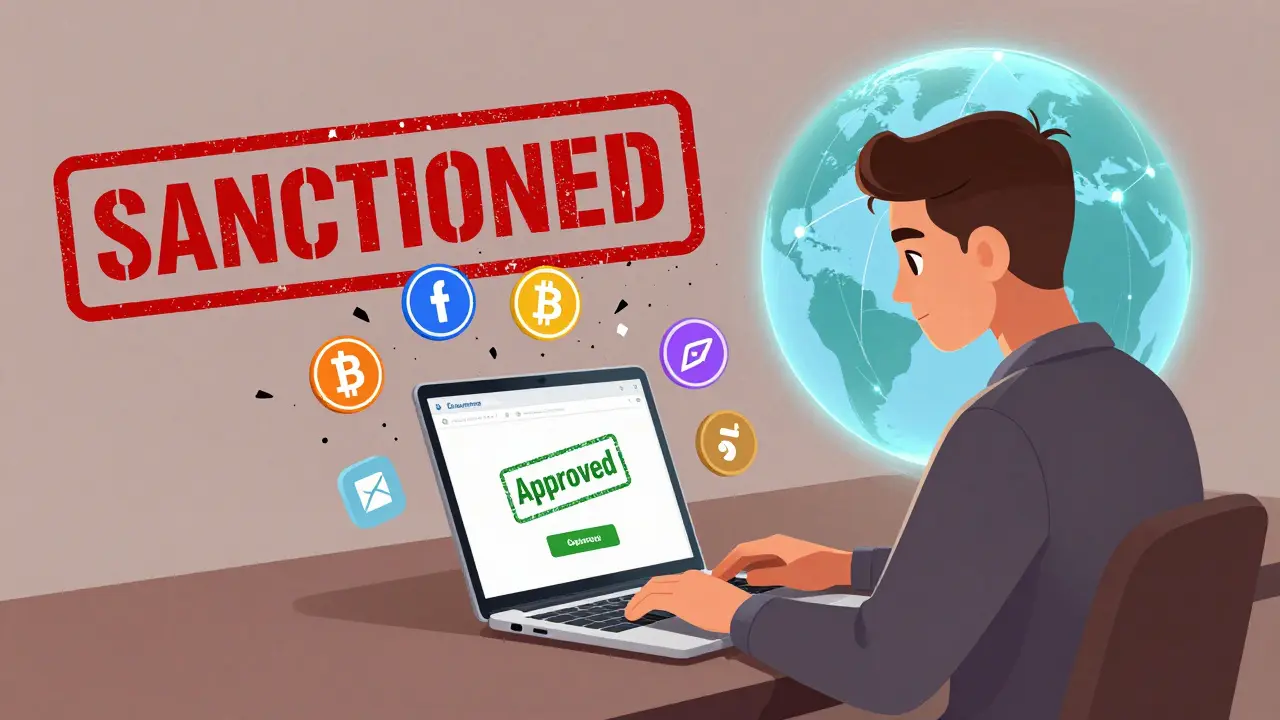
The Office of Foreign Assets Control (OFAC) didn’t just tweak rules - it erased them. On August 26, 2025, the Syrian Sanctions Regulations (SySR) were removed entirely from the Code of Federal Regulations. That meant the legal foundation for blocking Syrian wallets, freezing crypto assets, or fining exchanges that served Syrian users vanished overnight.
Before this, any U.S.-based platform - Coinbase, Kraken, even a small DeFi app - had to block Syrian IP addresses, freeze accounts linked to Syrian IDs, and refuse transactions from Syrian wallets. Violating these rules meant civil penalties up to $20 million or twice the value of the transaction. Now? Those rules are gone. Syrian users can open accounts on U.S. exchanges, use USDT or USDC to pay for goods online, or even stake ETH without triggering a sanctions violation.
General License 25: The Key That Unlocked Access
The real turning point came with General License 25, issued on May 28, 2025. This wasn’t a loophole. It was a full legal authorization. It explicitly permitted all transactions that were previously blocked under the Syrian Sanctions Regulations. That includes:
- Buying, selling, or transferring cryptocurrency through U.S. exchanges
- Using U.S.-based wallet services like Ledger or MetaMask (if registered)
- Participating in DeFi protocols like Aave or Uniswap
- Receiving crypto payments from U.S. individuals or businesses
OFAC also removed 518 individuals and entities from the Specially Designated Nationals (SDN) list - people who were previously blocked for any reason tied to Syria. Many were ordinary citizens: shop owners, doctors, students. Their removal meant their wallets were no longer blacklisted. Suddenly, thousands of Syrians could access global financial tools they’d been locked out of for years.
What’s Still Blocked?
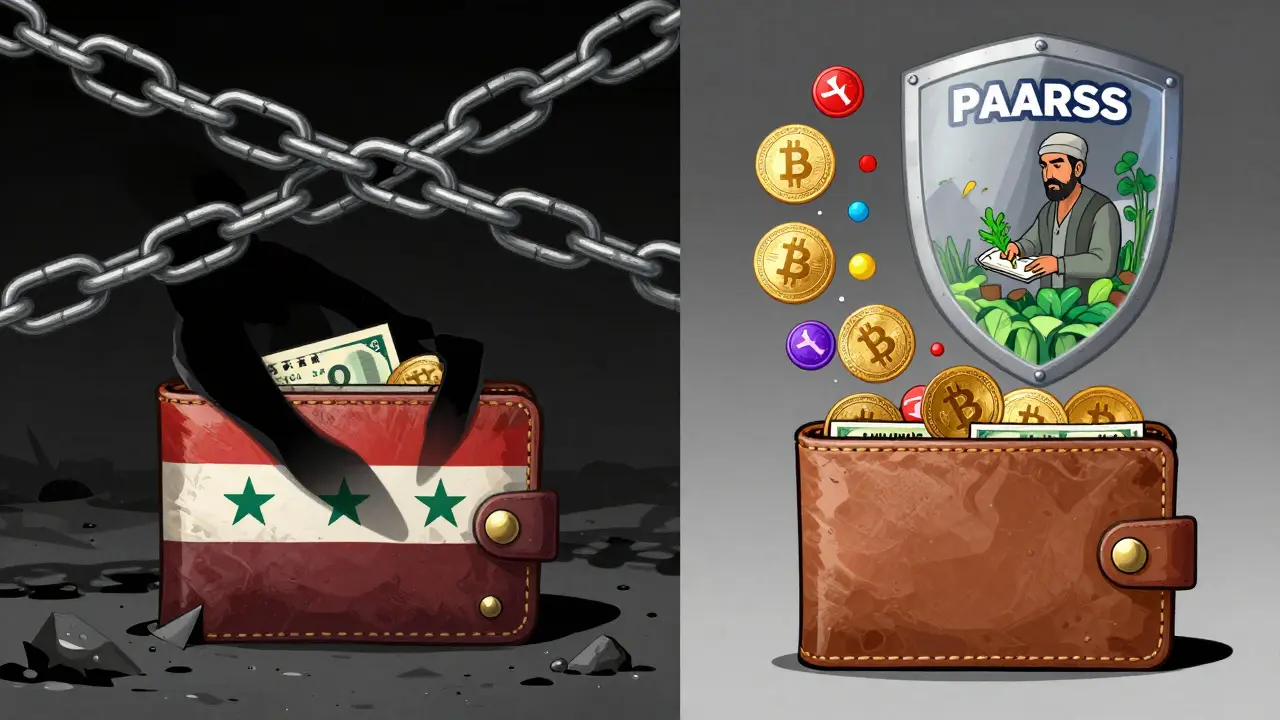
Don’t get the wrong idea. This wasn’t a full amnesty. OFAC didn’t erase all sanctions - it narrowed them. The new framework, now called the Promoting Accountability for Assad and Regional Stabilization Sanctions Regulations (PAARSS), targets specific bad actors, not entire populations.
Here’s what’s still off-limits:
- Transactions with over 100 individuals and entities tied to Bashar al-Assad’s regime
- Deals with human rights abusers, Captagon traffickers, or ISIS/Al-Qa’ida affiliates
- Any crypto activity involving Iranian proxies operating in Syria
That means a Syrian farmer sending crypto to buy seeds from a U.S. supplier is fine. But if that same farmer is linked to a regime-affiliated bank - even indirectly - their transaction could still be flagged. This shift turns compliance from a blanket ban into a targeted screening game.
How Crypto Platforms Are Adapting
U.S. exchanges didn’t just flip a switch and start serving Syrian users. They had to rebuild their compliance systems from scratch. Before 2025, the rule was simple: block Syria. Now, the rule is: screen, don’t assume.
Platforms like Coinbase and Binance have updated their KYC workflows to ask for:
- Proof of residency (not nationality)
- Source of funds documentation
- Transaction history analysis
They now use geolocation tools, blockchain analytics, and name-matching algorithms to flag only those tied to sanctioned entities. If you’re a Syrian student in Aleppo with no ties to the regime, you can now sign up - but you’ll likely be asked more questions than a user from Canada.
Smaller platforms, especially DeFi protocols, are struggling. Many still use outdated IP blocks or refuse Syrian users out of fear. Some have started working with compliance firms like Chainalysis and Elliptic to build custom screening rules that distinguish between civilians and sanctioned actors.
Technology Transfer: Mining and Infrastructure Are Now Legal
The relief wasn’t just about money - it was about access to tools. On September 2, 2025, the Bureau of Industry and Security (BIS) launched License Exception Syria Peace and Prosperity (SPP). This allows U.S. companies to legally export cryptocurrency mining hardware, blockchain servers, and even solar-powered nodes to Syria.
Before this, importing a single ASIC miner required a special license - a process that took months and often failed. Now, companies like Bitmain and MicroBT can ship equipment directly. Syrian entrepreneurs are already setting up small mining farms in cities like Homs and Latakia, using cheap solar energy to mine Bitcoin and Ethereum.
This isn’t just about profit. It’s about infrastructure. With access to hardware and software, Syria is starting to build its own crypto ecosystem - something that was impossible under the old sanctions.
Why This Matters Beyond Syria
The U.S. didn’t lift sanctions on Syria because it forgot about the conflict. It did it because the old model failed. For two decades, comprehensive sanctions didn’t stop the regime - they just made life harder for ordinary Syrians. Crypto users were cut off from remittances, savings, and entrepreneurship. Many turned to informal networks, peer-to-peer trades, or risky offshore platforms - often with no consumer protection.
Now, the U.S. is testing a new approach: targeted sanctions. Instead of punishing a whole country, it’s going after specific criminals and war profiteers. This model is being watched closely by policymakers in the EU, UK, and Canada. If it works in Syria, similar changes could come to other sanctioned regions - like Venezuela, Sudan, or even parts of Africa.
For Syrian crypto users, this isn’t just policy. It’s survival. A mother in Idlib can now receive crypto from her son in Turkey without risking her bank account. A tech startup in Aleppo can raise funds through a token sale. A farmer can get paid in stablecoins for his crops. These weren’t just economic gains - they were human ones.
What’s Next?
OFAC has said it plans to expand the PAARSS framework with new rules, possibly including clearer definitions of "sanctioned activity" in crypto, updated general licenses, and guidance on decentralized exchanges. That means the rules aren’t set in stone. Platforms will need to keep monitoring changes.
For Syrian users, the message is clear: if you’re not linked to the regime, you’re now free to use crypto like anyone else. The barriers are gone. The tools are available. The only thing left is to use them.
Can Syrian citizens now use U.S. cryptocurrency exchanges legally?
Yes. Since August 26, 2025, when the Syrian Sanctions Regulations were fully removed, Syrian individuals can open accounts on U.S.-based exchanges like Coinbase, Kraken, and Binance. General License 25 authorizes all transactions previously blocked under sanctions, including deposits, withdrawals, and trading. Users must still pass standard KYC checks, but nationality alone is no longer a reason for denial.
Are all Syrian individuals now allowed to transact in crypto?
No. While comprehensive sanctions are gone, targeted sanctions remain. Over 100 individuals and entities tied to the Assad regime, human rights abusers, Captagon traffickers, and ISIS/Al-Qa’ida affiliates are still on the SDN list. If a Syrian user is linked to any of these, their transactions can still be blocked. Exchanges now screen for specific names, addresses, and transaction patterns - not just nationality.
Can I send crypto from Syria to the U.S. without getting in trouble?
Yes, as long as you’re not dealing with a sanctioned entity. Under General License 25, sending crypto from Syria to a U.S. wallet or exchange is fully legal. The key is ensuring the recipient isn’t on OFAC’s SDN list. Most major exchanges automatically screen incoming transactions. If you’re sending to a friend or family member in the U.S., there’s no legal risk.
Is mining cryptocurrency in Syria legal now?
Yes. Since September 2, 2025, the U.S. allows the export of cryptocurrency mining equipment to Syria under License Exception SPP. This means Syrians can legally buy ASIC miners, GPUs, and blockchain servers from U.S. companies. They can also install and operate them without needing special permits. Solar-powered mining operations are already emerging in rural areas.
What happens if a Syrian user accidentally transacts with a sanctioned person?
If a Syrian user unknowingly sends crypto to a sanctioned entity, the transaction will be frozen by the exchange’s compliance system - not penalized by the U.S. government. OFAC has made it clear that enforcement will focus on intentional violations, not mistakes. Users who report the error and cooperate with investigations are unlikely to face penalties. The system is designed to protect civilians, not punish them.
Will this change affect other sanctioned countries?
Yes. Syria is now a test case for targeted sanctions in the crypto space. The U.S. is shifting from blanket bans to precision targeting - a model being studied by the EU and UK. If successful, similar changes could come to Venezuela, Sudan, or North Korea. The goal is to allow civilians access to financial tools while still isolating criminals - a balance that’s hard to achieve with traditional sanctions.

Comments
Kyle Tully
This is the most naive piece of policy theater I've seen in years. You think removing a regulation changes the underlying power dynamics? The regime still controls the banks, the militias, the black markets. All this does is make it easier for them to launder money through crypto while pretending to be 'civilians'. The US didn't do this for Syrians. They did it because they're tired of enforcing sanctions that no one respects anyway.
kieron reid
I'm not convinced. If the regime can still access crypto through proxies, then this change is meaningless. All it does is create more surface area for exploitation. Why not just keep the blanket ban? At least then you know who's excluded.
Avantika Mann
This is actually really hopeful. I know people in Syria who've been stuck for years, unable to receive money from family abroad. Now they can finally use stablecoins to buy food, medicine, pay for internet. It's not perfect, but it's a step. I hope more countries follow this model.
yogesh negi
This is a game-changer, truly. Imagine a farmer in Homs using USDC to pay for solar-powered irrigation systems from a U.S. startup. Or a young woman in Aleppo launching a DeFi-based microloan platform for women entrepreneurs. This isn't just about finance - it's about dignity. The old sanctions punished the innocent while letting the real criminals hide in plain sight. Now, at least, there's a chance for real innovation to take root.
Nikki Howard
I find it deeply concerning that this was implemented without any multilateral coordination. The EU and UK are still enforcing blanket restrictions. This creates regulatory arbitrage opportunities that will be exploited immediately. And who's auditing these new screening algorithms? Are we sure they're not biased against certain names or dialects?
Tarun Krishnakumar
Let me guess - the same people who told us 'sanctions would bring down Assad' are now saying 'crypto will save Syria'. Classic. The regime didn't collapse under sanctions. It adapted. And now, with crypto, it's going to get even better at hiding its wealth. This isn't relief - it's a Trojan horse. The U.S. is letting Syria into the global financial system so they can track everyone better. Your 'freedom' is being monitored. Every transaction. Every wallet. Every IP. You think you're free? You're just being tagged.
jennifer jean
This is so beautiful 🌱 I hope this becomes the new global standard. People deserve access to tools that let them survive and thrive, not just exist under fear. I'm so glad someone finally had the courage to do this right.
Sasha Wynnters
The real revolution here isn't legal - it's ontological. We've moved from a politics of exclusion to a politics of traceability. The regime didn't fall because of sanctions - it was outmaneuvered by the emergence of a decentralized, permissionless identity layer. Now, the Syrian user isn't a 'threat' - they're a node. A data point. A participant. And that shift? That's the quiet apocalypse we didn't see coming.
Aileen Rothstein
I love how this flips the script. For years, we treated entire nations as guilty until proven innocent. Now, we're finally starting to treat individuals as individuals. That’s not just policy - that’s moral progress. Even if it’s imperfect, it’s a step toward a world where your wallet doesn’t carry the sins of your government.
Jennifer Riddalls
I've been watching this unfold and honestly, it's one of the few times I've felt hopeful about U.S. foreign policy. The fact that they're using blockchain analytics to target bad actors instead of whole populations? That's smart. That's humane. I hope this becomes the blueprint for other sanctions regimes.
Chris Thomas
You're all missing the real story. This isn't about Syria. It's about the collapse of the U.S. sanctions industrial complex. The compliance costs were insane. Every bank, every exchange, every fintech had to maintain redundant systems to block a country of 20 million people. Now they can cut 90% of that overhead. This was an economic decision dressed up as moral reform. Don't be fooled.
Lisa Parker
I'm so tired of people acting like this is some kind of humanitarian win. The regime still controls the ports, the power grids, the telecoms. They'll just use crypto to pay their mercenaries. You think a farmer in Idlib is going to be the one using USDT? Nah. It's going to be the same people who've been looting for decades. This just makes it easier.
Nicole Stewart
So now Syrians can use crypto. Cool. What about the 100+ regime-linked entities still on the SDN list? How are you verifying that a 'student' in Damascus isn't just a front for a Hezbollah-linked shell company? This system is a joke waiting to be exploited.
Alan Enfield
I think this is a good move. The old system was broken. You can't punish 20 million people for the sins of a few. If you can screen transactions properly, then why not? It's not perfect, but it's better than what we had.
Ian Plunkett
This is the beginning of the end. The U.S. just handed the regime a new weapon - one that can't be blocked by traditional means. Now they can move billions in crypto, undetected, through decentralized channels. The compliance tools are laughable. You think Chainalysis can trace every wallet? Please. This is a disaster waiting to happen.
george chehwane
Let’s be real - this isn't about Syrians. It's about the U.S. trying to reassert dominance in the crypto space. By allowing access, they're forcing everyone to adopt U.S.-style compliance infrastructure. You think MetaMask is neutral? It's now a tool of American regulatory hegemony. Welcome to the new colonialism - it's decentralized, and it's wearing a KYC form.
Rajib Hossaim
This is a significant development. The shift from nationality-based restrictions to entity-based screening is a major improvement in international financial governance. It aligns with global trends toward precision targeting and reduces collateral damage. I commend the U.S. for this pragmatic evolution.
Beth Erickson
Why are we helping Syria? They've been our enemy for 20 years. Now we're giving them access to our financial systems? This is weak. We should be tightening sanctions, not lifting them. The regime is still brutal. We shouldn't be making it easier for them to survive.
Ruby Ababio-Fernandez
No.
Jenn Estes
You're all so naive. This is going to backfire. The moment people start using crypto, the regime will crack down harder. They'll force everyone to use state-controlled wallets. They'll track every transaction. This isn't freedom - it's surveillance with a smile.
Anandaraj Br
I knew this was coming. The U.S. has been softening its stance for months. First they let humanitarian aid through, then they allowed remittances, now crypto? It's all part of the same game. They're not helping Syrians - they're setting them up to be the next battleground for crypto laundering. Wait till you see the first $500M ransomware payout from a Syrian-linked wallet. It's coming.
AJITH AERO
So what? Now Syrians can use crypto. Cool. What's next? Free Wi-Fi? A Starbucks in Damascus? This isn't liberation - it's PR. The regime will still run the country. The people will still be poor. The only thing that changed? Now they can send money faster.