
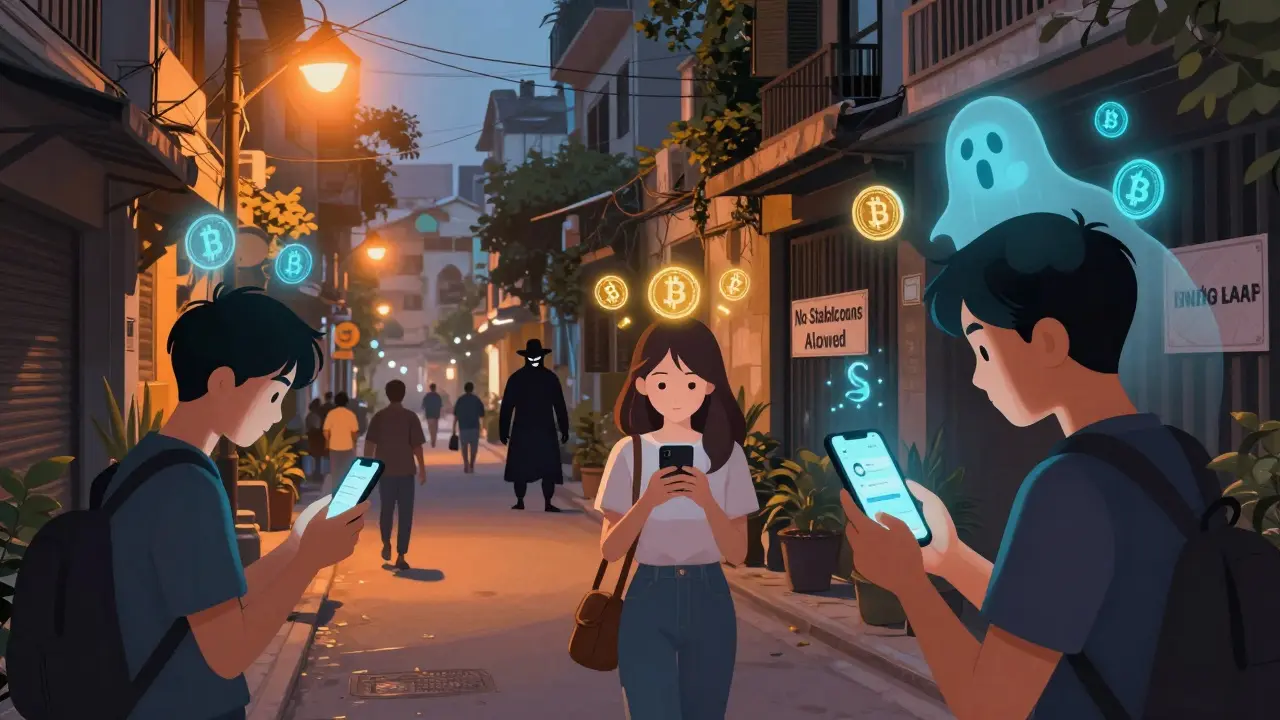
When you hear Vietnam is a top country for crypto use, you might picture a free-for-all crypto hub like Miami or Singapore. But the truth is more complicated. Vietnam ranks #6 in the 2025 Chainalysis Global Crypto Adoption Index - not #5, as many headlines claim - and it got there not because of open policies, but in spite of them.
How Vietnam Became a Crypto Powerhouse Against the Odds
Vietnam has about 17 million active crypto users - that’s 17.2% of its entire population. In a country where banking access is uneven and remittance fees are sky-high, crypto isn’t a luxury. It’s a workaround. People use it to send money home from abroad, buy goods on Shopee, and protect savings from inflation. Last year, crypto transactions in Vietnam hit over $100 billion. That’s more than the GDP of many small nations. What’s surprising isn’t the volume - it’s how it happened. The State Bank of Vietnam (SBV) doesn’t allow stablecoins. You can’t issue a digital dollar or euro-backed token. You can’t even trade crypto for foreign currency directly. All trades must go through Vietnamese Dong (VND). And only Vietnamese companies can issue crypto assets - and only if they’re backed by real physical goods like gold, real estate, or agricultural products. Bitcoin and Ethereum? Fine. USDT? Not allowed. This isn’t a policy that encourages adoption. It’s one that forces it underground.The Underground Market: Binance P2P and the $200 Billion Gray Zone
Because local exchanges can’t offer stablecoins, 87% of Vietnamese crypto users rely on offshore platforms. Binance P2P alone handles 63% of all trades. Bybit and OKX make up most of the rest. These platforms let users trade VND for USDT, then send it abroad - or use it to pay for international services. But it’s messy. Users pay 3-5% premiums just to buy USDT. KYC checks are brutal. Withdrawals to local banks take days. One user on Reddit, ‘HanoiTrader88’, said he spends more time verifying his identity than trading. Trustpilot reviews for Binance Vietnam average just 3.2 out of 5, mostly because of slow VND deposits and high fees. Yet people keep using it. Why? Because traditional remittance channels charge 6.8% to send money home. Crypto? Around 1.2%. For a family sending $400 monthly from Malaysia or Korea, that’s $220 saved a year. That’s life-changing money.Why the Government’s Rules Are Backfiring
The SBV’s goal was simple: bring crypto into the light. In September 2025, they launched a five-year regulatory sandbox - a controlled environment where firms could test crypto services under supervision. But here’s the twist: as of October 2025, zero companies applied. Why? The cost and complexity are insane. To become a licensed Crypto Asset Service Provider (CASP), you need at least 10 trillion VND ($379 million USD) in capital. That’s more than most banks in Vietnam have in reserves. You also need to build a real-time transaction monitoring system capable of handling 5,000 trades per second. Then you need 14 separate certifications from three different ministries: Finance, Public Security, and the SBV itself. A PwC Vietnam report found it takes 11.3 months and an average of $2.8 million to get compliant. No startup can afford that. Only state-backed firms might try - and even they’re holding back. Meanwhile, the informal market keeps growing. The IMF warned in October 2025 that 92% of Vietnam’s crypto activity happens outside regulated channels - a major financial integrity risk. No oversight. No tax collection. No consumer protection.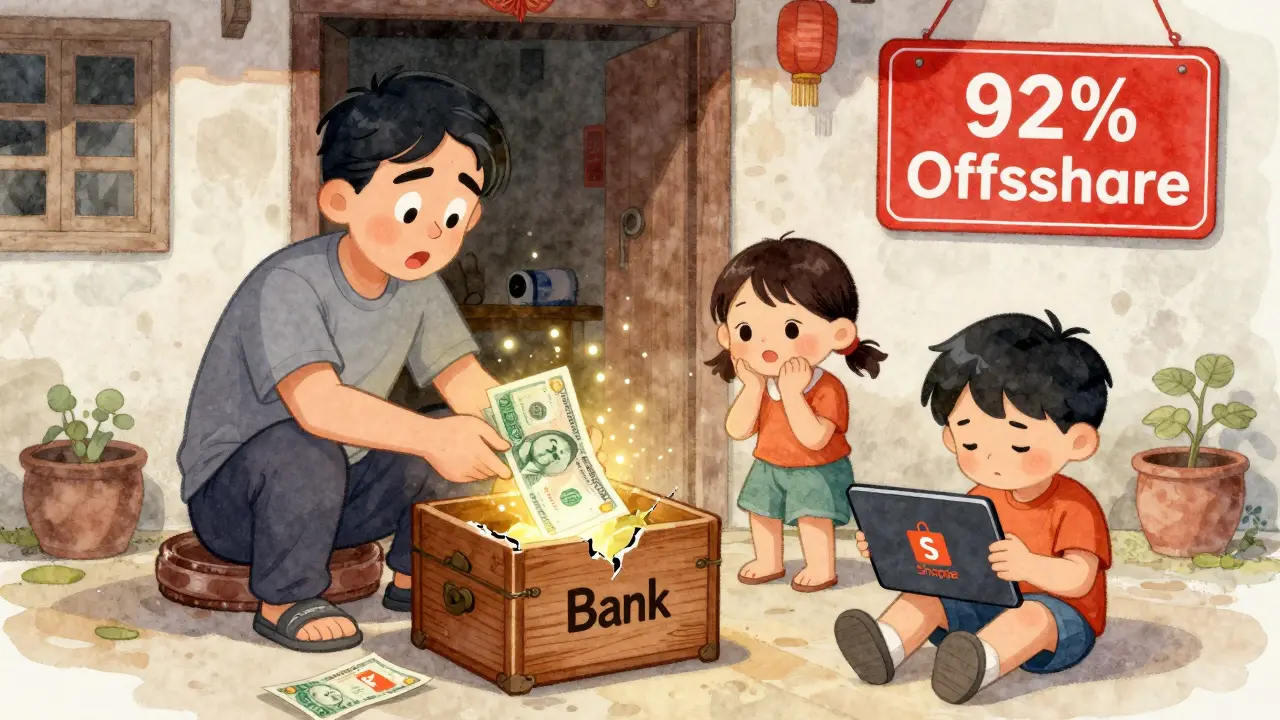
Who’s Using Crypto - And Why
Vietnam’s crypto users aren’t Wall Street types. They’re students, young professionals, and small business owners. 68% are under 35. 54% have university degrees. Most earn between $568 and $1,514 a month - not rich, but tech-savvy and desperate for better financial tools. They’re not speculating on meme coins. They’re using crypto as utility:- 74% use it for cross-border remittances
- 41% use it to pay for goods on Shopee’s crypto pilot program
- 32% use it to buy international services like Netflix or AWS
What’s Next? The Tightrope Between Control and Growth
The SBV isn’t blind to the problem. Deputy Governor Pham Thanh Ha says their approach “prioritizes financial stability.” But stability without access is just exclusion. In October 2025, the Ministry of Finance proposed new taxes: 2% VAT on crypto sales and 0.1% per transaction. That’s a step toward bringing crypto into the formal economy - but only if people can actually trade legally. There’s also a digital đồng pilot underway. The central bank is testing a digital version of the Vietnamese Dong with 20 commercial banks. If it ever connects to crypto infrastructure, it could be a game-changer. Imagine paying for a USDT transfer with a digital đồng - no offshore exchange needed. But right now, the system is broken. You can’t build a real financial ecosystem on a foundation of restrictions. Vietnam’s ranking isn’t a win. It’s a warning.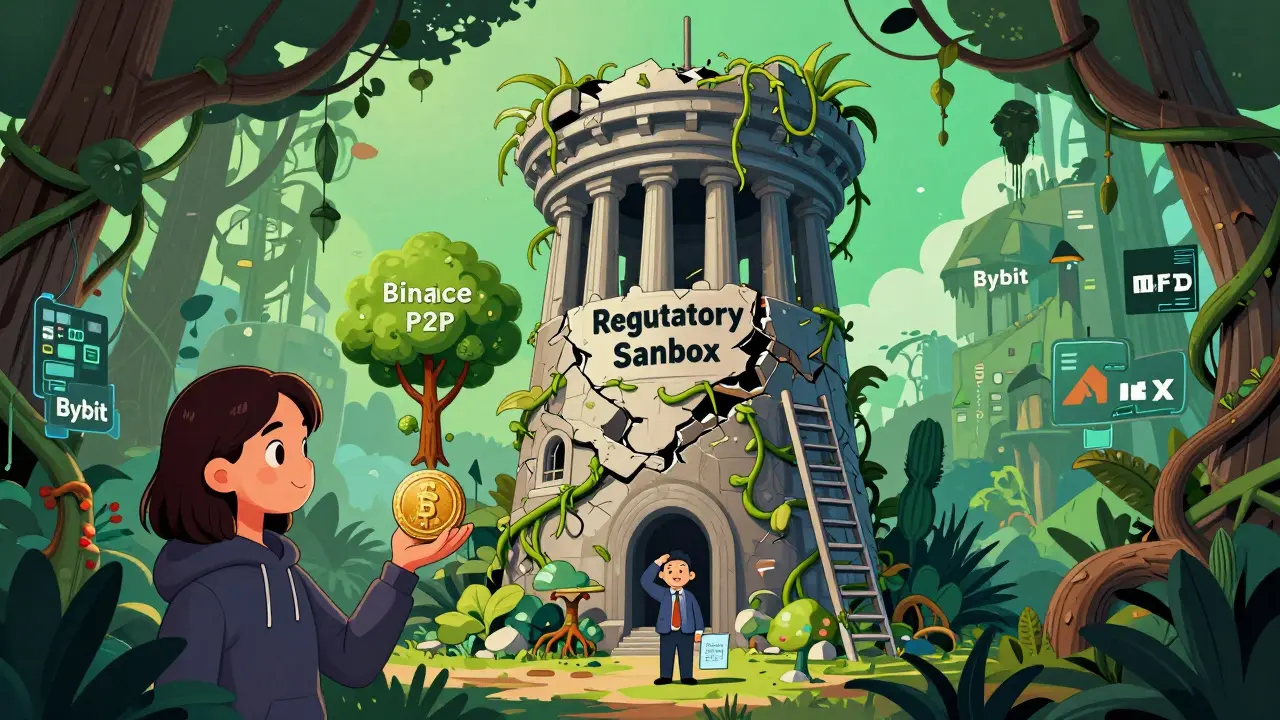
The Bigger Picture: APAC’s Crypto Surge
Vietnam isn’t alone. The whole Asia-Pacific region saw crypto transaction value jump 69% in 2025 - from $1.4 trillion to $2.36 trillion. Vietnam contributed $200.6 billion of that. India and Pakistan are right behind. But Vietnam stands out because it’s doing this with the tightest leash. Singapore, with its open stablecoin rules, has 32% more institutional adoption. Thailand’s regulated stablecoin framework has already enabled $4.2 billion in onshore crypto activity since 2024. Vietnam’s growth is organic. It’s grassroots. It’s people finding a way when the system fails them. That’s powerful. But it’s also fragile.Can Vietnam Keep Leading Without Reform?
Morgan Stanley projects Vietnam’s crypto market could grow 25-30% annually through 2028 - if the government allows stablecoins and lowers barriers for startups. That could unlock 12-15% of its $19.2 billion remittance market and tap into its $137 billion e-commerce sector. But right now, the rules are stopping that. The sandbox is empty. The banks are waiting. The users are frustrated. The regulators are caught between fear and opportunity. The next 12 months will decide whether Vietnam becomes a model of controlled innovation - or a cautionary tale of missed potential.Why do some sources say Vietnam is #5 in crypto adoption when others say #6?
The confusion comes from mixing two different rankings. Chainalysis releases both an absolute ranking (total transaction volume) and a population-adjusted ranking (volume per capita). Vietnam is #6 in the population-adjusted index - the one that measures real adoption by citizens. Some media outlets mistakenly report the unadjusted ranking, where Vietnam is higher due to sheer transaction volume. The official 2025 Chainalysis report confirms #6 as the correct position.
Can I legally buy Bitcoin in Vietnam?
Yes, you can buy Bitcoin and other crypto assets in Vietnam - but not through local banks or regulated exchanges. You must use offshore platforms like Binance P2P, Bybit, or OKX to trade VND for crypto. The government allows holding and trading crypto as a digital asset, but prohibits using it as a payment method or issuing fiat-backed tokens.
Why doesn’t Vietnam allow stablecoins?
The State Bank of Vietnam fears stablecoins could undermine the Vietnamese Dong, create money laundering risks, and destabilize the banking system. They worry that if people start using USDT instead of VND, it could reduce control over monetary policy. So they banned all fiat-backed digital assets, even though this forces users to rely on risky offshore channels.
How much of Vietnam’s crypto activity is illegal?
Technically, none of it is illegal - holding and trading crypto isn’t banned. But 92% of transactions happen through unregulated offshore platforms, which operate outside the government’s oversight. That means no taxes collected, no KYC enforced, and no consumer protections. The IMF calls this a major financial integrity risk.
Is crypto used for everyday purchases in Vietnam?
Yes, but only in pilot programs. Shopee Vietnam started accepting crypto payments in March 2025 for select products. Around 41% of crypto users report using digital assets for online shopping. However, because there’s no legal stablecoin, users still need to convert crypto to VND through P2P markets first - making it slow and expensive.
What’s the future of crypto in Vietnam?
It depends on regulation. If the government allows stablecoins and lowers capital requirements for crypto firms, adoption could explode - especially in remittances and e-commerce. If not, the underground market will keep growing, increasing financial risks. Experts believe Vietnam could jump to #4 in the 2026 index if reforms happen. Without them, it risks becoming a high-risk outlier.

Comments
Robert Mills
Vietnam's crypto scene is wild lol
Rob Duber
This isn't adoption-it's rebellion with a Wi-Fi connection. People aren't using crypto because it's cool, they're using it because the system is broken and they're too smart to sit still. I love it. The government is trying to build a dam with a toothpick and the river just went around it. 🤯
Aaron Poole
Honestly, this is one of the most fascinating case studies in financial innovation I've seen in years. People aren't waiting for permission-they're building their own infrastructure. The fact that 87% use Binance P2P means the market is self-organizing. The SBV’s rules aren't stopping adoption; they're just making it more expensive and risky. That’s not regulation-it's friction.
Dahlia Nurcahya
I really admire how Vietnamese users are turning constraints into creativity. It’s not about speculation-it’s survival. Sending $400 home and saving $220 a year? That’s not a crypto win, that’s a human win. The government needs to see this as a signal, not a threat.
Andrea Demontis
It’s funny how we always assume regulation = safety. But here, regulation is the barrier to safety. People are using unregulated platforms because the regulated ones are impossible to access. So they’re taking on higher risk not out of greed-but because they have no other choice. The real question isn’t ‘why is crypto growing?’ It’s ‘why are we forcing people into the shadows?’
laurence watson
I’m just thinking about all the moms and students who are doing this. They’re not crypto bros. They’re just trying to feed their families. The fact that they’re using Shopee’s pilot program and still dealing with 3-day VND delays… it breaks my heart a little. We need to stop calling this a ‘gray market’ and start calling it a ‘necessary workaround’.
Brandon Vaidyanathan
Let’s be real-this isn’t adoption, it’s desperation dressed up in blockchain. You can’t call a system healthy when 92% of it’s operating outside the law. The SBV isn’t being paranoid-they’re being responsible. Imagine if USDT replaced the dong in 5 years. Inflation? Gone. Monetary policy? Useless. This isn’t innovation. It’s a financial hostage situation.
Akhil Mathew
India and Vietnam are doing the same thing-bypassing broken systems. But here’s the difference: India’s RBI is slowly opening up. Vietnam’s SBV is pretending the problem doesn’t exist. The sandbox has zero applicants because the rules are designed to fail. You can’t expect startups to play by rules written for banks with $10B in assets. This isn’t regulation-it’s a suicide pact for fintech.
Raju Bhagat
Bro the fact that people are paying 5% premiums just to buy USDT is insane but also kinda genius. Imagine if you had to pay extra to use your own money. That’s Vietnam right now. The government is trying to control money like it’s a TV channel. But people just changed the channel. And now they’re streaming in 4K with no ads
Elizabeth Jones
The deeper issue here is the assumption that financial inclusion requires central control. But what if true inclusion means enabling decentralized access? Vietnam’s users aren’t rejecting the system-they’re creating a parallel one that actually works for them. The government’s fear of losing control is valid, but so is the people’s right to economic agency. Maybe the solution isn’t more rules-but better bridges.
Joseph Pietrasik
vietnam rank 6 but no stablecoins?? sounds like a glitch in the matrix
Rachel Stone
so the government banned usdt... and everyone just used binance anyway. classic.
Joshua Clark
I think what’s truly remarkable isn’t just the volume of crypto activity-it’s the cultural and economic resilience behind it. People are not just transacting; they’re redefining financial sovereignty on a grassroots level. The fact that 74% use it for remittances means this isn’t speculative gambling-it’s lifeline infrastructure. And yet, the regulatory framework treats it like a novelty. The $2.8 million compliance cost? That’s not a barrier to entry-it’s a barrier to survival for anyone without state backing. This isn’t just bad policy; it’s an economic injustice.
Dylan Morrison
It’s beautiful, honestly. 🌏 People in Hanoi, Da Nang, Ho Chi Minh City-none of them have access to fancy banking, but they’ve built a global financial network with their phones. No permission. No bank account. Just trust in code and a P2P app. The digital đồng could be the bridge… but only if it listens to the people who are already building it. The future isn’t in boardrooms-it’s in the 17 million who refused to wait.
Nickole Fennell
I can’t believe the government doesn’t see this as a chance to lead. They’re sitting on a goldmine of tech-savvy youth and they’re acting like it’s a virus. What if they partnered with Binance? What if they let them issue dong-backed stablecoins? Imagine if every remittance was taxed at 0.1% and funneled into digital infrastructure. They could’ve been the Singapore of Asia-but instead, they’re the guy who locked the door and then complained no one came in.
Jerry Ogah
This is why capitalism always wins. You try to ban something that people need, and they just build it better in the dark. The SBV is clinging to 1980s financial control like it’s gospel. Meanwhile, a 19-year-old in Hanoi just sent $500 to his sister in Korea in 12 minutes with 1% fees. The system didn’t fail. The regulators did.