
Most crypto airdrops feel like a lottery. You connect your wallet, follow a Twitter account, and hope for the best. The Phala Network a privacy-preserving blockchain protocol that uses Trusted Execution Environments (TEEs) to secure smart contracts airdrop is different. It doesn’t ask you to wait; it asks you to work. If you are looking at the PHA token distribution right now, you need to understand that this isn't just about getting free coins. It’s about running a node. This changes the game from passive speculation to active participation.
The core promise here is straightforward: run a Phala miner node, verify it works, and receive 30 PHA tokens. While 30 tokens might not sound like a fortune, the context matters. Phala operates in the high-stakes world of confidential computing. By participating, you aren't just collecting dust; you're helping secure a network that raised $1.43 million in funding and holds a market cap nearing $77 million. But before you download anything, let's break down exactly what you need to do, what it costs, and whether the effort pays off in 2026.
How the Phala Airdrop Mechanism Works
To get the PHA tokens, you have to become part of the infrastructure. The process relies on a specific technical setup rather than simple social media engagement. Here is the step-by-step reality of claiming your share:
- Download the Mining Software: You need to grab the specific client files provided by Phala Network. This isn't a browser-based extension; it’s software that interacts with your hardware’s security features.
- Configure Your Node: Run the designated commands in your terminal. This step verifies that your machine can handle the workload and communicates correctly with the network.
- Verify Trusted Computing: This is the critical filter. Your hardware must support Intel SGX or AMD SEV (Secure Encrypted Virtualization). The software checks for this capability automatically. If your CPU doesn't support these TEE technologies, the node won't start.
- Submit Proof: Once the node is running and showing successful status, you take a screenshot. You submit this proof through the official verification channels (often linked via platforms like AirdropBob or directly through Phala’s developer portal).
- Wait for Distribution: Rewards are tied to the activation of the 'Darth Vader' pre-mainnet version. This means your payout depends on a development milestone, not just your action.
This structure filters out bots. Most spammy airdrops get flooded by thousands of fake wallets. Phala’s requirement for actual hardware compatibility and command-line execution ensures that participants are real humans with capable machines. That scarcity often leads to better long-term value for the token holders.
Hardware Requirements: Can Your PC Run It?
This is where most people hit a wall. You cannot run a Phala miner node on just any laptop. The network requires Trusted Execution Environment (TEE) hardware-level security features that create isolated areas of memory for sensitive data processing. Specifically, you need a processor that supports Intel SGX (Software Guard Extensions) or AMD SEV.
| Component | Requirement | Notes |
|---|---|---|
| CPU | Intel Core i-series (8th Gen+) or AMD Ryzen (with SEV) | Must have SGX/SEV enabled in BIOS |
| RAM | 4GB Minimum | 8GB recommended for stability |
| OS | Linux (Ubuntu 20.04+), Windows 10/11, macOS | Linux offers the smoothest experience |
| Internet | Stable Broadband | No specific speed requirement, but low latency helps |
If you are using an older MacBook or a budget gaming PC from five years ago, check your specs first. Go into your BIOS settings and look for "SGX" or "Memory Protection." If those options are missing or grayed out, you likely can't participate. This barrier keeps the network secure but limits who can claim the airdrop. Don't waste time trying to force it on incompatible hardware.
Value Analysis: Is 30 PHA Worth the Effort?
Let’s talk numbers. As of mid-2026, the PHA token trades around $0.10 to $0.11. At this price, 30 PHA is worth roughly $3.09. On paper, spending two hours setting up a node for three dollars sounds like a bad deal. However, crypto valuation is rarely linear.
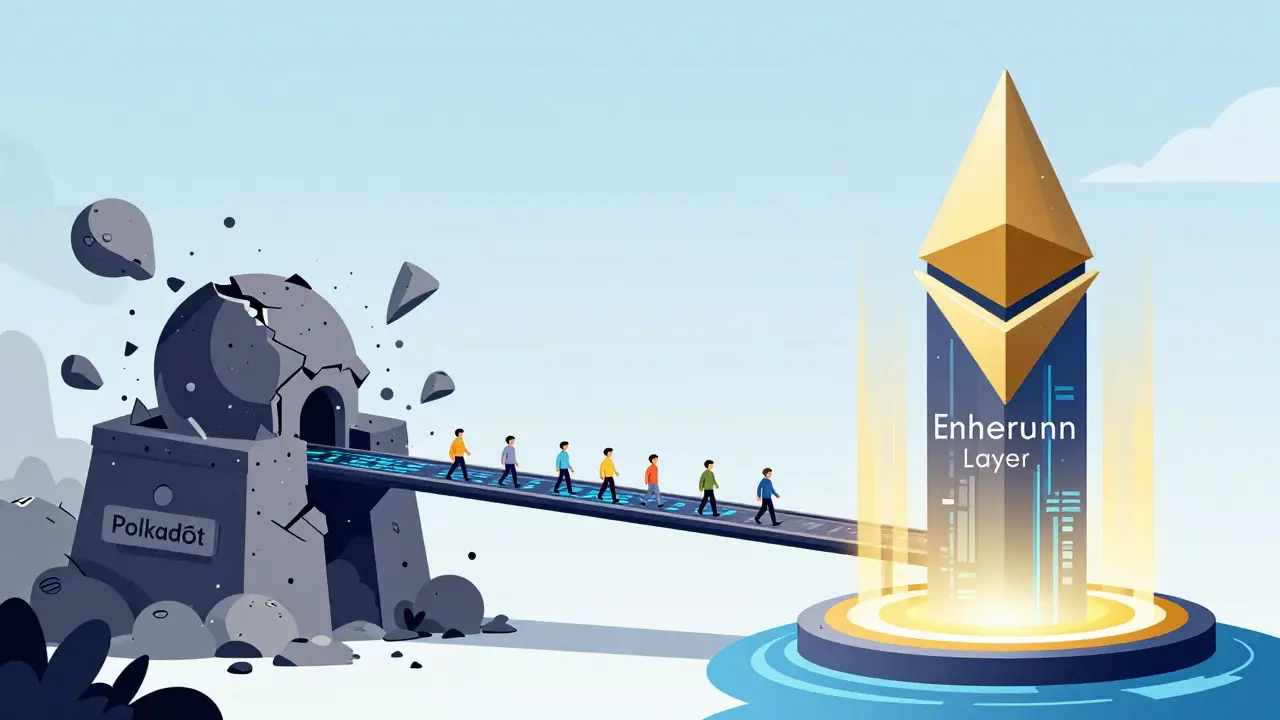
Consider the trajectory. When Phala launched its Token Generation Event in September 2020, the ecosystem was nascent. Today, the project has pivoted significantly. With the expiration of its Polkadot parachain slot in November 2025, Phala migrated fully to Ethereum Layer 2 infrastructure. This move aligns the project with the largest smart contract platform in the world. Historical patterns show that tokens associated with successful L2 migrations often see volatility followed by revaluation based on utility.
Furthermore, the daily trading volume for PHA exceeds $16 million. This liquidity suggests strong interest. If you view the 30 PHA not as cash today, but as a position in a privacy-focused L2 solution, the potential upside changes. Price prediction models suggest modest growth, targeting $0.11-$0.12 by late 2026. If the network gains adoption among enterprise developers needing confidential computing, that number could shift dramatically. You are essentially buying exposure to the privacy sector for the cost of your electricity and time.
The Strategic Shift: From Polkadot to Ethereum L2
You cannot evaluate the Phala airdrop without understanding the bigger picture. For years, Phala was a key player in the Polkadot ecosystem. But the decision to leave the parachain slot and build on Ethereum is massive. Why does this matter to you, the airdrop participant?
Ethereum Layer 2 solutions benefit from the security and user base of the main Ethereum chain. By moving there, Phala opens its technology to millions of Ethereum users who previously couldn't easily access its privacy features. This expansion increases the demand for PHA tokens, which are used to pay for computation and storage within the network. More users mean more transactions, which means higher demand for the token. Your 30 PHA holding becomes a stake in a much larger market pool. The transition period carries risk, but the reward is access to the deepest liquidity in crypto.
Common Pitfalls and Troubleshooting
Even if your hardware is compatible, things can go wrong. Based on community feedback and technical reports, here are the most common issues:
- BIOS Settings Locked: Many modern laptops disable SGX by default for security reasons. You may need to reboot, enter BIOS (usually F2 or Del key), and manually enable "Intel SGX" or "Platform Trust Technology." If your manufacturer locked this setting, you’re out of luck.
- Screenshot Verification Rejection: The proof submission is strict. Ensure your screenshot clearly shows the node ID, the timestamp, and the "Running" status. Blurry images or cropped terminals get rejected.
- Darth Vader Delay Frustration: The distribution is tied to the 'Darth Vader' pre-mainnet launch. There is no fixed date. If you set up the node last month, you might still be waiting. Patience is required. Check official Discord channels for updates rather than assuming the system is broken.
- Referral Confusion: Some platforms offer referral bonuses. Make sure you understand if your 30 PHA includes these or if they are separate. Typically, the base reward is flat, and referrals add small increments.
If your node crashes repeatedly, try switching to a Linux environment if you are currently on Windows. Linux handles daemon processes more reliably for this type of mining software.
Comparing Phala to Other Privacy Projects
Phala doesn't exist in a vacuum. It competes with other projects offering privacy and decentralized compute. How does it stack up?
| Project | Tech Focus | Airdrop Style | Barrier to Entry |
|---|---|---|---|
| Phala Network (PHA) | TEE + Smart Contracts | Node Operation | High (Hardware Dependent) |
| Oasis Network (ROSE) | Parachains for Privacy | Staking/Delegation | Medium (Capital Required) |
| The Graph (GRT) | Indexing Protocol | Indexer Node | High (Technical + Capital) |
| Akash Network (AKT) | Decentralized Cloud | Provider Node | Very High (Server Rig) |
Unlike Oasis or Akash, which often require significant capital to delegate or run heavy servers, Phala’s entry point is lower if you already own a compatible PC. You don't need to buy expensive GPUs or rent cloud servers. You just need a modern CPU with security extensions. This makes it one of the few "work-for-tokens" opportunities accessible to average desktop users.
Final Thoughts on Participation
The Phala Network airdrop is not a get-rich-quick scheme. It is a test of commitment. By requiring you to run a node, Phala ensures that its token holders are also its infrastructure providers. In the current crypto landscape, where many projects struggle with adoption, having a built-in base of active miners is a huge advantage. If you have the hardware and the patience, the 30 PHA reward is a solid entry point into the privacy-preserving blockchain space. Just make sure your BIOS is configured correctly before you start.
Is the Phala Network airdrop still active in 2026?
Yes, the mechanism remains active, but rewards are distributed upon the activation of the 'Darth Vader' pre-mainnet version. Participants must continue to maintain their node status until the distribution window opens. Always check the official Phala Network announcements for the latest timeline updates.
What happens if my computer doesn't support Intel SGX?
You cannot participate in the miner node airdrop. The Trusted Execution Environment (TEE) is a core requirement for Phala's security model. Without SGX or AMD SEV support, the mining software will not install or run. There is no workaround for this hardware limitation.
How much is 30 PHA worth in USD?
As of mid-2026, PHA trades approximately between $0.10 and $0.11. Therefore, 30 PHA is valued at roughly $3.00 to $3.30. However, token prices are volatile, and the value may increase or decrease based on market conditions and the success of Phala's Ethereum L2 migration.
Do I need to pay gas fees to claim the airdrop?
Typically, the initial node setup and verification do not require gas fees. However, once the tokens are distributed to your wallet, you may need a small amount of ETH (if on L2) or DOT (if interacting with legacy systems) to transfer or trade the PHA tokens. Keep a small balance in your wallet for transaction costs.
Why did Phala move from Polkadot to Ethereum?
Phala's parachain slot on Polkadot expired in November 2025. Rather than renewing, the team chose to migrate to Ethereum Layer 2 to access a larger user base and deeper liquidity. This strategic shift aims to integrate Phala's privacy tech with the dominant smart contract platform, enhancing long-term utility for the PHA token.

Write a comment