

You’ve probably seen it happen. One day, a dog-themed token is trading for fractions of a penny. The next week, after a tweet from a celebrity or a viral TikTok trend, that same token has skyrocketed by thousands of percent. Meanwhile, the "serious" coins you bought years ago-like Ethereum (ETH) or Solana (SOL)-are moving steadily, driven by developer activity and network upgrades rather than internet jokes.
This split defines the modern crypto market in 2026. On one side, you have memecoins: assets built on humor, community hype, and social media momentum. On the other, you have serious cryptocurrency projects: networks designed to solve real-world problems, execute smart contracts, and support decentralized finance (DeFi). Understanding the difference isn’t just academic; it’s the single most important factor in deciding whether your portfolio survives a crash or thrives during a bull run.
The Core Difference: Utility vs. Hype
At their heart, memecoins and serious cryptocurrencies serve completely different purposes. All memecoins are technically altcoins (any coin other than Bitcoin), but not all altcoins are memecoins. The distinction lies in what backs the value.
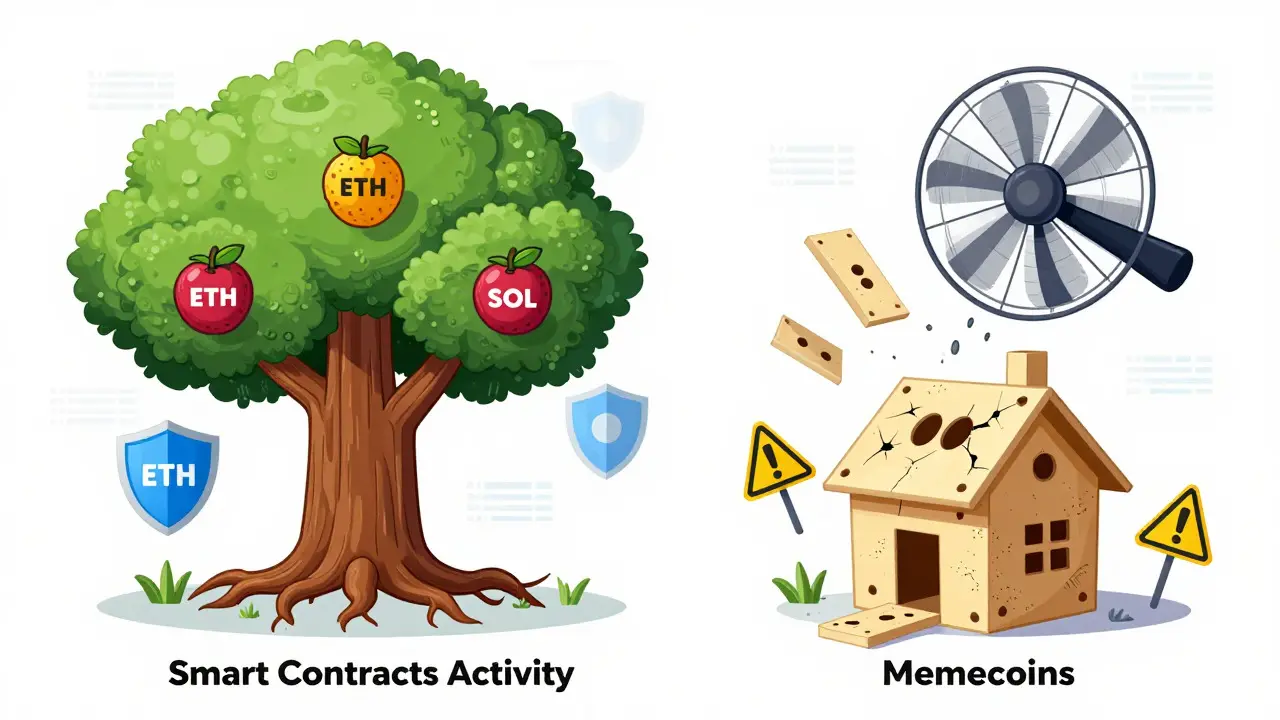
Serious projects like Cardano (ADA), Polkadot (DOT), and XRP were created with specific technical goals. They aim to improve transaction speeds, reduce fees, enable interoperability between blockchains, or provide secure platforms for enterprise applications. Their value is tied to adoption, developer activity, and the functionality they offer to users and businesses.
In contrast, memecoins such as Dogecoin (DOGE), Shiba Inu (SHIB), Pepe (PEPE), and Floki Inu (FLOKI) rarely introduce new technology. They usually launch on existing frameworks like Ethereum or Solana because it’s faster and cheaper. Their primary driver is community sentiment. If people believe the joke is funny or the mascot is cool, the price goes up. If the attention shifts, the price often collapses.
| Feature | Memecoins (e.g., DOGE, PEPE) | Serious Projects (e.g., ETH, SOL) |
|---|---|---|
| Primary Value Driver | Social media hype, community sentiment, influencer endorsements | Technological utility, network adoption, developer activity |
| Technical Innovation | Low to none; typically uses existing blockchain infrastructure | High; introduces smart contracts, scalability solutions, new consensus mechanisms |
| Risk Profile | Extreme volatility; high risk of total loss due to scams or fading trends | Moderate to high volatility; backed by fundamentals and long-term roadmaps |
| Investment Horizon | Short-term trading; quick gains and exits | Long-term holding; staking, governance participation, ecosystem growth |
| Security & Audits | Often lacking; prone to rug pulls and contract vulnerabilities | Rigorous security audits; established governance structures |
| Regulatory Scrutiny | Increasing compliance requirements in 2025-2026; higher regulatory risk | Generally clearer regulatory paths; institutional acceptance growing |
Why Serious Projects Build Long-Term Value
When you invest in a serious cryptocurrency project, you’re betting on technology and adoption. These projects undergo rigorous development cycles. Teams publish whitepapers, release testnets, and invite independent auditors to review their code for vulnerabilities. This process takes time and money, but it builds trust.
Take Ethereum, for example. It wasn’t just a coin; it was a platform. By introducing smart contracts, it enabled an entire ecosystem of decentralized applications (dApps), from lending protocols to non-fungible tokens (NFTs). As more developers build on Ethereum, its network effect strengthens, creating intrinsic demand for ETH to pay for transaction fees (gas).
Other serious projects focus on specific niches. Polkadot aims to connect different blockchains so they can communicate seamlessly. Cardano emphasizes peer-reviewed research and formal verification to ensure security. Ripple focuses on facilitating fast, low-cost cross-border payments for financial institutions. Each of these has a clear problem it solves, which attracts institutional investors and long-term holders who care about sustainability, not just short-term price spikes.
Market analysts use tools like Token Metrics’ dual-rating system to evaluate these projects. They assign a Trader Grade for short-term potential and an Investor Grade for long-term viability. For instance, in 2025, ETH had a base case projection of $5,700 based on liquidity trends and user growth, while SOL was projected at $630. These numbers aren’t guesses; they’re derived from fundamental analysis of capital rotation patterns and network usage data.
The High-Stakes World of Memecoins
If serious projects are about building infrastructure, memecoins are about capturing attention. The barrier to entry is incredibly low. Anyone with a basic understanding of blockchain can create a new token in minutes using platforms like Uniswap or Raydium. This accessibility leads to an explosion of new coins, many of which disappear just as quickly.
The appeal of memecoins is undeniable. They offer the chance for life-changing returns. Early investors in Shiba Inu saw gains of over 100x when the token surged in popularity around 2020-2021. Stories of turning $1,000 into millions fuel the hype cycle, drawing in retail traders looking for the next big thing.
However, this excitement comes with significant risks. Because memecoins lack underlying utility, their prices are entirely dependent on hype. When the social media buzz fades, the price often crashes. In January 2025, the $TRUMP memecoin lost over 60% of its value after a sharp spike, illustrating the extreme volatility characteristic of this sector.
Security is another major concern. The memecoin space saw hackers steal cryptocurrency worth $2.2 billion in 2024, often exploiting vulnerabilities in hastily created tokens. Many new memecoins suffer from "rug pulls," where developers abandon the project and drain the liquidity pool, leaving investors with worthless tokens. Without proper audits or transparent teams, buying a random memecoin is akin to playing the lottery.
Community Dynamics: Governance vs. Viral Marketing
How communities engage with these two types of assets differs drastically. Serious cryptocurrency projects foster communities centered around technological innovation and governance. Holders of tokens like ADA or DOT often participate in voting on protocol upgrades, funding proposals, or selecting validators. This active involvement creates a sense of ownership and long-term commitment.
Some projects blur the line slightly. ApeCoin, for example, started with meme-like branding but evolved into a governance token for the Otherside metaverse project. Holders benefit from exclusive NFT drops and decision-making power within the ecosystem, providing utilities that extend beyond typical hype cycles. This shows that even meme-inspired projects can develop serious use cases if they establish clear value propositions.
Memecoin communities, on the other hand, operate purely on social engagement. Success relies heavily on viral marketing, influencer backing, and coordinated buying efforts. Platforms like Twitter, Telegram, and Discord become battlegrounds where communities pump their favorite coins. Examples like Osaka Protocol gained prominence in 2025 through mystery, cultural resonance, and presale exclusivity, leveraging curiosity rather than technical features.
While this model can generate rapid growth, it’s fragile. If key influencers lose interest or negative news spreads, the community can fragment quickly. There’s no fallback mechanism like staking rewards or governance rights to keep holders engaged when prices drop.
Regulatory Landscape in 2026
As the cryptocurrency market matures, regulation plays an increasingly important role. In 2025, the SEC introduced new compliance requirements specifically targeting meme coins. These mandates require creators to adhere to established standards, including transparency about team identity, liquidity locks, and audit reports. While this helps protect investors, it also raises the barrier to entry for memecoin creators, potentially reducing the number of new launches.
Serious projects generally face fewer regulatory hurdles because they align better with traditional financial definitions of securities or commodities. Established networks like Bitcoin and Ethereum have clearer legal precedents, making them more attractive to institutional investors and regulated exchanges. This regulatory clarity contributes to their stability compared to the wild west of the memecoin space.
For investors, this means doing your homework is more critical than ever. Checking if a project complies with current regulations can save you from investing in assets that might be delisted or banned in certain jurisdictions.
Strategic Approach: Balancing Risk and Reward
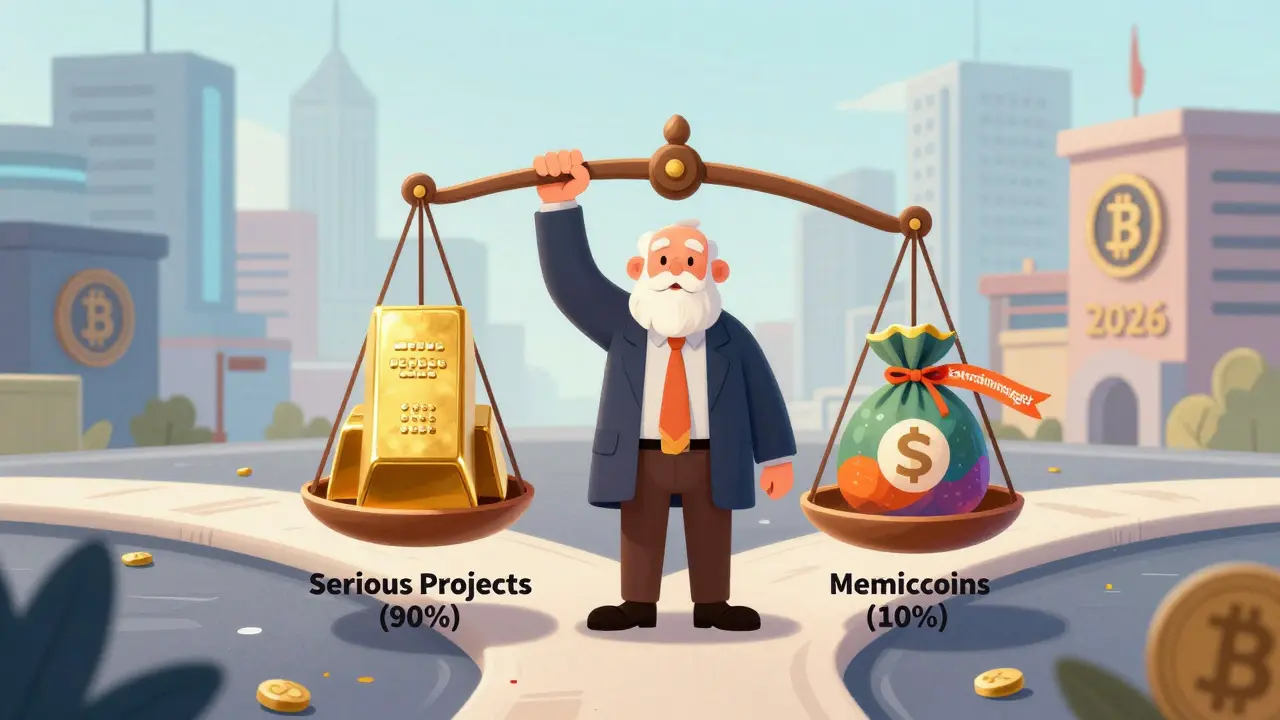
So, how should you approach this divide? Most experienced investors recommend a balanced portfolio. Allocate the majority of your crypto holdings to serious projects with strong fundamentals, active development, and clear use cases. These form the foundation of your portfolio, offering steadier growth and lower relative risk.
Reserve a smaller portion-perhaps 5-10%-for speculative investments in memecoins. Treat this money as entertainment expense. You might hit a jackpot, but be prepared to lose it all. Use tools like AI-driven analytics platforms (such as Token Metrics’ Moonshots feature) to identify tokens with potential before they reach major exchanges, giving you an early-mover advantage.
Always verify contract addresses, check liquidity pools, and look for locked liquidity periods to mitigate scam risks. Never invest more than you can afford to lose in the memecoin sector.
Are memecoins a good long-term investment?
Generally, no. Most memecoins lack intrinsic value and rely solely on hype. While exceptions like Dogecoin exist, the vast majority fade away after initial surges. They are better suited for short-term trading rather than long-term holding.
What makes a cryptocurrency project "serious"?
A serious project has a clear technological purpose, such as enabling smart contracts, improving scalability, or facilitating payments. It features an active development team, undergoes security audits, and has a roadmap for continuous improvement and real-world adoption.
How do I avoid rug pulls in memecoins?
Look for projects with verified smart contracts, locked liquidity, and transparent development teams. Use blockchain explorers to check token distribution and ensure no single wallet holds a disproportionate amount. Be wary of anonymous creators promising guaranteed returns.
Is Ethereum still considered a serious project in 2026?
Yes, Ethereum remains one of the most robust and widely adopted serious cryptocurrency projects. Its transition to proof-of-stake, ongoing scalability upgrades, and dominance in DeFi and NFT markets solidify its position as foundational blockchain infrastructure.
Can memecoins ever become serious projects?
It’s rare but possible. Some memecoins evolve by adding utility, such as launching their own blockchains, introducing staking mechanisms, or integrating into broader ecosystems. However, most remain purely speculative assets driven by community sentiment.

Write a comment