
Crypto Regulation in Pakistan: What You Need to Know in 2025
When it comes to crypto regulation in Pakistan, the legal stance on digital assets is officially restrictive, with the State Bank of Pakistan banning banks from processing cryptocurrency transactions since 2018. Also known as Pakistan’s crypto ban, this policy hasn’t stopped people from trading—it just pushed it underground. Unlike countries like the UAE or Nigeria, where crypto thrives despite gray areas, Pakistan’s rules are clear: no banks, no licensed exchanges, no official recognition.
That doesn’t mean crypto disappeared. Instead, P2P crypto trading, peer-to-peer platforms like Binance P2P and LocalBitcoins became the lifeline for millions. Also known as cryptocurrency bypass networks, these systems let users trade Bitcoin and USDT directly with each other, often using cash or mobile payment apps like JazzCash and Easypaisa. Meanwhile, crypto tax Pakistan, has no formal structure yet. There’s no official 1% TDS like in India, and no declared capital gains rate—but the Federal Board of Revenue has warned that unreported crypto income could be taxed under existing income laws. The lack of clarity creates risk: you’re not breaking the law by holding crypto, but using banks to buy or sell it might get your account frozen.
What about exchanges? crypto exchanges Pakistan, are blocked if they’re not registered with the State Bank. Platforms like Binance, KuCoin, and Bybit can’t operate legally here, and local users who rely on them do so at their own risk. Some try using VPNs, but that doesn’t make them safer—scams targeting Pakistani traders have surged, with fake platforms promising high returns and vanishing overnight. The government hasn’t issued a clear roadmap for legalization, but recent signals suggest they’re watching global trends. If the IMF pushes for financial transparency, or if neighboring India introduces stricter rules, Pakistan might follow with its own licensing system.
What you’ll find in the posts below are real stories from people who’ve navigated this gray zone—how they bought crypto without a bank, what happened when their account got flagged, and why some low-cap tokens like FRY or FintruX Network are especially dangerous here. You’ll also see how scams exploit confusion around regulation, and why airdrops like KTN or HaloDAO are red flags in a market where trust is already thin. This isn’t theory. These are the choices people are making right now, under pressure, without official guidance. If you’re trading crypto in Pakistan, you need to know the risks—not just the rules.
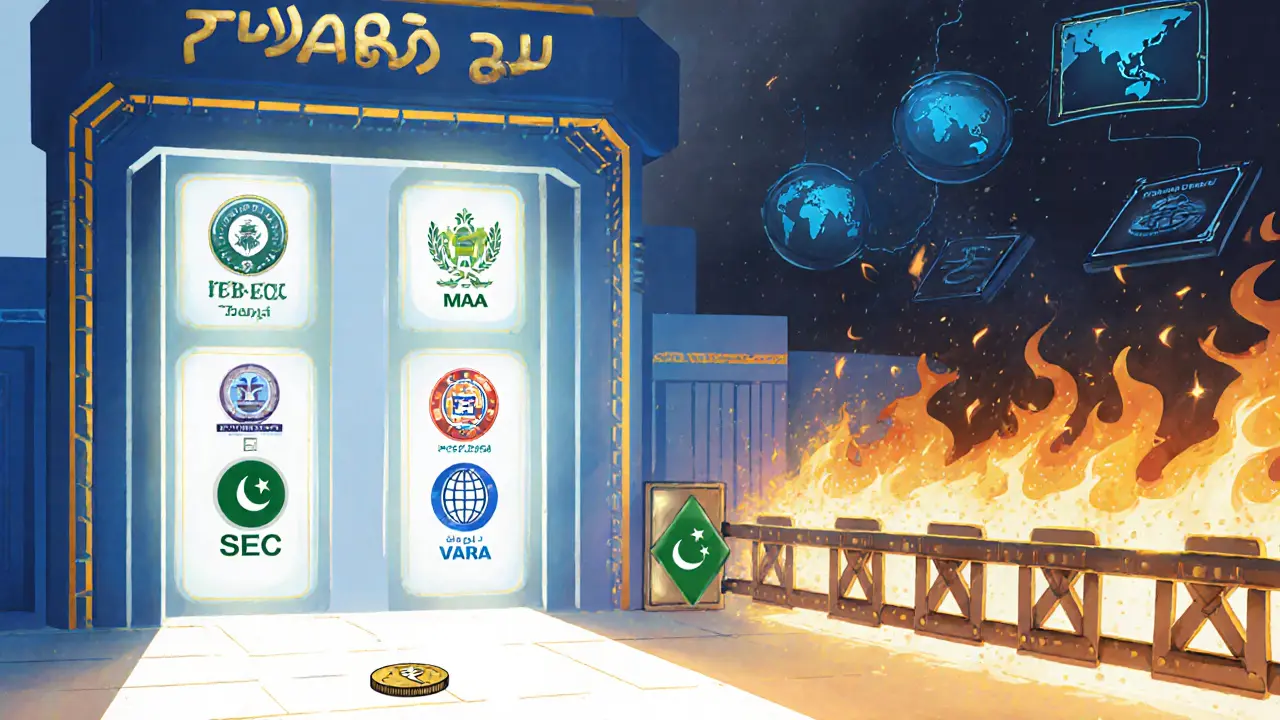
Pakistani Crypto Exchange Licensing Requirements and Process in 2025
Pakistan's new PVARA licensing system in 2025 lets only globally regulated crypto exchanges operate legally. Learn the strict requirements, compliance rules, and the big contradiction with the central bank.
read more