
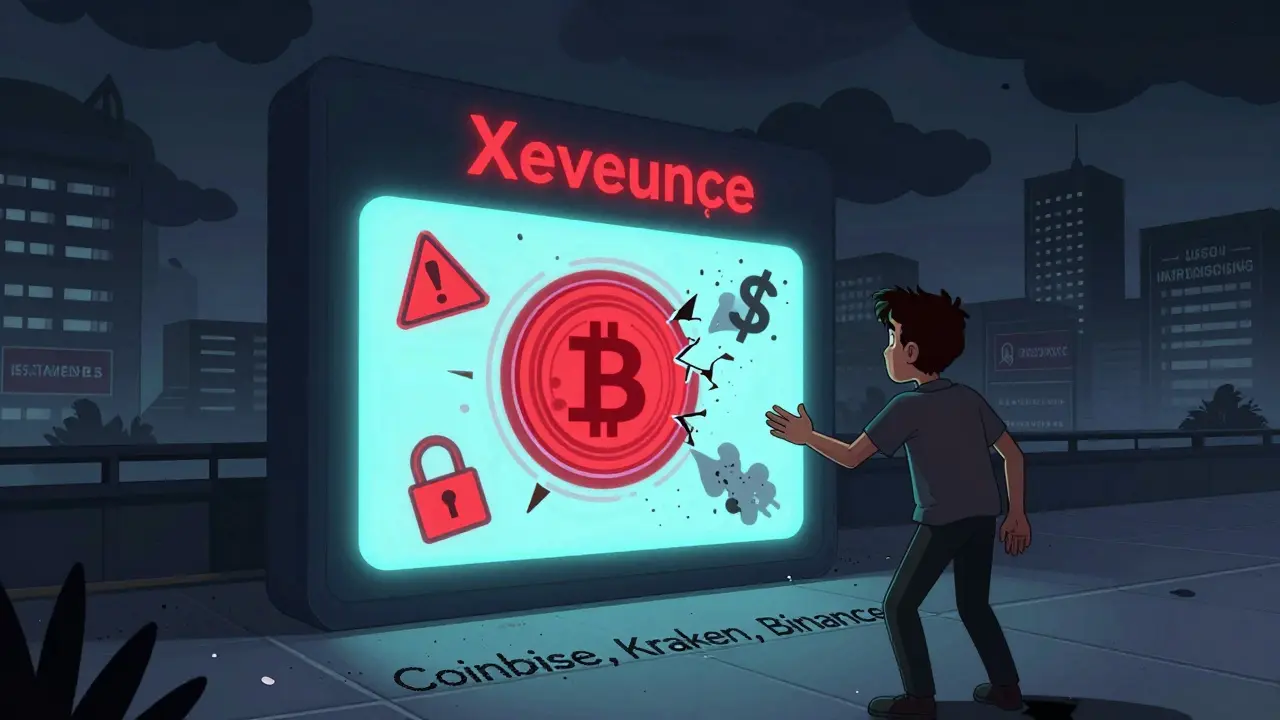
There’s no verified record of a cryptocurrency exchange called Xevenue in any major industry database, security report, or user review platform as of late 2025. Not on CoinGecko. Not on CoinMarketCap. Not on Trustpilot, Reddit’s r/CryptoCurrency, or even obscure forums. If you’re seeing ads, pop-ups, or YouTube videos pushing Xevenue as the next big thing, you’re likely being targeted by a phishing scheme or a newly launched scam operation.
Why You Can’t Find Xevenue Anywhere
The global crypto exchange market has around 500 active platforms, and every legitimate one leaves a trail. They’re listed on comparison sites. They’re audited. They’re mentioned in security whitepapers. They have customer support emails that work. They have documented compliance with KYC and AML rules. Xevenue has none of that. A quick check of blockchain security firms like Chainalysis and CipherTrace shows no wallet addresses tied to Xevenue. No transaction volume. No withdrawal history. No customer complaints on forums because there are no verified users. This isn’t a case of a small exchange flying under the radar-it’s a case of an exchange that doesn’t exist in any meaningful way.Red Flags You Can’t Ignore
If someone is trying to get you to sign up for Xevenue, watch for these classic scam signs:- They promise guaranteed returns or "risk-free" trading.
- The website looks cheap-poor grammar, blurry logos, broken buttons.
- No physical address, no company registration number, no legal terms.
- They only accept crypto deposits, never fiat (USD, EUR, etc.).
- Customer support replies with copy-pasted messages or disappears after you deposit.
What Real Crypto Exchanges Do Differently
Legitimate exchanges like Coinbase, Kraken, and Binance don’t just say they’re secure-they prove it. Here’s what they actually do:- 95-98% of user funds are stored in cold wallets, offline and unreachable by hackers.
- Multi-signature wallets require 3-5 separate approvals to move large sums.
- Two-factor authentication (2FA) is mandatory, and top platforms use app-based 2FA (like Authy or Google Authenticator), not SMS.
- They publish monthly proof-of-reserves reports verified by independent auditors.
- They have dedicated security teams, regular penetration testing, and 24/7 intrusion detection systems.
- They comply with KYC rules: you must verify your ID before depositing.
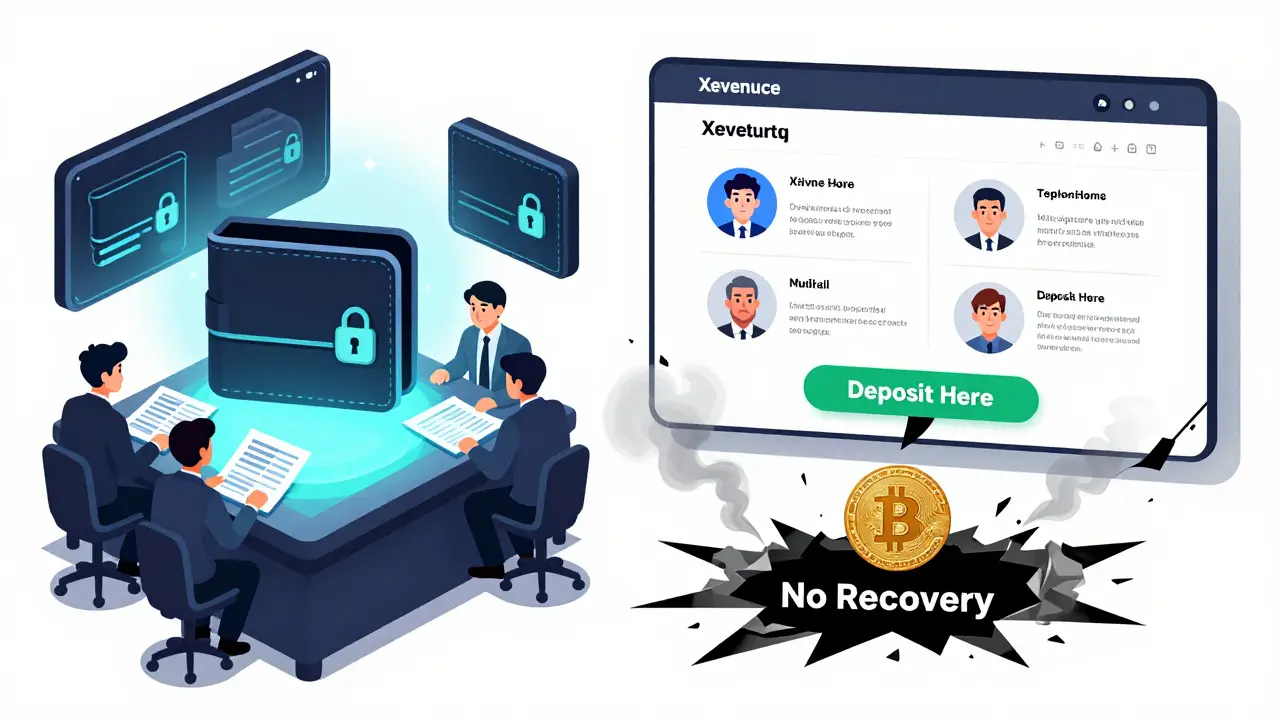
How Scammers Trick People Into Using Fake Exchanges
Scammers don’t rely on technical tricks. They rely on psychology. They create fake testimonials with stock photos of people holding cash and smiling. They use AI-generated videos of supposed "founders" giving speeches. They run ads on Instagram and TikTok targeting people who just bought their first Bitcoin. They create urgency: "Limited spots! Only 3 left!" Once you deposit-even $50-they disappear. Your account shows a balance, but you can’t withdraw. The site might say "maintenance" or "delayed due to regulatory review." After a week, the site goes dark. The domain expires. The Telegram group vanishes. There’s no recourse. No customer service. No legal protection. You’re out of money.What to Do Instead
If you want to trade crypto safely, stick to platforms with proven track records:- Coinbase - Best for beginners, regulated in the U.S. and EU.
- Kraken - Strong security, low fees, supports 200+ coins.
- Binance - Highest volume, advanced tools (but avoid if you’re in the U.S. due to regulatory issues).
- Bybit - Good for trading derivatives, strong cold storage.

How to Spot a Fake Exchange Before You Deposit
Use this quick checklist before signing up for any exchange:- Search the name + "scam" on Google. If you see multiple red flags, walk away.
- Check if it’s listed on CoinGecko or CoinMarketCap. If not, it’s not trusted.
- Look for a physical address. Type it into Google Maps. Is it a real office or a co-working space?
- Try to contact support. Ask a specific question like, "What’s your insurance coverage for cold wallet breaches?" If they reply with a generic answer or don’t reply at all, that’s a red flag.
- Check the domain age. Use whois.domaintools.com. If the site was registered last month, avoid it.
- Never deposit crypto to a platform you’re unsure about. Use a small test deposit first-$5 max-and see if you can withdraw it within 24 hours.
Final Warning: Don’t Risk Your Crypto
Xevenue isn’t a failed exchange. It’s not a startup. It’s not even a ghost. It’s a trap. The crypto space is full of real opportunities-but only if you know how to separate them from scams. Every year, thousands of people lose life savings to fake exchanges like this one. You don’t need to be one of them. Stick to the big names. Do your research. And if something sounds too good to be true-especially if it’s a name you’ve never heard of-it almost certainly is.There’s no shortcut to safety in crypto. Only due diligence.
Is Xevenue a real crypto exchange?
No, Xevenue is not a real or verified crypto exchange. It does not appear on any major cryptocurrency tracking platforms like CoinGecko or CoinMarketCap, has no public audit reports, no regulatory compliance records, and no verified user base. All evidence suggests it is either a scam site or an extremely obscure platform with no operational presence.
Why can’t I find reviews of Xevenue online?
Legitimate exchanges have hundreds or thousands of user reviews across Trustpilot, Reddit, and specialized forums. Xevenue has no verifiable reviews because there are no verified users. Any reviews you see are likely fake-generated by bots or paid actors to trick new users into depositing funds.
What should I look for in a safe crypto exchange?
A safe crypto exchange should offer: cold storage for 95%+ of funds, multi-signature wallets, mandatory two-factor authentication (2FA) via apps (not SMS), public proof-of-reserves audits, KYC/AML compliance, a physical address, and responsive customer support. Platforms like Coinbase, Kraken, and Binance meet all these criteria.
Can I recover my money if I deposit into Xevenue?
Almost certainly not. Fake exchanges like Xevenue are designed to disappear after you deposit. There’s no company behind it, no legal entity to sue, and no customer service to contact. Once your crypto leaves your wallet and goes to their address, it’s gone for good. Blockchain transactions are irreversible.
How do I avoid fake crypto exchanges in the future?
Always check if the exchange is listed on CoinGecko or CoinMarketCap. Search the name + "scam" on Google. Verify their domain age and physical address. Never trust ads on social media. Test with a tiny deposit first-$5 max-and confirm you can withdraw it before putting in more. If it feels rushed or too good to be true, it is.

Write a comment