
By 2026, decentralized finance (DeFi) isn’t just a buzzword anymore - it’s a working alternative to banks. If you’ve ever waited days for an international transfer, paid $30 in fees to process a $100 sale, or been locked out of your own money because a bank froze your account, DeFi already solved those problems for millions. And it’s only getting faster, cheaper, and easier to use.
DeFi Isn’t About Replacing Banks - It’s About Bypassing Them
Traditional finance runs on middlemen. Banks hold your money. Credit card companies take a cut. Payment processors charge per transaction. DeFi removes them all. Instead of a bank approving your loan, a smart contract automatically releases funds when you meet the conditions - like depositing collateral or hitting a repayment date. No human review. No paperwork. No waiting.
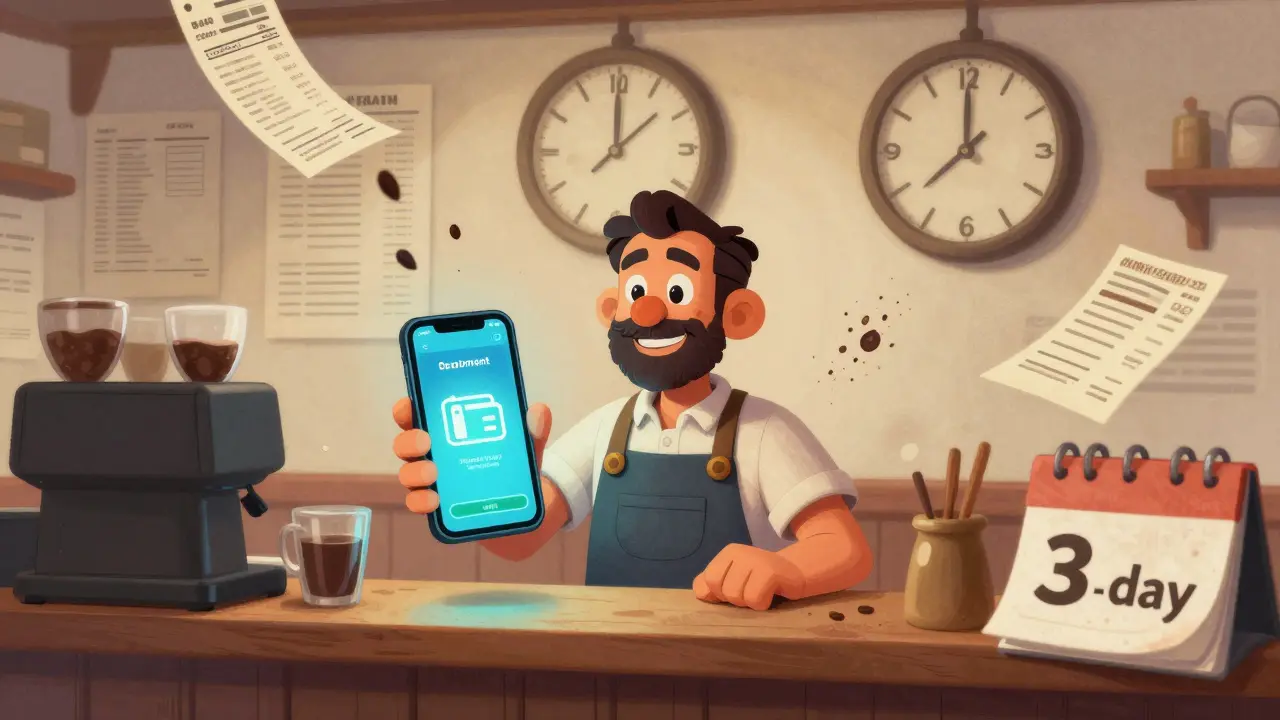
Take a coffee shop owner in Mexico. Before DeFi, they paid 3% in credit card fees and waited 3 business days to see their money. Now, they accept payments in stablecoins like USDC. The transaction settles in under a minute. The fee? Less than a penny. No chargebacks. No disputes. Just clean, instant money.
This isn’t theory. It’s happening. Small businesses - corner stores, food trucks, freelance designers - are leading the charge because they feel the pain of traditional finance the most. They don’t need complex credit checks. They need speed and low cost. DeFi gives them both.
Wallets Are the New Bank Accounts
Your phone used to be your camera, your music player, and your GPS. Now, it’s also your wallet. DeFi wallets are the same shift - but for money. You don’t need a bank login. You need a crypto wallet a digital key that gives you full control over your funds, with no middleman.
Modern wallets aren’t just keys anymore. They’re full financial hubs. You can swap tokens, stake your crypto for interest, lend money to others, and even buy insurance - all in one place. Many now support multiple blockchains (Ethereum, Solana, Polygon) so you’re not stuck on one network.
Security has improved too. Biometric login (fingerprint or face ID) is standard. Hardware wallets - small USB devices that store your keys offline - are more affordable and easier to use. You still own your private keys. But now, the interface doesn’t look like a hacker’s manual. It looks like your banking app.
The Real Cost Difference: DeFi vs Traditional Finance
Here’s what DeFi actually saves you:
- Transaction fees: A $500 wire transfer via Western Union costs $45. A DeFi transfer? $0.50.
- Cross-border time: Traditional banks take 3-7 days. DeFi settles in under 10 minutes.
- Payment processing: Credit cards charge 2-3% per sale. DeFi payments cost less than 0.1%.
- Loan interest: Banks charge 15% APR for personal loans. DeFi lending platforms offer rates as low as 4% - because there’s no overhead.
These aren’t theoretical savings. A study from the International Monetary Fund an international organization that monitors global financial systems found that small businesses using DeFi payment systems saw a 22% increase in net profit within six months - mostly from reduced fees.
And it’s not just about money. It’s about access. In countries with unstable banks or strict capital controls - like Nigeria, Argentina, or Venezuela - DeFi is the only way people can preserve value, send money home, or get loans. No passport. No ID. Just a smartphone.

Why DeFi Isn’t Perfect - Yet
Let’s be real: DeFi isn’t flawless. You can’t call customer service if you send crypto to the wrong address. There’s no chargeback. If you lose your private key, your money is gone forever. That’s scary.
And the learning curve? Real. You need to understand:
- Gas fees - the cost to run transactions on a blockchain
- Staking vs liquidity pools - two ways to earn interest
- Slippage - how prices change between when you click "swap" and when the trade executes
New users often get burned. One common mistake? Connecting a wallet to a fake DeFi site that steals keys. That’s why hardware wallets physical devices that store crypto offline for maximum security are now recommended for anyone holding more than a few hundred dollars.
But the tools are getting better. Educational videos, step-by-step guides, and community Discord servers are everywhere. Most major DeFi platforms now offer in-app tutorials. It’s still not as simple as Venmo - but it’s getting close.
The Quiet Revolution: Tokenized Assets and CBDCs
DeFi isn’t just about Bitcoin and Ethereum. The real shift is happening with tokenized assets real-world items like real estate, solar panels, or even music rights turned into digital tokens that can be bought and traded on DeFi platforms.
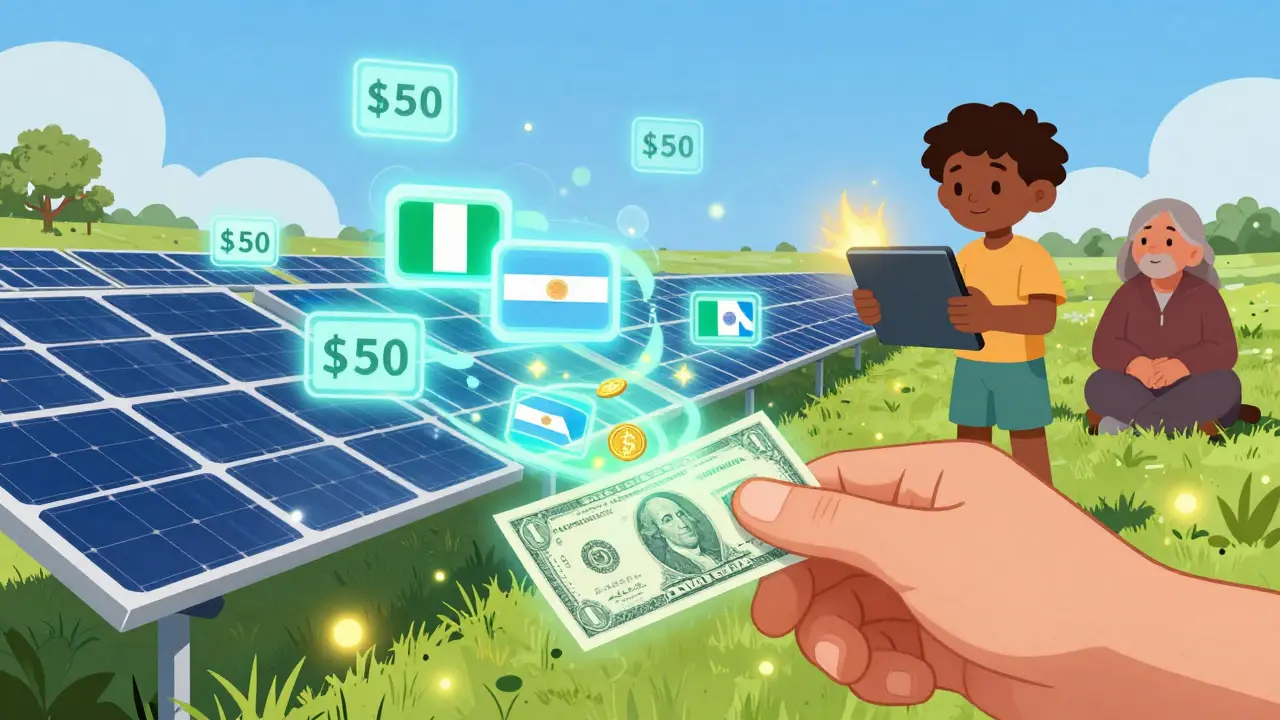
Imagine owning 1% of a solar farm in Texas. You didn’t need $1 million. You bought a token on a DeFi platform for $50. That token pays you dividends every month - automatically, in crypto. No paperwork. No lawyer.
And then there’s Central Bank Digital Currencies (CBDCs) digital versions of national currencies issued by governments, such as the digital euro or digital yuan. Countries like the UK, EU, and China are testing them. CBDCs aren’t DeFi - but they’ll talk to DeFi.
Think of it like this: Your government issues a digital dollar. You use it to pay taxes. But you can also lend that dollar on a DeFi platform to earn interest. Or use it as collateral for a loan. That’s the bridge between old finance and new.
Even governments are getting in. The UK’s Financial Conduct Authority now has a sandbox for testing tokenized government bonds. That means one day, you might buy a bond issued by the U.S. Treasury - not through a bank, but directly on a DeFi app.
Who’s Adopting DeFi - And Why
It’s not tech bros anymore. The biggest adopters in 2026 are:
- Small businesses: Restaurants, barbershops, and online sellers who can’t afford 3% fees.
- Developers: Building apps that use DeFi as a backend - like rent collection, tipping, or subscription payments.
- Developing nations: Where banks are unreliable or inaccessible.
- Investors: Looking for yield beyond traditional stocks - and finding 6-12% returns on stablecoins.
Large corporations? They’re watching. Companies like Visa and Mastercard are integrating stablecoins into their systems. Why? Because they see the future: faster settlements, lower costs, and global reach.
It’s not about replacing banks. It’s about offering a better option - one that works better for people who’ve been left out.
What Comes Next? Three Predictions for 2027
Looking ahead, three things are inevitable:
- DeFi will be built into everyday apps. You won’t click "DeFi" - you’ll just pay with crypto in your Uber, Spotify, or Shopify store. It’ll be seamless.
- Insurance for DeFi will become standard. Just like credit cards offer fraud protection, DeFi platforms will partner with insurers to cover lost funds from hacks or user error.
- Regulation will stabilize, not kill it. Governments aren’t banning DeFi - they’re building rules around it. Clear rules mean more trust, more adoption, and more innovation.
By 2028, DeFi won’t be "the future." It’ll just be how money works - for millions, not just tech enthusiasts.
Is DeFi safe to use in 2026?
DeFi is safer than ever, but it still demands responsibility. Your funds are protected by cryptography, not banks. Use a hardware wallet for anything over $500. Never share your recovery phrase. Stick to well-known platforms like Aave, Compound, or Uniswap. Avoid anything promising "guaranteed returns" - those are scams. Security isn’t perfect, but it’s better than most people think.
Can I use DeFi without buying Bitcoin or Ethereum?
Yes. Most DeFi apps today use stablecoins like USDC or DAI - digital coins pegged to the U.S. dollar. You can deposit dollars, convert them to USDC, and start earning interest or lending without touching Bitcoin. Stablecoins are the bridge between traditional money and DeFi.
Do I need to be a tech expert to use DeFi?
No. You need to understand a few basics: how wallets work, how to store your recovery phrase, and how to check a website’s URL. Most apps now have guided onboarding. It takes about 20 minutes to get started. Learning advanced features like yield farming takes weeks - but you don’t need them to benefit from DeFi.
What happens if a DeFi platform shuts down?
If a platform shuts down, your funds aren’t lost - as long as you control your wallet. DeFi platforms are just interfaces. Your crypto lives on the blockchain, not on their servers. You can still access your money using other wallets or apps that support the same tokens. The protocol may vanish, but your assets don’t.
Is DeFi legal everywhere?
DeFi is legal in most countries, but rules vary. The U.S., EU, UK, Japan, and Canada have clear guidelines. Some countries like China ban crypto transactions, while others like El Salvador treat Bitcoin as legal tender. Always check local laws before using DeFi. But globally, the trend is toward regulation - not prohibition.
DeFi isn’t coming. It’s already here. And for the first time in history, money doesn’t need a bank to work.

Comments
Arya Dev
DeFi? More like De-Fraud. I’ve seen people lose life savings because they clicked ‘approve’ on a random contract. No customer service? LOL. When your money vanishes, who you gonna call? The blockchain??
Jessica Carvajal montiel
Let’s not pretend this isn’t just Wall Street 2.0 with better branding. They’re not removing middlemen-they’re replacing them with unregulated smart contracts that can be hacked, exploited, or front-run by whales. And now they want us to believe this is ‘financial freedom’? Please. It’s a casino with gas fees.
Phillip Marson
Banks are dinosaurs but DeFi? Nah. I tried it. My wallet got drained by a phishing site that looked legit. Now I keep my cash under the mattress. At least rats can’t steal a mattress.
Tracy Whetsel
I started with just $20 in USDC and now I earn 5% interest just sitting there. No bank can do that. I know it feels scary at first but there are so many free guides and communities ready to help. You don’t need to be a genius-just careful. And maybe use a hardware wallet. 💖
Jeff French
The real innovation isn't the tech-it's the composability. You can stack yield, collateralize assets, and automate payouts without intermediaries. That’s systemic change. The UX is still clunky but the primitives are solid. This is how money evolves.
Brian Lemke
I’m from a rural town in Texas. My cousin runs a food truck. Last year she started taking USDC. No more waiting 3 days for payments. No more 3% fees. She bought a new grill with the savings. DeFi isn’t for techies-it’s for people who get screwed by the system every single day.
Megan Lavery
I used to think crypto was a scam. Then I saw my aunt in Mexico send money to her mom in Oaxaca for $0.20. Took 90 seconds. I cried. This isn’t about Bitcoin. It’s about dignity.
Mae Young
Oh wow, so now we’re supposed to trust algorithms run by anonymous devs with no accountability? And you call this progress? Meanwhile, the Fed is printing trillions and you’re cheering for ‘decentralized finance’? Wake up. This is just another asset class for the elite to game. The 1% don’t need wallets-they need loopholes.
Trenton White
The tokenized real estate example is fascinating. Imagine owning a sliver of a solar farm in Arizona and getting monthly payouts. That’s not finance. That’s democracy.
Cheryl Fenner Brown
ok so i tried to swap some usdc and my tx failed and now im like 30 bucks in the red? idk what gas even means but i think i got scammed?? lol
Colin Lethem
The real win? You can lend your stablecoins and earn 6-8% APY without a credit check. Banks hate this. That’s why they’re lobbying so hard to regulate it into oblivion. They’re scared of competition that actually works.
lori sims
I used to think DeFi was too wild. Then I saw a single mom in Nigeria use it to pay for her kid’s school fees-no bank account, no ID, just a phone. That’s not innovation. That’s justice.
Reggie Fifty
This is why America is falling behind. We let these crypto anarchists run wild while China builds a digital yuan with full state control. You think DeFi is freedom? It’s chaos. And chaos doesn’t build nations.
Kristi Emens
I appreciate the breakdown. The part about CBDCs integrating with DeFi is the most important. Governments won’t ban it-they’ll co-opt it. That’s the real story.
Deborah Robinson
I just started using a hardware wallet. It felt like buying a lock for my soul. But now I feel… safe. Like I finally own something real. 🌿
christopher luke
DeFi is the first time in history that a poor person in Lagos can earn the same interest as a hedge fund manager in New York. That’s not tech. That’s revolution.
Amanda Markwick
The future isn’t about replacing banks. It’s about making them irrelevant. When you can buy a bond from the U.S. Treasury directly from your phone without a broker? That’s not convenience. That’s power redistribution.
Neeti Sharma
India banned crypto and for good reason. This is just another way for rich Americans to gamble while poor people lose everything. Don’t be fooled.
Nadia Shalaby
I’ve been using DeFi for 2 years. My biggest lesson? Never trust a platform that says ‘guaranteed returns’. Always check the contract. Always verify the URL. Always use a hardware wallet. It’s not hard. Just disciplined.
Fiona Monroe
The regulatory framework in the UK has been meticulously constructed to ensure consumer protection while preserving innovation. The FCA sandbox model demonstrates a commendable balance between oversight and experimentation. One must, however, remain cognizant of the inherent volatility and technical complexities involved.
Nicki Casey
The IMF study? That’s not a study-it’s a PR stunt funded by crypto lobbying groups. There is no peer-reviewed evidence that DeFi increases net profit. Meanwhile, the real economy is collapsing under inflation, and we’re all here cheering for digital ponzi schemes? This isn’t finance. It’s a cult.
maya keta
I read this and thought ‘this guy doesn’t know what he’s talking about’. DeFi isn’t for small businesses-it’s for crypto bros who think ‘yield farming’ is a real job. And ‘tokenized solar panels’? That’s not innovation, that’s vaporware. If you can’t explain it in plain English, it’s probably a scam.