

Imagine you’re sitting in Auckland, ready to trade some Bitcoin for Ethereum. You open your favorite Centralized Exchange (CEX), but instead of a trading interface, you get a stark error message: "Service unavailable in your region." Frustrating, right? Now imagine trying the same trade on a Decentralized Exchange (DEX). No account needed, no ID upload, just connect your wallet and go. But is it really that simple? The reality of crypto geographic restrictions is a messy patchwork of laws, technical workarounds, and regulatory gray areas that differs wildly depending on which type of exchange you use.
This isn’t just about inconvenience; it’s about accessibility, privacy, and legal risk. As regulators worldwide tighten their grip on digital assets, the divide between centralized and decentralized platforms has become a critical factor for any trader. Whether you are in the US, New Zealand, or anywhere else, understanding how these restrictions work can save you from frozen funds or unexpected compliance headaches.
The Core Difference: Who Controls Access?
To understand why you might be blocked from one platform but not another, you have to look at who actually runs the show. A CEX is essentially a bank with a crypto twist. It holds your money, matches your orders, and keeps records. Because it’s a company, it must obey local laws. If a country says, "No derivatives trading for retail users," the CEX has to block those features for everyone in that jurisdiction. This creates a rigid, top-down control system where access is granted based on your location and identity.
A DEX, by contrast, is code. It lives on the blockchain. There’s no CEO to call when things go wrong, and often, no physical headquarters to subpoena. Most DEXs operate through smart contracts that automatically swap tokens based on liquidity pools. Technically, anyone with an internet connection and a compatible wallet can interact with these contracts. This architecture makes traditional geographic blocking much harder. You can’t easily shut down a protocol running on thousands of nodes globally without shutting down the entire network.
How Centralized Exchanges Enforce Restrictions
CEXs have had decades to refine their compliance tools, and they use them aggressively. Their primary weapon is the IP address. When you visit Binance or Coinbase, they check your IP against a database of restricted regions. If you’re in a banned country, you might be redirected to a limited version of the site or blocked entirely. But IP checks are only the first line of defense.
The real gatekeeper is KYC (Know Your Customer). To withdraw significant amounts or use fiat currency pairs, you must upload government-issued ID, proof of address, and sometimes even a selfie video. This data ties your digital activity to a physical location. If you try to bypass an IP block using a VPN, the KYC process will eventually catch you out because your proof-of-address document won’t match your claimed residence. Furthermore, CEXs often restrict specific products. For example, while spot trading might be allowed in a certain country, leveraged futures might be banned due to higher risk profiles.

The DEX Loophole: Accessibility and Anonymity
For many traders, DEXs represent freedom. Platforms like Uniswap or PancakeSwap don’t ask for your name or passport. They ask for a wallet signature. This means there’s no central authority to deny service based on nationality. In theory, if you can download MetaMask and fund it with ETH, you can trade on Uniswap regardless of whether you’re in Singapore, Nigeria, or Nevada.
However, this freedom comes with caveats. While the protocol itself doesn’t block you, the user interface (UI) often does. Many popular DEX frontends are hosted websites that detect your IP address and hide the "Connect Wallet" button if you’re in a restricted region. But here’s the trick: the UI is just a wrapper. Advanced users can still interact directly with the smart contract via block explorers or command-line tools, effectively bypassing the website’s geo-block. This technical nuance is crucial for anyone living under strict crypto bans.
Regulatory Pressure: Closing the Net
Don’t think regulators are ignoring DEXs. The landscape is shifting fast. In the European Union, the Markets in Crypto-Assets (MiCA) regulation is setting new standards. While MiCA primarily targets intermediaries, it pushes for greater transparency across the board. In the US, the SEC and CFTC are increasingly scrutinizing DeFi protocols, arguing that some should be treated as securities exchanges.
We’re already seeing early signs of change. Some newer Layer 2 solutions and compliant DeFi platforms are starting to integrate optional KYC layers or geo-fencing features. These aren’t mandatory yet for most users, but they signal a trend toward bringing DEXs closer to the regulatory fold. Additionally, fiat on-ramps-the bridges between traditional banks and crypto-are almost exclusively centralized services. If you need to convert NZD to USDT to start trading on a DEX, you’ll likely hit a CEX restriction before you even touch the blockchain.
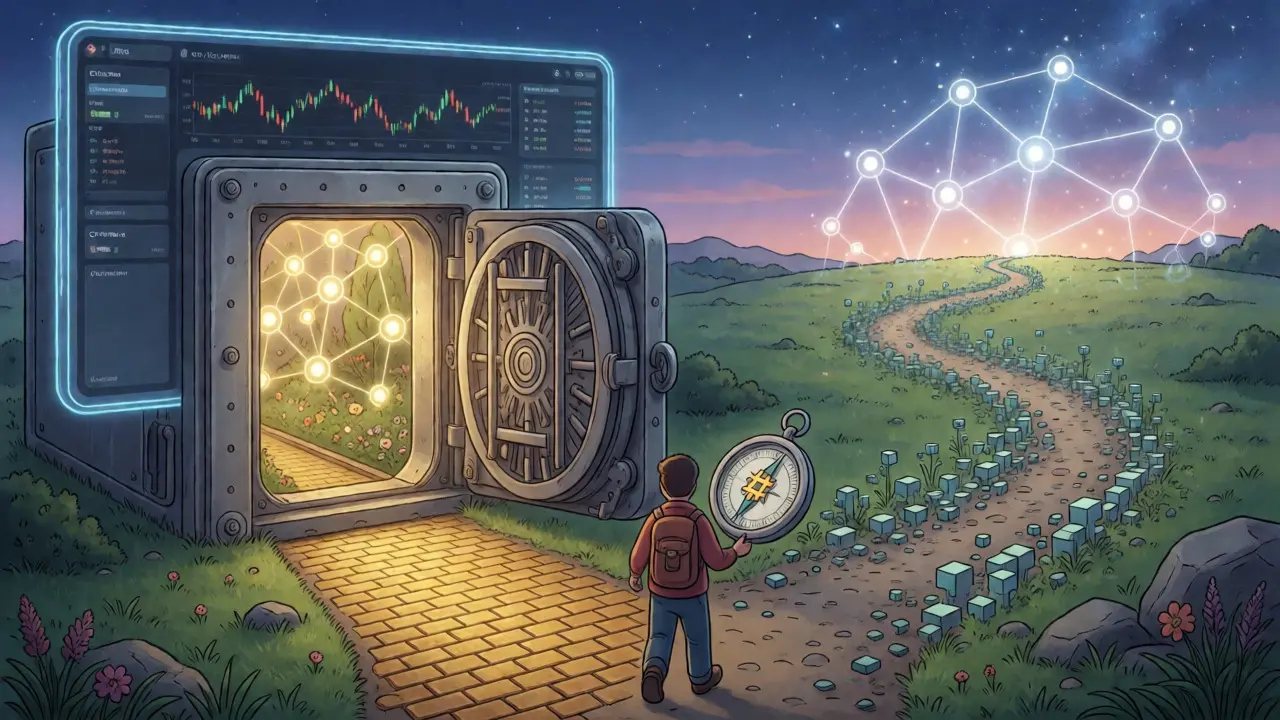
Comparison Table: CEX vs DEX Geographic Barriers
| Feature | Centralized Exchange (CEX) | Decentralized Exchange (DEX) |
|---|---|---|
| Access Method | Account creation + KYC verification | Wallet connection (non-custodial) |
| Geo-Blocking Mechanism | IP detection + Legal entity restrictions | Frontend IP blocking (protocol remains open) |
| Fiat Integration | High (Bank transfers, cards) | Low (Requires prior crypto holdings) |
| Product Restrictions | Common (e.g., no derivatives in US/EU) | Rare (Protocol agnostic, unless frontend blocks) |
| Regulatory Risk | High (Direct liability for exchange) | Medium (User bears more responsibility) |
Navigating Restrictions: Practical Tips for Traders
If you find yourself in a restricted region, what do you do? First, assess your needs. If you need easy fiat conversion, a CEX is unavoidable. Look for platforms that offer localized versions or partner with local banks. For example, some global CEXs have separate entities for different jurisdictions, allowing them to serve markets that would otherwise be closed off.
If you’re comfortable managing private keys and already hold crypto, a DEX offers superior flexibility. Use a reputable wallet provider that supports multiple networks. If a DEX frontend blocks your IP, learn to use alternative interfaces or direct contract interaction. Always remember that while DEXs reduce censorship risk, they don’t exempt you from tax obligations. Just because you didn’t provide your name to the exchange doesn’t mean the tax authority won’t come knocking if you move large sums through known addresses.
Finally, keep an eye on emerging technologies like Account Abstraction and cross-chain interoperability. These developments could further blur the lines between centralized convenience and decentralized freedom, potentially creating hybrid models that satisfy both regulators and privacy advocates.
Why are some countries banning DEXs?
Countries typically ban or restrict DEXs to prevent capital flight and enforce anti-money laundering (AML) laws. Since DEXs allow peer-to-peer trading without intermediaries, governments worry that illicit funds can move across borders without being tracked or taxed.
Can I use a VPN to access a restricted CEX?
You can often bypass the initial IP block with a VPN, but you will likely face issues during withdrawal or KYC verification. If your proof-of-address document shows a different country than your VPN location, the exchange may freeze your account until you resolve the discrepancy.
Do DEXs require KYC?
Most standard DEXs do not require KYC. However, some regulated DeFi platforms or fiat on-ramp integrations within DEX interfaces may request identity verification. Purely on-chain swaps usually remain anonymous.
Is it safer to trade on a DEX in a restrictive country?
It depends on your definition of safe. DEXs protect against censorship and account freezes, which is valuable in restrictive regimes. However, they place the burden of security on you. Losing your seed phrase means losing your funds, with no customer support to help recover them.
Will future regulations kill DEXs?
Unlikely. Regulations will likely force DEXs to evolve rather than disappear. We may see more compliant frontends or optional identity layers, but the underlying decentralized protocols are difficult to shut down completely as long as the blockchain network remains active.

Write a comment