
You built a dApp. The code works. The UI looks slick. But if you haven't hardened your security posture, you're just waiting for an exploit to drain your users' funds. In 2026, the landscape is crowded with protocols that failed not because they lacked innovation, but because they ignored basic dApp security considerations. Whether you are a developer shipping a new DeFi protocol or a user connecting your wallet to a fresh NFT marketplace, understanding where things break is non-negotiable.
Security in decentralized applications isn't a single checkbox. It's a layered defense strategy involving smart contracts, frontend interfaces, and user behavior. Unlike traditional web apps, you can't just patch a bug on the server side and call it a day. Once a smart contract is deployed on Ethereum or another EVM-based chain, it’s immutable unless you designed upgradeability patterns from day one. This means mistakes are expensive-sometimes costing millions of dollars in seconds.
The Smart Contract Core: Where Most Exploits Happen
At the heart of every dApp lies the smart contract. This is self-executing code stored on the blockchain, and it holds the logic for token transfers, governance votes, and liquidity pools. If this layer fails, the entire application collapses.
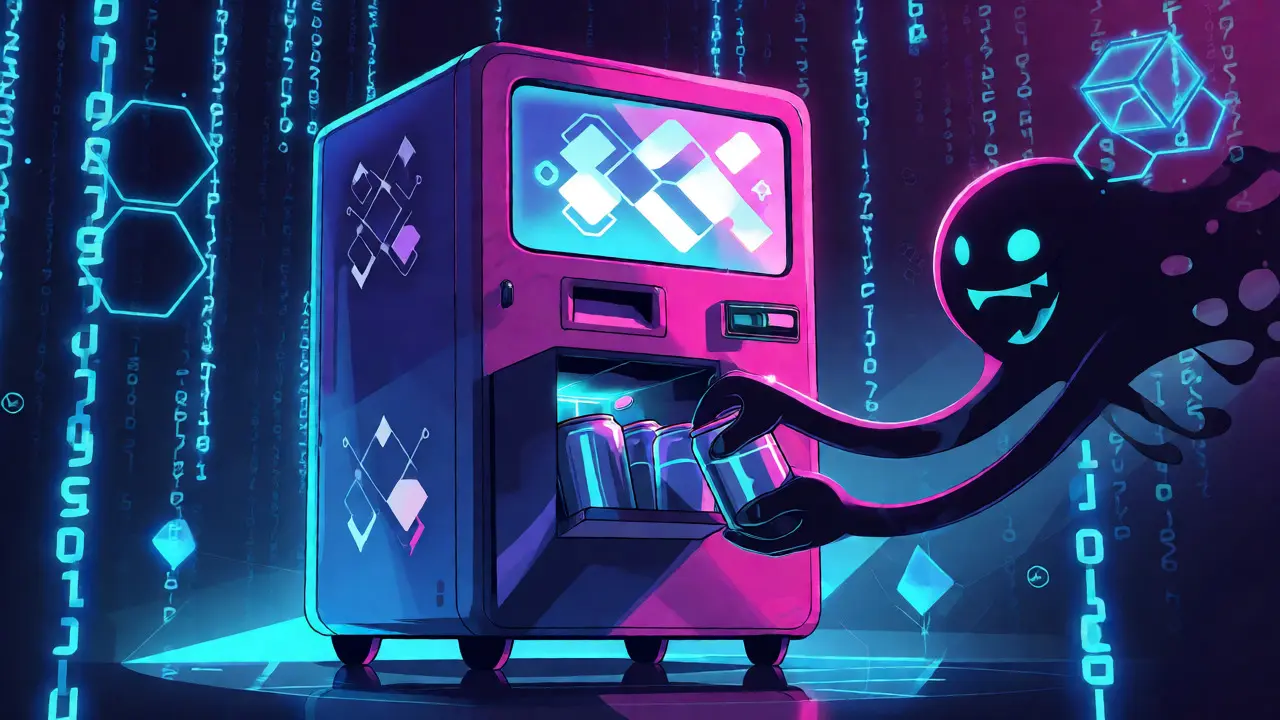
The most common killer? Reentrancy attacks. Imagine a vending machine that gives you a soda before taking your money. A malicious contract can repeatedly call your withdrawal function before your balance updates, draining funds faster than you can blink. While Solidity has evolved to mitigate many of these issues, logic errors remain rampant. That’s why relying solely on automated tools isn't enough. You need human eyes.
This is where the OWASP Smart Contract Security Verification Standard (SCSVS) comes into play. Released in draft form recently, this standard provides a structured checklist for developers. It moves beyond generic advice, offering specific requirements for handling external calls, managing state variables, and preventing integer overflows. If you aren't auditing against a recognized standard like SCSVS, you're flying blind.
| Vulnerability Type | Description | Mitigation Strategy |
|---|---|---|
| Reentrancy | External calls allow malicious contracts to re-enter functions before state updates. | Use Checks-Effects-Interactions pattern; implement mutex locks. |
| Access Control Flaws | Unauthorized users can modify critical parameters or mint tokens. | Implement Role-Based Access Control (RBAC); use OpenZeppelin libraries. |
| Oracle Manipulation | Price feeds can be manipulated by attackers in thin markets. | Use multiple oracle sources; implement time-weighted averages. |
| Integer Overflow/Underflow | Math operations exceed data type limits, wrapping around unexpectedly. | Use SafeMath libraries or native checks in newer compiler versions. |
Frontend Security: The Forgotten Layer
Developers often obsess over smart contract audits while neglecting the frontend-the interface users actually interact with. Your React app might look secure, but if it doesn't validate what the user is signing, you’re vulnerable. Phishing remains the biggest threat here. Hackers clone popular dApps, tweak the URL slightly, and wait for users to connect their wallets.
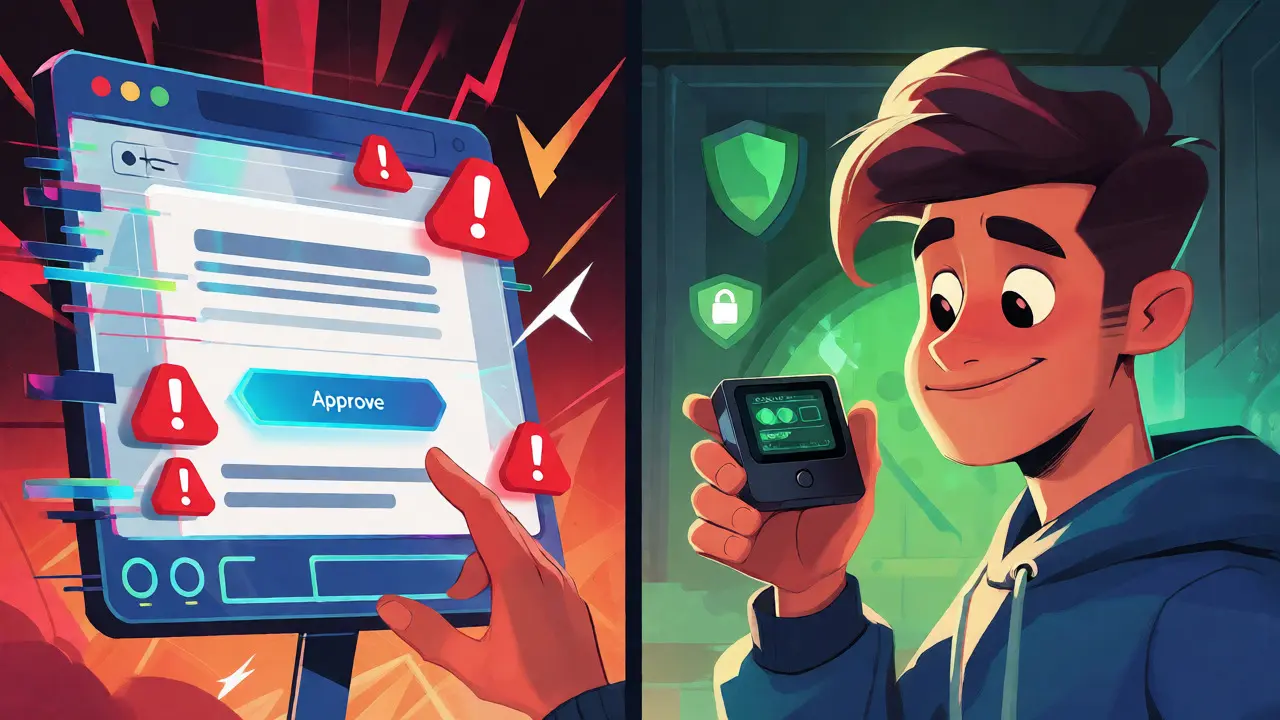
When a user connects their wallet, the frontend requests permission to view addresses and sign transactions. If your site displays a fake "Approve" button that actually grants unlimited spending allowance for a malicious contract, the user loses everything. Good practice dictates showing clear transaction details: which token, how much, and to which address. Always provide a link to the block explorer so users can verify the contract address themselves.
Another critical aspect is dependency management. Frontends rely on libraries like ethers.js or web3.js. If a maintainer abandons a package or a supply chain attack injects malware into a minor dependency, your dApp becomes a vector for theft. Regularly update dependencies and lock versions to prevent unexpected changes.
User Wallet Hygiene and Interaction Risks
Let’s face it: users make mistakes. Even with perfect code, a confused user can sign a malicious transaction. This is where UX design meets security. Instead of hiding complex data behind "Advanced Settings," show it upfront. When interacting with a DEX, display the slippage tolerance and potential fee impact clearly. If a transaction requires approving a new token, explain why that approval is needed.
Phishing attacks target this cognitive load. During the DeFi boom, countless users lost funds connecting to fake Uniswap clones. These sites looked identical but pointed to attacker-controlled contracts. To combat this, encourage users to bookmark official links rather than searching via Google ads. For developers, consider integrating domain verification tools that alert users if the current domain hasn't been previously verified as legitimate.
Hardware wallets offer a significant security upgrade for larger holdings. By keeping private keys offline, you eliminate the risk of keyloggers stealing credentials from a compromised browser. However, even hardware wallet users must verify the data displayed on the device screen. Blind signing-clicking "confirm" without reading-is still a major risk factor.
Decentralization and Governance Security
A truly secure dApp isn't just about code; it's about control. Who owns the admin keys? Can a single developer pause the contract indefinitely? Centralized points of failure are security risks. If the team holds a multisig with only two signers, a stolen laptop could mean a drained treasury.
Transitioning toward decentralized governance reduces this risk. Tools like SNS (Service Nervous System) on the Internet Computer or DAO frameworks on Ethereum allow communities to vote on upgrades and parameter changes. However, decentralization introduces its own challenges, such as voter apathy or plutocracy (where whales dominate votes). Ensure your governance model includes safeguards like timelocks, which delay executed proposals, giving users time to exit if they disagree with a change.
For enterprise-grade dApps, consider using Hardware Security Modules (HSMs) for key management. Services like YubiHSM provide physical protection for private keys, storing them in secure enclaves. This prevents remote extraction of keys even if the server environment is compromised. Threshold signature schemes further enhance this by requiring multiple parties to approve sensitive actions, ensuring no single point of failure exists within the operational infrastructure.

Privacy and Data Protection in Public Ledgers
Blockchain transparency is a double-edged sword. Every transaction is public. If your dApp handles sensitive data, you need more than just pseudonymity. Homomorphic encryption allows computations on encrypted data without decrypting it, preserving privacy during processing. Zero-knowledge proofs (ZKPs) take this further, letting users prove they have sufficient funds or meet criteria without revealing the actual amount or identity.
Identity solutions are evolving too. Decentralized Identifiers (DIDs) enable users to manage their digital identities across platforms without relying on centralized providers. Protocols focusing on selective disclosure let users share only necessary information. For example, proving you are over 18 without revealing your birthdate. As regulatory scrutiny increases in regions like New Zealand and Europe, building privacy-preserving features into your dApp architecture will become a competitive advantage, not just a compliance requirement.
Practical Checklist for Launch Day
Before you push your dApp live, run through this mental audit:
- Audit Status: Have you undergone at least two independent audits? Are the reports public?
- Upgradeability: Do you have a proxy pattern? Is the upgrade authority decentralized?
- Frontend Validation: Does your UI warn users about high gas fees or unusual approvals?
- Dependency Check: Are all npm packages pinned to specific versions?
- Incident Response: Do you have a plan if an exploit occurs? Is there a pause mechanism?
Security isn't a feature you add at the end. It's a mindset that permeates every line of code and every pixel of the interface. The cost of prevention is always lower than the cost of recovery.
What is the OWASP SCSVS?
The OWASP Smart Contract Security Verification Standard (SCSVS) is an open framework providing guidelines for designing, building, and testing secure smart contracts. It specifically targets vulnerabilities unique to blockchain environments, such as reentrancy and access control flaws, helping developers align with industry best practices.
Why are frontend audits less common than smart contract audits?
Historically, the focus was on smart contracts because they hold value directly. However, frontend vulnerabilities like phishing and incorrect transaction parsing are increasingly exploited. Modern security practices now emphasize full-stack audits, recognizing that a compromised UI can lead to fund loss just as easily as a buggy contract.
How does homomorphic encryption improve dApp privacy?
Homomorphic encryption allows computations to be performed on encrypted data without decrypting it first. This means a dApp can process sensitive information (like credit scores or balances) while maintaining confidentiality, as the raw data never appears in plaintext on the server or blockchain during calculation.
What is a rug pull in the context of dApp security?
A rug pull occurs when developers abandon a project and suddenly withdraw all invested capital, leaving investors with worthless tokens. It’s often exacerbated by poor security practices, such as centralized control over liquidity pools or lack of code transparency, allowing insiders to manipulate the market and exit abruptly.
Are hardware wallets completely safe?
Hardware wallets significantly reduce risk by keeping private keys offline, protecting against software-based malware. However, they are not immune to all threats. Users must still verify transaction details on the device screen to avoid blind signing malicious transactions, and physical theft remains a concern if backup phrases are exposed.

Write a comment