
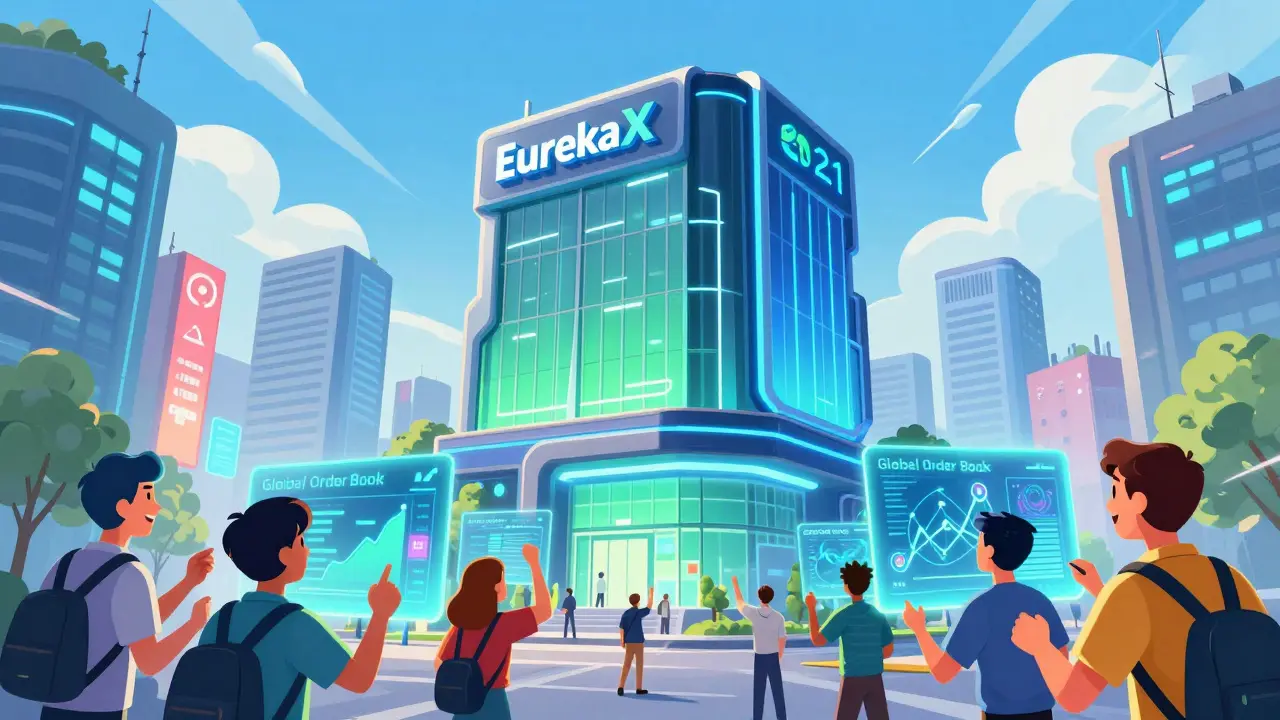
You find a crypto exchange promising 'super-fast transactions' and 'highest security.' It sounds too good to be true. That’s exactly how many traders felt about EurekaX is a cryptocurrency exchange platform that utilizes Global Order Books technology to facilitate fast trading and high liquidity across multiple markets. Also known as EurekaX Exchange, it was first launched in 2020 with the goal of solving liquidity fragmentation by aggregating order books from top exchanges. But here is the hard truth for 2026: silence from an exchange is louder than any marketing hype. While EurekaX made waves in 2021 with its unique aggregation model, the lack of recent updates raises serious questions about whether it is still operational, safe, or worth your time.
I’ve spent years tracking the rise and fall of niche crypto platforms. Most promise the moon and deliver dust. EurekaX falls into a tricky category: innovative concept, questionable execution, and now, ominous quiet. Before you connect your wallet or deposit funds, you need to know what actually happened to this platform since its peak activity in 2021. This isn’t just another generic review; it’s a deep dive into why EurekaX faded, what risks remain, and where you should trade instead if you want actual liquidity and security.
The Core Problem EurekaX Tried to Solve
To understand EurekaX, you have to look at the problem it aimed to fix. In the early days of crypto, liquidity was fragmented. If you wanted to buy a specific altcoin, you might find better prices on Binance, but deeper order books on Kraken, and faster settlement on another smaller exchange. Traders had to juggle multiple accounts, paying fees on each platform.
EurekaX introduced Global Order Books is a technology that aggregates liquidity from multiple exchanges into a unified trading interface. The idea was simple: connect all those separate pools into one place. You get the best price available across the network, not just on one isolated exchange. They paired this with Self-Governing Sidechains are blockchain technology inherited from the Eureka ecosystem that enable quicker and cheaper transactions compared to standard blockchain operations. On paper, this solved two major pain points: slippage (getting a worse price due to low volume) and high transaction fees.
They also introduced native utility tokens. ERK (Eureka Coin) is the primary utility token of the EurekaX ecosystem used for trading fees and governance. Another token, IPX (InterPlanetary Exchange Token), was integrated early on. The platform offered giveaways-300 ERK tokens to new users in mid-2021-to drive adoption. For a brief window, this worked. Users flocked to the platform hoping to exploit arbitrage opportunities between aggregated sources.
Current Status: Ghost Town or Sleeping Giant?
Here is where things get uncomfortable. The last significant update from EurekaX dates back to June 2021. Coinspeaker reported active promotional campaigns then. By March 2022, Blockspot.io noted the platform was operating but highlighted a lack of transparency regarding performance metrics. Fast forward to 2026. There are no recent roadmap updates. No new partnerships announced. No major tech releases. In the crypto world, six months of silence is concerning. Two years? It’s a red flag.
Why does this matter? Because crypto moves fast. Regulations change. Security threats evolve. An exchange that doesn’t update its software or communicate with users is vulnerable. We don’t know if EurekaX is actively maintaining its servers, updating its security protocols, or complying with current KYC/AML laws. Without recent audits or public statements, assuming it’s ‘safe’ is a gamble you shouldn’t take.
User reviews from Revain (dated August 2022) show a 4.2/5 rating, but note the date. Those reviews reflect the experience of 2021-2022. Since then, sentiment has shifted. Reddit discussions from 2021 mentioned issues like withdrawal delays during volatility. One user reported a 6-hour wait for withdrawals when the platform advertised 15 minutes. If support was slow then, imagine it now.
Security and Trust: What Do We Know?
Let’s talk security. EurekaX claimed ‘highest security’ in their 2021 press materials. But claims aren’t proof. I couldn’t find any third-party security audits published after 2021. No CertiK reports. No Hacken certifications. No public disclosure of cold storage percentages. For context, major exchanges like Coinbase publish regular proof-of-reserves and undergo annual SOC 2 Type II audits. EurekaX offers none of this visibility.
Their technical setup involved connecting to multiple external exchanges. This creates a complex attack surface. If one connected exchange gets hacked, does it impact EurekaX? How are keys managed? Who holds the private keys for the aggregated liquidity? These questions remain unanswered. Regulatory compliance is another blind spot. Cross-exchange aggregation involves navigating multiple jurisdictions. As one industry expert noted on Bitcointalk in 2020, ‘regulatory compliance becomes exponentially complex when bridging multiple jurisdictional frameworks.’ With global crypto regulations tightening in 2024-2026, an unregulated or poorly documented platform faces existential risk.
If you value capital preservation, opacity is your enemy. You need to know where your money sits. With EurekaX, you’re flying blind.
User Experience and Trading Mechanics
For those who did use EurekaX during its active phase, the feedback was mixed. The interface was described as ‘nice’ and intuitive for intermediate traders. However, the learning curve wasn’t trivial. Experienced traders needed 1-2 hours to master the global order book view. Beginners took 4-6 hours. Why? Because understanding aggregated liquidity requires knowing how arbitrage works. It’s not just clicking ‘buy.’ You’re seeing a composite price from multiple sources.
Token wrapping was a key feature. Users could wrap almost any token into the EurekaX ecosystem via a dedicated site. This allowed trading assets not natively listed on the main pool. But users reported occasional sync issues. During high volatility, the global order book sometimes lagged. Solutions involved manual refreshes or switching to direct connections-a clunky workaround for a platform promising seamless speed.
Customer support was a consistent complaint. Average response times were 24-48 hours via email. No live chat. No Telegram support team. In crypto, when something goes wrong, you need help now, not tomorrow. Limited support channels mean if you face a stuck withdrawal or account lockout, you’re on your own.
| Feature | EurekaX | Binance | Coinbase |
|---|---|---|---|
| Liquidity Model | Aggregated (Global Order Books) | Internal High Volume | Internal + Institutional |
| Security Audits | None Publicly Available Post-2021 | Regular Third-Party Audits | SOC 2 Type II Certified |
| Fiat On-Ramp | Limited/Unspecified | Extensive (Bank Transfer, Card) | Extensive (US, EU, UK) |
| Customer Support | Email Only (Slow Response) | 24/7 Live Chat & Ticket | 24/7 Live Chat & Phone |
| Regulatory Status | Unclear/Uncertain | Licensed in Multiple Jurisdictions | Publicly Traded (NASDAQ) |
| Last Major Update | Mid-2021 | Ongoing (Weekly/Monthly) | Ongoing (Weekly/Monthly) |
Who Was EurekaX Actually For?
EurekaX never really fit beginners. The complexity of aggregated order books and the need to understand cross-exchange dynamics meant you needed prior trading experience. It also didn’t appeal to large institutions. Revain reviews noted it underperformed for massive orders due to undisclosed size limits. Its sweet spot was the intermediate trader looking for small arbitrage edges or holding ERK tokens.
But even for that niche, the value proposition eroded. Why? Because major exchanges started improving their own liquidity. Binance added more pairs. Kraken improved matching engines. The gap EurekaX filled narrowed. Meanwhile, EurekaX stagnated. By 2023, Chainalysis data showed the top 10 exchanges controlled 85% of spot trading volume. Fragmentation decreased. Aggregation became less critical for average users.
If you’re holding ERK tokens today, you’re in a tough spot. Liquidity for ERK outside of EurekaX is thin. Selling might require finding a peer-to-peer buyer or using a decentralized exchange with limited depth. This is the trap of niche utility tokens: they only have value within their ecosystem. If the ecosystem dies, the token struggles.
Risks You Must Consider
Trading on inactive or obscure exchanges carries specific risks. Here’s what you need to watch out for:
- Withdrawal Delays or Freezes: Without active maintenance, withdrawal processes can break. Users in 2021 already reported delays. In 2026, infrastructure decay could make withdrawals impossible.
- Smart Contract Vulnerabilities: If EurekaX uses wrapping mechanisms, those contracts may contain bugs. Unaudited code is dangerous. A single exploit could drain funds.
- Regulatory Action: Governments are cracking down on unregistered exchanges. If EurekaX lacks proper licenses, it could be blocked or shut down without warning.
- Phishing Attacks: Old domains become targets. Scammers often clone defunct exchange websites to steal credentials. Always verify URLs carefully.
- Opportunity Cost: Time spent troubleshooting EurekaX is time lost earning yields or trading on robust platforms. Your capital could work harder elsewhere.
Better Alternatives for Aggregated Liquidity
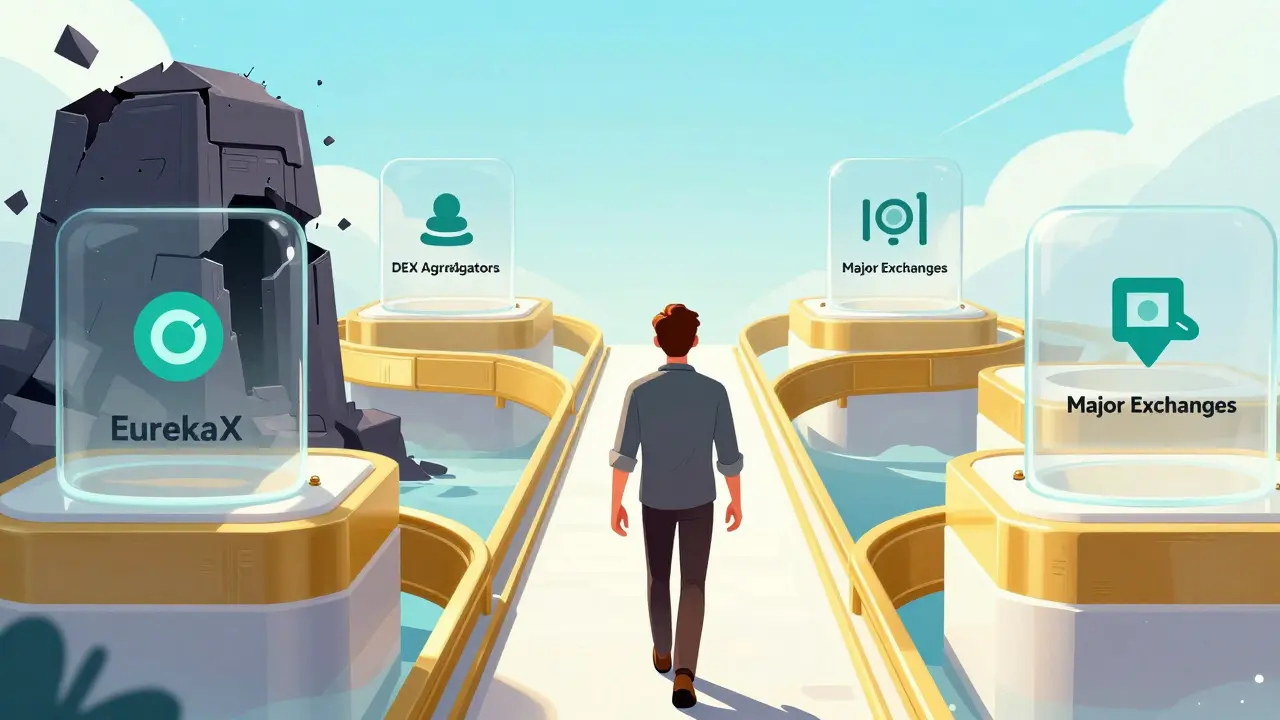
If you liked the idea of EurekaX-aggregated liquidity, lower slippage-you don’t need to stick with a potentially dead platform. Modern solutions exist that are safer, more transparent, and actively developed.
DEX Aggregators: Platforms like 1inch, Matcha, and Jupiter scan dozens of decentralized exchanges to find the best route for your trade. They split orders across Uniswap, SushiSwap, Curve, and others to minimize slippage. You keep custody of your funds in your wallet. No counterparty risk. No KYC required. This is the decentralized evolution of what EurekaX tried to do centrally.
Major CEXs with Deep Pools: Binance, Coinbase Advanced, and Kraken offer such deep liquidity that for most retail traders, slippage is negligible. You don’t need aggregation when the pool is already massive. Plus, these platforms invest millions in security, insurance funds, and regulatory compliance.
Portfolio Management Tools: Apps like Delta or CoinGecko Pro allow you to track assets across multiple exchanges in one dashboard. You get the visibility EurekaX promised without surrendering your funds to a single, opaque entity.
Final Verdict: Stay Away
EurekaX had a clever idea. Solving liquidity fragmentation is a real problem. But execution matters more than ideas. EurekaX failed to maintain momentum, transparency, and security standards. The silence since 2021 is deafening. In crypto, trust is earned through consistency and proof. EurekaX offers neither.
Do not deposit new funds. If you have existing assets, consider withdrawing them immediately while the system still functions. Move to platforms with proven track records, regular audits, and active development teams. Your financial safety is worth more than chasing a ghost.
Is EurekaX still operational in 2026?
There is no confirmed evidence that EurekaX is actively operated or maintained in 2026. The last significant updates and promotions occurred in mid-2021. While the website may still load, the lack of recent security audits, customer support responsiveness, or technical upgrades suggests the platform is likely dormant or minimally functional. Proceed with extreme caution.
Can I withdraw my funds from EurekaX?
Users attempting withdrawals in 2021-2022 reported delays ranging from hours to days. Given the platform's inactivity since then, withdrawal success is uncertain. If you hold assets there, try to withdraw small amounts first to test functionality. Be aware that older blockchain networks may have increased gas fees or compatibility issues with modern wallets.
What is the Global Order Book technology?
Global Order Book technology aggregates buy and sell orders from multiple independent exchanges into a single view. This allows traders to access deeper liquidity and potentially better prices than any single exchange offers alone. However, it requires complex backend integration and real-time synchronization, which can lead to latency or errors if not properly maintained.
Is the ERK token still valuable?
The value of ERK (Eureka Coin) is heavily tied to the usage of the EurekaX platform. With the platform's apparent dormancy, demand for ERK has likely plummeted. Liquidity for ERK on other exchanges is extremely thin. Holding ERK carries significant risk of becoming illiquid or worthless if the ecosystem fails completely.
Are there safer alternatives for aggregated trading?
Yes. Decentralized Exchange (DEX) aggregators like 1inch, Matcha, and Jupiter provide similar benefits of finding the best prices across multiple liquidity pools without requiring you to trust a central company. Additionally, major centralized exchanges like Binance and Coinbase offer sufficient liquidity for most traders, eliminating the need for aggregation tools.
Did EurekaX ever undergo a security audit?
No publicly verifiable security audits from reputable firms (such as CertiK, Hacken, or Trail of Bits) have been documented for EurekaX post-launch. Claims of 'highest security' were made in marketing materials, but without independent verification, these claims cannot be trusted. Lack of audits is a major red flag for any crypto platform.

Comments
Mekz Wheoki
Oh look, another 'innovative' platform that promised the moon and delivered a crater. Classic.
Akeem Whittaker
I remember when this thing was hyped in 2021. The whole global order book concept sounded like it could actually solve fragmentation for smaller alts. It was a solid idea on paper, honestly. But execution is everything in crypto. If you can't keep your servers updated or communicate with your user base, you're just sitting duck for hackers or regulators. I always told my trading group to stick to Binance or Kraken because at least they have skin in the game. This silence since 2021 is basically a confession that they folded or got taken over by bad actors. Don't touch it.
Skm Shubham
The technical analysis of their failure is obvious. They tried to bridge multiple jurisdictions without the legal framework to support it. That is not innovation, that is negligence. Anyone who left funds there after 2022 is an idiot. The lack of audits post-2021 confirms they had nothing to show for their 'security' claims. It is a ghost town for a reason.
Danna Charris
Please. Only amateurs fall for these niche exchange traps. Real traders know where the liquidity lives. EurekaX was always a scam waiting to happen. Stay away from anything that doesn't have SOC 2 certification. It's elementary.
Josh Dodson
i totally agree with the review man. i had some erk tokens back then and tried to sell them but the slippage was insane. plus the support never replied to my emails. its crazy how fast these things die. glad i moved out before it went completely dark. dont trust anythign that looks too good to be true lol
Fede Faith
It is really sad to see people lose money because they didn't do their due diligence. The red flags were there all along. No live chat? No recent audits? Come on. I always tell my community: if an exchange isn't transparent about its reserves, assume they are empty. Use DEX aggregators like 1inch instead. You keep custody of your keys, which is the only way to truly own your crypto. It's safer and often cheaper once you factor in the risk of counterparty failure.
Grace Newman
One must consider the broader implications of such opaque financial instruments. The silence from EurekaX is not merely a business decision; it is indicative of a systemic rot within unregulated digital asset platforms. These entities operate in the shadows, evading the scrutiny that traditional financial institutions face. To deposit funds into such a vessel is to invite catastrophe. The regulatory crackdowns of 2024-2026 were inevitable consequences of this unchecked proliferation of shadow banking. We must remain vigilant against these predatory structures that threaten the integrity of our economic systems.
Mauricio Contreras Loredo
Sarcasm aside, this review is spot on. Who still thinks centralized exchanges are safe anyway? They're all just one hack away from zero. EurekaX just failed faster than most. At least FTX gave us a good show before going down. This place just... vanished. Boring exit strategy.
Kumaran sowkarpet
namaste friends. i think we should learn from this mistake. many indian traders lost money on small exchanges thinking they will get better rates. but safety is more important. please use binance or coinbase. do not risk your hard earned money on unknown platforms. god bless you all :)
Kenneth Riley
you guys are missing the point entirely. this isn't just about one dead exchange. it's about the entire model of centralized aggregation being flawed. why would you trust a middleman to connect you to other middlemen? it adds layers of risk without adding value. the smart contracts are unaudited garbage. anyone holding ERK right now is holding a bag of worthless dust. wake up sheeple
Kwon Bill
In the context of cross-border liquidity, EurekaX attempted to solve a real problem but failed on compliance. The regulatory landscape in Asia and Europe has tightened significantly. Without proper licensing in each jurisdiction, their aggregation model was legally untenable. It is a cautionary tale for fintech startups. Innovation cannot outpace regulation indefinitely. For those seeking similar functionality, decentralized solutions offer a more compliant path forward, albeit with higher UX friction.
Annemarie Fitzgerald
The existential dread of checking your portfolio and seeing a platform that hasn't updated since the last administration is palpable. It speaks to the ephemeral nature of digital value. One day you are a trader, the next you are a victim of corporate abandonment. The silence is deafening, isn't it? It echoes the void left by so many broken promises in this industry. We are all just dancing on the edge of a volcano.
Abby Sivertsen
I feel for everyone stuck there. It's genuinely scary to think your money might be gone forever. I made sure to withdraw everything from obscure exchanges years ago. Now I just use Coinbase for fiat ramps and keep the rest in cold storage. Peace of mind is worth more than any tiny fee savings. Don't let greed blind you to basic security practices.
Rob Aronson
From a risk management perspective 📉, the absence of proof-of-reserves is a critical failure point. In institutional trading, we demand transparency. Retail traders often ignore these metrics until it's too late. The opportunity cost of capital trapped in illiquid assets like ERK is significant. Diversification across audited venues is non-negotiable. Stay safe out there 🛡️
ravi mahla
Haha, yeah EurekaX was a joke from day one. Promised fast transactions but withdrawals took days. Typical Indian startup vibe but worse. Just stick to the big boys. Don't be silly.
Mark Brunschwiler
I don't know, I feel like there's something deeper here. Why did they stop updating? Was it pressure? Were they hiding something? It feels like a conspiracy. Maybe the big exchanges killed them off. It's suspicious how quiet it got. I'm worried about what else is out there looking legitimate but isn't. We need to dig deeper.
Benjamin Eisen
I guess the main takeaway is to always verify. I used to think if a website looked nice it was safe. Boy was I wrong. Thanks for the detailed breakdown. Helps me understand why I should avoid these places. Hopefully the author keeps making these guides. They are super helpful for newbies like me who make lots of typos and mistakes 😅
Suman Patil
Great points everyone! Let's keep the discussion positive though. Instead of just bashing EurekaX, let's share what works. I've been using Jupiter for Solana trades and it's amazing. Aggregation without the centralization risk. We can learn from these failures and build a better future together. Crypto is about resilience! 🚀
sreeja boora
This platform shows why foreign exchanges are dangerous for our citizens. They operate without oversight and steal from our people. We need strict regulations to ban such entities. Do not use international platforms that do not respect our sovereignty. Stick to local regulated options if available.
Sonya O'Brien
I have been following the crypto space for quite some time now, and I have noticed that many platforms promise features that they simply cannot deliver consistently over the long term, especially when it comes to maintaining high levels of security and liquidity simultaneously, which is a very difficult balance to strike for any organization, particularly those that are not backed by substantial institutional capital or government support, and as a result, users often find themselves in precarious situations where their funds are at risk, and it is essential that we all take responsibility for our own financial decisions and conduct thorough research before entrusting our assets to any third-party service provider, no matter how appealing their marketing materials may seem at first glance.
Filbert Reeves
You all are sheep. Of course this review says stay away. It's probably written by someone who shorted the token. There's definitely a cover-up here. The government wants you to use Coinbase because they can track every transaction. EurekaX was trying to give you freedom. Now it's gone. Coincidence? I think not. Wake up. The silence is because they are under investigation by the CIA. Don't believe the mainstream narrative. Keep your eyes open and question everything. The truth is hidden in the code they deleted.