
You’ve probably heard of the big names in decentralized finance. Uniswap, PancakeSwap, Curve-they dominate the headlines and the volume charts. But what about the projects that started with promise but seem to have faded into the background? That’s where CheeseSwap fits in. Founded in 2020 on the Binance Smart Chain (BSC), CheeseSwap aimed to be a one-stop shop for swapping, farming, and staking. It positioned itself as a comprehensive DeFi ecosystem. Today, however, the picture is starkly different. If you are looking at the CHEESE token or considering using the platform in mid-2026, you need to look past the marketing copy and examine the raw data.
The short answer? CheeseSwap appears to be a dormant project with negligible liquidity and virtually no trading activity. While the infrastructure might still technically exist on the blockchain, the economic engine has stalled. Before you connect your wallet, let’s break down exactly what’s happening with this exchange, why the numbers look the way they do, and whether there is any real value left for a trader or investor.
What Is CheeseSwap and How Does It Work?
To understand where CheeseSwap stands today, we first need to look at its original design. CheeseSwap was built as a decentralized exchange (DEX) on the Binance Smart Chain (now often referred to as BNB Chain), a blockchain known for low transaction fees and fast block times. The core idea was simple: allow users to swap tokens without an intermediary. You could trade BNB for CHEESE tokens or other assets directly from your wallet, like MetaMask or Trust Wallet.
Beyond basic swaps, the platform promised a suite of DeFi services. These included:
- Liquidity Pools: Users could provide pairs of tokens to earn trading fees.
- Farming: Yield farming opportunities where users locked assets to earn extra CHEESE rewards.
- Staking: Holding CHEESE tokens to generate passive income.
- Keeper Services: Automated bots to manage pool rebalancing.
The native currency driving this ecosystem is the CHEESE token an ERC-20 compatible utility token used for governance, fees, and rewards within the CheeseSwap protocol. The contract address for this token is 0xb4bf64b17e270b50d00658e3c0e2fbdefabdd87b. In a healthy DeFi project, this token would have significant demand because traders need it to pay fees or participate in yield programs. However, demand requires activity, and that is precisely what CheeseSwap lacks today.
The Hard Numbers: Market Data and Liquidity Crisis
Let’s talk about the metrics that actually matter to a trader: volume, market cap, and price stability. As of July 2026, the data paints a concerning picture of stagnation.
| Metric | Value | Context |
|---|---|---|
| Token Price | $0.0000001838 | Extremely low unit value |
| 24-Hour Volume | $0 - $9.81 | Virtually non-existent trading activity |
| Market Cap | $30.17K | Micro-cap status; high risk |
| All-Time High (ATH) | $0.002417 (Aug 2021) | Current price is ~99.99% below ATH |
| Total Supply | 99.49 Billion | Nearly all tokens are in circulation |
| Holders | ~13,010 | Static holder count suggests no new adoption |
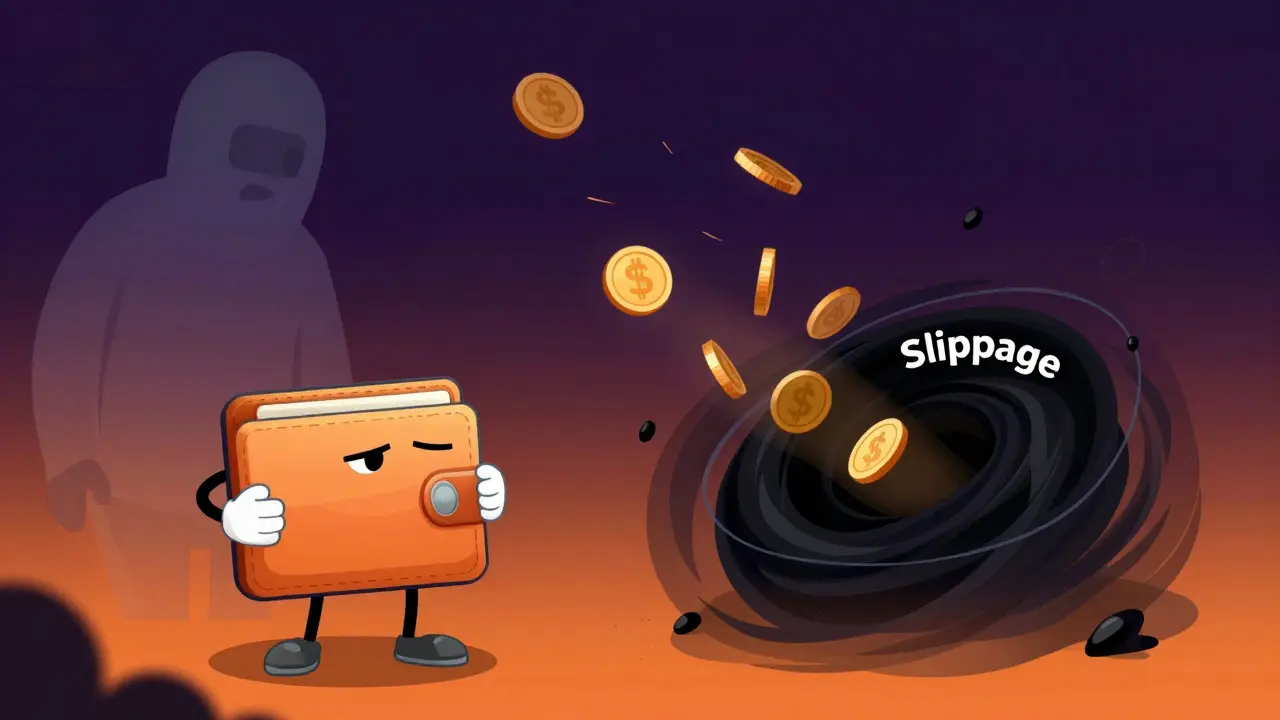
A 24-hour trading volume of less than $10 is not just "low"-it is effectively zero for a functional exchange. For context, major DEXs process millions of dollars every minute. With such thin liquidity, attempting to swap even a small amount of CHEESE could result in massive slippage. Slippage is the difference between the expected price of a trade and the price at which the trade is executed. In illiquid pools, you might try to sell $10 worth of tokens and only receive $2 back because there aren't enough buyers in the pool to absorb your sale.
The market capitalization of roughly $30,000 indicates that this is a micro-cap asset. While some investors hunt for gems in this space, the lack of volume suggests there is no active market to buy out your position if you decide to exit. The fact that the circulating supply is nearly identical to the total supply (99.49 billion tokens) means there is no future inflation pressure from team unlocks, but it also means the token has fully distributed without generating sustained demand.
Security and Smart Contract Risks
When evaluating a DEX, security is paramount. Unlike centralized exchanges like Coinbase or Binance, where the company holds your funds, a DEX relies entirely on smart contracts. If the code has bugs, your funds can be drained. There is little public information regarding recent security audits for CheeseSwap. Most active DeFi protocols undergo regular audits by firms like CertiK or Hacken and publish these reports prominently.
The absence of recent audit updates is a red flag. Furthermore, the primary venue for trading CHEESE is currently listed as PancakeSwap (v2) the largest decentralized exchange on the BNB Chain, originally launched in 2020. This is ironic because CheeseSwap competes with PancakeSwap. The fact that the most liquid pair for CHEESE is on a competitor’s platform suggests that CheeseSwap’s own internal pools are too dry to be useful. Traders are forced to use another exchange to trade the token associated with this specific exchange.
If you do decide to interact with the contract, always verify the address yourself. Scammers often create fake tokens with similar names. The legitimate CHEESE token resides at the BSC address mentioned earlier. Never trust links from social media comments; always cross-reference with a trusted block explorer like BscScan.

Comparison: CheeseSwap vs. Active Competitors
To put the state of CheeseSwap into perspective, let’s compare it with two other BSC-based DEXs that remain highly active. This comparison highlights the gap between a dormant project and a thriving ecosystem.
| Feature | CheeseSwap | PancakeSwap | Uniswap (Ethereum) |
|---|---|---|---|
| Chain | BSC | BSC / Multi-chain | Ethereum / L2s |
| Daily Volume | <$10 | $100M+ | $500M+ |
| Token Utility | Minimal | Governance & Fees | Governance |
| Liquidity Depth | Very Low | High | Very High |
| Development Activity | Inactive/Dormant | Active | Active |
| Risk Level | Extreme | Medium | Medium-Low |
PancakeSwap, despite facing competition, continues to innovate with features like NFTs, prediction markets, and multi-chain support. Uniswap remains the gold standard for Ethereum-based trading. CheeseSwap, by contrast, offers none of these advantages. Its value proposition of being a "one-stop solution" collapses when the individual components (swap, farm, stake) have no participants to make them work.
How to Buy or Sell CHEESE Tokens (If You Must)
If you already hold CHEESE tokens or are determined to buy them as a speculative bet on a potential revival, here is how the process works. Note that buying via centralized exchanges is generally safer for beginners, while DEXs offer more direct access but higher complexity.
- Centralized Exchange Route: Some platforms like KuCoin or Binance may list CHEESE. On Binance, you can use the Web3 Wallet feature to bridge into the BSC network. This method provides better price transparency and customer support if issues arise.
- Decentralized Exchange Route: Connect your wallet (MetaMask, Trust Wallet) to PancakeSwap. Paste the CHEESE contract address (
0xb4bf64b17e270b50d00658e3c0e2fbdefabdd87b) to ensure you are interacting with the correct token. Swap BNB for CHEESE. Be aware that due to low liquidity, your transaction might fail or suffer extreme slippage.
Always set a high slippage tolerance (e.g., 5-10%) when trading on illiquid pools, but understand that this increases the risk of getting a bad deal. Gas fees on BSC are low (often under $0.10), so cost is not the barrier here-liquidity is.
Is There Any Future for CheeseSwap?
The cryptocurrency market is cyclical, and sometimes forgotten projects see sudden spikes in interest. However, for a DEX to recover, it needs three things: developers, liquidity providers, and traders. Currently, CheeseSwap shows signs of lacking all three.
The developer community is silent. There are no recent roadmap updates, no new feature announcements, and no visible engagement on social media channels compared to active competitors. Without development, the platform cannot adapt to changing security standards or user demands. Liquidity providers have withdrawn their funds, likely seeking better yields elsewhere. And traders avoid the platform because of the poor execution quality.
This creates a death spiral common in failed DeFi projects. As volume drops, liquidity providers leave because fees disappear. As liquidity leaves, traders leave because slippage becomes unbearable. Without intervention from the founding team-such as injecting capital or launching a major incentive program-the trend is unlikely to reverse.
Alternatives to Consider
If you are looking for a BSC-based DEX that is safe, liquid, and actively developed, consider these alternatives:
- PancakeSwap: The dominant force on BSC. Huge variety of tokens, deep liquidity, and frequent updates.
- BiSwap: A strong competitor offering lower fees and robust yield farming options.
- ApeSwap: Known for its innovative "MasterChef" v3 system and strong community focus.
These platforms have proven track records, regular security audits, and active communities. They offer the same core functionality as CheeseSwap-swapping, farming, and staking-but with the reliability and volume necessary for serious trading.
Is CheeseSwap a scam?
There is no definitive evidence labeling CheeseSwap as a outright scam in the legal sense, meaning the founders did not necessarily steal funds directly. However, it exhibits many characteristics of abandoned or failed projects. The lack of development, near-zero liquidity, and inability to provide basic exchange functions make it extremely risky. In crypto, a project that stops working and loses value can be just as harmful as a fraudulent one.
Why is the CHEESE token price so low?
The price is low due to a combination of high supply (nearly 100 billion tokens) and extremely low demand. When a token has no active use case and few traders want to buy it, the price naturally depreciates. Additionally, the loss of confidence after the peak in 2021 led to massive selling pressure, pushing the price down by over 99% from its all-time high.
Can I still farm yield on CheeseSwap?
Technically, the smart contracts may still accept deposits, but practically, it is not advisable. With minimal trading volume, the fees generated for liquidity providers are negligible. You might lock up your capital in a pool that generates almost no returns, while exposing yourself to smart contract risks without any compensation for that risk.
Where is the best place to trade CHEESE?
Due to the lack of liquidity on the CheeseSwap platform itself, the most active trading pair (CHEESE/WBNB) is found on PancakeSwap. Centralized exchanges like KuCoin may also offer trading pairs, which can provide slightly better execution for larger orders, though availability varies by region.
Should I invest in CHEESE token in 2026?
Investing in CHEESE carries extreme risk. The project shows no signs of recovery, development, or growing adoption. Unless you are an experienced trader comfortable with high-risk, speculative bets on dead projects hoping for a random pump, it is generally recommended to avoid allocating capital to assets with zero volume and no utility.

Comments
Curtis Johnson
man this is wild to see in writing like really just zero volume... i mean who even looks at cheese anymore besides us old deFi heads from 2021? it feels like a ghost town out there on the chain.
i remember when we were farming those yields and thinking it was gonna be the next big thing but yeah time moves fast and projects die hard. not trying to be negative but its just reality check for sure
Kristy Morrow
you people are so naive if you think any dex survives without constant hype cycles. the market doesn't care about your memories or your feelings it only cares about liquidity depth and slippage tolerance. this project is dead because it failed to adapt to the new narrative of real world assets and institutional adoption. stop looking back at 2021 garbage.
John Harman
let me educate you all on how smart contracts actually work here because clearly nobody read the whitepaper back then. the issue isn't just lack of marketing its that the tokenomics were fundamentally flawed from day one with that massive supply dilution. once you have nearly 100 billion tokens in circulation with no burn mechanism the price action is mathematically destined to go to zero unless you have infinite buyers which obviously doesn't exist.
Antony Lopez
typical foreign scam project trying to drain american wallets. we need stricter regulations on these offshore entities that launch on bsc and disappear. its disgusting how they take our money and leave us holding worthless bags while they cash out in stablecoins. shame on them for exploiting our trust in decentralized finance.
Kat Barr
oh my gosh i still have some cheese in my wallet lol 😂😂😂 i forgot about it completely until i saw this post today!!! its crazy how much crypto we forget about right?? i guess its just part of the journey though 🙈🙈🙈 maybe one day it will pump again and i can buy myself a coffee ☕️☕️☕️ but honestly im just happy i didnt sell low back in 2022 📉📉📉 lets keep vibes positive everyone!! 💖💖💖
Logan Edmison
the philosophical implication of a dead protocol is quite profound isnt it? it represents the entropy of digital capital where value dissipates into the void of inactive ledgers. we are merely observers of this decay watching as the liquidity evaporates like morning dew under the harsh sun of market indifference. perhaps there is beauty in such stagnation a silent testament to the fleeting nature of human attention spans in the age of information overload.
Michelle Walker
stop crying about it. you bought a shitcoin. end of story. the data shows zero volume which means zero utility which means zero future. anyone investing here is an idiot. move along.
Shay Thomson
it truly breaks my heart to see what happened to this community... we had such hope and dreams of financial freedom through decentralization but now its just dust in the wind. i feel so sad for everyone who lost money believing in the promise of yield farming. let us come together and support each other through these tough times because we are stronger than these broken protocols ❤️❤️❤️
DJ Maleko
so basically you guys are sitting on a bag of trash wondering why it smells bad 🤡🤡🤡 i checked the contract address and its literally empty except for some dust. dont tell me you expected the devs to magically fix it after ghosting for three years? grow up and accept your losses instead of posting here seeking validation for your bad decisions 💀💀💀
Erika Pozzetto
in light of the aforementioned statistical anomalies and the evident lack of developmental momentum within the CheeseSwap ecosystem it becomes increasingly apparent that the platform has succumbed to the inevitable forces of market attrition and technological obsolescence. furthermore the absence of regular security audits coupled with the negligible trading volume suggests a complete abandonment of user safety protocols which is deeply concerning for any rational investor considering exposure to such high-risk assets in the current volatile macroeconomic environment.
Russ Fincham
look i know i sound harsh but the numbers dont lie. if you cant trade ten dollars without losing half to slippage its not an exchange its a donation box. the comparison table in the article is spot on pancake swap and uniswap are leagues ahead in terms of infrastructure and active development. stick to the majors unless you enjoy gambling with fire.
Linda Hilliard
one must possess a certain level of sophistication to understand why micro-cap dexs fail repeatedly across bull and bear markets alike. it is not merely bad luck it is a fundamental misunderstanding of network effects and liquidity provision dynamics by the retail investors flocking to these platforms. those who continue to engage with such dormant protocols demonstrate a profound ignorance of basic economic principles and deserve their financial ruin as a corrective measure for their hubris :/
Winston Lacewing
this makes me so angry!!! 😡😡😡 how dare they abandon their users like this?! it is morally reprehensible for founders to launch a project collect funding and then vanish without a trace leaving thousands of people with worthless tokens. they should be prosecuted for fraud and theft! we deserve justice and accountability not silence and neglect!!! ⚖️⚖️⚖️
Kristine Lawson
contrary to popular belief among the uninformed masses; the demise of CheeseSwap was entirely predictable given the initial red flags present in its governance structure. furthermore; it is imperative to recognize that blaming external factors such as market conditions is a cop-out excuse for poor project management and lack of vision. therefore; those who invested heavily in this venture did so at their own peril due to insufficient due diligence.
Tawny Holmes
its dead. stop talking about it. use pancake swap.
Melissa Beckwith
i have been analyzing the blockchain data for several months now and what strikes me most is the complete absence of any meaningful interaction with the core smart contracts beyond simple balance checks. this indicates that not only has the trading activity ceased but even the administrative functions appear to be neglected suggesting that the development team has likely moved on to other ventures leaving this codebase to rot in obscurity which is a common pattern in failed defi experiments.
Josephine Finlayson
i understand how frustrating this must be for everyone involved... please remember that learning from mistakes is part of the process. it might be helpful to look into more established platforms like bi-swap or ape-swap which offer similar features but with active communities and regular updates. take care of yourself and don't let this setback discourage you from exploring the wonderful world of decentralized finance safely 💛💛💛
Tuan Nguyen
the sheer incompetence displayed by the creators of this platform is staggering. to build a dex on bsc without securing adequate initial liquidity or establishing a sustainable revenue model is amateur hour at best and criminal negligence at worst. i refuse to associate myself with such pedestrian efforts in the space and advise anyone with actual capital to steer clear of this dumpster fire immediately.
Hazel Fruitman
i feel like we are being played for fools by these tech bros who think they can just launch a token and get rich quick. its wrong and unethical to treat people's savings like play money. we need to stand up against this greed and demand better standards for all crypto projects going forward. enough is enough!!
Autumn Story
aww man i am so sorry this happened to u guys :( i hope you can find peace in knowing that you tried your best in a very difficult market. maybe try donating your remaining tokens to charity if possible? it would feel good to help someone else out instead of letting them sit there doing nothing. sending lots of love and hugs to everyone affected by this sad situation 🤗🤗🤗
Mark Tuason
it is important to approach this situation with a calm and measured perspective rather than reacting emotionally to the loss of value. while the outcome is certainly disappointing it serves as a valuable lesson in risk assessment and portfolio diversification. moving forward it would be prudent to focus on assets with proven track records and transparent governance structures to mitigate similar risks in the future.
Steven Briggs
yeah i just checked my wallet too. nothing happening there either. guess its time to delete the app.