
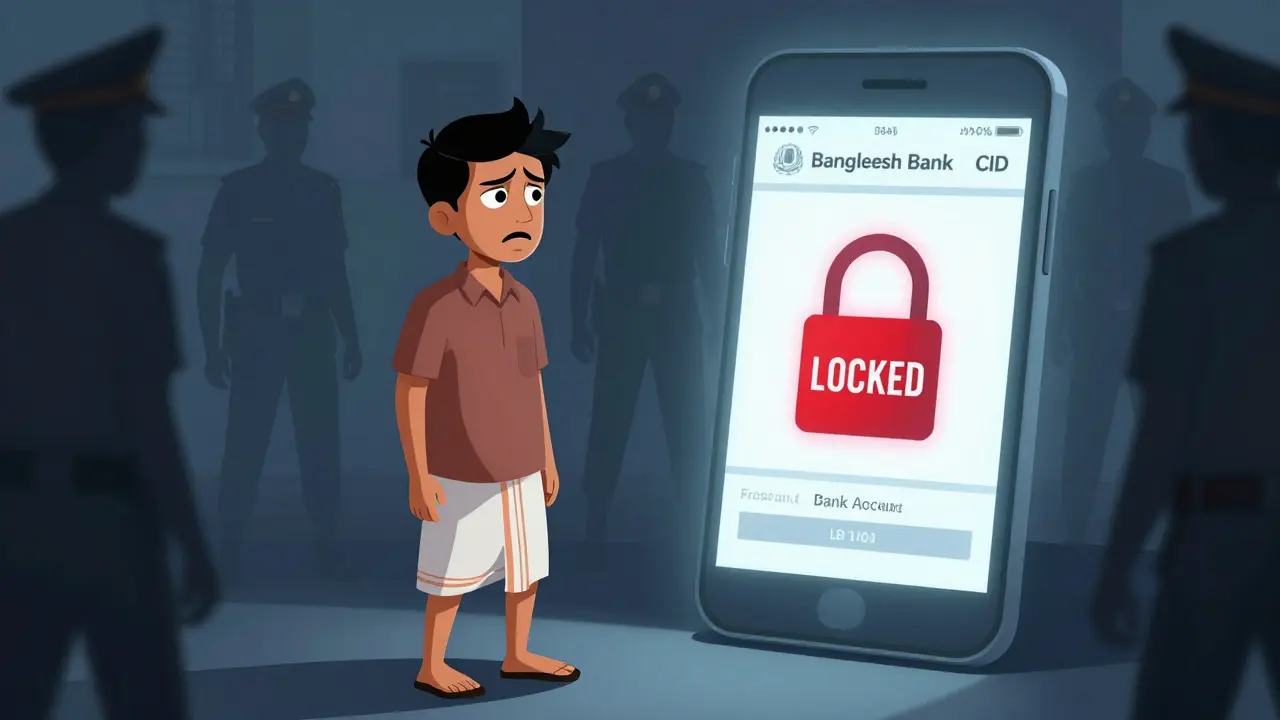
Imagine checking your bank account balance and seeing it frozen. No warning. No explanation. Just a locked screen while you panic about where your money went. For thousands of people in Bangladesh, this isn't a hypothetical nightmare-it’s the daily reality of trading Bitcoin under one of Asia's strictest bans. While you might think owning digital currency is just a personal financial choice, in Bangladesh, it walks a razor-thin line between civil disobedience and criminal prosecution.
The confusion starts with the law itself. There is no single statute that explicitly says "owning Bitcoin is illegal." Instead, authorities trap traders using older laws designed for entirely different crimes. This creates a dangerous legal gray zone where you could be perfectly innocent until you move money, at which point you become a suspect in a money laundering or foreign exchange violation case. If you are considering entering this market, you need to understand exactly how the hammer falls and why the risk is so much higher here than in neighboring countries like India or Pakistan.
How the Ban Actually Works
To understand the danger, you have to look at who is pulling the strings. The Bangladesh Bank is the central bank of Bangladesh responsible for issuing currency and regulating the financial sector. Since December 2014, they have issued circulars stating that cryptocurrencies are not legal tender. By February 2016, they clarified that using these assets could violate the Foreign Exchange Regulation Act of 1947. Then came the definitive blow in 2017, when the central bank declared all digital currencies strictly prohibited as a medium of exchange, store of value, or investment vehicle.
Here is the catch: the ban is administrative, not legislative. Parliament has never passed a specific "Crypto Crime Act." This means prosecutors cannot charge you simply for holding Bitcoin in a cold wallet. However, the moment you try to convert that Bitcoin into Bangladeshi Taka (BDT), you trigger other laws. The Money Laundering Prevention Act is legislation enacted to prevent the processing of illicit funds, amended significantly in 2012 and 2015 becomes the primary weapon. Section 6 of this act criminalizes transactions involving proceeds from illegal activities. Authorities interpret any unexplained flow of funds through peer-to-peer networks as suspicious activity linked to money laundering.
This regulatory framework is enforced by two main bodies. The Bangladesh Financial Intelligence Unit (BFIU) monitors transaction patterns, looking for red flags that suggest illicit flows. Meanwhile, the Criminal Investigation Department (CID) handles the actual arrests and seizures. The result is a system where ownership is tolerated in silence, but movement is punished with severity.
Penalties and Real-World Arrests
If you get caught, what happens? The penalties are severe and can destroy your life financially and legally. Under the Money Laundering Prevention Act, as amended in 2015, offenders face imprisonment ranging from one to ten years. Fines can range from 10,000 BDT to 1,000,000 BDT, depending on the scale of the operation. But the real cost often comes from asset seizure.
Let’s look at what actually happened on the ground, because statistics tell a stark story. In July 2022, the CID arrested 14 individuals in Dhaka for operating an underground cryptocurrency exchange. They were processing approximately $2.3 million in transactions. These weren't just minor speculators; they were running a business model that the state viewed as a direct threat to its monetary control.
Then there was the case of Mohammad Ali in February 2023. He was a trader based in Dhaka who had accumulated 127 Bitcoin. At the time, that stash was worth roughly 1.3 billion BDT (about $12.1 million). Authorities seized the entire amount. This wasn't just a fine; it was total confiscation. More recently, in May 2024, seven university students in Chittagong found themselves under investigation by the BFIU. They weren't running a massive exchange; they were facilitating $85,000 in monthly transactions through peer-to-peer networks. Students, likely trying to earn extra income, suddenly faced federal-level scrutiny.
These cases show a clear pattern: if you trade small amounts quietly, you might slip through. But if you trade frequently, use local agents, or handle large sums, you attract attention. The threshold for "suspicious" is incredibly low in Bangladesh.
The Underground Economy: How People Trade Anyway
Despite the risks, the demand for Bitcoin in Bangladesh hasn't disappeared; it has just gone underground. A 2024 report by the Blockchain Association of Bangladesh estimates that 500,000 to 700,000 citizens actively participate in crypto trading. That’s a significant portion of the population ignoring a direct order from their central bank. So, how do they do it?
The ecosystem relies on three main channels:
- Local Agents: This is the most common method. You find someone on Facebook or Telegram who claims to buy USDT (Tether) for cash. They charge a commission of 3% to 5%. You hand them physical Taka, and they send you stablecoins. It sounds simple, but it’s fraught with risk. In June 2024, an agent named 'Sohel Rana' collected payments from 23 traders totaling approximately $350,000 and then vanished. There was no recourse. No insurance. No police help, because admitting you were trading crypto would implicate you too.
- Peer-to-Peer Platforms: Apps like Binance and KuCoin remain accessible via the Google Play Store in Bangladesh. Sensor Tower data from March 2025 shows that between 150,000 and 200,000 users access these apps monthly. Users rely on VPNs to mask their IP addresses and use mobile financial services to bridge the gap between fiat and crypto.
- Mobile Financial Services (MFS): Providers like bKash and Nagad are the lifelines of the Bangladeshi economy. Traders use them to transfer funds to agents. However, these platforms are now heavily monitored. In 2024 alone, bKash and Nagad reported blocking 2,843 accounts for suspected crypto-related activity. Once your MFS account is flagged, you are effectively cut off from the formal banking system.
This underground network thrives on trust, which is the scarcest resource in this environment. Every transaction is a gamble against both the government and your counterparty.

Taxation in the Gray Zone
You might assume that since crypto is banned, you don’t have to pay taxes on it. Think again. The National Board of Revenue (NBR) operates under the Income Tax Ordinance of 1984. Even though there are no specific crypto tax regulations, the NBR applies general rules to digital asset profits.
In a press briefing on February 15, 2025, NBR Commissioner Md. Moniruzzaman confirmed that profits from cryptocurrency transactions are subject to standard tax rates. If you are an individual, you could face a personal income tax rate of up to 30%. If you are operating as a corporate entity, the rate jumps to 25%. The irony is palpable: the state prohibits the activity but still expects its share of the revenue. Reporting these gains voluntarily is nearly impossible without exposing yourself to criminal investigation, leaving traders in a double bind. Pay taxes and admit to a crime, or don’t pay and risk evasion charges later.
Enforcement Methods: How They Catch You
The Bangladesh Bank doesn't just guess who is trading; they have sophisticated tools to track you. The primary mechanism is the Bangladesh Automated Clearing House (BACH). This system monitors international card transactions and domestic high-value transfers. In the fourth quarter of 2024 alone, BACH flagged 127 suspicious transactions linked to crypto activities.
When a transaction looks odd-say, a sudden influx of cash into a student’s account followed by a withdrawal to a known agent-the system triggers an alert. The BFIU reviews these alerts. If they deem the activity suspicious, they issue a freeze order to the bank. Your account is locked immediately. You cannot withdraw money for rent, food, or medical bills. To unfreeze it, you must appear before investigators and explain the source of the funds. Explaining that you bought Bitcoin is an admission of violating the Foreign Exchange Regulation Act.
This surveillance extends to social media. The CID actively monitors groups like 'Bangladeshi Crypto Traders' on Facebook, which boasts nearly 29,000 members. Posting screenshots of trades or complaining about price drops can provide the digital footprint needed to identify and locate traders. Privacy is not just a preference here; it is a survival necessity.
Regional Comparison: Why Bangladesh Stands Alone
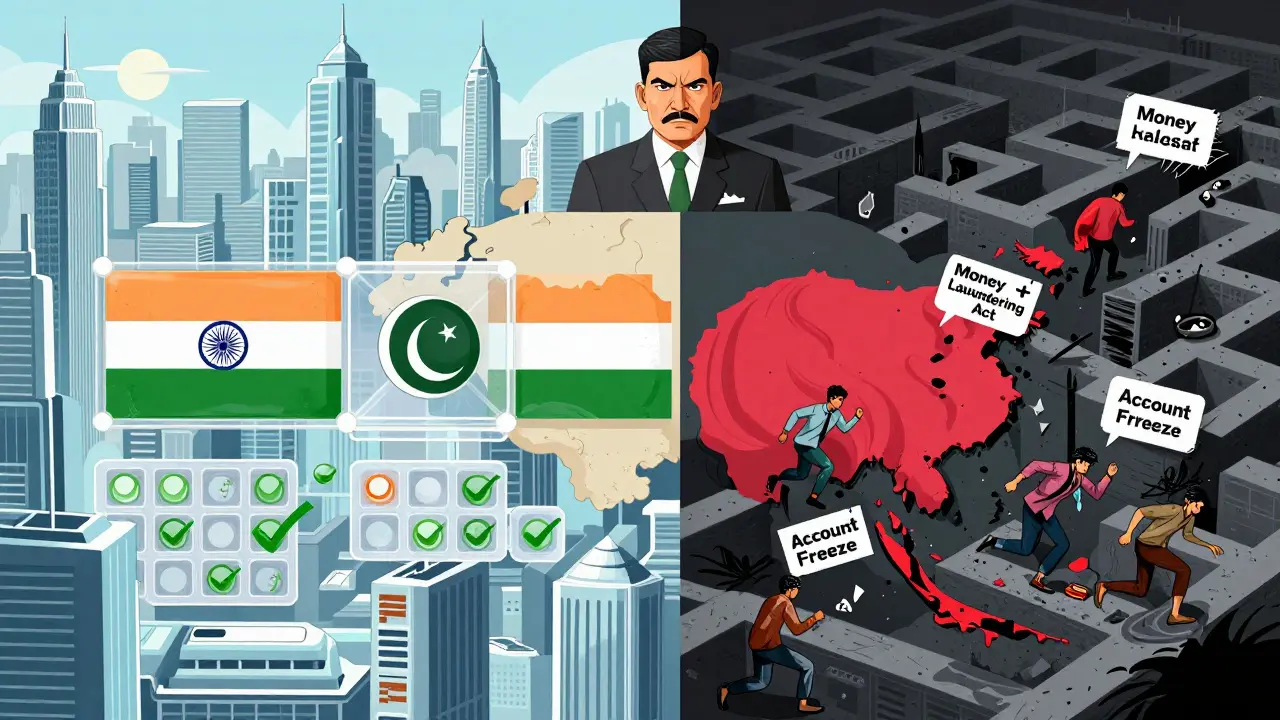
To truly grasp the severity of the situation, compare Bangladesh to its neighbors. The rest of South Asia is moving toward regulation, not prohibition.
| Country | Legal Status | Tax Rate on Gains | Active Users (Est.) |
|---|---|---|---|
| Bangladesh | Strictly Prohibited | N/A (Illegal) | 500,000 - 700,000 |
| India | Legal but Taxed | 30% Flat + 1% TDS | 15 Million+ |
| Pakistan | Exploring Reserves | Under Review | ~1 Million |
| Sri Lanka | Draft Framework | TBD | ~500,000 |
India allows trading and taxes it at a flat 30%, creating a transparent market with over 15 million active users. Pakistan began exploring Bitcoin reserves in early 2025, signaling a shift toward acceptance. Sri Lanka drafted a regulatory framework in late 2024. Bangladesh, however, maintains a stance of "strict prohibition with no shift," according to the June 2025 CoinDCX Crypto Currents Newsletter. Finance Minister Abul Hassan Mahmood Ali stated in March 2025 that there are no plans to reconsider the ban. This isolation makes Bangladesh a high-risk outlier in the region.
The Future: Blockchain vs. Bitcoin
Is there any hope for change? The government is making a distinction between the technology and the token. The 2020 National Blockchain Strategy recognized the potential of blockchain for digital transformation but explicitly excluded cryptocurrencies. In January 2025, the Bangladesh Bank launched an Innovation Hub sandbox specifically for non-crypto blockchain applications. This suggests that regulators see value in distributed ledger technology for supply chains or identity verification, but they view decentralized finance as an existential threat to monetary policy.
Dr. B M Mainul Hossain, a Professor of Finance at Dhaka University, argues in his April 2024 paper that the ban costs Bangladesh approximately $150 million annually in potential tax revenue and stifles innovation. Conversely, the Bangladesh Bank’s Research Department maintains in their 2025 Financial Stability Report that allowing crypto would undermine monetary policy, especially given that remittances constitute 6.1% of GDP ($21.1 billion in 2024). They fear capital flight if citizens can easily move wealth out of the country using Bitcoin.
Until this philosophical divide is resolved, the ban remains. For the average citizen, this means the legal landscape will stay hostile for the foreseeable future.
Is owning Bitcoin illegal in Bangladesh?
Owning Bitcoin itself is not explicitly criminalized by a specific statute. However, the Bangladesh Bank prohibits its use as a medium of exchange or investment. Prosecution typically occurs when ownership is linked to transactions that violate the Money Laundering Prevention Act or the Foreign Exchange Regulation Act. Essentially, holding it is a gray area, but moving it is a crime.
What are the penalties for getting caught trading crypto?
Penalties under the Money Laundering Prevention Act include imprisonment from one to ten years and fines ranging from 10,000 to 1,000,000 BDT. Additionally, authorities have the power to seize all assets involved in the transaction, including the cryptocurrency itself and any associated fiat currency.
Can I use Binance or KuCoin in Bangladesh?
Yes, these apps are available on the Google Play Store and have hundreds of thousands of active users. However, using them carries significant risk. Banks monitor transactions linked to these platforms, and your bank account may be frozen if suspicious activity is detected. There is no legal protection for users of these exchanges.
Do I have to pay taxes on my crypto profits?
Technically, yes. The National Board of Revenue applies standard income tax rates (up to 30% for individuals) to crypto gains under the Income Tax Ordinance of 1984. However, reporting these gains requires disclosing illegal activity, creating a paradox where taxpayers risk criminal prosecution by complying with tax laws.
Why is Bangladesh stricter than India or Pakistan?
The Bangladesh Bank fears that widespread crypto adoption will undermine monetary policy and facilitate capital flight, particularly given the country's reliance on remittances (6.1% of GDP). Unlike India, which has chosen to tax and regulate, Bangladesh views crypto as an uncontrollable threat to financial stability and has opted for a complete ban.
What happens if my bank account gets frozen?
If your account is frozen due to suspected crypto activity, you must contact the Bangladesh Financial Intelligence Unit (BFIU) or your bank's compliance department. You will likely need to provide proof of the source of funds. Admitting to crypto transactions can lead to further investigation and potential criminal charges under money laundering statutes.
Are there any plans to legalize crypto in Bangladesh?
As of mid-2025, there are no plans to legalize cryptocurrency. Finance Minister Abul Hassan Mahmood Ali confirmed in March 2025 that the ban remains in place. The government is focusing on blockchain technology for non-financial applications, but digital currencies remain strictly prohibited.

Write a comment