

Imagine trying to buy a coffee with Bitcoin. You scan the QR code, wait for confirmation, and suddenly realize the network fee was $45. The coffee costs $3. You just lost money making a purchase. This isn’t a hypothetical nightmare; it’s the reality of blockchain congestion on Layer 1 networks like Ethereum or Bitcoin during peak times. But what if you could make that same transaction for pennies? That is exactly what rollups are designed to do.
Rollups are not just a technical buzzword. They are the practical solution to the most annoying problem in crypto: high gas fees. By moving the heavy lifting off the main blockchain and bundling transactions together, rollups cut costs dramatically while keeping your assets secure. If you are a developer building an app, a trader tired of slippage, or just a user who wants to send small amounts without paying a fortune, understanding how this works is essential.
The Core Mechanism: Batching and Off-Chain Processing
To understand why rollups save money, you first need to see where the cost comes from. On a standard blockchain (Layer 1), every single transaction requires space on a block. When millions of people want to transact at once, that space becomes scarce. Scarcity drives up price. It’s basic economics.
Blockchain rollups solve this by acting as a middleman. Instead of sending one transaction to the main chain, then another, then another, a rollup collects hundreds-or even thousands-of transactions. It processes them on a separate, faster system (off-chain). Then, it bundles all those transactions into a single, compressed data packet and sends just that one packet back to the main blockchain.
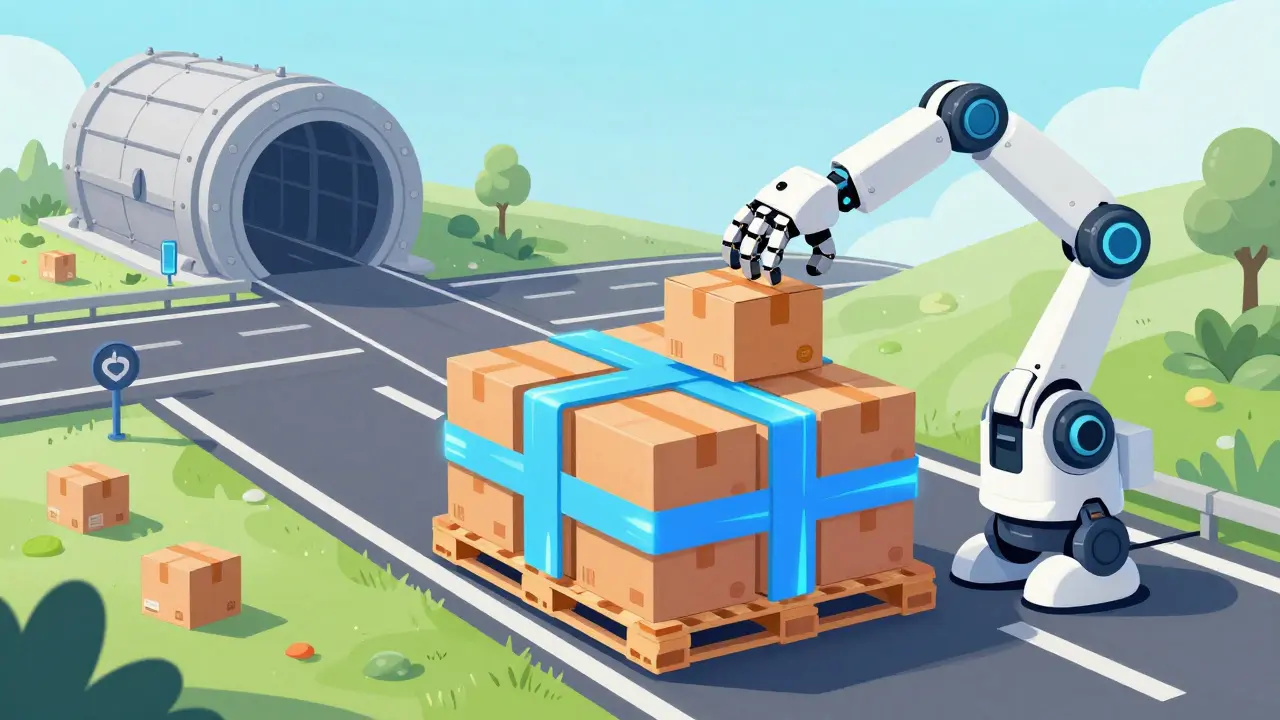
Think of it like shipping packages. If you mail ten boxes individually, you pay for ten shipments. If you put all ten boxes into one large pallet and ship that pallet, you pay for one shipment. The destination (the main blockchain) still receives all the goods, but the logistics cost drops significantly. This batching process is the primary driver of cost reduction.
- Collect: Users submit transactions to the rollup network.
- Process: The rollup executes these transactions off-chain.
- Compress: Data is bundled into a single proof or batch.
- Submit: The bundle is posted to Layer 1 for final settlement.
This method reduces the computational load on the main network. The main chain doesn’t have to execute every step of every trade; it only has to verify the final result. This efficiency frees up bandwidth and lowers the price per transaction for everyone involved.
ZK-Rollups vs. Optimistic Rollups: Which Saves More?
Not all rollups work the same way. There are two dominant types, and they approach cost reduction differently. Knowing the difference helps you choose the right tool for your needs.
| Feature | ZK-Rollups | Optimistic Rollups |
|---|---|---|
| Verification Method | Cryptographic proofs (Zero-Knowledge) | Assumes validity; allows challenges |
| Withdrawal Time | Near-instant (minutes) | Slow (7 days challenge period) |
| Cost Efficiency | Higher long-term savings due to fixed verification costs | Lower upfront costs, but higher risk overhead |
| Best For | High-frequency micropayments, gaming | General DeFi, complex smart contracts |
ZK-rollups use advanced math called zero-knowledge proofs to verify transactions. The key benefit here is the "fixed-cost" model. Verifying a proof takes roughly the same amount of computing power whether it represents 10 transactions or 10,000. As more users join, the cost per user plummets. This creates a positive feedback loop: more usage equals lower fees. For example, a Bitcoin transfer that normally costs 5,000 satoshis can drop to 50 satoshis via a ZK-rollup-a 99% reduction.
Optimistic rollups, on the other hand, assume transactions are valid unless someone proves otherwise. They rely on economic incentives (slashing bonds) to keep fraudsters honest. While they are easier to build and support complex applications better today, their withdrawal times are slower because of the challenge window. However, they remain a popular choice for decentralized finance (DeFi) platforms where immediate finality is less critical than compatibility with existing tools.
Real-World Impact: From Gaming to Supply Chains
Why does this matter outside of technical circles? Because high fees kill usability. Let’s look at specific industries where rollups are changing the game.
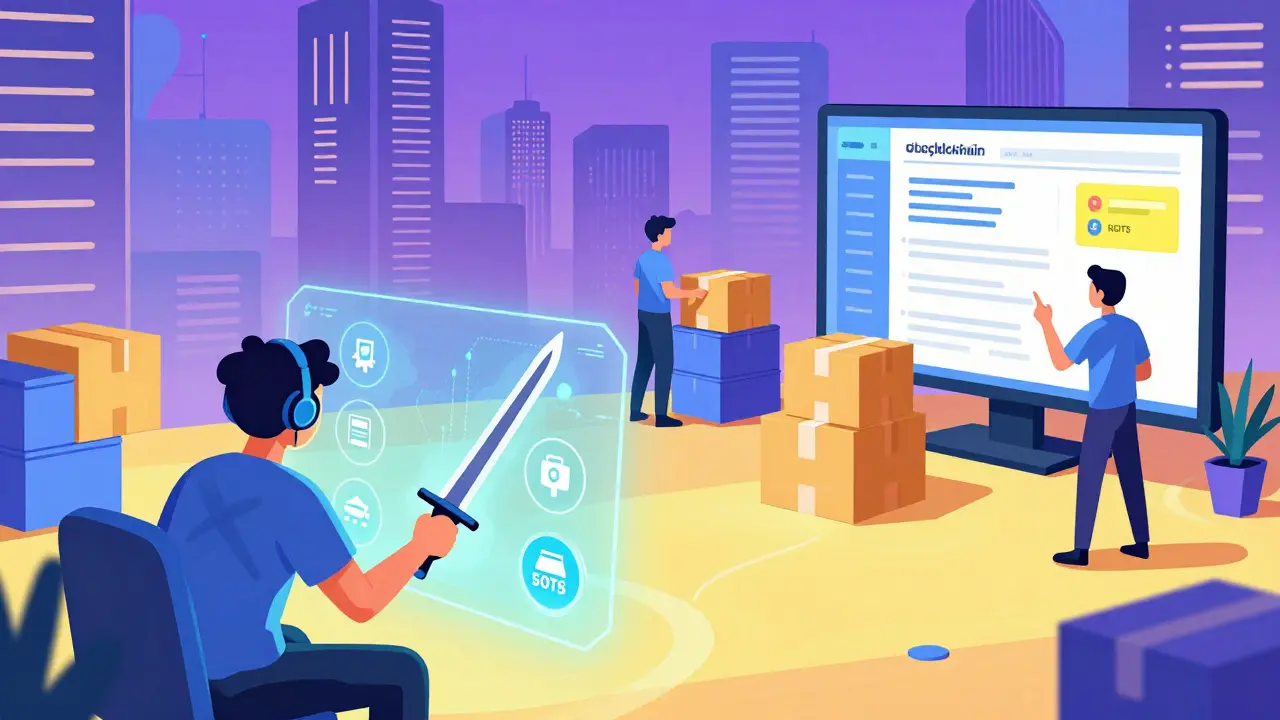
In gaming, players expect instant feedback. If buying a sword in a blockchain game costs $10 in gas fees, no one will play. Rollups allow developers to charge fractions of a cent per interaction. This enables new gameplay mechanics, like real-time combat or frequent item trading, which were previously impossible on Layer 1.
In supply chain management, companies track goods through thousands of checkpoints. Recording each checkpoint on a public ledger provides transparency. Without rollups, the cost of recording every box moved would bankrupt the system. With rollups, granular tracking becomes affordable, allowing businesses to audit their entire supply chain in real-time without breaking the bank.
For NFT creators, minting costs used to be a barrier to entry. Artists couldn’t afford to list their work if the gas fee exceeded the potential sale price. Rollups have democratized this space, allowing artists to mint collections for pennies, opening the market to a wider audience.
The Trade-Offs: Liquidity Fragmentation and Complexity
It’s important to be realistic. Rollups are not a magic bullet with zero downsides. The biggest issue right now is liquidity fragmentation.
When you move funds to a rollup, they are technically on a different chain than the main Layer 1. This means liquidity gets split across multiple networks. If you want to swap tokens between two different rollups, you often have to bridge them back to Layer 1 first, which adds time and complexity. This breaks "composability," the ability for different apps to interact seamlessly. Developers are working on cross-rollup bridges to fix this, but for now, users must manage their assets across multiple environments.
Additionally, rollups still depend on the base layer for security. If the underlying blockchain (like Ethereum) experiences a major outage or attack, the rollups are affected too. They inherit the security of Layer 1, which is generally good, but it also means they cannot escape the fundamental limitations of the main network’s throughput entirely. They optimize within those limits, but they don’t break them completely.
Future Outlook: Danksharding and Beyond
The story doesn’t end here. The blockchain industry is actively developing technologies to make rollups even cheaper. One major development is danksharding on Ethereum. This upgrade aims to increase the amount of data that can be stored on the main chain without increasing the computational burden on nodes. For rollups, this means they can post larger batches of data for even less cost. We are already seeing early signs of this, with transaction fees dropping further as these upgrades roll out.
As we move through 2026, the distinction between Layer 1 and Layer 2 is blurring. Users won’t necessarily know they are using a rollup; they will just see low fees and fast speeds. Abstracted wallets and improved bridging solutions will hide the complexity. The goal is a seamless experience where cost reduction happens automatically in the background.
Practical Steps for Adopters
If you are considering integrating rollups into your business or personal wallet strategy, start by evaluating your transaction volume. If you are making fewer than five transactions a month, the savings might not justify the learning curve. But if you are running a high-frequency application or trading daily, the math is clear.
- Identify your bottleneck: Are gas fees eating into your profits?
- Choose the right rollup: Need speed? Look at ZK-rollups. Need complex contract compatibility? Look at Optimistic rollups.
- Test with small amounts: Familiarize yourself with the bridging process and withdrawal times before committing significant capital.
- Monitor liquidity: Ensure the rollup you choose has enough depth for your trades to avoid slippage.
By shifting to a rollup-centric architecture, you align yourself with the future of scalable, affordable blockchain technology. The era of paying dollars for cents-worth of value is ending.
What is the main advantage of using rollups over Layer 1 blockchains?
The primary advantage is significant cost reduction. Rollups bundle many transactions into one, reducing the data posted to the main chain. This can lower fees by up to 99%, making microtransactions and high-frequency applications economically viable.
Are rollups safe compared to sidechains?
Yes, rollups are generally considered safer than sidechains. They inherit the security of the underlying Layer 1 blockchain. Even if the rollup operator fails, users can typically withdraw their funds using the data posted on the main chain, whereas sidechain failures can lead to total loss of funds.
Why are ZK-rollups becoming more popular for cost reduction?
ZK-rollups use cryptographic proofs that have a fixed verification cost regardless of the number of transactions included. As more users join, the cost per transaction decreases dramatically, creating economies of scale that optimistic rollups struggle to match in the long term.
What is the downside of liquidity fragmentation in rollups?
Liquidity fragmentation occurs when assets are spread across multiple rollup networks rather than being concentrated on one main chain. This makes it harder to find deep markets for trading and requires users to bridge assets between chains, adding complexity and potential delay to transactions.
How does danksharding affect rollup costs?
Danksharding increases the capacity of the main blockchain to store data without requiring full validation by all nodes. This allows rollups to post larger batches of transaction data for a lower fee, further driving down costs for end-users.

Write a comment