

Most people think of the Japanese Akita as a loyal, powerful dog breed. But in the crypto world, Japanese Akita Inu is also the name of a tiny, high-risk meme token known by the ticker JAI. Launched in 2025 on the Solana blockchain, this project markets itself as a “next-generation” asset built for speed and low fees. However, beneath the cute branding lies a complex reality involving extremely low liquidity, confusing contract addresses, and severe price drops that have wiped out over 98% of its initial value. If you are considering buying or selling JAI, understanding these specific details is critical to avoid getting stuck with an unsellable asset.
The Basics: What Is the JAI Token?
At its core, Japanese Akita Inu is a standard SPL token operating on the Solana network. It was created in early 2025 and has a nominal maximum supply of 1 billion tokens. The project’s pitch relies heavily on the symbolism of the Akita dog-loyalty and strength-to attract meme-coin enthusiasts who are looking for fresh narratives within the Solana ecosystem. Unlike major cryptocurrencies like Bitcoin or Ethereum, JAI does not have a unique technical utility; it is purely a speculative asset designed to ride the wave of community hype and fast trading speeds provided by the underlying chain.
The token uses 6 decimal places of precision, which is standard for Solana assets. Its primary contract address on the main Solana deployment is bp7ycdpc7gk9wu28efamcbe5zd9j1c6q1hvadmi3pump. This address is crucial because, as we will see later, other tokens with the same name exist on different blockchains, some of which are outright scams. When traders look at data aggregators like CoinMarketCap or CoinPaprika, they see JAI listed with a market capitalization that often hovers in the low five-figure US-dollar range. For context, this means the entire value of all JAI tokens combined is worth less than a mid-range smartphone, placing it firmly in the “micro-cap” category where volatility is extreme and risk is highest.
Technical Specs and Where to Trade
If you decide to interact with JAI, you need to know exactly where it lives. The primary venue for trading is decentralized exchanges (DEXs) on Solana, specifically Raydium. Most trades happen in the SOL/JAI pair, meaning you swap your Solana coins for JAI directly on-chain. You can also find JAI listed on wallet interfaces like Phantom, which allows users to buy and sell without leaving their wallet app. Centralized exchanges play a minor role here; while platforms like Crypto.com may display price data, actual spot trading volume is negligible compared to on-chain activity.
| Attribute | Value |
|---|---|
| Blockchain | Solana |
| Ticker | JAI |
| Max Supply | 1,000,000,000 tokens |
| Decimals | 6 |
| Main Contract Address | bp7ycdpc7gk9wu28efamcbe5zd9j1c6q1hvadmi3pump |
| Primary DEX | Raydium |
| Launch Year | 2025 |
Liquidity is the biggest hurdle for new entrants. As of mid-2026, daily trading volumes have frequently dropped to near zero on some trackers. For instance, one snapshot showed only $68 traded in a 24-hour period on Raydium. This thin order book means that if you try to buy or sell a large amount, the price impact will be significant. You might get a much worse exchange rate than the displayed price due to slippage, a common pitfall in micro-cap DeFi trading.
Price History and Market Performance
The price action of JAI tells a story of rapid rise and steep decline. The token hit its all-time high in early February 2025, reaching approximately $0.000522 per token according to CoinMarketCap. By late 2025, the price had fallen by more than 90%, and by early 2026, it was down nearly 98% from that peak. Current prices fluctuate around fractions of a cent, often below $0.00001. This kind of volatility is typical for meme coins that lack fundamental backing, but JAI’s drawdown is particularly sharp because there is no active development roadmap or major institutional interest to support the floor price.
When comparing JAI to other dog-themed coins, the difference in scale is staggering. Tokens like Shiba Inu (SHIB) or even the separate Akita Inu (AKITA) project have market caps in the billions or hundreds of millions. JAI’s market cap, hovering around $8,000 to $13,000 depending on the date, makes it a fringe asset. In practical terms, this means individual traders holding a few thousand dollars’ worth of JAI can move the price significantly. While this offers potential for outsized gains, it equally exposes holders to sudden crashes if a large holder decides to dump their bags.
The Danger of Clone Contracts
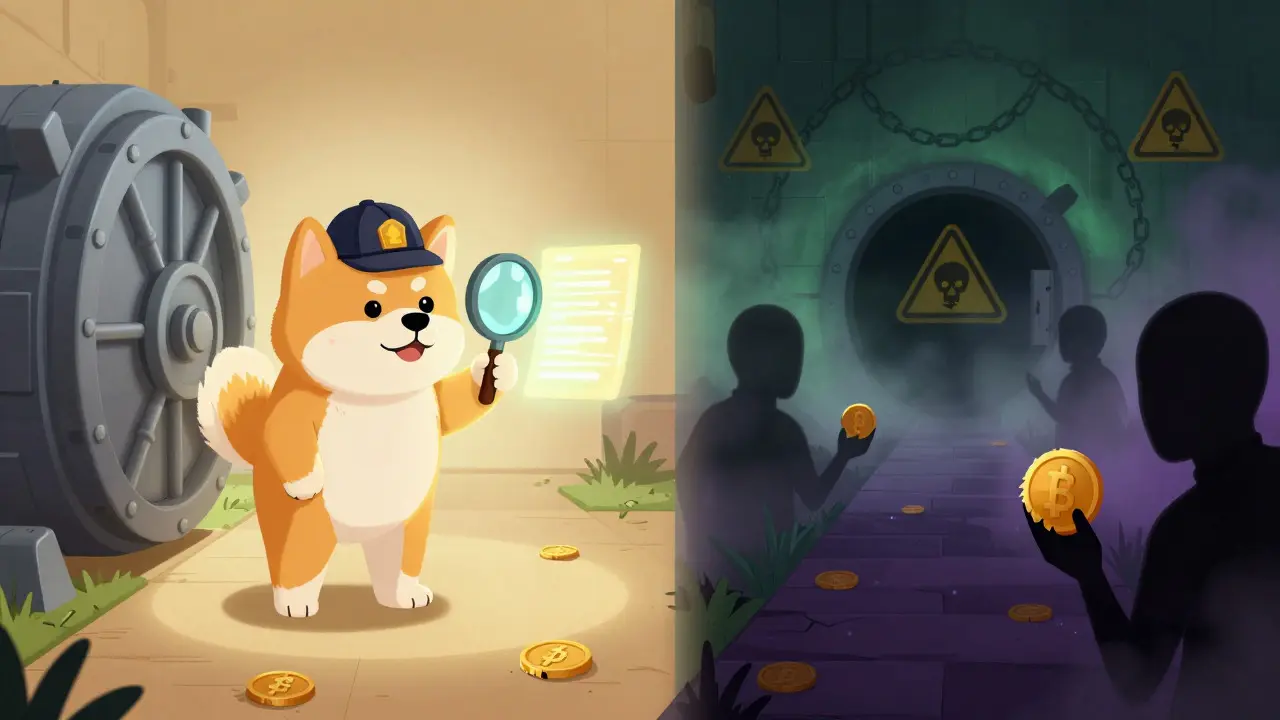
One of the most critical risks associated with JAI is brand confusion. Because the name “Japanese Akita Inu” is catchy, scammers have deployed fake versions of the token on other blockchains. On the Binance Smart Chain (BSC), there is a contract labeled JAI that has been flagged by monitoring sites like Top100Token as a “honeypot.” A honeypot is a scam where you can buy the token but cannot sell it, effectively locking your funds forever. There is also a version on the Base network with a massive supply of 100 trillion tokens, which dilutes value further and lacks the security checks of the original Solana deployment.
To protect yourself, you must always verify the contract address before swapping. Do not rely solely on the token name or symbol. Check that the address matches the official Solana deployment: bp7ycdpc7gk9wu28efamcbe5zd9j1c6q1hvadmi3pump. If you are using a wallet like Phantom, ensure you are interacting with the correct token list. Clicking on a link from a social media post or a random forum thread can easily lead you to a malicious contract, especially given the lack of widespread awareness about the BSC scam version.
Community and Social Presence
Meme coins live and die by their community. Unfortunately, JAI struggles in this area. While the broader Akita Inu (AKITA) project boasts tens of thousands of Twitter followers, JAI lacks comparable public metrics. There are no prominent GitHub repositories, active Reddit threads, or verified influencer endorsements driving sustained engagement. The community appears small and scattered, often confused with similarly named projects on Algorand or other chains. This lack of a strong, unified voice makes it difficult for JAI to maintain momentum during market downturns, as there is no grassroots army ready to defend the price or promote new updates.
Is JAI a Good Investment?
Whether JAI is a “good” investment depends entirely on your risk tolerance. For conservative investors, it is likely too risky due to its micro-cap status, low liquidity, and history of 98% drawdowns. For high-risk speculators, it represents a lottery ticket: cheap enough to buy in bulk, with the potential for a viral spike if the meme catches fire again. However, you should approach it with strict rules. Never invest more than you are willing to lose completely. Use limit orders to control slippage. And double-check the contract address every single time. The future of JAI remains uncertain, hinging on whether it can build genuine user engagement on Solana while avoiding further brand dilution by scam deployments elsewhere.
What is the current price of Japanese Akita Inu (JAI)?
As of mid-2026, the price of JAI fluctuates significantly but generally sits below $0.00001 USD. Due to low liquidity, the exact price can vary between exchanges and wallets. Always check real-time data on Raydium or Phantom for the most accurate swap rate.
Where can I buy JAI safely?
The safest place to buy JAI is through a Solana-compatible wallet like Phantom, swapping directly on the Raydium decentralized exchange. Ensure you use the correct contract address (bp7ycdpc7gk9wu28efamcbe5zd9j1c6q1hvadmi3pump) to avoid scam clones on other networks.
Is JAI listed on major exchanges like Coinbase or Binance?
No, JAI is not listed on major tier-1 centralized exchanges for spot trading. It is primarily traded on Solana DEXs like Raydium. Some price trackers like Crypto.com may show data, but direct trading happens on-chain.
What is the total supply of JAI?
The maximum supply of Japanese Akita Inu is 1,000,000,000 (1 billion) tokens. Data sources sometimes conflict on the circulating supply, but most indicate that the vast majority of the supply is in circulation or available for trade.
How do I avoid the JAI honeypot scam?
Always verify the token contract address before buying. The legitimate Solana JAI starts with 'bp7y...'. Avoid any JAI tokens on Binance Smart Chain (BSC) or Base unless you have thoroughly audited them, as several versions on those chains have been flagged as honeypots or scams.

Write a comment