

Over $10 billion vanished from American bank accounts in 2024-not through hacking, not through market crashes, but through carefully crafted lies told over text messages and dating apps. The money didn’t disappear into thin air. It flowed into criminal compounds in Shwe Kokko, a lawless border town in Myanmar, where victims were tricked into investing in fake crypto platforms, and the scammers themselves were trapped in modern slavery.
The $10 Billion Machine
In 2024, cryptocurrency fraud in the U.S. hit a record $10 billion in losses. Two-thirds of that came from one source: Myanmar. The U.S. Treasury Department called it the largest, most organized crypto scam operation in history. These aren’t random hackers working from their bedrooms. They’re corporate-style fraud factories, run like businesses-with HR departments, call centers, and performance bonuses tied to how much money they steal. The epicenter is Shwe Kokko, a town near the Thai border that’s become a criminal free zone. It’s protected by the Karen National Army (KNA), a rebel group that doesn’t answer to Myanmar’s military junta or any international authority. The KNA collects taxes from the scam centers, provides armed guards, and turns a blind eye to the abuses inside. The result? A place where U.S. citizens are lured in, robbed, and sometimes held against their will-while the criminals who do it are also being held against their will.How the Scams Work
The method is chillingly simple. Scammers start by building trust. They create fake profiles on dating apps like Tinder, Bumble, or Facebook. They send messages that feel personal, warm, real. They talk about shared interests, family, dreams. They might spend weeks or months doing this-sometimes even sending gifts or money to gain deeper trust. Then, they introduce the investment. "I just made $50,000 in a week on this platform," they say. "It’s a new crypto system. Only a few people know about it. I’ll help you get in." The platform looks real. The charts move. The profits show up. Victims deposit $5,000. Then $10,000. Then $50,000. They’re told to send crypto to a wallet address. And then-nothing. The platform vanishes. The person they loved disappears. The money is gone. The FBI says this isn’t just romance scams anymore. It’s a full-scale fraud ecosystem. The same people who run these scams also operate fake mining companies, fake tech startups, and even fake Toyota dealerships in Shwe Kokko. These aren’t fronts-they’re money laundering shells. The cash gets converted into crypto, moved through exchanges in Thailand, then washed into real assets: luxury cars, real estate, gold.The Human Cost Behind the Numbers
Here’s the part most headlines skip: the scammers are victims too. People from Vietnam, China, India, and even the U.S. are lured with fake job offers-"Customer service agent," "Tech support," "Marketing coordinator"-with salaries three times what they’d earn at home. They’re flown to Myanmar. Their passports are taken. They’re locked inside compounds with armed guards. If they refuse to scam people, they’re beaten. If they try to escape, they’re sold into forced prostitution. Some are held for years. The U.S. Treasury didn’t just sanction fraudsters. They sanctioned human traffickers. On September 9, 2025, OFAC targeted 19 individuals and organizations under multiple executive orders: one for cybercrime, one for terrorism, one for human rights abuses. This was the first time the U.S. used all three at once against a single criminal network. The sanctioned names include Tin Win, Saw Min Min Oo, and the Yatai International Holding Group. These aren’t shadowy figures. They’re listed on company websites, appear in local news, and even sponsor sports teams in the region. Their businesses are public. Their crimes are hidden in plain sight.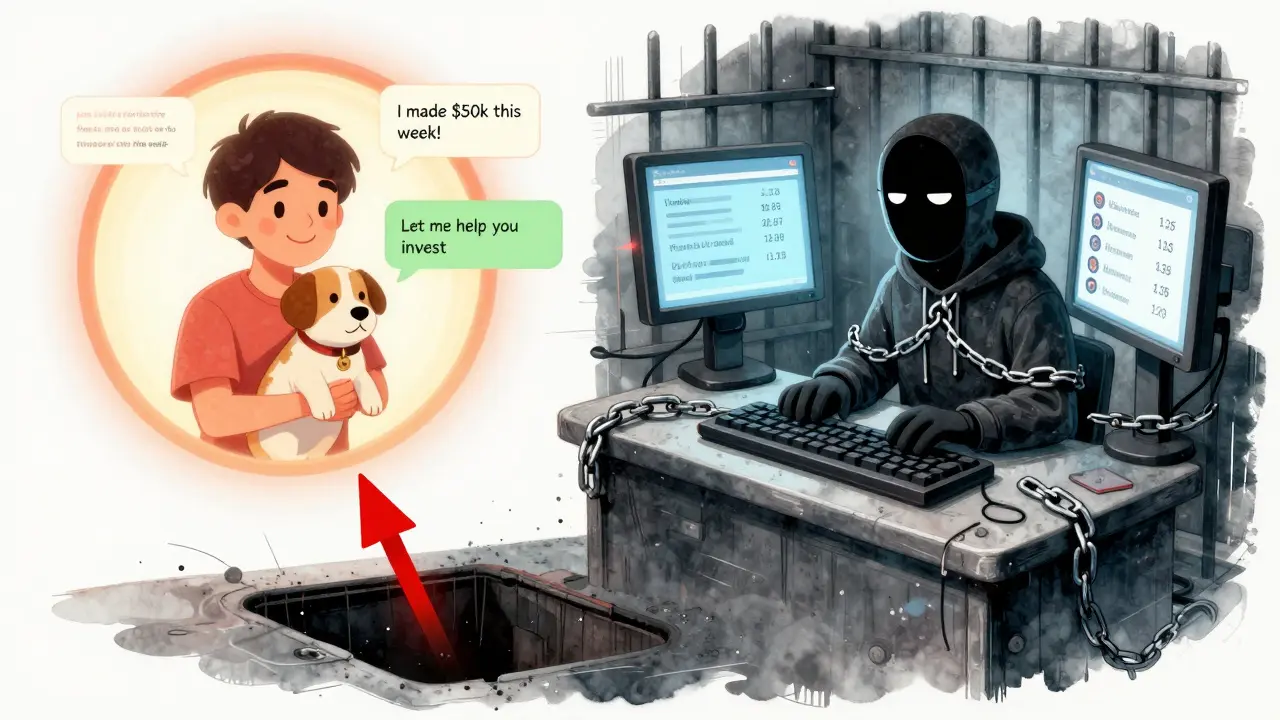
Why Myanmar? Why Now?
Myanmar’s collapse after the 2021 military coup created a vacuum. No one controls the border regions. Armed groups rule. The government has no power to stop them. And because the scams are digital, they can operate from anywhere with internet access. Unlike North Korea’s cyber units or Russia’s ransomware gangs, Myanmar’s operations are decentralized, chaotic, and brutally efficient. They don’t need state backing-they have something better: armed protection. They don’t need perfect tech-they just need people desperate enough to believe a stranger on a dating app. The growth is exponential. In 2023, losses were $6 billion. In 2024, they jumped 66%. Experts say it’s because the model is now scalable. New recruits are trained in "customer engagement techniques"-the same ones used by real sales teams. The best performers get better food, bigger rooms, and sometimes even a phone call home to their families-used as leverage to keep them compliant.What’s Being Done?
The U.S. sanctions froze assets, blocked access to the U.S. financial system, and made it illegal for Americans to do business with any of the 19 sanctioned entities. Banks are now required to flag transactions linked to these names. Crypto exchanges are being pressured to block wallets tied to Shwe Kokko. But enforcement is hard. The scam centers are in remote areas. The money moves fast. Criminals shift operations to Cambodia or Laos when pressure builds. The Thai government has cracked down on some border crossings, but the networks adapt. The Independent Community Bankers of America warned that community banks-small institutions that serve everyday Americans-are the most vulnerable. They lack the resources to detect these complex fraud patterns. The Treasury has proposed new rules to force financial institutions to report suspicious crypto activity faster. But without international cooperation, especially with Thailand and Laos, the problem will keep growing.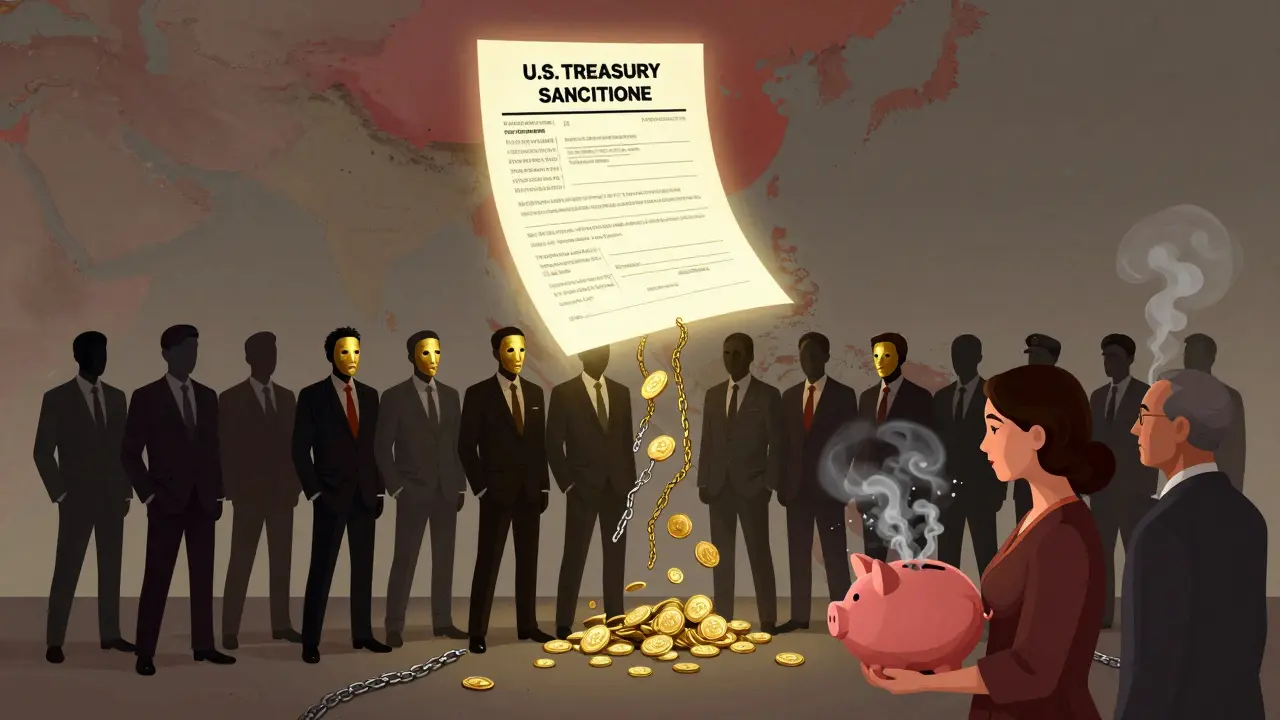
What You Can Do
If you’re using dating apps, be suspicious of anyone who talks about crypto investments within the first few weeks. Real relationships don’t turn into investment pitches. If someone you’ve never met in person asks you to send money to a wallet address-no matter how convincing they seem-block them. Report them. Don’t wait. If you’ve already sent money, contact the FBI’s Internet Crime Complaint Center (IC3) immediately. Even if the money is gone, reporting helps build cases. The more reports, the more pressure on law enforcement to act. And if you know someone who’s been targeted-don’t blame them. These scams prey on loneliness, hope, and trust. The most vulnerable people are often the most kind-hearted.What Comes Next?
The U.S. says more sanctions are coming. Investigations are ongoing. But this isn’t just a law enforcement problem. It’s a global governance failure. Until Myanmar’s border regions are brought under some form of rule-or until cryptocurrency exchanges adopt real identity checks-these scams will keep growing. Crypto isn’t the problem. The lack of accountability is. The $10 billion lost isn’t just numbers on a screen. It’s a mother’s life savings. A veteran’s retirement. A student’s tuition. And behind every dollar stolen, there’s someone being held against their will, forced to steal it.How do Myanmar crypto scams target Americans?
Scammers use dating apps and social media to build fake romantic relationships over weeks or months. Once trust is established, they convince victims to invest in fake cryptocurrency platforms that show fake profits. Victims send real money-usually in crypto-and then the platform vanishes, along with the scammer.
Where are these scam operations located?
The main hub is Shwe Kokko, a town on Myanmar’s border with Thailand. These operations are protected by the Karen National Army (KNA), a rebel group that controls the area and allows the scams to run without interference from any government.
Are the scammers also victims?
Yes. Many people working in these scam centers were tricked into moving to Myanmar with promises of good jobs. Once there, their passports are taken, they’re held by armed guards, and forced to scam people under threat of violence or forced prostitution. They’re victims of human trafficking.
What did the U.S. Treasury do about it?
On September 9, 2025, the U.S. Treasury’s OFAC imposed sanctions on 19 individuals and companies linked to the scams, including key figures like She Zhijang and the Yatai International Holding Group. The sanctions freeze their U.S. assets and ban Americans from doing business with them. This was the first time the U.S. used counterterrorism, cybercrime, and human rights sanctions together against a single criminal network.
Why hasn’t this been stopped yet?
Myanmar has no functioning central government in its border regions. Armed groups like the KNA run these areas and profit from the scams. The criminals move quickly across borders, use cryptocurrency to hide money, and exploit weak international coordination. Enforcement is slow, and the scams keep evolving.
How can I protect myself from these scams?
Never send money or crypto to someone you’ve only met online, no matter how real they seem. If they mention investments, especially crypto, within the first few weeks of contact, it’s almost certainly a scam. Block them, report them to the platform, and file a report with the FBI’s IC3. Trust your gut-if something feels off, it is.

Comments
Murray Dejarnette
This is wild. I had a girl on Bumble last year who kept talking about "crypto staking" and "risk-free returns"-I thought she was just weird. Turns out she was probably in one of those compounds. I blocked her, but now I feel like I barely escaped. 🤯
Sarah Locke
Let’s not forget-these aren’t just scams. They’re modern-day slavery with a Tinder profile. The fact that we’re still treating this like a financial crime instead of a human rights emergency is criminal. We need global pressure, not just sanctions. Real action. People are being tortured so strangers can buy Lambos. This isn’t capitalism-it’s horror.
Mani Kumar
The scale is staggering. But the real failure lies in the lack of KYC enforcement on decentralized exchanges. No jurisdictional arbitrage should permit this level of impunity.
Tatiana Rodriguez
I cried reading this. Not because of the money-though $10 billion is insane-but because of the people trapped inside those compounds. Imagine being forced to lie to someone you pretend to love, just to eat. Imagine being told your family’s safe… only to realize they’re being used as leverage. This isn’t just fraud. It’s soul murder. And we’re all complicit by doing nothing. I’m donating to anti-trafficking orgs tonight. Who’s with me?
Philip Mirchin
As someone who’s worked in Southeast Asia for over a decade, this isn’t surprising. The border zones are lawless. Thailand turns a blind eye because the money flows through their casinos. Laos? Same. The U.S. sanctions are symbolic. Real change needs boots on the ground-or at least real pressure on Bangkok. Also, if you’re on a dating app and they mention crypto before the third date? Run. Don’t walk. Just run.
Britney Power
While the human toll is undeniably tragic, let’s not romanticize the victims. Many of these scammers are highly educated, English-fluent professionals who chose this path. They knew the risks. They signed contracts. They took the money. To portray them as mere pawns is disingenuous. This is organized crime with a corporate structure-not a Dickensian novel. Accountability must be proportional.
Maggie Harrison
My heart is breaking. 😭 These people aren’t just stealing money-they’re stealing hope. And the worst part? The scammers are crying too, behind locked doors. We need to fix the system, not just punish the symptoms. 🌍💔 #EndTheSilence
Lawal Ayomide
Why does America always act like it’s the victim? You fund these scams with your greed. You chase get-rich-quick crypto dreams. You ignore red flags. Then you cry when you lose. The real scam is your naivety.
justin allen
Of course it’s Myanmar. The U.S. spent 20 years bombing the Middle East for oil and now we’re shocked when someone uses a border town to scam people? Wake up. This is what happens when you export democracy with drones and then get mad when the world doesn’t play by your rules. Sanctions won’t fix this. Stop pretending you’re the moral police.
ashi chopra
I’ve seen this happen to my cousin. She lost $47,000. She didn’t want to talk about it for months. People blamed her. But no one asked what she was running from. Loneliness. Grief. The pandemic left so many of us desperate for connection. These scammers don’t just exploit crypto-they exploit pain. We need more compassion, not just warnings.
Darlene Johnson
They’re using AI voice cloning now. I know someone who got a call from her dead mother-voice perfect, crying, begging for money. It wasn’t her mom. It was a scammer in Shwe Kokko. This isn’t just fraud anymore. It’s psychological warfare. And the government’s doing nothing. They’re all in on it.
Ankit Varshney
The structural vulnerability lies in the lack of real-time blockchain analytics integration with traditional banking systems. Until regulators mandate real-time transaction monitoring across all crypto gateways, this will persist. The human element is tragic, but the technical failure is systemic.
Ziv Kruger
We built a world where trust is currency and loneliness is a market. Then we got mad when someone monetized it. The scam isn’t the platform. The scam is us.
Heather Hartman
It’s okay to feel ashamed if you got scammed. But please don’t stay silent. You’re not weak. You’re human. And if you’re reading this-thank you for surviving. I believe you. Let’s turn pain into power. 💪❤️
Catherine Williams
My uncle worked in a call center in Cambodia before this. Same thing. They promised him a job as a tech support rep. He got there, they took his passport, and he had to pretend to be a woman on Tinder for six months. He didn’t eat for three weeks because he didn’t meet his quota. He still has nightmares. This isn’t a headline. It’s someone’s life.
Paul McNair
India and Vietnam are the next frontlines. I’ve seen job ads on LinkedIn for "Crypto Customer Service Managers" based in Yangon-paying $4,000/month. No one checks the location. No one asks why the company has no website. We’re training a generation to be predators. Or victims. Or both.
Mohamed Haybe
Westerners think they’re smart but they’re gullible as hell. You think you’re dating someone? Nah. You’re funding a torture chamber. Your crypto dreams? They’re someone’s prison sentence. Stop acting like you’re the hero. You’re the mark.
Marsha Enright
If you’re reading this and you’re scared you might’ve been scammed-don’t panic. Call the IC3. Save every message. Block everything. You’re not alone. I’ve helped 12 people recover their data after similar scams. It’s not easy, but it’s possible. You’re stronger than you think. 💛