
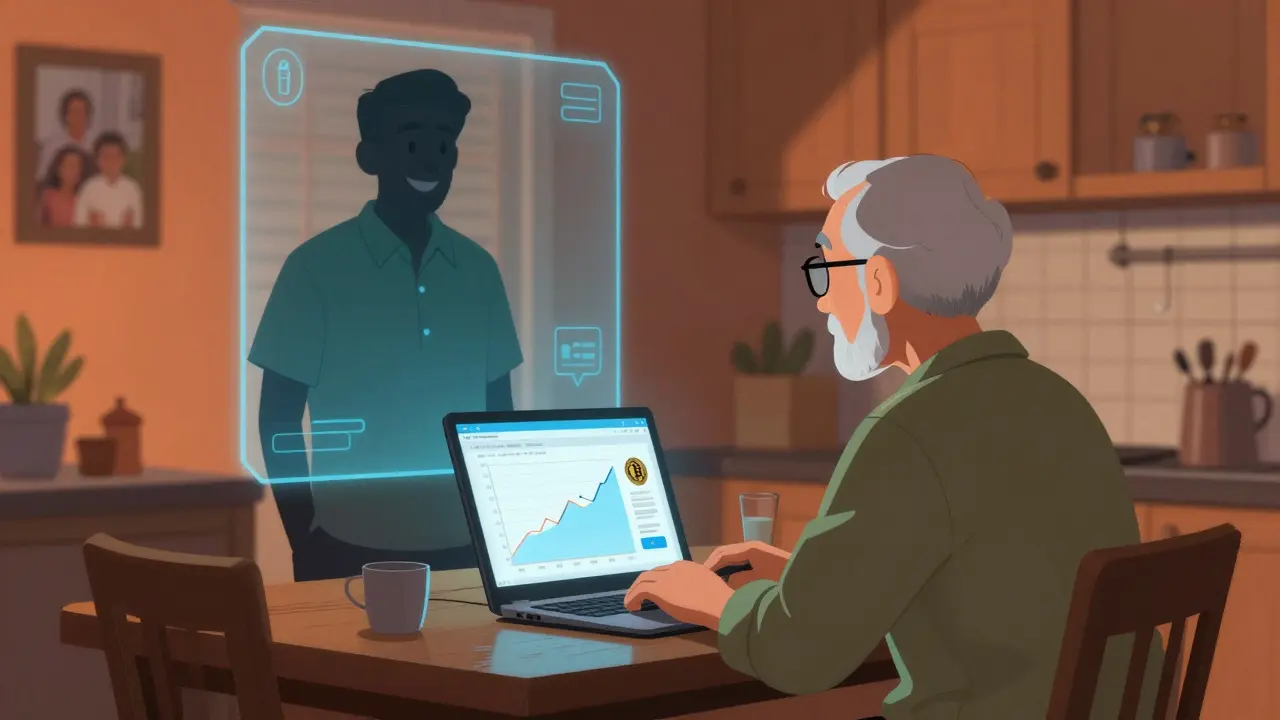
Over $10 billion vanished from American bank accounts in 2024-not through hacking, not through market crashes, but through carefully crafted lies told over text messages and dating apps. The source? A network of criminal compounds hidden in the jungles near Thailand’s border, in a place called Shwe Kokko, Myanmar. This isn’t a movie. It’s real. And it’s getting worse.
How the Scams Work: Love, Trust, and Lost Money
The scams don’t start with fake websites or phishing links. They start with a message: "Hey, I just moved to Myanmar for work. How’s your day going?" A few weeks later, you’re sharing personal stories, late-night calls, maybe even talking about marriage. Then comes the pitch: "I found this investment opportunity. It’s guaranteed. I’ll show you how it works." Victims are told to invest in fake cryptocurrency platforms-ones that look real, with live charts and fake customer support. The money goes in. The returns seem real at first. Then, one day, the platform goes dark. The person you thought you loved? Gone. Your savings? Gone too. The FBI reports that crypto romance scams alone cost Americans $1.7 billion in 2024. That’s more than the entire annual budget of some small countries. And nearly two-thirds of all crypto fraud losses traced back to Myanmar-based operations.Shwe Kokko: The Criminal Capital of Crypto Fraud
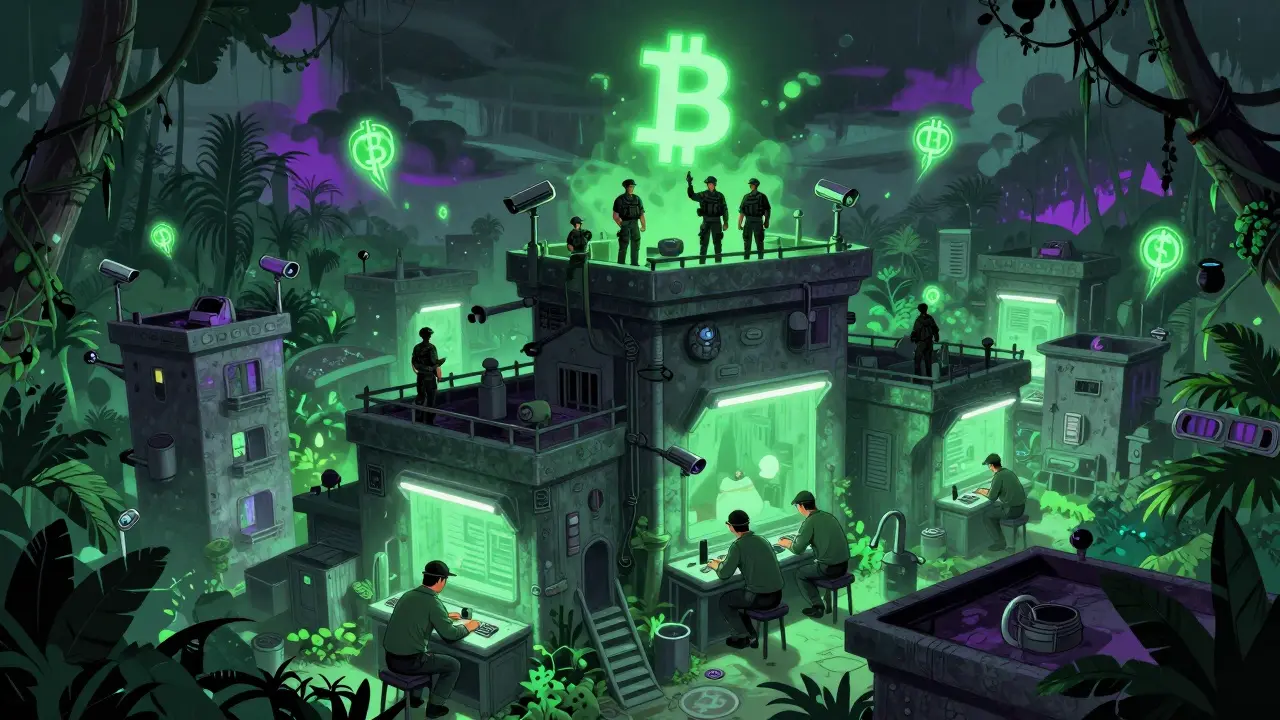
Shwe Kokko isn’t on most maps. But for criminals, it’s ground zero. Once a quiet border town, it’s now a sprawling network of high-rise compounds, each housing hundreds of workers forced to run scams 16 hours a day. These aren’t small-time operators. They’re organized like tech startups-with HR departments, performance bonuses, and surveillance cameras watching every keystroke. The Karen National Army (KNA), an armed ethnic group in Myanmar, controls the area. In exchange for protection and tax payments, they let these scam networks operate freely. Police? Nonexistent. Courts? Broken. The KNA doesn’t just tolerate this-it profits from it. Inside these compounds, workers are lured with fake job ads: "Customer service rep needed! $3,000/month in Thailand!" Many come from Cambodia, Laos, even China. Once they arrive, their passports are taken. They’re told they owe thousands in "recruitment fees." If they refuse to scam, they’re beaten. Some are forced into prostitution. Others disappear.Who Got Sanctioned-and Why It Matters
On September 9, 2025, the U.S. Treasury Department dropped a bombshell. It sanctioned 19 individuals and companies tied to these scams, nine of them based in Myanmar. The targets include:- Tin Win and Saw Min Min Oo-individual operators running multiple scam centers
- Chit Linn Myaing Co. and its subsidiaries-front companies laundering money through fake auto dealerships and mining firms
- She Zhijang-linked to over 20 scam compounds in Shwe Kokko
- Yatai International Holdings Group and Myanmar Yatai International Holding Group Co.-the corporate backbone of the operation
The Human Cost: Victims on Both Sides
There are two kinds of victims here. The first are the people who lost their life savings. A 68-year-old retiree in Ohio sent $450,000 to a man who claimed to be a doctor in Yangon. He never met him in person. The second are the workers trapped in the compounds-many of them young, desperate, and deceived. A 22-year-old woman from Cambodia told investigators she was promised a job as a marketing assistant. Instead, she was forced to run 12 romance scams a day. When she tried to escape, she was locked in a room for three days without food. She was told if she didn’t make $50,000 in three months, she’d be sold to a brothel. The U.S. government didn’t just use financial sanctions. They used human rights laws. Executive Order 13818, which targets human traffickers, was applied alongside cybercrime and terrorism tools. That’s rare. It shows how seriously the U.S. now sees this crisis-not just as fraud, but as slavery.Why Myanmar? Why Now?
You might wonder: why not Thailand? Why not Cambodia? Both have similar scams. But Myanmar is different. Thailand has a working police force. Cambodia has started cracking down-partly because of U.S. pressure. Myanmar? Since the 2021 military coup, the country has collapsed into chaos. No central government. No rule of law. Armed groups fill the vacuum. And they’ve found a new cash cow: crypto scams. The technology is easy to replicate. Messaging apps like Telegram and WhatsApp are encrypted and untraceable. Cryptocurrencies like Bitcoin and USDT move across borders without banks. And the victims? Mostly Americans. Why? Because they’re trusting, often lonely, and have access to savings. The result? A 66% jump in crypto fraud losses in 2024. That’s not a spike. It’s a trend. And it’s accelerating.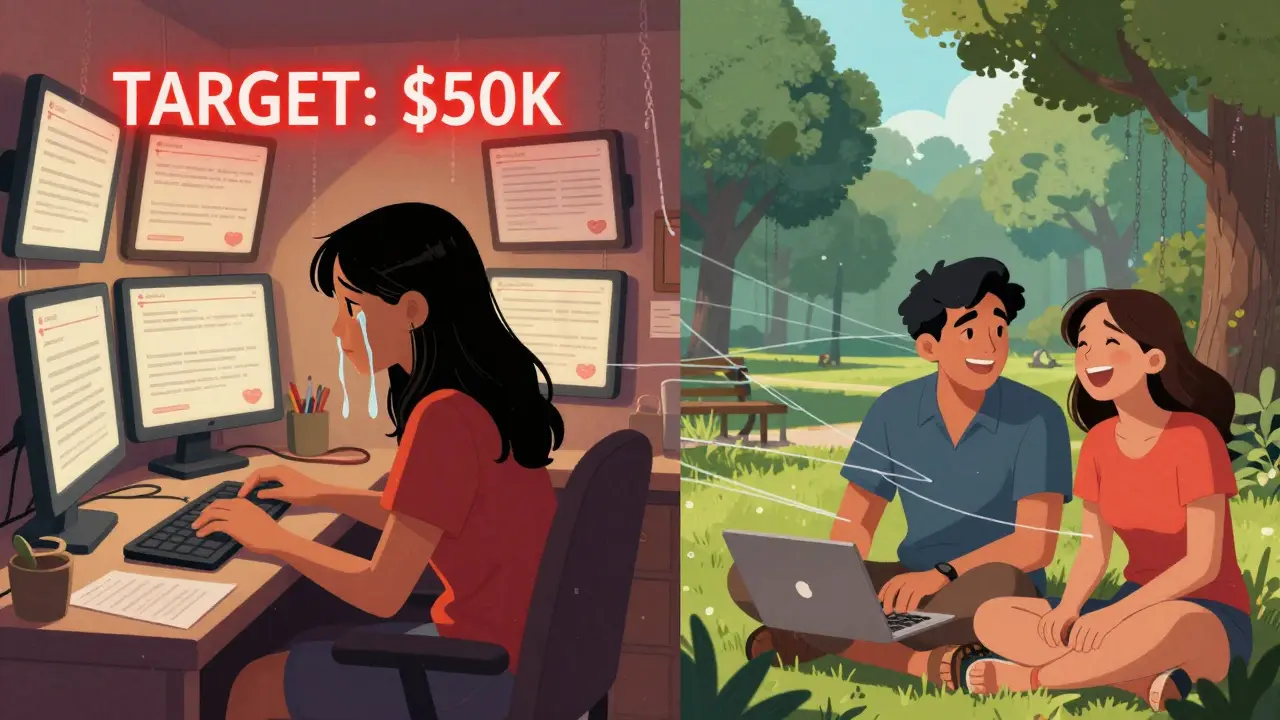
What’s Being Done-and What’s Not
The U.S. sanctions are a major step. But they won’t shut down Shwe Kokko overnight. The scam centers are mobile. Workers are replaced daily. Money flows through underground exchanges and Chinese payment processors. The Independent Community Bankers of America (ICBA) warned that community banks are being overwhelmed. Many don’t have the tools to spot these scams. A small-town bank in Iowa might not know that a wire transfer to a Cambodian company linked to a Myanmar scam network is a red flag. Experts say the real solution needs three things:- International cooperation-especially with Thailand, Laos, and Cambodia-to shut down supply chains for workers and money.
- Stronger crypto regulations-like requiring exchanges to verify the origin of funds and block transfers to known scam zones.
- Public awareness-Americans need to know that if someone you met online asks you to invest in crypto, it’s a scam. Always.
What You Can Do
If you’ve ever been approached online by someone who quickly talked about love, money, or investments-stop. Block. Report. If you’ve lost money to a crypto scam, contact the FBI’s Internet Crime Complaint Center (IC3). Even if the money is gone, reporting helps build cases against these networks. And if you know someone who’s dating someone online who talks about "guaranteed crypto returns," talk to them. Not with judgment-with facts. These scams don’t work on fools. They work on people who are kind, hopeful, and alone.What’s Next?
The U.S. Treasury says more sanctions are coming. Investigations are still active. But the criminals are adapting. They’re moving operations deeper into Myanmar. They’re using AI to generate fake personas. They’re hiring local Myanmar citizens to run the scams, making them harder to trace. Without global pressure, without stronger crypto rules, and without public awareness, this won’t stop. The $10 billion lost in 2024? It’s just the beginning.Are cryptocurrency scams only happening in Myanmar?
No. Similar operations exist in Cambodia, Laos, and even parts of Nigeria and the Philippines. But Myanmar’s scale, organization, and protection from armed groups make it the largest and most dangerous hub. The $10 billion in losses to Americans in 2024 came mostly from Shwe Kokko and nearby areas.
Can I get my money back if I was scammed?
Almost never. Cryptocurrency transactions are irreversible. Once the money leaves your wallet, it’s gone. The best you can do is report the scam to the FBI’s IC3. This helps law enforcement track patterns and build cases against the networks-but recovery is extremely rare.
How do these scammers find their victims?
They use dating apps, social media, and even Facebook groups. They build relationships over weeks or months. They pose as professionals-doctors, engineers, military personnel-living abroad. They use stolen photos and AI-generated voice messages to sound real. The goal is trust, not urgency.
Why don’t local authorities in Myanmar stop this?
Because the Myanmar government doesn’t control those areas. The Karen National Army runs Shwe Kokko. They profit from the scams through taxes, protection fees, and even ownership stakes. There’s no central authority to enforce laws. Police don’t go there. And even if they did, they’d be outgunned.
Is it safe to use cryptocurrency because of these scams?
Yes-just not with strangers online. Cryptocurrency itself isn’t the problem. It’s the people using it to commit fraud. Legitimate platforms like Coinbase and Kraken have strong security. The risk comes from third-party websites and individuals you meet online. Never invest based on a DM or text message.
What should I do if someone I met online asks me to invest in crypto?
Stop talking. Block them. Report the profile to the platform. Then report the scam to the FBI’s IC3 at ic3.gov. Don’t try to reason with them. Don’t ask for your money back. These are professional criminals. The only way to stop them is by reporting them.

Comments
Murray Dejarnette
This is insane. I had a girl on Hinge who swore she was a nurse in Yangon. We talked for 3 months. She had this "crypto arbitrage platform"-said it was "government-approved." I almost sent $80k. Then she ghosted me. Now I see it was all scripted. Fuck these people.
Sarah Locke
We need to stop treating this like a financial crime and start treating it like a human rights emergency. These are modern-day slave labor camps with AI-generated love letters. The victims aren't just losing money-they're losing their faith in human connection. We have to protect both the givers and the forced workers. This isn't just about crypto. It's about the soul of the internet.
Mani Kumar
The U.S. sanctions are performative. Without coordinated ASEAN military intervention, this is theater. China controls the liquidity flows. Thailand turns a blind eye. Myanmar’s factions profit. No single nation can fix this. The global financial system is complicit.
Tatiana Rodriguez
I cried reading about that 22-year-old from Cambodia. I can't even imagine being trapped like that-forced to lie to strangers every day, pretending to be someone's soulmate just to avoid being sold into a brothel. And then we blame the victims? No. We blame the system. We blame the lack of global accountability. We blame the fact that someone in a high-rise compound in Shwe Kokko makes more in a week than that girl will make in her entire life. This isn't just fraud. It's genocide of the heart.
Philip Mirchin
I’m Indian-American. My cousin got scammed last year. Thought she was dating a guy in Singapore. Lost $120k. He sent her pictures of his "villa"-turns out it was a stock photo from a Thai resort. The worst part? She still won’t admit it was a scam. Says he "had to leave suddenly for family reasons." We’ve got to break the shame cycle. This isn’t about being gullible. It’s about being lonely in a digital world that sells connection like a product.
Britney Power
The fact that the U.S. Treasury invoked Executive Order 13818-a human trafficking statute-to target these scam networks is a monumental legal precedent. It signals a paradigm shift: crypto fraud is no longer a white-collar crime, but a transnational crime against humanity. The next phase must be indicting the Karen National Army under RICO statutes. They are not insurgents-they are organized crime syndicates with paramilitary backing. The DOJ needs to treat them like the Sinaloa Cartel.
Maggie Harrison
This broke me. 😭 I just texted my mom to tell her I love her. I don't know why, but after reading about those workers being forced to scam people... I just needed to hear her voice. We all think we're safe because we're smart. But loneliness? That's the real vulnerability. And these predators? They're not hackers. They're psychologists with a script and a webcam.
Lawal Ayomide
Nigeria has same thing. But here they use WhatsApp groups. Fake Nigerian princes. Fake oil deals. Same playbook. Only difference? We don't have armed groups protecting them. Just corrupt police. This Myanmar thing? It's next level. Like Wall Street meets The Hunger Games.
justin allen
Let’s be real-this is what happens when you let immigrants and foreigners run your economy. Americans get soft. They trust strangers online. Meanwhile, China and India are building real wealth. This isn’t a scam problem. It’s a cultural decay problem. We raised a generation of emotionally vulnerable idiots who think love can be found on Bumble. Wake up.
ashi chopra
I work in mental health counseling. So many of my clients-especially older women-are targets. They’re not stupid. They’re isolated. Their kids live across the country. Their spouses passed. They crave connection. These scammers don’t offer money. They offer belonging. That’s why they’re so dangerous. We need community programs. Not just warnings.
Darlene Johnson
I knew this was coming. The deep state allowed it. The Fed’s zero-interest policy pushed everyone into crypto. The government knew Shwe Kokko was becoming a hub. They didn’t stop it because they wanted the chaos. It distracts from the real issues-like inflation, surveillance, and the collapse of the dollar. This is all part of the Great Reset. The victims? Just collateral damage.
Ankit Varshney
The scale is terrifying. But the real issue is how easily these platforms are built. Anyone with $500 and a template can create a fake crypto exchange with live charts. The tech is democratized. The regulation isn’t. That’s the gap.
Ziv Kruger
We treat money like it's sacred. But what's more sacred? A human being forced to lie for 16 hours a day. What's more sacred? A 68-year-old man who lost his life savings to a voice he never heard in person. The scam isn't just stealing dollars. It's stealing meaning. And we're letting it happen because we don't know how to feel anymore
Heather Hartman
I’m so proud of the U.S. for using human rights law here. This isn’t just about money-it’s about dignity. I work with seniors. I’ve seen how they get targeted. We need local workshops. Libraries. Senior centers. Not just online warnings. We need to rebuild trust in real life.
Catherine Williams
The KNA is basically running a state within a state. And the U.S. is sanctioning individuals while ignoring the structural enablers: Telegram, USDT, Chinese payment gateways, and the lack of KYC on decentralized exchanges. Until we regulate the infrastructure, we’re just playing whack-a-mole.
Paul McNair
I spent 6 months in Myanmar before the coup. Shwe Kokko was a fishing village. Now? It’s a ghost city of glass towers with no windows. The locals told me the compounds have their own power grids, water systems, even gyms. They’re not hiding. They’re building a new economy. And we’re the fuel.
Mohamed Haybe
America thinks it's the victim here. But we created this monster. We pushed crypto. We told people to invest in everything. We told them to trust algorithms not banks. Now we're mad when the system eats its own? Wake up. The real scam is the myth that capitalism doesn't feed on pain
Marsha Enright
If you're reading this and you've ever sent money to someone you met online-don't blame yourself. Blame the system that made you feel alone. And if you're still talking to someone like that? Stop. Block. Report. And call a friend. You're not weak. You're human. And that's exactly what they count on.
Andrew Brady
This is a psyop. The media is exaggerating to justify more surveillance. The FBI doesn't care about your $50k. They care about using this to justify mass crypto monitoring. Next thing you know, your wallet will need government approval to send $100. This isn't justice. It's control.
Sharmishtha Sohoni
How many workers are there? 100k? 500k? No one knows. But if each runs 10 scams a day, that’s millions of fake relationships daily. That’s not a crime. That’s a war on intimacy.
Althea Gwen
So we're supposed to feel bad for the scammers too? 😅 Like they're victims of capitalism? Bro. They're not. They're the ones holding the knives. The real victims are the ones who believed in love. And that's the real tragedy.
Durgesh Mehta
I think we need to stop calling it a scam. It's a psychological operation. They're not selling crypto. They're selling hope. And hope is the most valuable currency in the world right now
Sarah Roberge
I dont think people reallllly understand how deep this goes. Like the AI voices? Theyre trained on real people's audio from social media. So when you hear "Hey babe, I miss you"-it's not a bot. It's a recording of your cousin's ex-boyfriend from 2019. And the person using it? Probably a 19-year-old kid in Myanmar with a headset and no food. We're all complicit.
Jess Bothun-Berg
This article is sensationalist drivel. The FBI's own stats show that 87% of victims are over 50. They're not "lonely Americans"-they're technologically illiterate. The solution? Not sanctions. Not awareness. Not human rights laws. Just stop letting elderly people use smartphones unsupervised.
Steve Savage
I used to think crypto was the future. Now I think it's just the latest way humans find new ways to hurt each other. But here's the thing-we're not powerless. We can choose not to engage. We can choose to call someone instead of texting. We can choose to be present. Maybe that's the only real security protocol we need.