
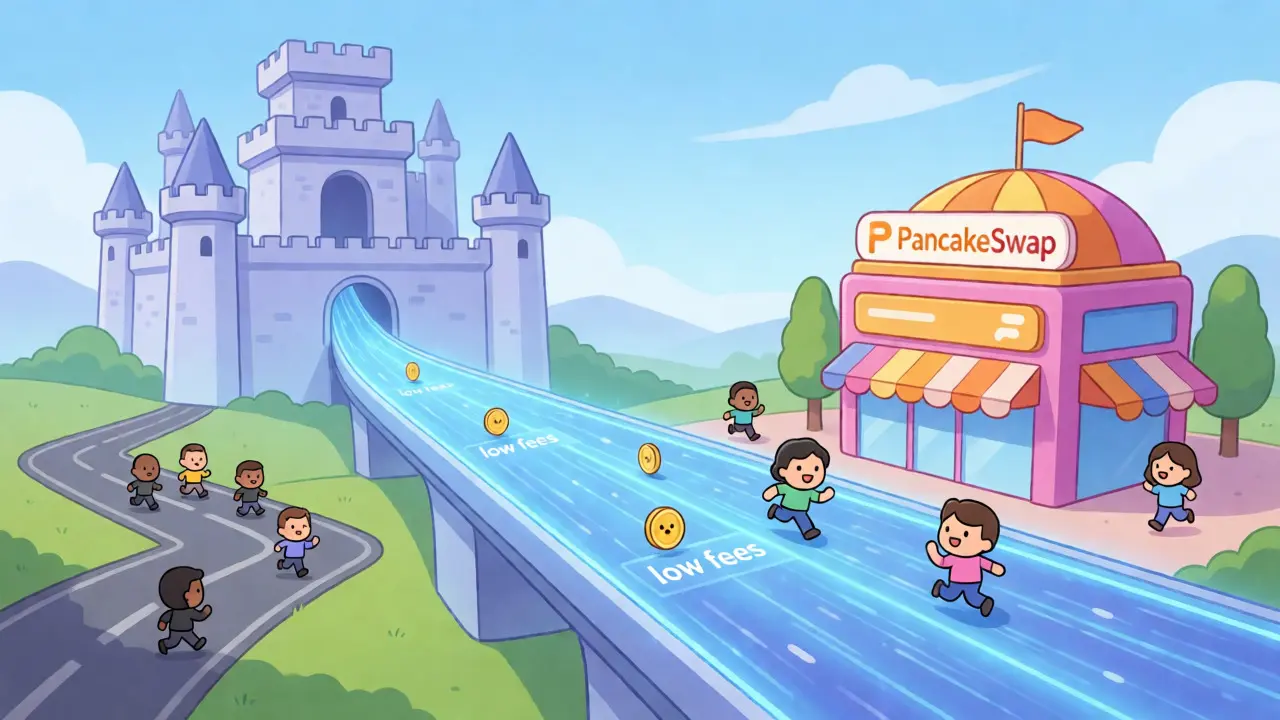
You probably know PancakeSwap. It’s the giant of Binance Smart Chain, famous for its syrupy interface and massive liquidity. But did you know it has a version running on Polygon zkEVM? This isn’t just another chain port; it’s an attempt to bring PancakeSwap’s familiar experience to Ethereum’s most secure scaling layer. If you’re wondering whether this specific implementation is ready for serious trading or if it’s still a ghost town, you’re in the right place.
Let’s be real about the data first. As of late 2025 and early 2026, the numbers for PancakeSwap v2 (zkEVM) are... quiet. CoinGecko lists zero active coins and zero trading pairs with negligible volume. CoinMarketCap shows slightly more activity, but we’re talking dollars, not millions. This tells us something critical: this is a nascent platform. You aren’t here to day-trade meme coins with high slippage. You’re here because you want to understand why a major DEX is deploying on Polygon zkEVM, a technology that promises Ethereum-level security with lower fees.
What Exactly Is PancakeSwap v2 on zkEVM?
To understand the value proposition, you have to look at the underlying tech. Polygon zkEVM is a Layer-2 scaling solution. Unlike optimistic rollups, it uses zero-knowledge proofs to validate transactions. This means when you swap tokens here, you get the speed and low cost of a sidechain, but the cryptographic finality of Ethereum. PancakeSwap deployed its V2 architecture here to capture users who want to escape Ethereum mainnet gas fees without sacrificing security.
The interface looks exactly like the BSC version you’re used to. Same swap tabs, same liquidity pools, same farm structures. The difference is invisible to the user until they check their wallet balance after a transaction. Instead of paying $15 in gas, you might pay cents. But there’s a catch: the ecosystem on Polygon zkEVM is smaller. Fewer tokens mean fewer pairs, which leads to the low volume stats we mentioned earlier.
Liquidity and Trading Volume: The Reality Check
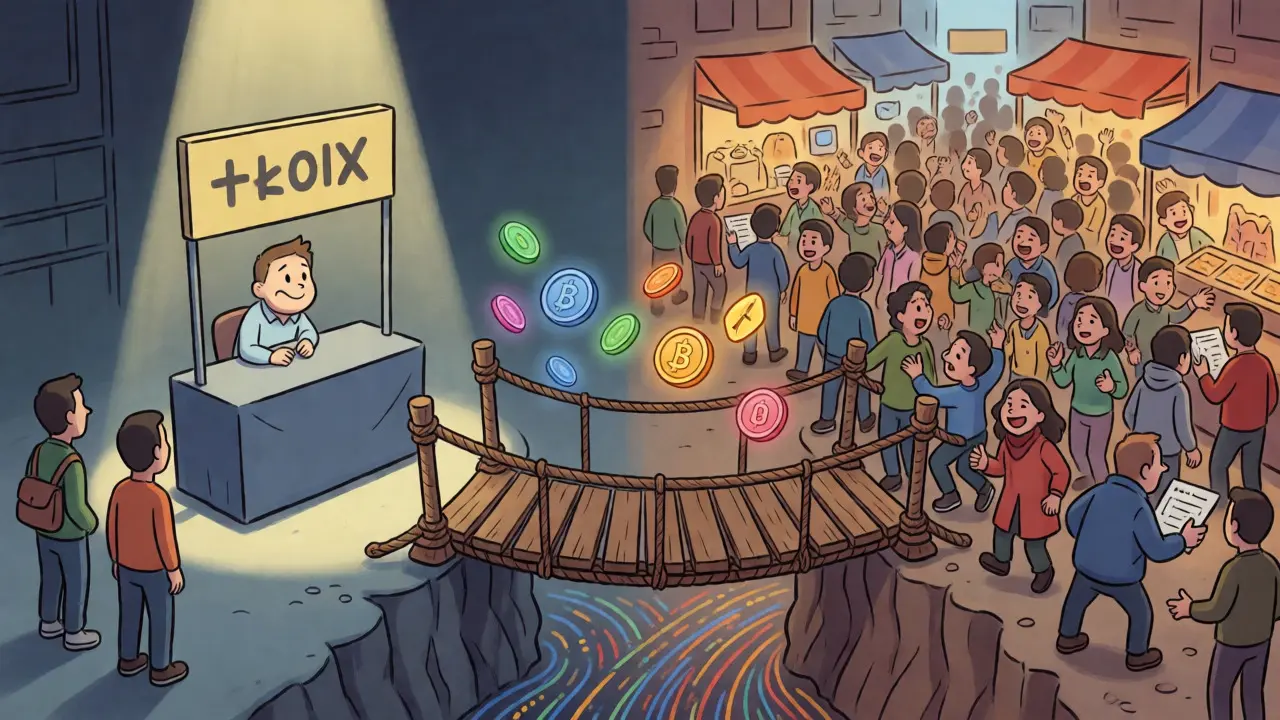
If you click around the platform expecting deep order books, you’ll be disappointed. The current state of PancakeSwap v2 (zkEVM) reflects a classic "chicken and egg" problem in DeFi. Liquidity providers (LPs) don’t add funds because there are no traders. Traders don’t come because there are no liquid pools.
- Volume: Reported as near-zero on major aggregators. This implies that even large swaps could suffer from significant price impact due to thin liquidity.
- Pairs: Very limited. You won’t find every new altcoin listed here immediately. You’re mostly looking at established assets bridged to the chain.
- Adoption: Minimal compared to its BSC counterpart, which processes billions monthly.
This isn’t necessarily a failure. It’s a strategic beachhead. PancakeSwap is establishing presence on emerging chains early. For now, though, treat this platform as experimental rather than primary.
Fees and Performance: Where It Shines
Here is where the technical advantage becomes tangible. On Ethereum mainnet, a simple swap can cost $10-$50 depending on network congestion. On Polygon zkEVM, that same swap costs a fraction of a cent. PancakeSwap maintains its standard fee structure of 0.25% per trade, regardless of the chain. So, while the protocol fee stays the same, your total cost drops dramatically because network gas is so low.
| Feature | Binance Smart Chain (BSC) | Polygon zkEVM | Ethereum Mainnet |
|---|---|---|---|
| Average Swap Fee (Protocol) | 0.25% | 0.25% | 0.30% (Uniswap equivalent) |
| Average Gas Cost | $0.10 - $0.50 | <$0.01 | $5.00 - $50.00+ |
| Transaction Speed | Fast (~3s) | Fast (~2-4s) | Variable (~15s+) |
| Liquidity Depth | Very High | Low/Nascent | Very High |
For small trades, the savings are negligible. For frequent traders or those managing multiple positions across different chains, the cumulative savings on gas can be substantial. Plus, the confirmation times are comparable to BSC, so you aren’t waiting minutes for a transaction to finalize.
Security and Trust: Who Watches the Watchmen?
One concern with any DeFi platform is smart contract risk. PancakeSwap has been audited extensively over its years on BSC. However, code deployed on Polygon zkEVM may have unique vulnerabilities related to how the EVM emulation handles certain opcodes. While the core logic is likely identical, the environment differs.
It’s also worth noting that PancakeSwap remains unregulated. There is no central authority holding your keys or insuring your deposits. If a bug occurs in the zkEVM-specific contracts, there’s no customer support hotline to call. You rely entirely on the community and the developers’ transparency. Given the anonymous nature of the founding team, trust is placed in open-source code and audit reports, not brand reputation alone.

How to Get Started: A Practical Guide
If you decide to test the waters, here’s the workflow. It’s not much different from using MetaMask on other networks, but configuration matters.
- Set Up Your Wallet: Use MetaMask or Rabby. Ensure you have the correct network parameters for Polygon zkEVM.
- Bridge Funds: You need ETH or USDC on the zkEVM chain. Use official bridges or reputable third-party services like Stargate or Hop Protocol to move assets from Ethereum L1 to zkEVM.
- Connect to PancakeSwap: Visit the PancakeSwap site, switch the network selector to "Polygon zkEVM," and connect your wallet.
- Check Pools: Before swapping, verify the pool depth. Click on the pair details to see TVL (Total Value Locked). If it’s under $10k, avoid large trades.
- Execute Swap: Input your amount, confirm the gas estimate, and approve. Watch for slippage warnings.
Pro tip: Always keep a small buffer of native ETH for gas. Running out of gas mid-transaction on a new chain can be frustrating if you haven’t set up alerts.
Who Should Use This Platform?
This isn’t for everyone. Here’s a quick breakdown of personas:
- The Early Adopter: Yes. You want to explore zk-rollups and don’t mind low liquidity. You’re happy to provide initial liquidity for potential future rewards.
- The Active Trader: Probably not. Slippage will eat your profits, and you’ll struggle to find exotic pairs. Stick to BSC or Arbitrum for now.
- The Security-Conscious User: Maybe. If you prioritize Ethereum-grade security over pure speed, this is a compelling option compared to optimistic rollups or sidechains.
- The Yield Farmer: Keep an eye out. Sometimes new deployments offer high APY incentives to bootstrap liquidity. Check the "Farms" tab for CAKE emissions, though these may be sparse initially.
For now, PancakeSwap v2 (zkEVM) is a tool for experimentation and niche use cases. It proves that major DEXes are diversifying beyond BSC, but it hasn’t yet displaced existing solutions for daily trading.
Is PancakeSwap v2 on Polygon zkEVM safe to use?
Generally, yes, as it uses the same audited smart contract architecture as the main PancakeSwap platform. However, always exercise caution with new chain deployments. Verify the URL to avoid phishing sites and start with small amounts to test the bridge and swap functionality before committing significant capital.
Why is the trading volume so low on this version?
The low volume is primarily due to the platform's recent launch and the nascent state of the Polygon zkEVM ecosystem. Most liquidity and user activity remain concentrated on Binance Smart Chain and Ethereum mainnet. As more projects deploy on zkEVM, liquidity is expected to grow gradually.
Can I earn CAKE tokens by providing liquidity on zkEVM?
It depends on the current incentive programs. PancakeSwap often allocates CAKE emissions to new chains to bootstrap liquidity. Check the "Earn" section specifically filtered for Polygon zkEVM to see if active farms exist. If no farms are listed, you currently earn only trading fees from your position.
Do I need MATIC/POL to pay for gas on Polygon zkEVM?
No. Unlike the original Polygon PoS chain which uses POL (formerly MATIC), Polygon zkEVM uses ETH as its native gas token. You must hold ETH on the zkEVM network to pay for transaction fees.
How does the fee structure compare to Uniswap on zkEVM?
PancakeSwap typically charges a 0.25% swap fee, whereas Uniswap V3 allows variable tiers (0.05%, 0.3%, 1%). For stablecoin pairs, Uniswap’s 0.05% tier might be cheaper, but PancakeSwap’s fixed rate is simpler for volatile assets. Always calculate total cost including gas, which is similar for both on this chain.

Write a comment