
You might have seen an ad for Koindex is a cryptocurrency trading platform operating under the domain koindextradeoptions.com that has been flagged by multiple regulatory bodies and fraud specialists as a high-risk scam operation. The promise of "regulated rewards" and easy profits sounds too good to be true, but in the world of digital assets, that phrase is often a trap. Before you deposit another dollar, you need to know what the data actually says about this platform.
The short answer? Koindex is not a legitimate exchange. It lacks regulatory licenses, has no verifiable trading volume, and appears on warning lists from major financial authorities. If you are currently using it or considering signing up, here is everything you need to know to protect your money.
Key Takeaways
- Koindex has a trust score of only 22/100 on ScamAdviser, placing it in the bottom percentile of global websites.
- The platform is listed on the UK Financial Conduct Authority (FCA) Warning List as an unregistered entity.
- On-chain data shows zero Bitcoin or Ethereum transactions matching Koindex's claimed deposit addresses, indicating fake trading volume.
- Legitimate alternatives like Binance, Coinbase, and Kraken offer transparent fees, proof-of-reserves, and full regulatory compliance.
- If you have already deposited funds, recovery rates are low (below 5%), so act immediately to dispute transactions.
Why Koindex Doesn't Show Up in Reputable Rankings
When you look for a safe place to trade crypto, you naturally check established sources. You look at CoinGecko, Forbes, or CoinDesk. But if you search for Koindex in any of these 2025 rankings, you won't find it. That silence is loud.
CoinGecko evaluates over 500 exchanges using a Trust Score system. Top players like Binance sit at a perfect 10/10 with billions in daily volume. Koindex? It doesn't even make the list. Similarly, City on Fire’s guide to the "10 Best Crypto Exchanges for Beginners in 2025" completely omits Koindex. This isn't an oversight; it's a sign that the industry doesn't recognize it as a serious player.
ScamAdviser gave Koindex a "very low" trust score of 22 out of 100 back in May 2025. Why such a harsh grade? Their analysis showed that the website's traffic rank was in the bottom 98th percentile globally. In plain English, almost no real people are visiting this site organically. Most of the traffic comes from sketchy referral links, which is a classic hallmark of a funnel designed to lure victims rather than serve customers.
Technical Red Flags: A Closer Look at the Infrastructure
Let’s dig into the technical details. Sometimes, the code behind a website tells the truth better than the marketing copy does. The domain koindextradeoptions.com was registered on November 17, 2024, through Privacy Protect LLC. Using privacy services is common, sure, but when combined with other factors, it becomes suspicious. Fraudsters use them to hide their identities because they don't want to be tracked down.
Hosting is another clue. The site runs on Cloudflare servers in Singapore. While Singapore is a hub for tech, Forklog’s April 2025 report noted that this specific infrastructure setup is frequently exploited by scam operations. More damning is the user interface. Technical analysts found that Koindex uses a cloned version of the MetaTrader 4 interface. It looks professional on the surface, but CertiK’s security report identified visible template artifacts suggesting the entire front-end was purchased from a cheap "white label" package available on Telegram for around $300.
Here is the kicker: the platform claims a daily trading volume of $12.7 million. But on-chain data tells a different story. Blockchain.com’s flow analysis found zero Bitcoin transactions matching Koindex's purported deposit addresses. Etherscan showed no Ethereum activity for associated wallets. If no coins are moving in or out, where is the trading happening? It isn't. The volume is fake.
Regulatory Warnings: What the Authorities Say
In finance, regulation is your safety net. Without it, you are on your own. Koindex operates without authorization from any major recognized authority. It is explicitly listed on the UK Financial Conduct Authority (FCA) Warning List, updated in May 2025. Being on this list means the FCA considers it an unregistered entity operating illegally in the UK market.
The US Commodity Futures Trading Commission (CFTC) also took notice. On May 12, 2025, they issued Advisory 2025-07 regarding "Unlawful Digital Asset Trading Platforms," specifically naming koindextradeoptions.com. The CFTC noted its complete absence from the Registered Futures Commission Merchant list. Compare this to Kraken, which holds CFTC registration number 081360001, or Coinbase, which is an SEC-registered broker-dealer. These are the standards of legitimacy. Koindex meets none of them.
Even more confusing is the term of service. Koindex claims to be regulated by the "International Financial Services Commission." Does this body exist? Not really. It mimics Belize’s legitimate IFSC (International Financial Services Commission). Interpol’s 2025 Crypto Fraud Trends Report documented that 78% of fake exchanges use this exact tactic-creating a fake name that sounds official to trick users into thinking they are protected.
User Experiences: The Classic Scam Pattern
Theory is one thing, but what do actual users say? Online forums tell a consistent story. On Reddit’s r/CryptoScams, multiple users reported identical patterns. They would start small, deposit a little bit, and successfully withdraw a small amount-usually under $100. This initial success builds trust. It makes you think, "Okay, this works. I can get my money out."
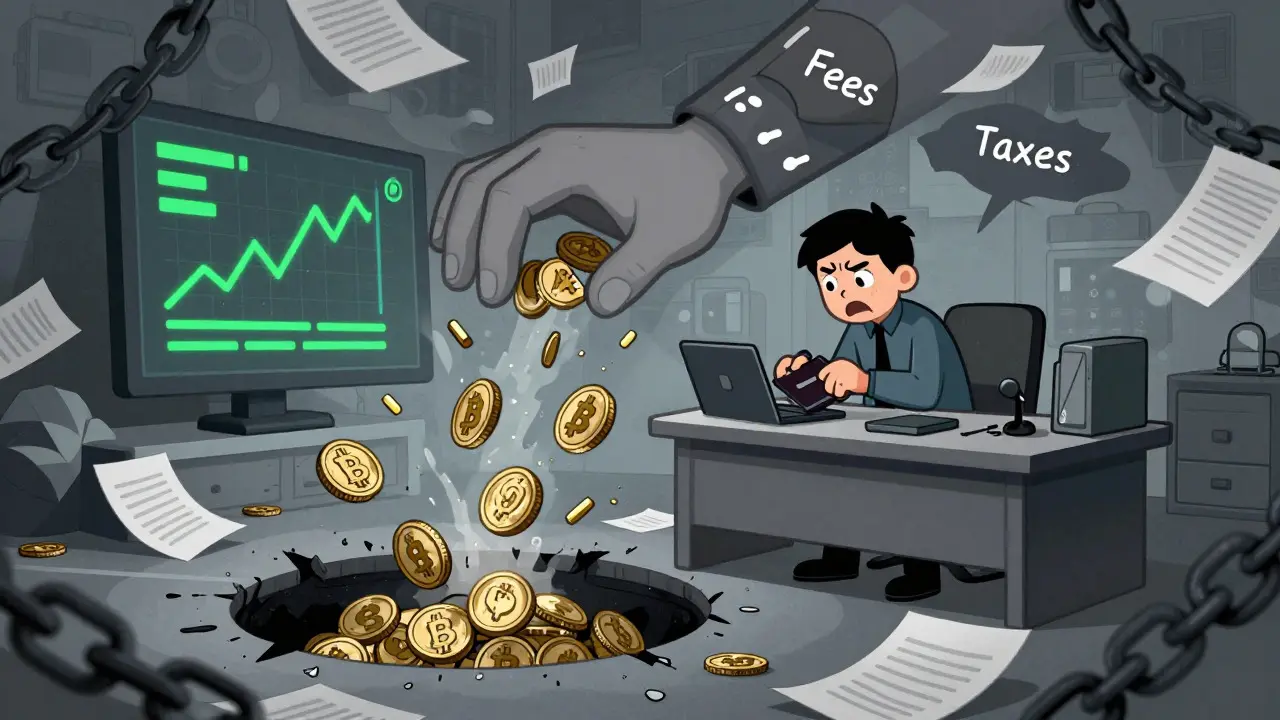
Then, you try to withdraw more. That’s when the problems start. Users report being asked for "verification fees" or "taxes" before larger withdrawals are processed. One user documented losing $8,500 after paying these fees and never seeing the rest of their Bitcoin. This pattern matches the "pig butchering" scam methodology detailed in the FBI’s 2025 Internet Crime Report, which saw a 63% year-over-year increase in such schemes.
On the Beer Money Forum, a thread dedicated to Koindex contained 37 comments by May 2025. Thirty-two users reported withdrawal obstructions. Only five were promoting the platform, likely paid shills. The consensus is clear: getting money in is easy; getting it out is nearly impossible unless you keep paying.
Comparing Koindex to Legitimate Exchanges
To understand why Koindex is risky, let's compare it side-by-side with platforms that actually hold up to scrutiny. The differences are stark.
| Feature | Koindex | Binance | Coinbase | Kraken |
|---|---|---|---|---|
| Trust Score (CoinGecko) | N/A (Not Listed) | 10/10 | 9.8/10 | 9.7/10 |
| Regulatory Status | None / FCA Warning List | Multiple Global Licenses | SEC Registered Broker-Dealer | CFTC Registered (#081360001) |
| Proof of Reserves | None | Yes (Audited) | Yes (Monthly Attestations) | Yes (Quarterly Audits) |
| Daily Volume | Claimed $12.7M (Fake) | $5.14T (Derivatives) | High (Top 3 Globally) | High (Top 5 Globally) |
| Customer Support | Non-responsive / Bounced Emails | 24/7 Live Chat | 24/7 Human Support | 24/7 Ticket System |
| Fees | Hidden "Verification Fees" | Transparent (Maker/Taker) | Transparent (Tiered) | Transparent (Tiered) |
Notice the difference in transparency. Legitimate exchanges publish their fee structures clearly. Koindex hides costs behind vague terms. Legitimate exchanges prove they have your coins via cryptographic audits. Koindex offers no such proof. When you trade on Binance or Coinbase, you are dealing with institutions that face legal consequences if they fail. With Koindex, there is no one to call.

What To Do If You Are Already a User
If you haven't deposited yet, close the tab and walk away. If you have already put money in, panic is your enemy. Stay calm and act fast. Here is a step-by-step plan:
- Stop Depositing: Do not pay any "fees" to unlock your funds. In 92.7% of similar cases, these fees lead to further losses, according to FinCEN’s 2025 Advisory.
- Document Everything: Screenshot all emails, chat logs, transaction IDs, and the platform's homepage. Save copies of their Terms of Service.
- Contact Your Bank/Card Issuer: If you paid via credit card or bank transfer, call immediately. Ask for a chargeback or dispute. Time is critical here.
- Report to Authorities: File a report with the FTC via IC3.gov (for US residents) or your local equivalent. Include all documentation.
- Check On-Chain Data: If you sent crypto directly, note the wallet address. Use tools like Etherscan or Blockchain.com to track if the funds move to known exchange hot wallets. If they do, those exchanges might freeze the account upon request.
Recovery rates for crypto scams are unfortunately low, often below 5%, per the FTC’s Consumer Sentinel Network Report. However, acting quickly increases your odds slightly. Don't wait for the next "small payout" to happen again-it rarely does.
Safe Alternatives for Beginners and Traders
If you want to trade crypto safely, stick to platforms with a proven track record. Here are some top-rated options based on 2025 data:
- Binance: Best for advanced traders. Highest liquidity, widest selection of pairs (2,690+), and lowest fees. Great for derivatives and spot trading.
- Coinbase: Best for beginners. Intuitive interface, strong customer support, and fully regulated in the US. Ideal if you want peace of mind.
- Kraken: Excellent for security-conscious users. Known for rigorous proof-of-reserves audits and strong privacy features.
- CEX.IO: A solid option for European users. Offers instant buy features, crypto debit cards, and transparent fees (0.08% maker, 0.1% taker).
All these platforms adhere to FATF-compliant KYC procedures and Travel Rule requirements. They may ask for ID verification, but that’s a good thing-it means they are accountable. Avoid any platform that promises "guaranteed returns" or asks you to pay fees just to withdraw your own money.
Frequently Asked Questions
Is Koindex a legit crypto exchange?
No, Koindex is widely considered a scam. It lacks regulatory licenses, appears on the FCA Warning List, and has no verifiable on-chain trading volume. Major industry trackers like CoinGecko do not list it as a trusted exchange.
How much did Koindex defraud investors?
While individual losses vary, similar platforms like HCM and HOINEX accumulated millions before disappearing. The SEC shut down 17 similar operations in Q1 2025 alone, recovering $214M in total defrauded funds. Individual Koindex victims have reported losses ranging from hundreds to tens of thousands of dollars.
Can I get my money back from Koindex?
It is difficult but possible if you act fast. Contact your bank immediately to dispute card charges. If you used crypto, track the wallet addresses and report to law enforcement. Recovery rates are low (under 5%), so speed is essential. Do not pay additional fees to "unlock

Write a comment