
Renewable Mining Impact Calculator
Bitcoin mining uses more electricity than most countries. In 2025, it’s consuming around 150 terawatt-hours per year - roughly the same as Argentina or the Netherlands. But here’s the twist: more than half of that power now comes from renewable sources. Not because miners are doing it out of kindness, but because it’s cheaper, smarter, and increasingly the only way to stay in business.
Why Renewable Energy Is No Longer Optional
The Bitcoin halving in April 2024 cut miner rewards in half. Suddenly, the profit margin on each new coin shrank dramatically. Miners who were barely breaking even before now had to slash costs - and energy is the biggest one. Electricity can make up 60% to 80% of a mining operation’s expenses. If you’re using coal or natural gas, your margins are squeezed. But if you can tap into cheap, excess renewable power, you can still turn a profit. That’s why mining has shifted from coal-heavy regions like China to places where renewables are abundant and underused. Texas, Iceland, Canada, and parts of Latin America are now the new mining hubs. Why? Because they have wind, hydro, or solar power that often goes to waste.How Miners Are Using Surplus Renewable Energy
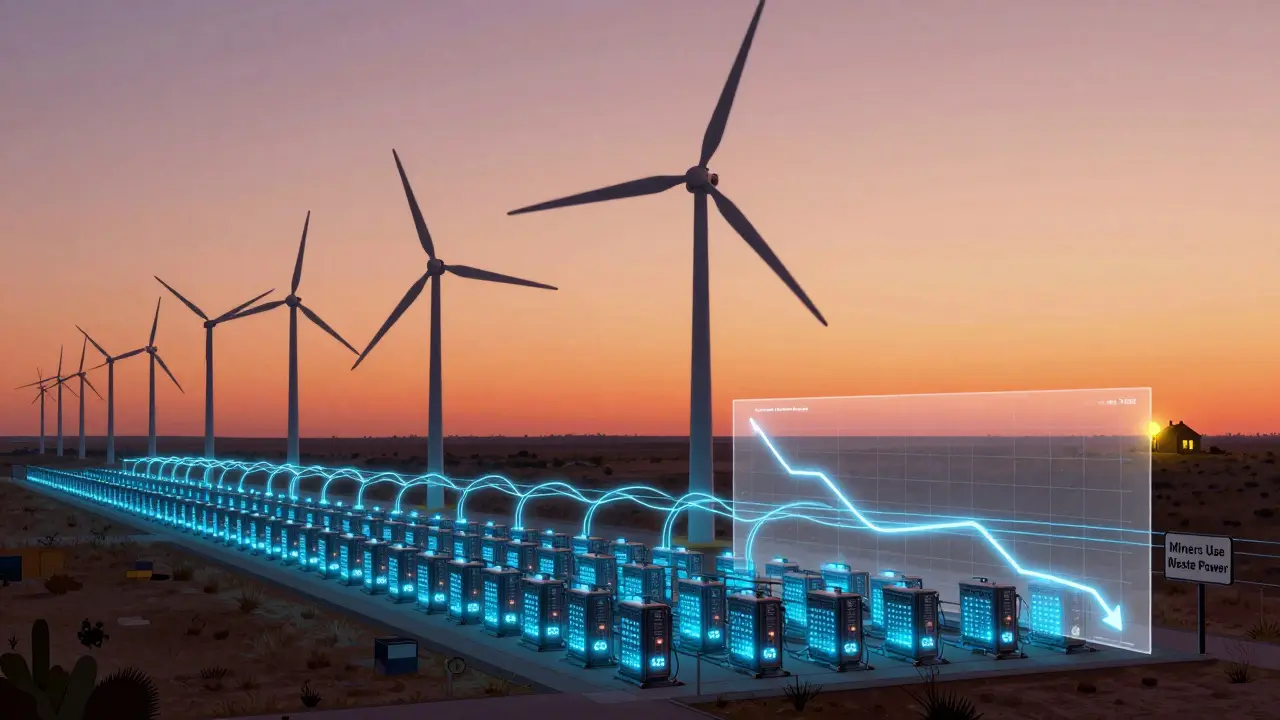
Renewable energy isn’t always available when you need it. The sun doesn’t shine at night. The wind doesn’t blow all day. That creates a problem for the grid - but a golden opportunity for miners. In Texas, wind farms generate so much power during off-peak hours that grid operators have to shut some of it down to avoid overloading the system. This is called curtailment. Instead of letting that energy go to waste, Bitcoin miners step in. They pay for this surplus power at rock-bottom rates - sometimes even negative prices - and run their rigs full blast. When demand spikes and prices rise, they shut down. They’re not just consuming energy; they’re acting like a giant, flexible battery for the grid. According to the Electric Reliability Council of Texas (ERCOT), Bitcoin miners now absorb 32% of all curtailed wind energy in the state. That’s not a coincidence. It’s a business model. And it’s helping wind farm developers build more turbines because they now have guaranteed buyers for their excess output.Who’s Leading the Green Mining Charge?
Not all mining companies are the same. Some are just moving from coal to natural gas. Others are betting big on renewables. Here are the real players making a difference:- Gryphon Digital Mining turns methane waste into Bitcoin. They capture gas flared from oil fields - a major polluter - and use it to power their rigs. This cuts emissions and creates energy from something that was just being burned off.
- CleanSpark runs 950+ megawatts of mining capacity across the U.S., mostly powered by solar and wind. They even built a 120 MW AI and computing center in Pennsylvania that uses clean energy 24/7.
- TeraWulf relies on nuclear and hydroelectric plants. These sources don’t depend on weather. They provide steady, low-cost power - perfect for mining.
- Iris Energy runs 100% renewable operations and has started offering AI computing services to diversify revenue. They’re not just mining Bitcoin; they’re building a broader tech infrastructure.
- Bitfarms uses hydroelectric dams in Quebec and British Columbia. Their facilities sit right next to rivers, tapping into clean, consistent power.
The Dark Side: When Green Mining Isn’t So Green
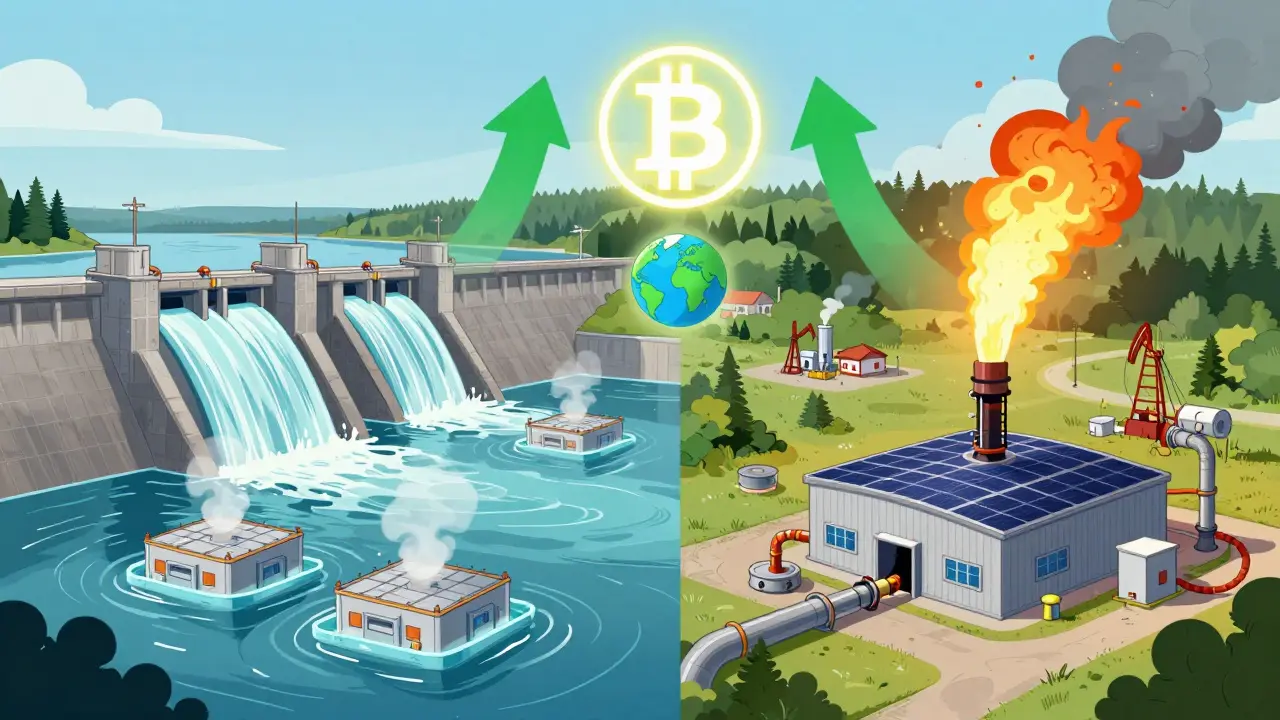
It’s easy to celebrate renewable mining - until you look closer. In the Pacific Northwest, cheap hydroelectric power has drawn miners like moths to a flame. But here’s the catch: that power was meant for homes, schools, and factories. When miners suck up 80% of the surplus hydro, local residents are forced to rely on fossil fuels to meet their needs. The grid doesn’t magically become cleaner. It just shifts the pollution elsewhere. Environmental groups like Earthjustice argue that crypto mining doesn’t create new renewables - it just grabs the cheapest power available, often at the expense of communities. In Washington State, residents have seen their electricity bills rise because mining companies are locking up supply. Even in Chile, where a 2.5 MW solar farm was built to power a Bitcoin mine, the story isn’t all bright. The mine took priority. Only after it was running did the excess power go to 1,200 nearby homes. Was that community benefit - or an afterthought?Community Backlash and Noise Pollution
It’s not just about energy. It’s about living next to a mining facility. Bitcoin miners need cooling. Lots of it. Fans run 24/7. In Texas, residents near mining sites complain of constant noise - like a jet engine outside their bedroom. Some have filed lawsuits. Local governments are starting to pass ordinances that limit mining hours or ban new operations near homes. The fix? Immersion cooling. Instead of loud fans, miners are dipping their rigs in special non-conductive fluids. It’s quieter, more efficient, and cuts energy use by up to 30%. But it’s expensive. Only big players can afford it. Small miners are stuck with noisy fans - and angry neighbors.Global Regulations Are Tightening
Not every country is okay with mining eating up power. Kuwait banned Bitcoin mining outright in early 2025, saying it was draining the national grid. India is considering heavy taxes on energy use by miners. The European Union is debating whether to classify crypto mining as a high-risk activity under climate rules. In the U.S., the Trump administration rolled back environmental reviews for mining projects, making it faster and cheaper to build new facilities. But that’s backfiring. Environmental groups are pushing back hard, arguing that unchecked mining could derail U.S. climate goals under the Paris Agreement.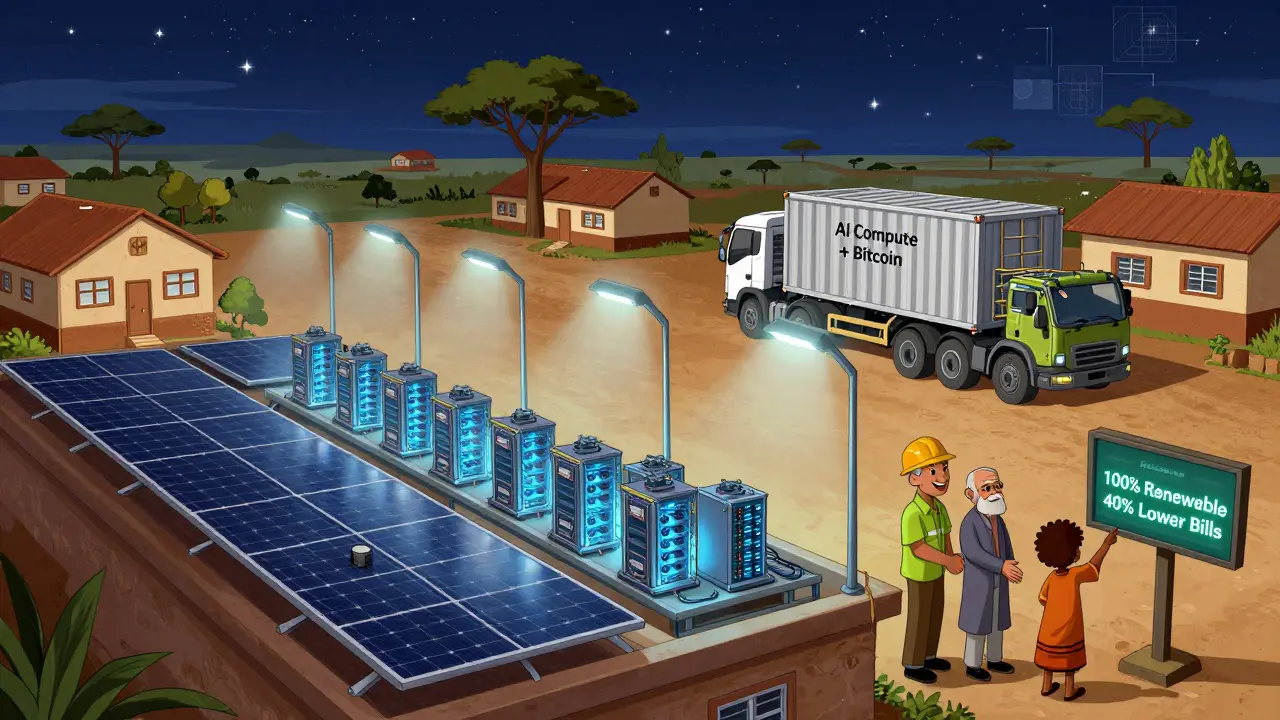
What’s Next? The Tech That Will Save This Industry
The future of mining isn’t about bigger rigs. It’s about smarter systems.- Immersion cooling is becoming standard for new facilities. It’s quieter, more efficient, and reduces hardware failure.
- Power Purchase Agreements (PPAs) are now the norm. Miners sign 10- to 20-year deals with solar and wind farms, giving developers the cash to build new projects.
- AI integration lets miners switch between mining and other high-performance computing tasks - like training machine learning models - based on energy prices.
- Modular designs let companies scale up or down quickly. If energy gets too expensive, they can shut down a container of miners in hours.
Can Renewable Mining Really Be Sustainable?
The data says yes - but with caveats. According to the Cambridge Centre for Alternative Finance’s 2025 report, 52.4% of Bitcoin mining now runs on renewable or nuclear energy. That’s up from 39% in 2021. Coal use has dropped to under 10%. That’s a massive shift. But here’s the problem: most of that renewable energy isn’t new. It’s leftover. The grid didn’t get greener because miners showed up. It got greener because solar and wind farms were built for other reasons - and miners just happened to be there to use the extra power. True sustainability means adding new clean energy to the grid, not just grabbing the scraps. The miners who are investing in new solar farms, wind projects, or nuclear plants are the ones making real progress. The rest? They’re just opportunists.What You Should Know If You’re Investing or Supporting Crypto
If you’re buying Bitcoin, holding crypto, or thinking about mining yourself - ask this:- Where is the energy coming from?
- Is it new renewable power, or just using what’s already there?
- Is the company paying for community benefits, or just taking advantage of cheap power?
And that’s the only version of crypto mining that can survive the next decade.
Is Bitcoin mining really using renewable energy?
Yes, but not always in the way people think. As of 2025, over half of Bitcoin mining runs on renewable or nuclear sources - mostly wind, hydro, and solar. But most of that energy comes from existing sources that would’ve been wasted anyway, like excess wind power in Texas or surplus hydro in Canada. It’s not always creating new clean energy - it’s often just using leftovers.
Why are miners moving to Texas?
Texas has a deregulated electricity market, which means miners can buy power directly from generators. It also has massive wind energy production - and a lot of it gets curtailed (wasted) because the grid can’t handle it. Miners pay very low prices for that surplus power and shut down when prices spike. This flexibility makes Texas the top mining hub in the world.
Does crypto mining help the environment?
It can - but only if miners invest in new renewable projects. Some companies, like Gryphon and CleanSpark, are building solar farms or capturing methane waste to power their rigs. That’s real environmental progress. But most miners just plug into the grid and use whatever’s cheapest. In places like the Pacific Northwest, that means taking clean hydro power away from homes and forcing people to use fossil fuels instead.
Can I mine Bitcoin sustainably at home?
Not really. Home mining with standard ASIC rigs uses too much power and generates too much noise to be practical or ethical. Even if you use solar panels, the hardware isn’t efficient enough to make sense. Professional mining farms with immersion cooling and direct renewable contracts are the only viable option today. Home mining is mostly a hobby with high costs and low returns.
What’s the future of crypto mining?
The future belongs to large, well-funded operations that use renewable energy, immersion cooling, and smart grid integration. Smaller miners will get squeezed out by rising energy costs and stricter regulations. The most successful companies will be those that don’t just mine Bitcoin - they build clean energy infrastructure, offer AI computing services, and work with local communities. Mining is becoming a utility, not a gamble.

Comments
Sammy Tam
Man, I love how miners are basically turning grid chaos into a profit engine. Texas wind farms used to just waste gigawatts at 2 a.m., now they’re powering Bitcoin rigs like it’s a damn rave. Who knew crypto could be this clever?
Sally Valdez
Oh please. You think this is green? It’s just another way for tech bros to loot the grid while pretending they’re saving the planet. We don’t need more energy-hungry toys - we need to turn off the damn lights.
George Cheetham
There’s a deeper truth here: energy isn’t good or bad - it’s a tool. The real question is whether we’re using it to create value or just consume it. Miners aren’t the villains - the system that lets power go to waste while people pay more is. This is capitalism adapting, not breaking.
Emma Sherwood
I’ve seen this play out in rural New Mexico. A solar farm got built, the miners came in, and suddenly the town had reliable power for the first time. Not because of charity - because someone figured out how to make money and share the surplus. That’s innovation, not exploitation.
Cheyenne Cotter
Let’s be real - most of these ‘green miners’ are just opportunists. They didn’t build the wind farms, they didn’t fund the hydro dams, they didn’t invent the tech - they just showed up when the power was cheap and started hashing like it’s a free buffet. The real environmental progress comes from people who invest in new infrastructure, not the ones who just piggyback on it. And let’s not forget, Bitcoin’s entire premise is energy-intensive by design. You can’t polish a turd and call it gold.
Even if 52% is renewable, that doesn’t mean the grid got cleaner. It means the dirtiest parts got masked by the excess. The carbon accounting is still a mess. And don’t even get me started on the noise pollution - imagine trying to sleep while your neighbor’s basement sounds like a jet engine running 24/7. That’s not sustainability, that’s just noise.
Plus, the idea that miners are ‘helping’ the grid by absorbing curtailment is a stretch. They’re not stabilizing it, they’re just a temporary drain that makes grid operators feel better about wasting power. If they were truly beneficial, they’d be integrated into demand-response systems, not just running when it’s cheapest.
And what about the downstream effects? When miners lock up hydro in the Pacific Northwest, local families get priced out and have to turn back to coal. That’s not green energy - that’s energy theft with a carbon offset sticker.
Don’t get me wrong, some companies like Gryphon and CleanSpark are doing real work. But they’re the exception, not the rule. Most of the industry is still playing the same old game: extract, profit, externalize, repeat. The tech is flashy, but the ethics are still stuck in 2017.
And let’s not forget the hardware. ASICs are single-use, non-recyclable, and get dumped every 18 months. That’s a mountain of e-waste waiting to happen. So yeah, maybe the power source is cleaner, but the whole lifecycle? Still a disaster.
Until the industry starts treating energy like a public good and not a commodity to be gobbled up by the highest bidder, I’m not buying the greenwashing.
Also, immersion cooling? Great for the big boys. But what about the small miners? They’re stuck with fans that sound like a dragon with a sinus infection. That’s not progress - that’s inequality dressed up as innovation.
And don’t even get me started on the regulatory arbitrage. US states are competing to be the cheapest place to mine, while Europe and India are trying to protect their citizens. This isn’t a global solution - it’s a race to the bottom.
So no, I don’t think renewable mining is sustainable. Not yet. Not unless we start measuring the full cost - not just the kWh, but the noise, the waste, the displacement, the inequality. Otherwise, we’re just building a new kind of pyramid scheme, powered by wind turbines.
Heather Turnbow
Thank you for presenting both sides of this issue with nuance. It’s easy to vilify an industry, but understanding the complexity of energy markets and incentive structures is critical to forming a balanced perspective.
Jesse Messiah
you know what? i think this is actually kind of beautiful. miners are like the ultimate utility players - they show up when the power’s cheap, they help stabilize the grid, they turn waste into value. it’s not perfect, but it’s smarter than just burning it all.
Terrance Alan
They’re not saving the planet they’re just making the rich richer while the rest of us pay for it with higher bills and louder neighbors
Jonny Cena
Hey, I get the skepticism - but think about it this way: if miners weren’t there, that wind energy would just vanish. Instead, it’s being used, and now developers have more confidence to build more. It’s a feedback loop. Maybe not perfect, but better than nothing.
Dionne Wilkinson
It’s weird how we get so mad at the miners but never ask why the grid lets so much energy go to waste in the first place.
Tom Joyner
Anyone who thinks this is sustainable hasn’t read the Cambridge report properly. 52% renewable? That’s still 48% fossil. And ‘renewable’ doesn’t mean ‘new.’ It means ‘already built and underutilized.’ This isn’t progress - it’s parasitic.
Amy Copeland
Oh wow, so now Bitcoin miners are climate heroes because they use leftover power? Next they’ll tell us that looting a museum is fine as long as you only take the stuff no one else wanted.
Patricia Amarante
Some of this is actually kinda cool.
Timothy Slazyk
The real innovation isn’t the mining - it’s the integration. Companies like TeraWulf and Iris Energy aren’t just buying power; they’re signing long-term PPAs that lock in funding for new solar and wind farms. That’s not opportunism - that’s infrastructure investment. They’re not just using the grid - they’re helping build the future version of it. And if you think immersion cooling is just a gimmick, you haven’t seen the efficiency gains. It cuts power use by 30%, reduces hardware failure, and makes noise levels drop from ‘jet engine’ to ‘humming fridge.’ That’s not luxury - it’s necessity.
And let’s not ignore Kenya’s Gridless Compute. They’re not just mining Bitcoin - they’re using the revenue to electrify villages. That’s not extraction, that’s empowerment. The tech is the tool, but the intent determines if it’s good or bad. Most critics focus on the tool and ignore the context.
Also, the noise complaints? Valid. But the solution isn’t banning miners - it’s mandating immersion cooling for new facilities. That’s a policy fix, not a moral one. And yes, small miners will get squeezed - but that’s the market. Efficiency wins. The real villain isn’t Bitcoin - it’s the lack of regulation that lets noisy, inefficient rigs run unchecked.
And for the record: the fact that miners use excess hydro in the Pacific Northwest doesn’t mean they’re stealing from homes. The surplus was already being spilled over dams. The real issue is the grid’s inability to store or redirect it. Miners are a temporary buffer - not the cause.
So yes, some miners are parasites. But the best ones? They’re the ones turning waste into wealth, and wealth into infrastructure. That’s not greenwashing - that’s evolution.
Jack Daniels
They’re just using the grid like a free ATM. One day we’ll wake up and realize we traded our electricity for digital lottery tickets.
Samantha West
What’s ironic is that the same people who scream about carbon footprints are fine with Bitcoin mining because it’s ‘renewable’ - yet they’d never support nuclear or hydro for the same reason. Double standards are the real pollution here
Craig Nikonov
They’re using the grid as a backdoor to control energy markets. Next thing you know, the whole system’s owned by crypto billionaires and we’re all just renters in our own homes
Sally Valdez
So what? You think the oil industry didn’t do the same thing? They didn’t build the wells - they just bought the rights and made billions. This is capitalism. Stop pretending it’s different.