
Crypto Arbitrage: Spotting Price Gaps and Turning Them Into Profit
When working with Crypto Arbitrage, the practice of buying a cryptocurrency on one market where the price is low and selling it on another market where the price is higher to capture the spread. Also known as arbitrage trading, it relies on fast execution and careful cost assessment.
At the heart of every arbitrage opportunity is a price discrepancy between two or more venues. Those venues are typically cryptocurrency exchanges, online platforms that let users buy, sell, and swap digital assets. An exchange’s fee structure, order‑book depth, and withdrawal limits directly shape how much of the spread you can actually keep. For example, a high trading fee, the charge taken by an exchange on each executed trade can erase a seemingly attractive arbitrage window. Understanding the fee schedule of each exchange is therefore a prerequisite for any profitable move.
Key Factors That Drive Arbitrage Opportunities
Liquidity is the second pillar. A deep liquidity pool, a reserve of assets that traders can draw from without moving the market price much ensures you can execute large orders without slippage. Low‑liquidity markets, on the other hand, can create bigger price gaps but also raise the risk of getting stuck with an unfilled order. The balance between gap size and pool depth often decides whether a trade is worth the effort.
Many traders combine arbitrage with other strategies such as Dollar‑Cost Averaging (DCA). While DCA smooths entry points over time, it can also mask short‑term price differences that arbitrageurs thrive on. Knowing when to pause a DCA plan in favor of a quick swing can boost overall returns. Our post “Avoid These Common Crypto DCA Mistakes and Protect Your Investments” shows how to spot those moments.
Security and speed matter too. An exchange with strong security measures and fast withdrawal processing reduces the chance of losing funds mid‑trade. Reviews of platforms like ProtoFi, XCOEX, and Nonkyc.io give insight into how each service handles fees, security, and token utility, which are all critical when you’re moving money between venues in minutes.
Finally, keep an eye on token‑specific events such as airdrops. A sudden surge in demand for a newly announced token can create temporary mispricings across exchanges. Guides on airdrops like the Kalata (KALA) or SHIBSC examples teach you how to verify legitimacy and avoid scams while still benefiting from the volatility they generate.
Putting all these pieces together—price gaps, exchange fees, liquidity depth, DCA timing, security, and token events—gives you a solid framework for crypto arbitrage. Below you’ll find a curated set of articles that break each component down, from exchange reviews and fee analyses to strategy tweaks and real‑world examples. Dive in, pick the tools that fit your style, and start turning market inefficiencies into steady gains.
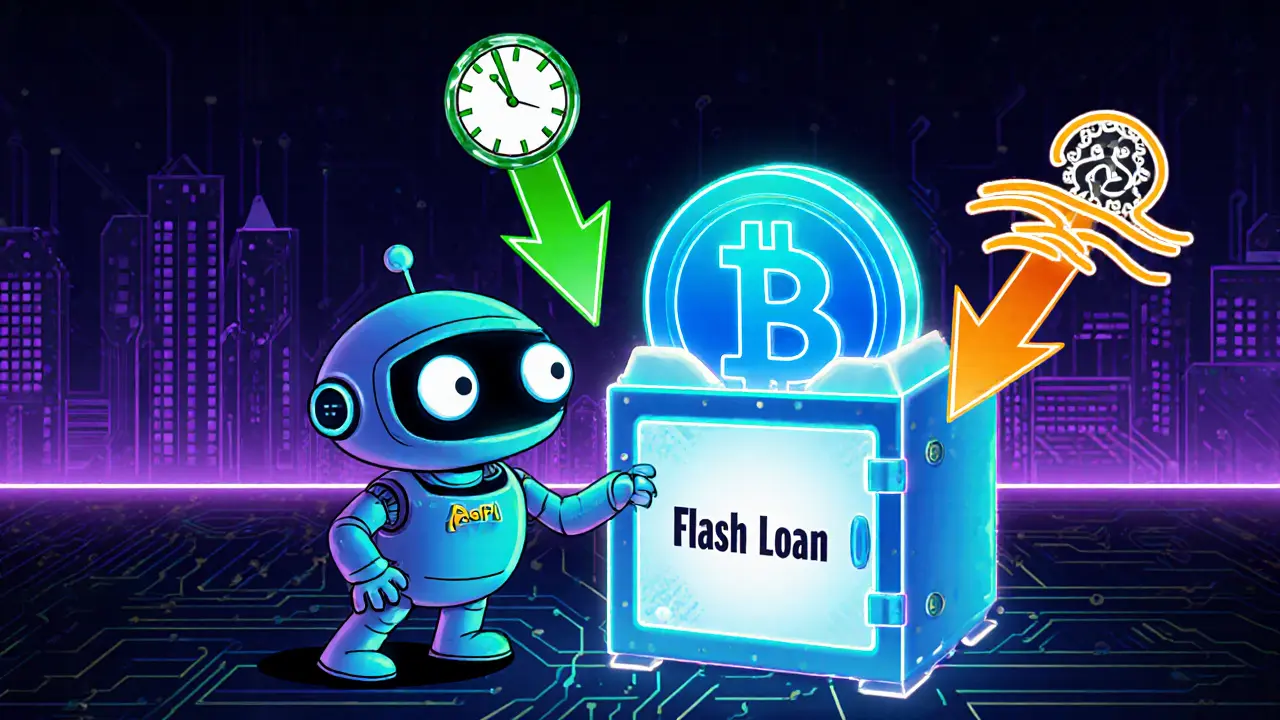
Flash Loan Arbitrage Opportunities in DeFi: How to Spot and Execute Profitable Trades
Discover how flash loan arbitrage works, learn to spot price gaps across DEXs, build a secure smart contract, manage risks, and maximize profits in today's DeFi market.
read more