
Crypto Confirmations: What They Are, Why They Matter, and How to Stay Safe
When you send crypto confirmations, the number of times a transaction is verified and added to the blockchain by network nodes. Also known as blockchain confirmations, it ensures your transaction is final and can’t be reversed. Without enough confirmations, your crypto isn’t really yours yet—even if the wallet shows it arrived.
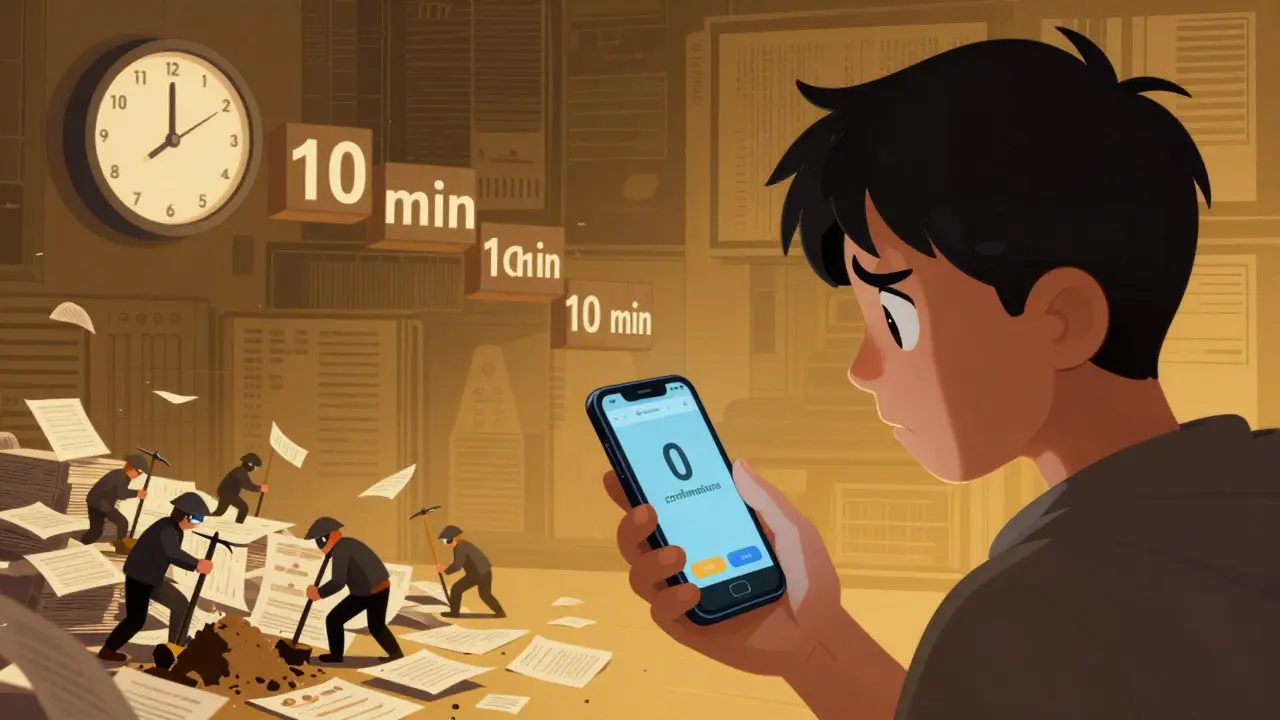
Every blockchain works differently. Bitcoin takes about 10 minutes per confirmation, and most exchanges want six before they credit your account. Ethereum? Faster—around 15 seconds per block, but you still need 12 to 30 confirmations depending on the platform. Why so many? Because each confirmation makes it harder and more expensive for someone to reverse your transaction through a 51% attack or double-spend scheme. You’re not just waiting for a notification—you’re waiting for the network to build a wall of proof around your transaction.
This isn’t just theory. Scammers know people rush. They send you a token with one confirmation, then drain your wallet before the network catches on. That’s why platforms like BXTEN, a new Southeast Asian crypto exchange with unverified volume and no regulation or WeDEX, an anonymous exchange offering 400x leverage and no KYC can be dangerous if you don’t wait for full confirmations. Even if the app says "deposit received," wait. Check the blockchain explorer. See how many blocks have been added since your transaction. Don’t trust a screen. Trust the chain.
And it’s not just about safety. wrapped tokens, like WBTC that let you use Bitcoin on Ethereum, rely on confirmations too. If the custodian holding your real BTC doesn’t get enough confirmations on the Bitcoin side, your wrapped version might not be backed properly. That’s custodial risk—and it’s real. Same goes for staking rewards, where your crypto earns interest by locking up on a proof-of-stake network. If a validator gets slashed because of a chain reorganization, you could lose earnings unless the network has deep confirmation depth.
Most people think confirmations are just a loading bar. They’re not. They’re the only thing standing between you and a stolen balance. The more confirmations, the less likely your transaction is to vanish. That’s why even reputable exchanges like those in Pakistan, where PVARA licensing now demands strict compliance or Brazil, where the Central Bank enforces AML/KYC rules set strict confirmation thresholds. They know what happens when you skip this step.
Below, you’ll find real cases where ignoring crypto confirmations led to losses—whether it was fake airdrops pretending to pay out, exchanges with hidden delays, or tokens that vanished after a single block. These aren’t hypotheticals. These are stories of people who trusted a screen instead of the chain. Learn from them.
Understanding Cryptocurrency Confirmation Times: How Long Until Your Transaction Is Final?
Learn how long cryptocurrency transactions take to confirm, why fees and network congestion matter, and how many confirmations you really need for safety. No fluff-just clear, practical guidance.
read more