
Foreign Crypto: What You Need to Know About Global Crypto Regulations and Risks
When people talk about foreign crypto, cryptocurrencies traded or regulated outside your home country. Also known as overseas crypto, it includes everything from exchanges based in Southeast Asia to token projects hosted on blockchains with no legal oversight. It’s not just a way to access more coins—it’s a minefield of unlicensed platforms, fake airdrops, and scam operations hiding behind weak laws.
Many crypto exchanges, platforms where users buy, sell, or trade digital assets. Also known as crypto trading platforms, it in countries like Myanmar, Pakistan, and Brazil operate without proper licensing. Take BXTEN in Southeast Asia or WeDEX with its 400x leverage and no KYC—these aren’t just risky, they’re often designed to vanish with your money. Meanwhile, countries like Brazil and Pakistan have started forcing exchanges to get government approval, but enforcement is spotty. That means you might be trading on a platform that’s legal on paper but still operates like a shell game.
And then there’s the scam side of foreign crypto, cryptocurrencies traded or regulated outside your home country. Also known as overseas crypto, it. Over $10 billion was stolen from Americans in 2024 through scams run from Shwe Kokko, a lawless border zone in Myanmar. These aren’t random hackers—they’re organized gangs using romance scams, fake airdrops like WKIM Mjolnir or KTN Adopt a Kitten, and fake exchange websites like BtcPro to trap victims. The U.S. has slapped sanctions on some operators, but the operations keep moving. Even if you’re not in those countries, your money can still get pulled in through offshore wallets or anonymous trading.
What ties all this together is trust—or the lack of it. Foreign crypto doesn’t come with consumer protections like refunds or insurance. If a wrapped token like WBTC fails because its custodian goes dark, you lose everything. If a Pakistani exchange gets shut down by PVARA, your funds might freeze forever. If a Brazilian exchange gets licensed but still hides its volume, you’re trading on smoke. The only thing consistent across every foreign crypto story is this: if it sounds too easy, too fast, or too anonymous, it’s probably a trap.
Below, you’ll find real breakdowns of exactly how these systems work—and how they fall apart. From fake airdrops in Pakistan to high-leverage exchanges in Southeast Asia, these aren’t theoretical risks. They’re happening right now. And if you’re trading outside your home country, you need to know which ones are real and which ones are just waiting for you to click "Confirm."
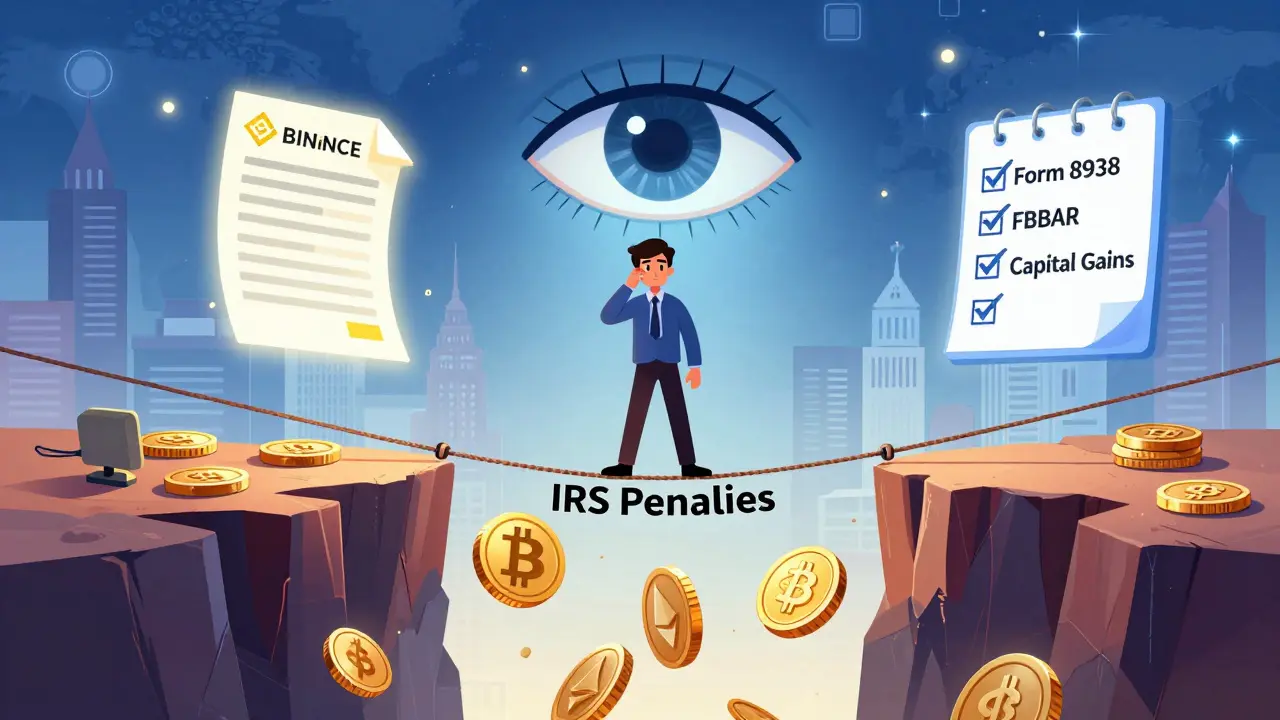
FATCA and Cryptocurrency Reporting for US Citizens: What You Must Know in 2025
U.S. citizens with foreign cryptocurrency must report holdings under FATCA if they exceed $50,000. FBAR rules are changing in 2025 - crypto may soon be included. Know your thresholds, how to value assets, and how to avoid penalties.
read more