
Pakistani crypto exchange: What you need to know about trading crypto in Pakistan
When people in Pakistan talk about a Pakistani crypto exchange, a digital platform where users buy, sell, or trade cryptocurrencies using Pakistani rupees or stablecoins. Also known as local crypto trading platform, it’s not just about technology—it’s about survival, opportunity, and navigating one of the most restrictive financial environments in the world. The State Bank of Pakistan banned banks from handling crypto transactions back in 2021, but that didn’t stop millions from trading. Instead, it forced the market underground—and made P2P platforms like Binance P2P, LocalBitcoins, and Paxful the real Pakistani crypto exchange, the primary way people access Bitcoin, USDT, and other digital assets without bank involvement. These aren’t fancy apps with customer support lines. They’re peer-to-peer marketplaces where buyers and sellers agree on prices, send cash via bank transfer or mobile wallets, and complete trades in minutes.
What makes a Pakistani crypto exchange, a trusted platform for locals to trade without getting locked out of their funds or flagged by authorities. isn’t its UI or marketing. It’s trust. Many platforms claim to be "Pakistan-friendly," but most are scams. Fake exchanges like BtcPro or Alita Finance lure users with promises of zero fees and instant withdrawals—then vanish with their deposits. Real traders know the difference: they check for user reviews, avoid platforms that don’t allow direct PKR deposits, and never send money to unknown wallets. The crypto tax Pakistan, a 30% capital gains tax on crypto profits introduced in 2023 and enforced through bank reporting. means every trade has legal consequences. You can’t ignore it. Even if you trade on offshore platforms, your bank may report large transfers to the Federal Board of Revenue. That’s why smart traders use stablecoins like USDT to move value without triggering red flags, and keep records of every transaction.
And then there’s the P2P crypto Pakistan, the unofficial backbone of the country’s crypto economy, where individuals trade directly using mobile payment apps like JazzCash and EasyPaisa. It’s messy, it’s risky, and it’s the only way most people can get into crypto. You’re not trading with a bot—you’re trading with a guy in Lahore who’s selling USDT for cash deposited into his mobile wallet. The price? It’s usually 5-10% higher than global rates because of the risk. But it works. People use it to send money abroad, buy goods online, and even pay for education. This isn’t speculation—it’s utility.
What you’ll find below are real reviews, scam warnings, and practical breakdowns of platforms that actually work in Pakistan. No fluff. No hype. Just what traders on the ground have learned the hard way: which exchanges are safe, which tokens are worthless, and how to avoid losing everything to a fake app. You’ll see why some "airdrops" are just phishing traps, why low-cap tokens like FRY or FintruX have zero liquidity here, and how to spot a crypto exchange that’s built for real users—not just scammers.
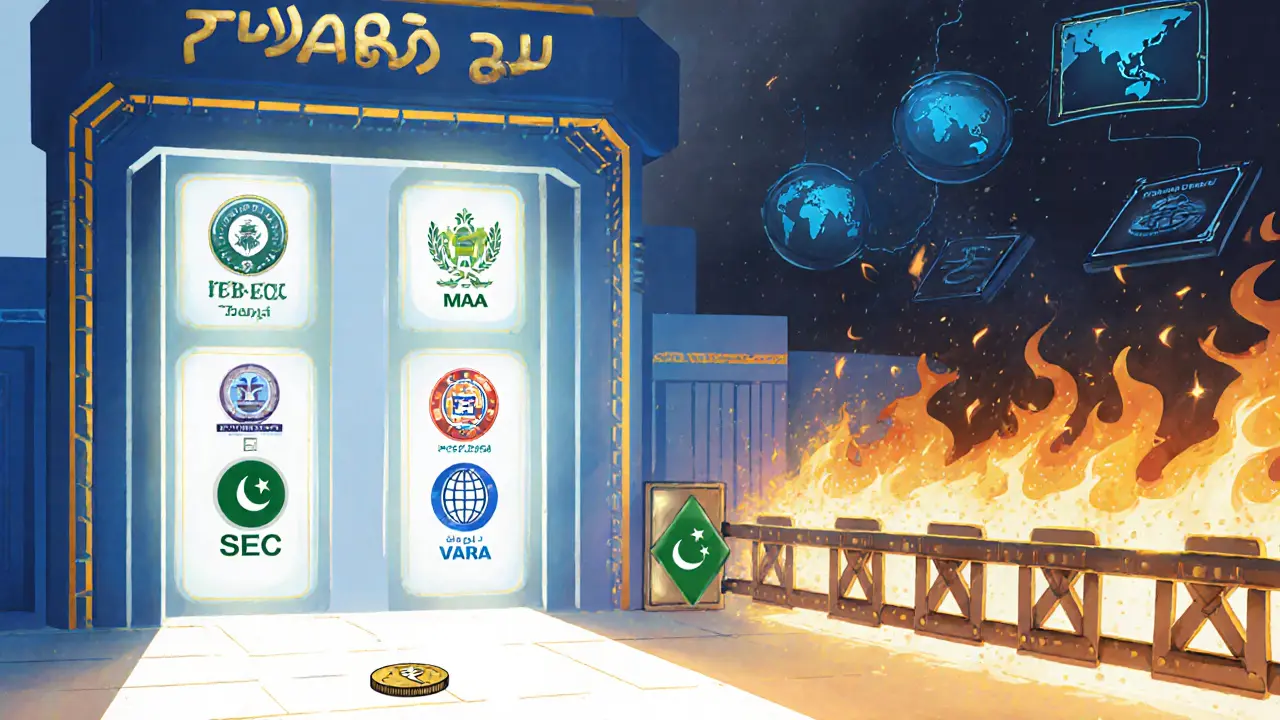
Pakistani Crypto Exchange Licensing Requirements and Process in 2025
Pakistan's new PVARA licensing system in 2025 lets only globally regulated crypto exchanges operate legally. Learn the strict requirements, compliance rules, and the big contradiction with the central bank.
read more