

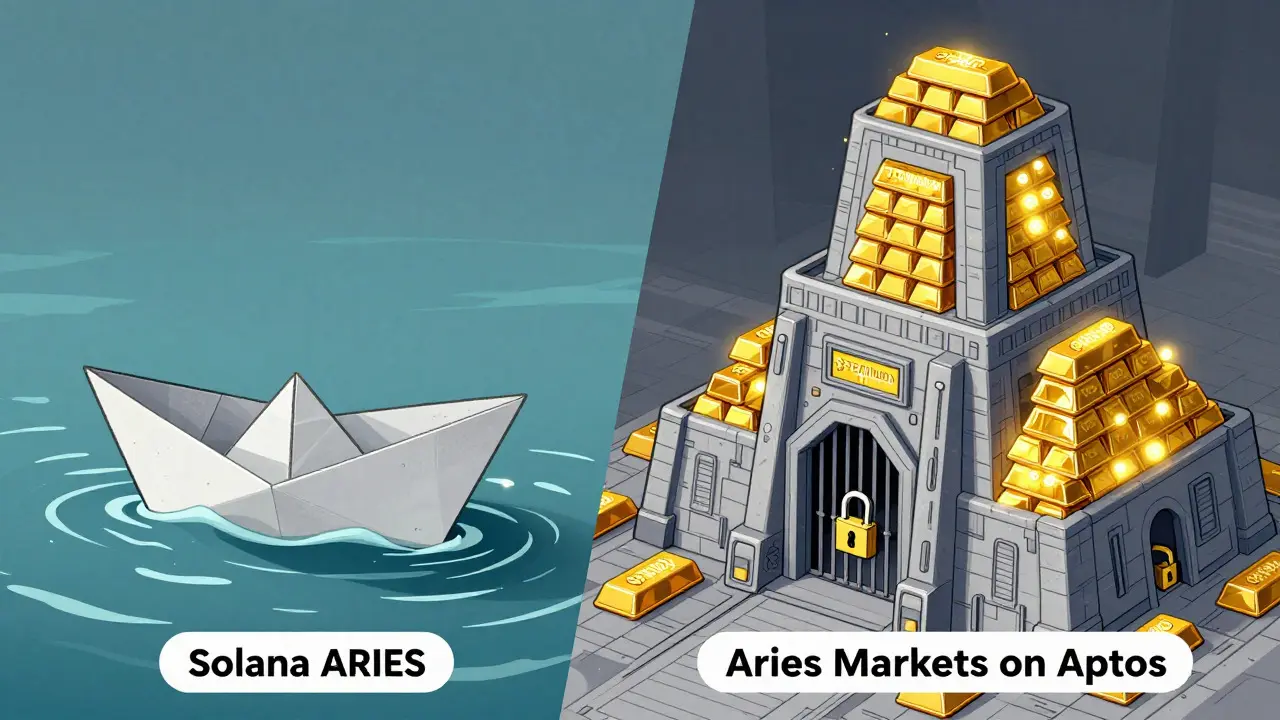
Searching for "Aries (ARIES)" in your wallet or on a price tracker can be confusing. You might expect one specific coin, but instead, you find several completely different projects sharing the same name and ticker symbol. As of mid-2026, this isn't just a minor naming clash; it's a fragmented landscape involving a micro-cap altcoin on Solana is a high-performance blockchain platform known for fast transactions and low fees, a major decentralized finance protocol on Aptos is a Layer 1 blockchain built with the Move programming language, a meme-themed token on BNB Chain is a blockchain network that supports smart contracts and decentralized applications, and an obscure contract on Base. If you buy the wrong one, you could end up with a worthless asset instead of the project you intended to support.
This guide cuts through the noise. We will break down each version of Aries, explain where they live on-chain, and help you identify which one actually matches your investment goals. Whether you are looking for high-risk speculation or serious DeFi utility, knowing the difference between these entities is critical.
The Solana-Based Aries (ARIES): A Micro-Cap Speculative Asset
When most retail traders search for "Aries" on aggregators like CoinGecko or CoinMarketCap, they usually land on the Solana-based token first. This is not a blue-chip asset. It is a micro-cap altcoin with a circulating supply of approximately 1 billion tokens. As of July 2026, its market capitalization hovers around $90,000 to $100,000, placing it thousands of ranks down from top cryptocurrencies.
| Metric | Value (Approximate) |
|---|---|
| Blockchain | Solana |
| Price Range | $0.000089 - $0.000092 |
| Market Cap | ~$90,000 |
| Daily Volume | $250 - $1,800 |
| Primary DEX | Raydium |
The liquidity here is thin. Daily trading volumes often stay below $2,000. This means if you try to sell a large position, you might slip the price significantly. The token trades primarily on Raydium is a decentralized exchange and automated market maker on the Solana blockchain, using the ARIES/SOL pair. Wallets like Solflare support instant swaps for this token, making it easy to buy, but also easy to lose money if the community interest dries up. Historically, this token has seen brief spikes-reaching over $0.001 in August 2025-before reverting to its micro-cap baseline. These spikes are typically driven by short-term speculative inflows rather than fundamental upgrades.
If you are buying this version of Aries, you are betting on viral momentum within the Solana meme-token ecosystem. There is no documented roadmap or significant utility beyond being a tradable asset. Treat it as high-risk gambling, not long-term investing.
Aries Markets: The Real DeFi Powerhouse on Aptos
There is a second, much more substantial entity called Aries. Aries Markets is a leading decentralized lending and margin-trading protocol on the Aptos blockchain. Launched in October 2022, it operates on the Aptos network, which uses the Move programming language. Unlike the Solana altcoin, Aries Markets is infrastructure. It is currently ranked as the number one DeFi application in the Move ecosystem by total value locked.
Here is the catch: the associated ARIES token is not widely tradable yet. As of mid-2026, CoinGecko lists the token under "Aries-2" but notes it is unavailable on major exchanges. However, the protocol itself is massive, holding approximately $750 million in deposits. Users deposit assets to earn interest, borrow against collateral, or engage in leveraged trading through unified margin accounts.
The architecture of Aries Markets is sophisticated. It offers sub-accounts for portfolio management, yield-bearing tokens, and flash loans. For developers and advanced traders, this is the "real" Aries worth watching. The future potential lies in the eventual launch of a tradable governance or utility token. Until then, exposure to Aries Markets comes from using the protocol, not buying a coin on a centralized exchange. If you see an "ARIES" token listed on a random DEX claiming to represent Aries Markets, verify the contract address carefully, as scams often mimic legitimate protocols before their token launches.
ARIES NETWORK: The Zodiac-Themed Meme Token on BNB Chain
Then there is ARIES NETWORK, deployed on BNB Chain. This project leans heavily into narrative branding. Described as being "backed by the cosmic energy of the zodiac," it markets itself with terms like "wealth shield" and "cosmic moon-charging engine." This is classic meme-token rhetoric.
The metrics reflect its niche status. With a market cap around $14,000 and only about 525 holders, this is a nano-cap asset. The price hovers near $0.00014. It combines AI themes with multi-chain ambitions, but lacks concrete technical details beyond its ERC-20-style contract on BNB Chain. You can swap it via Bitget Wallet or other Web3 interfaces, but the risk profile is extreme. The community engagement appears social and thematic rather than technical. If you enjoy collecting obscure meme coins with unique lore, this might fit your portfolio. If you want financial utility, look elsewhere.
The Base Chain Mystery: Contradictory Data and Boilerplate Text
A fourth variant exists on Base, an Ethereum Layer-2 network. Deployed in September 2025, this token presents data inconsistencies that raise red flags. Some aggregators list its price as $0, while others claim it costs nearly $0.03. The supply fields are often marked as "N/A" or zero.
Worse, the project description attached to this token claims it is a decentralized payment network that processed $299 billion in transactions by December 2020. Since the contract was deployed in 2025, this text is clearly copied boilerplate from another project, likely unrelated to this specific token. This suggests either a lazy deployment or a scam contract designed to confuse users. Avoid this version unless you have verified the contract address directly from a trusted source. The lack of volume and contradictory pricing makes it nearly impossible to trade safely.

How to Identify Which Aries You Are Buying
Mistaking one Aries for another is costly. Here is how to tell them apart before you click "swap":
- Check the Blockchain: If you are on Solana, you are likely looking at the micro-cap spec coin. If you are on Aptos, you are interacting with the DeFi protocol interface. If you are on BNB Chain, you are dealing with the zodiac meme token.
- Verify the Contract Address: Never trust the name alone. Copy the contract address from a reputable aggregator like CoinGecko or CoinMarketCap and paste it into your wallet. For the Solana token, ensure it matches the SPL token standard. For BNB Chain, verify the BEP-20 address.
- Look for Liquidity: The Solana token has low but real liquidity on Raydium. The Aptos protocol has high TVL but no liquid token yet. The Base token has erratic or zero volume. High slippage warnings are a sign of illiquidity.
- Read the Description: Does it mention "lending," "margin trading," and "Move language"? That’s Aries Markets. Does it mention "zodiac," "AI," and "cosmic energy"? That’s ARIES NETWORK. Does it mention nothing but generic crypto jargon? Be cautious.
Risk Assessment and Strategic Outlook
In the broader crypto market of 2026, these Aries variants illustrate the fragmentation of the space. The Solana and BNB Chain tokens are purely speculative. Their survival depends on continued community hype. Without new features or partnerships, they risk fading into obscurity as attention shifts to newer memes. The Base chain token is essentially dead on arrival due to data integrity issues.
Aries Markets stands out as the only entity with fundamental value. Its $750 million in deposits proves product-market fit in the Aptos ecosystem. However, investors must wait for the token launch to gain direct equity-like exposure. Until then, the protocol serves as a benchmark for DeFi innovation on non-Ethereum blockchains.
If you are a conservative investor, avoid all ARIES tokens except perhaps monitoring Aries Markets for its token generation event. If you are a degenerate trader seeking 100x returns, the Solana and BNB Chain versions offer the volatility you crave, but bring your own luck and risk management tools. Always use a hardware wallet for larger holdings, and never invest more than you can afford to lose in these micro-cap assets.
Is Aries (ARIES) a good investment?
It depends on which Aries you mean. The Solana and BNB Chain versions are high-risk, micro-cap speculative assets with low liquidity. They are suitable only for aggressive traders who can tolerate total loss. Aries Markets on Aptos is a leading DeFi protocol with significant value locked, but its token is not yet widely tradable, limiting immediate investment options.
Where can I buy Aries (ARIES)?
The Solana-based ARIES can be bought on decentralized exchanges like Raydium using SOL. The BNB Chain version can be swapped via Web3 wallets like Bitget Wallet. The Aptos-based Aries Markets token is not currently available on major centralized exchanges. Always verify the contract address before swapping.
What is the difference between Aries Markets and Aries token?
Aries Markets is a decentralized finance protocol on the Aptos blockchain that allows lending and borrowing. The ARIES token is the native asset associated with this protocol, but as of mid-2026, it is not yet actively traded on public exchanges. Other "Aries" tokens on Solana or BNB Chain are unrelated to this protocol.
Is the Base Chain Aries token safe?
Caution is advised. The Base Chain Aries token has contradictory price data and appears to use boilerplate descriptions from unrelated projects. This suggests poor maintenance or potential fraud. Verify the contract thoroughly and consider it high-risk or inactive.
Which blockchain is the most popular Aries token on?
The most commonly searched and tracked Aries token is the one on the Solana blockchain. It appears frequently on price aggregators like CoinGecko and CoinMarketCap. However, the most financially significant project named Aries is Aries Markets, which operates on the Aptos blockchain.

Write a comment