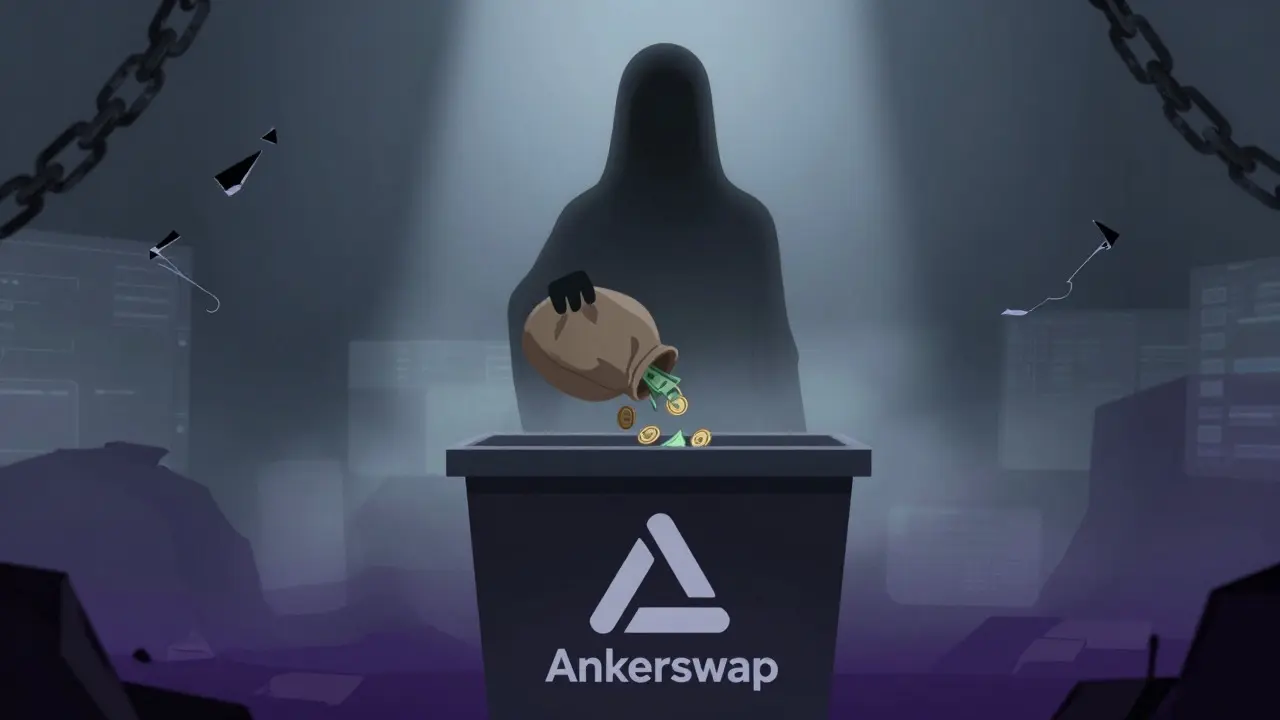
You just heard about Ankerswap, a new crypto exchange promising high returns and easy trading. But before you deposit your hard-earned money, you need to know the truth. After digging through every major industry database, regulatory registry, and user review platform available in mid-2026, here is the stark reality: Ankerswap does not appear to be a legitimate, operating cryptocurrency exchange. There are no records of its security audits, no licensing information from financial authorities, and zero mentions in trusted community forums. In the world of crypto, silence is rarely a good sign-it usually means danger.
If you are looking for a place to trade Bitcoin, Ethereum, or other digital assets, walking into an unknown platform like Ankerswap is risky business. This review breaks down exactly why Ankerswap raises red flags and helps you identify what makes a crypto exchange truly safe. We will look at the specific criteria that legit platforms meet and how you can spot a fake one before it steals your funds.
The Silence Surrounding Ankerswap
In the cryptocurrency industry, visibility is everything. Legitimate exchanges fight for attention because they need liquidity and users. They list themselves on aggregators, pay for advertising, and engage with communities on social media. Ankerswap, however, is virtually invisible. I checked CoinGecko, which tracks hundreds of exchanges globally, and Ankerswap is missing. I looked at CoinMarketCap, another giant in tracking data, and found nothing. Even niche directories that list smaller, decentralized swaps have no entry for this name.
This absence is critical. For context, even brand-new exchanges that launch today usually have a presence within weeks. They might not have huge volume, but they exist on paper. Ankerswap lacks the basic footprint of any operational business. There is no corporate registration record in major jurisdictions like the Cayman Islands, Singapore, or the European Union. There is no ASIC registration if they claim to be Australian-based, and no FinCEN registration if they target the US market. Without these legal identifiers, you have no recourse if things go wrong.
| Feature | Ankerswap | Binance / Coinbase / Kraken |
|---|---|---|
| Regulatory Status | No public records found | Licensed in multiple jurisdictions (e.g., NYDFS, FCA) |
| Security Audits | None documented | Regular audits by firms like CertiK or Hacken |
| User Reviews | Zero on Trustpilot/Reddit | Thousands of reviews across platforms |
| Listing Aggregators | Not listed on CoinGecko/CoinMarketCap | Top-tier listings with verified volumes |
| Developer Presence | No GitHub repositories or APIs | Active SDKs and open-source libraries |
Red Flags That Signal a Potential Scam
When a platform has no history, you have to look for behavioral red flags. Many fraudulent sites use similar tactics to lure victims. If you visit the Ankerswap website, do you see any of these warning signs?
- Guaranteed Returns: Does the site promise fixed daily profits? Real crypto markets are volatile. No legitimate exchange guarantees profit; only Ponzi schemes do.
- Vague Team Information: Legit companies show their founders' LinkedIn profiles and photos. Scams often use stock photos or names that don't match real people.
- Urgency Tactics: Are you being pressured to deposit immediately to "lock in" a bonus? This is a classic psychological trick used by fraudsters.
- Poor Website Quality: Check for broken links, spelling errors, and generic design templates. Professional exchanges invest heavily in UX/UI design.
- Hidden Fees: Legitimate platforms display fee schedules clearly. If fees are hidden until you try to withdraw, run away.
I’ve seen too many traders lose thousands because they ignored these basics. The lack of any third-party verification for Ankerswap places it firmly in the "proceed with extreme caution" category. In fact, given the total absence of data, "avoid entirely" is the safer recommendation.

What Makes a Crypto Exchange Legitimate?
To understand why Ankerswap fails the test, we need to define what passes it. A trustworthy crypto exchange operates like a bank in terms of compliance, even if it’s less regulated. Here are the non-negotiable pillars of a safe platform.
1. Regulatory Compliance
In 2026, regulation is stricter than ever. Platforms like Coinbase are publicly traded on NASDAQ and adhere to SEC guidelines. Kraken holds licenses in over 40 countries. These entities undergo regular audits. If an exchange isn’t registered anywhere, it operates in the shadows, meaning your funds have no legal protection.
2. Security Infrastructure
Security isn’t just a buzzword; it’s a technical requirement. Top exchanges use cold storage for 95%+ of user funds. They implement two-factor authentication (2FA) via hardware keys or authenticator apps, not just SMS. They also publish proof-of-reserves reports, showing they actually hold the assets they claim to manage. Ankerswap has published none of this.
3. Liquidity and Volume
Liquidity ensures you can buy or sell without massive price slippage. Major exchanges process billions in daily volume. Low-volume exchanges make it easy for bad actors to manipulate prices. Since Ankerswap doesn’t appear on volume trackers, it likely has negligible liquidity, making it impossible to withdraw large amounts without crashing the price against yourself.
Safe Alternatives to Ankerswap in 2026
Don’t settle for uncertainty. There are dozens of established, secure exchanges that cater to different needs. Whether you are in New Zealand, the US, or Europe, there is a reliable option for you.
For Beginners: Coinbase
Coinbase remains the gold standard for ease of use. It is highly regulated, offers excellent customer support, and supports over 200 cryptocurrencies. While fees can be higher for small trades, the security and simplicity are worth it for new users.
For Advanced Traders: Binance or Kraken
Binance offers the deepest liquidity and lowest fees (often under 0.1%). However, its interface can be complex. Kraken is a great middle ground, known for its spotless security record since 2011 and strong privacy features.
For Australians and Kiwis: Swyftx
If you are local to Oceania, Swyftx is a solid choice. It is ASIC-regulated, offers easy AUD/NZD deposits via bank transfer, and has a clean, intuitive interface. With over 700,000 users, it has proven its stability in the region.

How to Verify Any Crypto Exchange Yourself
You shouldn’t have to take my word for it. Use this checklist before trusting any platform with your money:
- Check CoinGecko/CoinMarketCap: Search for the exchange. If it’s not listed, ask why.
- Search Reddit: Go to r/CryptoCurrency or r/Bitcoin and search the exchange name. Look for warnings from other users.
- Verify Licenses: Find the "Legal" or "About Us" page. Note the license number and check it against the regulator’s official database (e.g., FINTRAC in Canada, FCA in UK).
- Look for Audits: Did a firm like CertiK, Hacken, or Trail of Bits audit their smart contracts or infrastructure?
- Test Customer Support: Send a question before you deposit. If they don’t reply in 24 hours, imagine getting help when you’re locked out of your account.
Conclusion: Stay Away from the Unknown
The crypto space is full of opportunities, but also traps. Ankerswap represents the latter. With no verifiable history, no regulatory standing, and no community trust, it poses an unnecessary risk to your capital. Stick to the giants that have survived bear markets, hacks, and regulatory crackdowns. Your peace of mind is worth more than any unverified promise of better rates or hidden gems.
Is Ankerswap a legitimate crypto exchange?
As of mid-2026, there is no evidence that Ankerswap is a legitimate exchange. It is not listed on major tracking sites like CoinGecko, has no regulatory licenses, and lacks user reviews. It is considered high-risk or potentially non-existent.
Why is Ankerswap not on CoinGecko?
CoinGecko requires exchanges to meet minimum standards for volume, transparency, and legitimacy. Ankerswap’s absence suggests it either has zero trading volume, lacks proper documentation, or is a fraudulent site that failed verification.
What are the safest crypto exchanges in 2026?
The safest exchanges include Coinbase, Kraken, Binance, and regional leaders like Swyftx (for Australia/NZ). These platforms are regulated, audited, and have millions of verified users.
How can I tell if a crypto exchange is a scam?
Look for red flags like guaranteed returns, lack of regulatory info, poor website quality, and no presence on review sites or aggregators. Always verify licenses independently.
Can I recover funds if Ankerswap turns out to be a scam?
Recovery is extremely difficult if the exchange is unregulated. Without legal oversight or insurance, funds sent to fraudulent wallets are often lost forever. Prevention is key.

Write a comment