
Brazil Crypto Platform Verification Tool
Verify Your Platform's Registration
Check if your crypto exchange or wallet service is officially registered with the Central Bank of Brazil (BCB). Only registered platforms offer consumer protection under Brazil's Virtual Assets Law (BVAL).
Enter a platform name and click "Check Registration Status" to verify if it's officially registered with the Central Bank of Brazil.
When you buy Bitcoin or trade Ethereum in Brazil, you’re not stepping into a legal gray zone anymore. Since June 20, 2023, the country has had a clear, enforceable framework for cryptocurrency - and it’s one of the strictest in Latin America. This isn’t about banning crypto. It’s about bringing it into the financial system, with rules that protect you as a consumer - whether you’re holding a few coins or trading stablecoins daily.
What the BVAL Law Actually Does
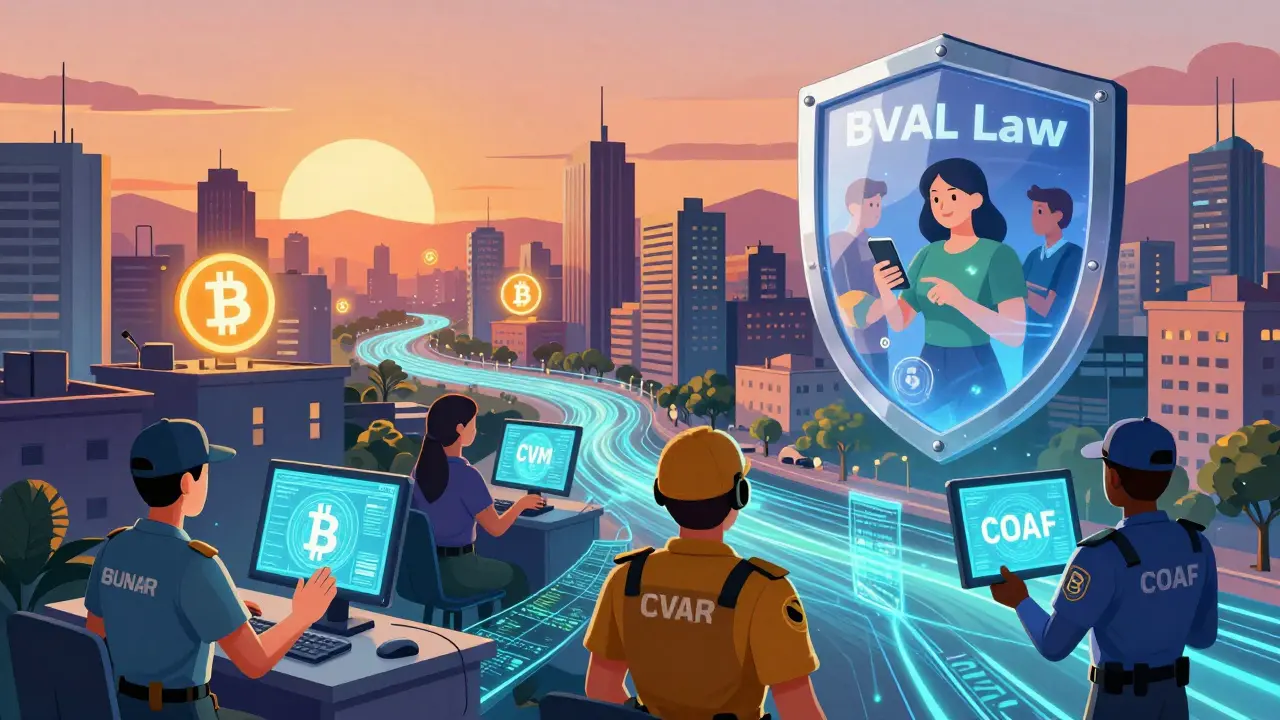
The Brazilian Virtual Assets Law (BVAL), or Law No. 14.478/2022, is the backbone of crypto regulation in Brazil. It didn’t just make crypto legal - it defined it. Virtual assets are now recognized as digital representations of value that can be traded, transferred, or stored electronically. But they’re not money. They’re not legal tender. They’re assets, and that distinction matters. The law forced every crypto platform operating in Brazil to register with the Central Bank of Brazil (BCB). No exceptions. If you’re running an exchange, wallet service, or crypto trading bot, you need official authorization. This isn’t a suggestion. It’s a legal requirement. And if you don’t comply? You can’t operate. Period. This registration system is the first layer of consumer protection. Before you can deposit money into a Brazilian crypto exchange, that exchange has to prove it’s following AML (Anti-Money Laundering) and KYC (Know Your Customer) rules. That means your ID is verified, your transactions are logged, and your activity is monitored. If someone tries to launder cash through a crypto wallet, the system flags it. That’s not just for law enforcement - it’s for you. It means fewer scams, fewer fake platforms, and more accountability.Who’s Watching What
Brazil didn’t put all the power in one agency. It split oversight across three key bodies:- Central Bank of Brazil (BCB): Handles all Virtual Asset Service Providers (VASPs). This includes exchanges, custodians, and trading platforms. They set the rules for licensing, reporting, and operational standards.
- Securities and Exchange Commission (CVM): Steps in when crypto assets act like securities - think tokens that promise profits based on someone else’s work, like a startup’s token sale. These fall under investor protection rules, similar to stocks.
- Financial Activities Control Council (COAF): Monitors suspicious transactions. If a user suddenly sends $50,000 in crypto to an unknown address, COAF gets notified. This helps trace fraud, ransomware payments, and organized crime.
Stablecoins Are the Real Deal - and They’re Under Fire
Here’s the truth most people miss: 90% of crypto transactions in Brazil are in stablecoins. Not Bitcoin. Not Ethereum. USDT, USDC, and other dollar-pegged tokens. Why? Because Brazilians use them to protect savings from inflation, send money across borders, and pay for goods online without relying on banks. That’s why regulators are zeroing in on stablecoins. The BCB sees them as the actual infrastructure of Brazil’s crypto economy. And right now, many are operating without proper backing or transparency. Some issuers claim they hold $1 for every token - but no one’s checking. New rules are coming in 2025. Issuers will need to prove their reserves are real, audited, and held in regulated financial institutions. They’ll also need to disclose how they manage risk. If you’re holding USDT on a Brazilian exchange, you’ll soon know exactly what backs it - and whether it’s safe.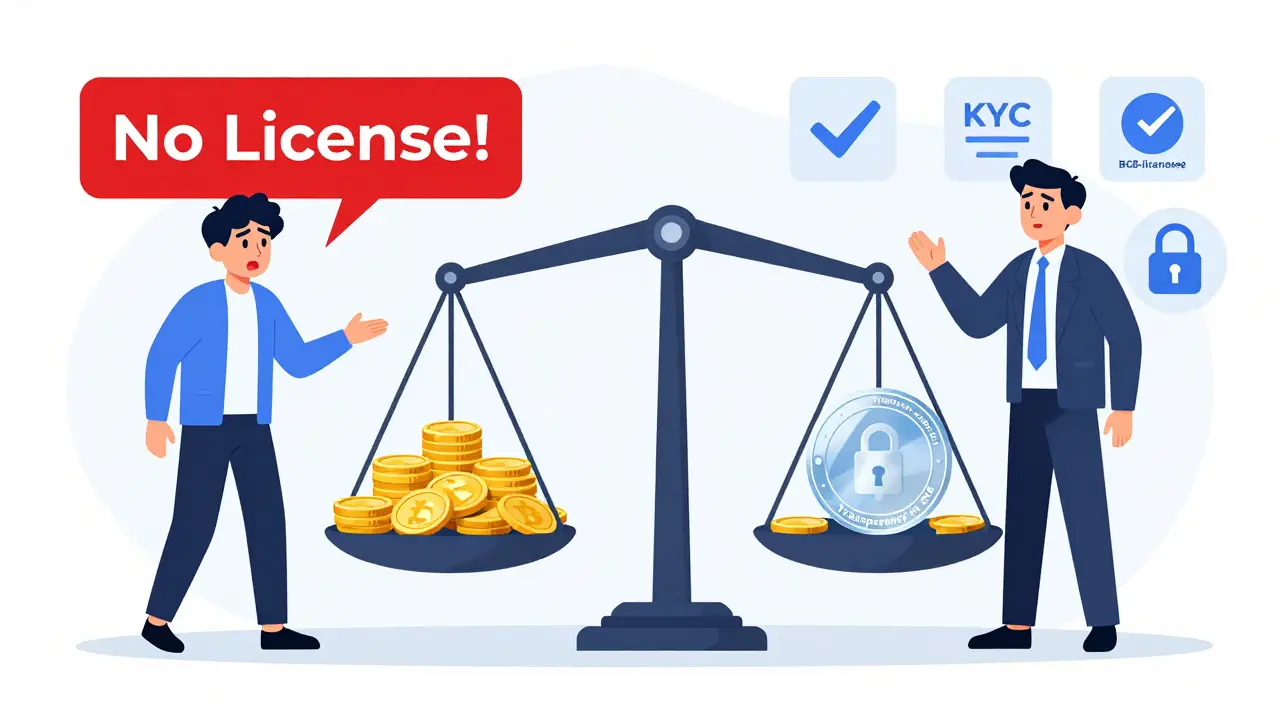
How Consumer Protection Actually Works
There’s no “crypto refund law” in Brazil. If you send crypto to a scammer, the government won’t reverse the transaction. But here’s what does protect you:- Only licensed platforms can operate. If a platform isn’t registered with the BCB, it’s illegal. You’re not protected if you use it - and you shouldn’t.
- Every transaction is traceable. KYC means exchanges know who you are. If you’re defrauded, investigators can follow the money. That’s a huge deterrent for criminals.
- The Regulatory Sandbox. New crypto products - like DeFi lending or tokenized real estate - can be tested under BCB supervision before going live. That means you’re not the first person to risk your money on an unproven system.
The New Foreign Exchange Rules - What They Mean for You
On September 24, 2025, Brazil’s central bank proposed new rules for foreign exchange providers. On the surface, it sounds like it’s about currency trading. But here’s the catch: if a crypto exchange lets you buy Bitcoin using U.S. dollars or send crypto abroad, it could be classified as a forex provider. Under the new rules:- Forex providers must get a license from the BCB.
- They must report every transaction to regulators.
- No single transaction can exceed $10,000 without extra scrutiny.
- All international transfers must go through designated financial entry points.

How Brazil Compares to the U.S. and Other Countries
While the U.S. is still arguing over whether crypto is a commodity or a security, Brazil has already built its rules. There’s no “regulation by enforcement” here. No SEC lawsuits targeting platforms after the fact. Brazil is setting the rules upfront - and making sure everyone follows them. This creates two big differences:- For users: Fewer shady platforms. More transparency. But also fewer unregulated options.
- For businesses: Higher compliance costs. Slower innovation. But more legal certainty.
What’s Coming Next
By the end of 2025, you’ll see two major updates:- Final BCB regulations: After public consultations ended in February 2025, the final rules for VASPs will be published. These will include exact reporting formats, capital requirements, and cybersecurity standards.
- CVM’s tokenization framework: The securities regulator will open a public consultation on how to legally tokenize real-world assets - like real estate, stocks, or bonds - on blockchain. This could open the door to a whole new layer of digital finance in Brazil.
What You Should Do Now
If you’re using crypto in Brazil:- Only use platforms registered with the Central Bank. Check the BCB’s official list - it’s public.
- Never send crypto to an unverified address. Once it’s gone, it’s gone.
- Understand that stablecoins are your most-used tool. Know what backs them. Demand transparency.
- If you trade internationally, be ready for $10,000 limits and extra reporting. Use licensed local platforms when possible.
- Keep records. Every transaction, every ID verification, every receipt. It’s your proof if something goes wrong.
Is cryptocurrency legal in Brazil?
Yes, cryptocurrency is fully legal in Brazil. Since June 20, 2023, the Brazilian Virtual Assets Law (BVAL) has provided a clear legal framework. Crypto assets are recognized as digital assets, not legal tender. All service providers must be licensed by the Central Bank of Brazil to operate legally.
Do I need to pay taxes on crypto in Brazil?
Yes. The Brazilian Revenue Service (Receita Federal) requires you to report crypto transactions. If you sell crypto for a profit, you owe capital gains tax. You must file monthly reports if your monthly sales exceed R$35,000 (about $7,000 USD). Platforms registered with the BCB automatically report transactions to tax authorities.
Can I use Binance or Coinbase in Brazil?
Binance and Coinbase operate in Brazil, but only through licensed local entities. Binance has a Brazilian subsidiary registered with the Central Bank. Coinbase partners with local providers. If you’re using a foreign version of these platforms without a Brazilian license, you’re at risk. Transactions may be blocked, and you won’t have legal recourse if something goes wrong.
Are stablecoins safe in Brazil?
Stablecoins are the most used crypto asset in Brazil, but safety depends on the issuer. Under new 2025 rules, issuers must prove they hold real reserves and undergo regular audits. Until then, stick to well-known, transparent stablecoins like USDC or USDT issued by regulated entities. Avoid obscure tokens with no public reserve reports.
What happens if a Brazilian crypto exchange shuts down?
If a licensed exchange fails, your assets are still protected by law. The BCB requires platforms to segregate customer funds from company funds. This means your crypto or fiat should be held separately and not used for the company’s operations. In case of bankruptcy, you have a legal claim to recover your assets - unlike in unregulated jurisdictions where users lose everything.
Can I send crypto from Brazil to another country?
Yes, but it’s now regulated under new foreign exchange rules. Cross-border crypto transfers are treated like forex transactions. Single transfers are capped at $10,000 USD, and all transactions must go through licensed providers. You’ll need to provide documentation, and your bank or exchange will report the transfer. Avoid unlicensed platforms - they’re likely violating these rules.
Is the Drex platform a central bank digital currency (CBDC)?
No. Drex is a distributed ledger infrastructure being tested by Brazil’s Central Bank to tokenize bank deposits, loans, and government bonds. It’s not a digital real. It’s a technical platform for financial institutions. The BCB has repeatedly stated Drex is not a CBDC and will not replace cash or bank accounts.

Comments
Krista Hewes
ok but like… i just sent 200 bucks to some guy on telegram and now my phone is melting? why does this feel like i’m playing russian roulette with my savings??
Mairead Stiùbhart
oh wow brazil finally got around to not letting scammers run wild. took them long enough. guess even chaos needs a rulebook eventually 😏
ronald dayrit
the real question isn’t whether crypto is regulated-it’s whether regulation itself is just another form of control disguised as protection. we’ve traded one kind of anarchy for another: the anarchy of the market replaced by the anarchy of bureaucracy. who gets to define ‘safe’? who gets to audit the auditors? and if the state becomes the ultimate custodian of value, are we still owning anything at all? or just renting permission?
Doreen Ochodo
use licensed platforms. keep records. dont send crypto to strangers. boom. you’re golden 🌟
Madison Agado
regulation isn’t the enemy. laziness is. if you don’t check if your exchange is registered, you’re not a victim-you’re just careless. simple as that.
Tisha Berg
everyone’s got a story about losing money. but if you use a BCB-licensed exchange, you’re already ahead of 90% of the world. that’s worth celebrating.
Billye Nipper
so… wait… if i send crypto abroad now, i need to fill out forms? and there’s a $10k limit?! i thought crypto was supposed to be free?! 😭😭😭 i just wanted to send my cousin some usdt for her birthday…
Roseline Stephen
the stablecoin reserve rules are long overdue. transparency isn’t optional-it’s the foundation. if you can’t prove your backing, you shouldn’t be in the game.
Jon Visotzky
so brazil’s basically saying if you want to trade crypto you gotta play by their rules. fair enough. i dont mind if it keeps the scams down. just dont make it too hard to use
Isha Kaur
i’ve been using usdt for remittances to my family in india for years. it’s faster and cheaper than western union. but now with these new forex rules, i’m worried my transfers will get stuck or flagged. i hope they make exceptions for personal use and not just big traders. people like me rely on this. it’s not speculation-it’s survival.
Glenn Jones
THIS IS A TRAP. THE CENTRAL BANK IS USING ‘CONSUMER PROTECTION’ AS A COVER TO MONITOR EVERY SINGLE TRANSACTION. THEY’LL TRACK YOUR WALLET, YOUR IP, YOUR BREATHING PATTERN NEXT. THEY’RE BUILDING A DIGITAL PRISON AND CALLING IT ‘SECURITY.’ THEY’RE NOT PROTECTING YOU-THEY’RE CONTROLLING YOU. #CRYPTOISFREE
Tara Marshall
check the BCB registry before you deposit. that’s it. no drama needed.
Nelson Issangya
if you’re still using unregulated platforms after this law, you’re not brave-you’re stupid. this isn’t 2017. the wolves are gone. the shepherds are here. stop being a liability to the whole ecosystem.
Chris Jenny
the central bank… is working with the IMF… they’re going to replace the real with digital currency… this is the first step… they’re tracking you… they’ll freeze your crypto… then your bank… then your life… don’t fall for the ‘protection’ lie… it’s the new slavery…
Adam Bosworth
oh great so now the government gets to decide what ‘safe’ crypto looks like? next they’ll tell us which coins we’re allowed to hold. who voted for this? nobody. this is tyranny wrapped in a compliance brochure.
Uzoma Jenfrancis
brazil is doing what africa should’ve done years ago. stop depending on foreign platforms. build local. regulate smart. this is leadership. respect.
Renelle Wilson
the evolution of financial governance in Brazil represents a profound and necessary recalibration of trust mechanisms in digital asset ecosystems. by establishing multi-agency oversight, enforcing segregation of client assets, and mandating reserve transparency for stablecoins, the state is not merely regulating-it is institutionalizing fiduciary responsibility in an otherwise anarchic domain. this framework, while stringent, offers a model for other emerging economies seeking to harmonize innovation with systemic integrity. the cost of compliance is high, but the cost of inaction-financial instability, mass fraud, and erosion of public confidence-is infinitely greater.
Elizabeth Miranda
the fact that brazil is treating crypto as assets-not currency-is smart. it avoids the legal mess the US is stuck in. clear definitions matter.
Chloe Hayslett
oh wow, brazil finally got around to being boring. congrats. you turned crypto into a bank loan. who’s excited? no one.
Jonathan Sundqvist
if i can’t use binance anymore because they’re not licensed here, then i’m just gonna use a vpn and not tell anyone. who’s gonna stop me?
Thomas Downey
it is deeply regrettable that the Brazilian government has chosen to impose a bureaucratic straitjacket upon what ought to be a frontier of individual sovereignty. by mandating KYC, restricting cross-border flows, and centralizing oversight, they have transformed a revolutionary technology into a state-sanctioned commodity. This is not progress. It is capitulation.
Annette LeRoux
i love that brazil gets it 🙌 stablecoins are the real MVPs. and yes, i’m crying a little that they’re finally making issuers prove their reserves. someone please send me usdc with an audit link 💖
Jerry Perisho
if you’re holding usdt on binance brazil, you’re fine. if you’re using the global site, you’re not. check your exchange’s registration status. it’s a 30-second google search.
Manish Yadav
why are we even talking about this? crypto is fake money. the real value is in land and gold. this whole thing is a scam by tech bros to steal from the poor.