
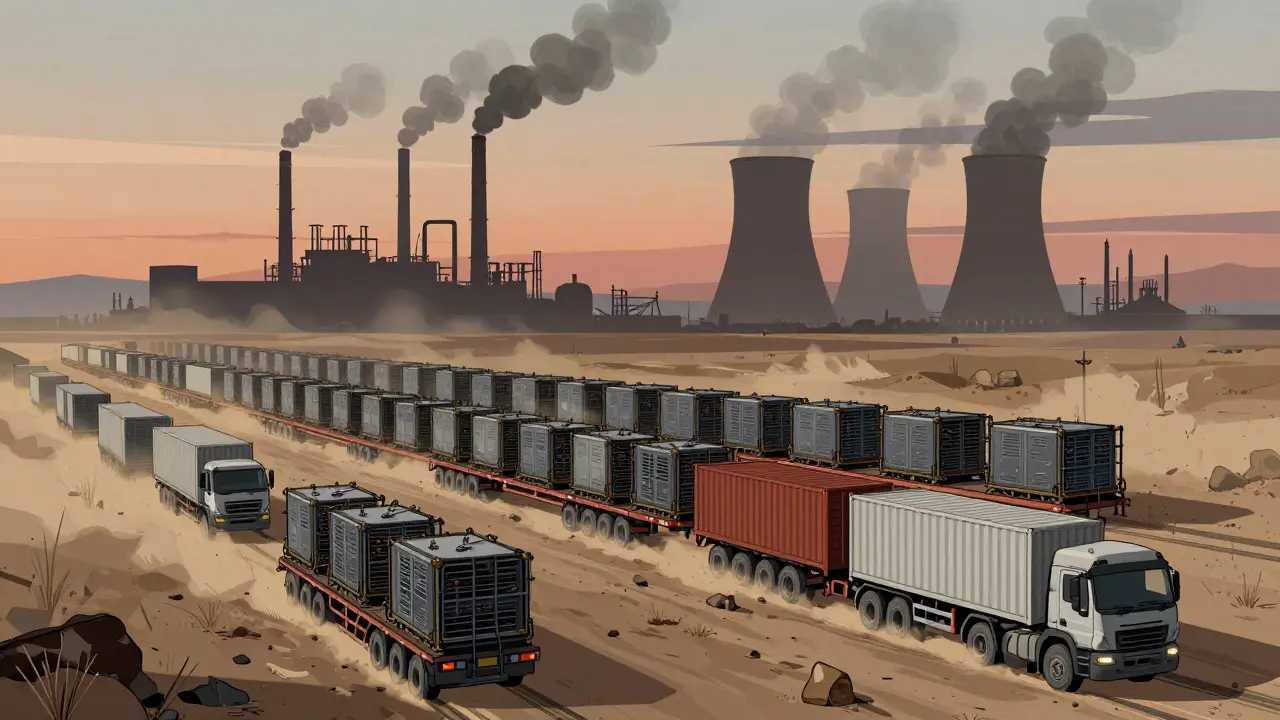
The lights went out in Ekibastuz, the industrial heart of Kazakhstan's Bitcoin mining industry, and they didn't just stay off for a few hours. For years, this region was the engine room of global cryptocurrency production, but now, the machines are packing up. If you have been tracking the Bitcoin network, you might have noticed a subtle shift in where the computational power is coming from. It’s not just a rumor; it’s a massive logistical movement known as the Bitcoin hash rate migration. By mid-2025, major players like Canaan were officially pulling their rigs out of the country. So, what exactly happened to the land that once held nearly 15% of the world's mining power? And where is all that electricity-hungry hardware going?
The Rise and Fall of the Central Asian Mining Hub
To understand why miners are leaving, you first need to understand why they came in the first place. After China banned crypto mining in 2021, the industry needed a new home fast. Kazakhstan stepped up. The country had two things every miner dreams of: cheap energy and surplus capacity left over from the Soviet era. Deep coal reserves meant electricity costs were rock bottom. By 2021, Kazakhstan had jumped to second place globally in Bitcoin hashrate distribution. It was a gold rush, plain and simple.
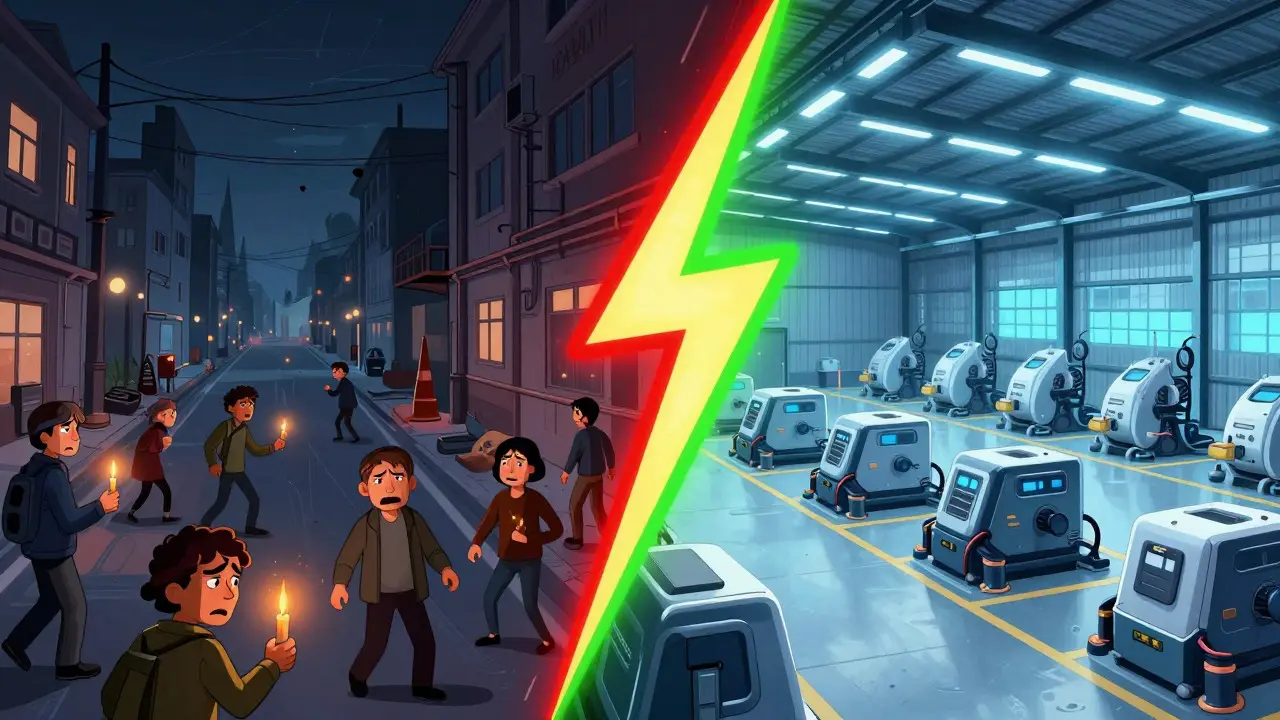
But there was a catch. The grid wasn’t built for this kind of load. As more ASIC miners arrived, they started eating up a huge chunk of the national supply. At its peak, mining operations were consuming about 7% of the country’s total power. Imagine if your household appliances used up 7% of your city’s entire electricity output. That’s unsustainable. The result? Blackouts. Not just for the mines, but for regular people too. When civilians lost power because miners were hogging the grid, public anger boiled over into mass protests. The government had no choice but to cut miners off from the national grid to keep the lights on for hospitals and homes. That was the turning point.
Why 2025 Marked the Acceleration of Exits
You might wonder, if the problems started in 2021, why is everyone talking about the migration now? The answer lies in regulatory tightening and corporate strategy shifts in 2025. While some smaller operators tried to hang on with private generators, the big institutional players decided the risk was too high. In July 2025, Canaan, a major manufacturer and operator of mining hardware, officially exited Kazakhstan. Their hashrate dropped from 6.67 EH/s in May to 5.56 EH/s by July. This wasn’t a random fluctuation; it was a planned withdrawal.
Canaan didn’t just leave Kazakhstan; they also pulled out of an underperforming site in South Texas. But the Kazakhstan exit was the headline grabber. They reported mining 89 BTC in July 2025, but the realized decline in hashrate was directly tied to these strategic moves. For a company of that size, moving thousands of heavy, delicate machines is a nightmare. It involves shipping logistics, customs hurdles, and downtime where you’re paying for nothing. Yet, they did it. This signals to the rest of the industry that the window for easy money in Central Asia is closing.
Where Is the Hash Rate Going?
If Kazakhstan is losing share, who is gaining it? The data shows a clear winner: the United States. As of 2024, the US led with 35.4% of the global hashrate, while Kazakhstan sat at 14.8%. That gap has likely widened further by mid-2026. Miners aren’t just fleeing Kazakhstan; they are flocking to jurisdictions with stable grids and clearer rules. Countries like Canada (9.6%) and even parts of Europe are seeing renewed interest. The trend is moving toward places where energy infrastructure can handle the load without threatening civilian life.
| Country | Hash Rate Share (%) | Key Advantage | Risk Factor |
|---|---|---|---|
| United States | 35.4% | Stable Grid, Legal Clarity | Higher Energy Costs |
| Kazakhstan | 14.8% | Cheap Coal Power | Grid Instability, Regulations |
| China | 12% | Legacy Infrastructure | Ban Enforcement |
| Canada | 9.6% | Hydroelectric Power | Weather Dependency |
| Russia | 4.7% | Natural Gas Surplus | Geopolitical Sanctions |
Notice how China still holds 12% despite the ban. That’s because decentralized, small-scale mining persists there, often hidden in residential areas. But for large-scale operations, the US and Canada offer the reliability that institutional investors demand. The migration isn’t just about finding cheaper power anymore; it’s about finding predictable power.
Kazakhstan’s Attempt to Regain Control
Kazakhstan knows it’s losing its crown jewel. The government hasn’t given up entirely. Instead of banning mining outright, they’ve tried to formalize it. In early 2025, they introduced a "70/30" energy allocation strategy. Here’s how it works: 70% of new thermal power plant capacity goes to the national grid to ensure civilians get their electricity, and only 30% is reserved for crypto mining. It’s a compromise designed to stop the blackouts while keeping the tax revenue flowing.
They’ve also cracked down on financial irregularities. In Q1 2025 alone, Kazakh banks blocked 15,800 unauthorized crypto transactions worth $3.07 million. This shows the state is actively monitoring the sector. But does this reassure miners? Mixed results. Some see it as stability; others see it as red tape. The reality is that even with these rules, the underlying issue remains: the grid is fragile. You can regulate the flow, but you can’t easily build new power plants overnight.

The Bigger Picture: Network Security and Institutional Confidence
Here’s something most retail investors miss: when hash rate moves, it doesn’t weaken the Bitcoin network; it often strengthens it. As of September 2025, the Bitcoin network hashrate hit a staggering 1.041 billion terahashes per second. That’s a 48.2% increase year-over-year. Even with miners leaving Kazakhstan, the overall security of the network is at an all-time high. Why? Because the miners leaving Kazakhstan are being replaced by newer, more efficient machines in better locations.
This surge in hashrate is a leading indicator for institutional confidence. Historically, spikes in mining difficulty and hashrate precede price rallies by several months. Institutions view the migration not as a crisis, but as a maturation of the market. They prefer jurisdictions where they can hedge against weather risks and political instability. Geopolitical competition between hubs like Kazakhstan, Iran, and the US creates volatility, but it also drives innovation in energy optimization. Miners are now looking into stranded energy assets-power that would otherwise go to waste-in remote areas across North America and Scandinavia.
What This Means for Your Strategy
If you are involved in mining, either as an operator or an investor, the message is clear: diversification is key. Betting everything on one geographic region is risky, as Kazakhstan’s experience proves. Look for regions with long-term power purchase agreements (PPAs) and favorable regulatory environments. Also, keep an eye on energy efficiency. The days of buying any old ASIC miner and plugging it into cheap coal power are over. The future belongs to those who can optimize energy usage and navigate complex international logistics.
For the average holder, this migration is largely invisible but beneficial. A more distributed mining network means less centralization of power. No single government can easily shut down Bitcoin production anymore. The resilience shown by the network during this transition period highlights the robustness of the underlying technology. As we move through 2026, expect to see more consolidation in the US and Canada, with Kazakhstan remaining a player but no longer the dominant force it once was.
Why did miners leave Kazakhstan in 2025?
Miners left Kazakhstan primarily due to grid instability and regulatory uncertainty. The consumption of 7% of the national power supply led to widespread blackouts affecting civilians, prompting the government to restrict mining access to the grid. Additionally, companies like Canaan sought more stable jurisdictions with clearer legal frameworks.
Does the migration weaken Bitcoin?
No, the migration does not weaken Bitcoin. In fact, the global hashrate reached record highs in late 2025, indicating increased network security. The relocation of mining power to more stable regions like the US and Canada enhances the decentralization and resilience of the network.
What is the 70/30 energy rule in Kazakhstan?
The 70/30 rule is a regulatory measure introduced by Kazakhstan to balance energy needs. It allocates 70% of new thermal power plant capacity to the national grid for civilian use and reserves only 30% for cryptocurrency mining, aiming to prevent future blackouts.
Which countries are replacing Kazakhstan in mining?
The United States is the primary beneficiary, holding over 35% of the global hashrate. Other growing hubs include Canada, Russia, and parts of Europe, which offer more stable energy infrastructure and favorable regulatory environments compared to Central Asia.
How does hashrate affect Bitcoin price?
Hashrate is often seen as a leading indicator for Bitcoin price movements. High hashrate indicates strong network security and institutional confidence. Historically, significant increases in hashrate have preceded price rallies by several months, as it reflects long-term commitment from miners.

Comments
Carl Michaud
It is obvious to anyone with a brain that this migration was orchestrated by the US government to centralize control over the blockchain. They claim decentralization but they are just moving the mines to places where they can monitor every transaction. The 70/30 rule in Kazakhstan is a smokescreen for state-sponsored theft of energy resources.
Matt Kay
us grid isnt stable either lol
Don Fizy
Hey everyone! Just wanted to chime in and say that while the move is big, it's actually great for long-term stability :) The US has better infrastructure for these large scale operations. Don't worry about the short term noise!
Prudence Flemming
the paradigm shift is evident yet we cling to old narratives of geographic determinism when really its about energy arbitrage on a global scale the hash rate is fluid like water finding its level regardless of political boundaries or regulatory frameworks imposed by nation states who still think they can control digital assets
Kat Bennett
I've been reading up on this for weeks now and it is fascinating how the industry evolves so quickly. It makes me wonder if we will see similar patterns in other industries that rely heavily on cheap energy. The fact that Kazakhstan tried to regulate it with the 70/30 split shows they are trying to adapt but maybe too late. I think the US is definitely the winner here because of the legal clarity which is something miners need more than just cheap power. It’s interesting to see how the network security actually increases despite the chaos of moving all that hardware.
Candice Cornett
you people are so naive thinking the us is any better its just a different kind of prison for your data and your money the moral high ground is a joke when you look at the carbon footprint of those coal plants in kazakhstan versus the gas flaring in texas
Lance Jantz
Oh, the drama of it all! One can almost taste the desperation in the air as those poor miners pack their bags. It is truly a tragedy of epic proportions, isn't it? The grand ballet of capital fleeing from one tyrant to another. I suppose we should feel sorry for them, or perhaps just marvel at the sheer audacity of thinking you can hide from the grid gods.
Dominic Greco
Wake up sheeple! 🚨 This is part of the plan to track every satoshi. The US wants to know who owns what. Kazakhstan was too chaotic for their surveillance state needs. Now everything is centralized under the nose of the FED. 👁️👄👁️
Sus Sawyer
Look, the bottom line is efficiency wins out. If you cant handle the heat get out of the kitchen right? Miners are smart cookies and they know where the reliable juice is. Plus the tech keeps getting better so even if power costs go up slightly the machines do more work per watt. Its a win win for the network security which is what matters most to us holders.
Aryan MISHRA
The regulatory framework in the US is significantly more robust; hence the migration. Kazakhstan's infrastructure was never designed for such load; it was a temporary haven. The shift to North America is inevitable due to grid reliability and legal protections. End of story.
Carl Michaud
@2800 You are repeating the propaganda. 'Legal protections' is code for 'compliance with the central bank.' The US grid is failing too, just slower. They are setting up the next crisis point.
Ryan Robinson
i mean its true tho the blackouts were crazy i remember seeing videos of whole towns going dark because of mining farms. pretty wild that it got that bad before they fixed it.
Alex Di Mango
It is unfortunate that it came to protests, but understandable given the impact on civilians. Ideally, there would have been a smoother transition. However, the move to the US does seem to offer a more stable environment for both the miners and the local communities who won't be losing power to ASICs. Let's hope the new locations manage the energy consumption responsibly.
Dave Kjendal
typical cycle boom bust move somewhere else repeat. nothing changes except the zip code.
Phil Babb
Let me tell you something!!! The cultural exchange here is massive!! American innovation meets global demand!!! We are leading the world again in crypto mining!!! It is fantastic news for our economy and our energy sector!!! Do not sleep on this opportunity!!!
Sean Rowland
One must consider the geopolitical implications of such a mass exodus. Is it merely economic? Or is there a deeper stratagem at play regarding energy dominance? The fragility of the Kazakh grid was a symptom, not the disease. The disease is reliance on fossil fuels in an unstable region. The cure is... well, let us see where the wind blows next.
Earl Kott65
Oh wow, talk about a plot twist! 😱 Who knew moving heavy metal boxes across borders could be so dramatic? But seriously, if the hashrate is going up, then Bitcoin is winning. 🚀💎🙌
Ethan Yuwono
it seems like a natural progression for the industry to mature. the early days were wild west style but now institutions want safety and predictability. that is why the us is the destination. it is not just about price it is about longevity.
Jack Delasquez
greaat article!! very informative stuff here keep it up guys love reading about tech trends and crypto moves its super exciting times to be alive honestly
Pernelia Wahkan
The logistics of moving thousands of ASICs are a nightmare in themselves. Customs, shipping containers, downtime. It is amazing how efficiently companies like Canaan managed this. It really highlights the professionalization of the mining sector. No longer just guys in garages but real supply chain management.
Subhash Kashyap Dm
china still has 12% dont forget that the ban is porous. small miners operate in shadows. but yes the big players are leaving kazakhstan because the risk reward ratio is skewed. us offers better ppas and less chance of getting cut off from the grid arbitrarily.
Billy Cunningham
😢 sad to see kazakhstan go but happy for bitcoin 📈
Ed Wallace
There is a poetic justice in the way the network seeks balance. When one area becomes too hot, the heat dissipates elsewhere. It reminds me of ecological systems seeking equilibrium. The US providing a cooler, more stable climate for these digital organisms is quite fitting.
Joshua Hofford
This is a great step forward for decentralization in a practical sense. By spreading out to different jurisdictions with different rules, the network becomes harder to attack. I am optimistic that this will lead to more innovation in energy usage too. Maybe we will see more solar and wind integration in the US mines.
Marcia Albert
Just watching the chessboard shift pieces. Interesting how the narrative flips from 'cheap power' to 'stable power'. It says a lot about where the market is heading. Less gambling more investing.
Emma Smith
the boundary between state and market is blurred here. kazakhstan tried to reclaim sovereignty over its energy resources but failed to account for the borderless nature of the protocol. the miners did not leave the country they left the inefficiency. simple as that.