
Steve Wozniak, the man who co-founded Apple in his garage, didn't stop there. In late 2020, he stepped into the crypto world with Efforce, a platform promising to use blockchain to fix how companies pay for energy upgrades. The native token, WOZX, launched with massive hype and a market cap that briefly touched nearly a billion dollars. But five years later, the story looks very different. Today, it's a micro-cap asset trading for fractions of a cent, raising questions about whether the tech actually works or if it was just a celebrity-driven launch.
If you're looking at this ticker on an exchange or saw it mentioned in climate-tech circles, you probably have one main question: Is this a solid investment, or is it a relic of 2020 crypto mania? This guide breaks down what Efforce actually does, how the token mechanics work, and where it stands in mid-2026 so you can make your own call without relying on old press releases.
The Core Concept: Democratizing Energy Efficiency
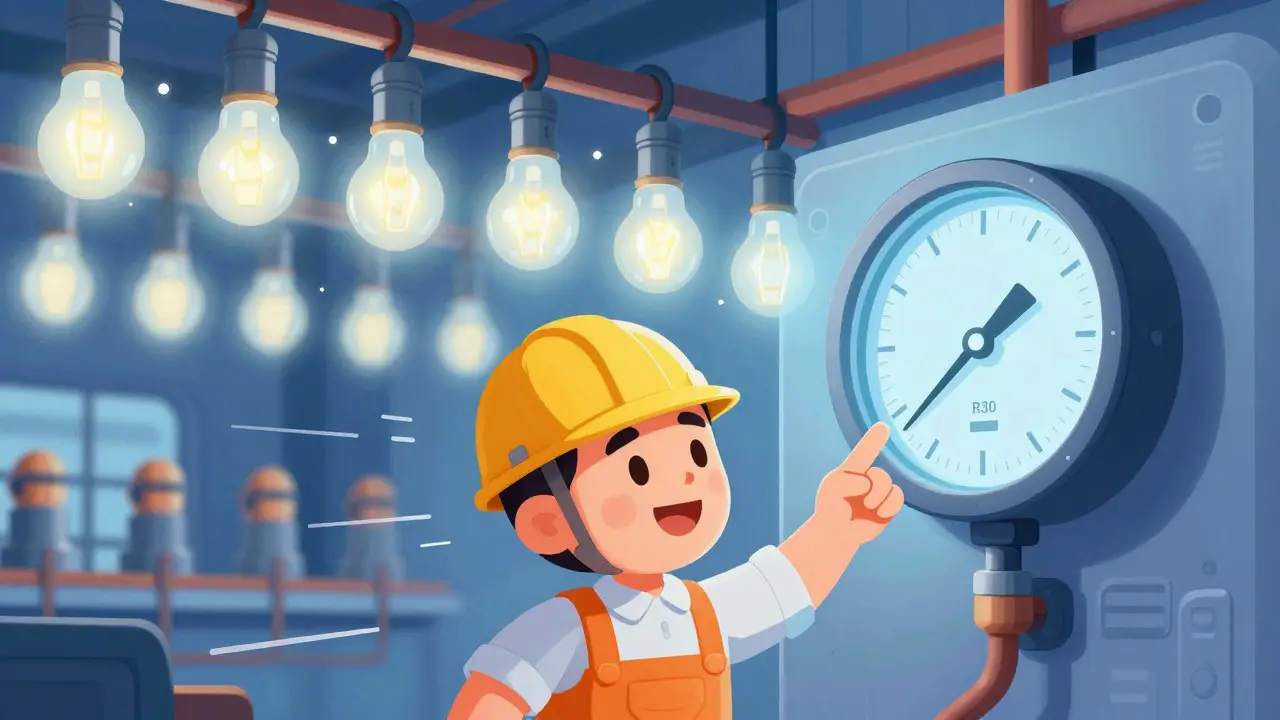
At its heart, Efforce isn't trying to be a store-of-value coin like Bitcoin or a general-purpose payment system. It’s a utility project focused on a specific problem: financing. Companies often want to install LED lighting, upgrade HVAC systems, or retrofit factories to save energy, but they hate paying the upfront cost. Traditional banks might say no, or charge high interest rates. That’s where Efforce steps in.
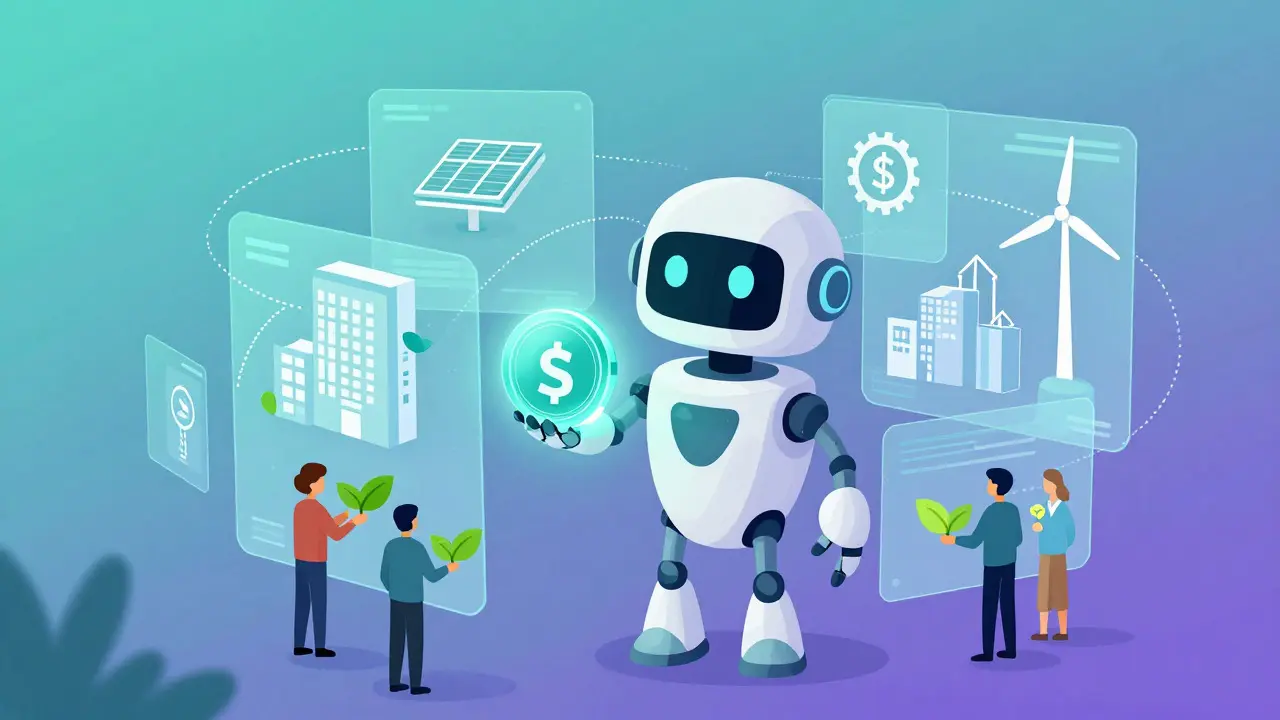
The platform acts as a middleman between businesses needing upgrades and investors willing to fund them. Here’s how the loop works:
- Project Identification: An Energy Service Company (ESCO) identifies a building or facility that needs efficiency improvements.
- Structuring: Efforce evaluates the expected energy savings and creates a contract defining how much the investor gets versus the project owner.
- Funding via Tokens: Investors buy WOZX tokens to fund these specific projects. Think of it like buying shares in a single energy-saving job.
- Rewards: Once the upgrades are installed, smart contracts on the Ethereum blockchain track the actual energy saved. Investors receive rewards in WOZX based on those measured savings.
The pitch is simple: companies get free upgrades, and investors get paid from the money the company saves on their electric bill. It sounds logical on paper, blending real-world infrastructure with decentralized finance (DeFi).
Tokenomics: The Numbers Behind WOZX
Understanding the supply is critical when evaluating any crypto asset, and here is where things get a bit messy. Data providers often disagree on the total supply of Efforce tokens, which adds a layer of risk for anyone doing due diligence.
| Attribute | CoinMarketCap Claim | Coinbase/Gate.com Data | Implication |
|---|---|---|---|
| Total Supply | 100 Million | 1 Billion | Huge discrepancy in dilution potential |
| Circulating Supply (Mid-2026) | N/A | ~530 Million - 620 Million | Most tokens are already in circulation |
| Standard | ERC-20 | ERC-20 | Built on Ethereum network |
| Vesting Schedule | Not fully public | Team: 20 years; Partners: 1-3 years | Long-term lockups intended to reduce sell pressure |
The confusion stems from early marketing materials that touted a "fixed cap" of 100 million tokens. However, major exchanges like Coinbase and Gate.com list the total supply at 1 billion. If the 1-billion figure is correct, the token has significantly more inflationary potential than initially advertised. Additionally, community discussions suggest that team members hold tokens locked for up to 20 years, while strategic partners see vesting periods of 1 to 3 years. This long tail of unlocks means that even if the price rises, new tokens could hit the market over the next decade, potentially capping upside.
Performance: From Hype Peak to Micro-Cap Reality
You can’t talk about Efforce without addressing its price history. When WOZX launched in December 2020, it was everywhere. Riding the wave of the 2020 bull run and the name recognition of Steve Wozniak, the price spiked to around $3.66 per token. At that peak, the market capitalization was estimated at roughly $950 million, making it a top-tier asset in the niche space.
Then, gravity kicked in. By the end of 2020, the price had already dropped to about $1.22. Over the next few years, as the broader crypto market cooled and specific scrutiny on utility tokens increased, WOZX continued to slide. As of mid-2026, the token trades between $0.0015 and $0.0019 USD. That represents a decline of nearly 99.9% from its all-time high.
This drop isn't just a number; it reflects the current state of the project. The daily trading volume is extremely thin, often hovering under $500 per day on major platforms. For context, that’s less liquidity than many small-cap stocks. This means if you try to buy or sell a large position, you’ll likely move the price against yourself, a phenomenon known as slippage. It’s a classic sign of a project that has lost mainstream institutional interest and now relies on a small group of dedicated holders.
Real-World Traction vs. Marketing Claims
The biggest gap in the Efforce narrative is the lack of visible, large-scale case studies. The whitepaper and press releases promise a global marketplace for energy efficiency, but finding concrete examples of funded projects is difficult. Unlike some DeFi protocols that publish detailed TVL (Total Value Locked) metrics or user counts, Efforce’s operational data is sparse.
Climate-tech analysts note that while the concept of tokenizing energy savings is sound, the execution requires rigorous third-party verification. Who measures the kilowatt-hours saved? How is the data fed into the smart contract? Without transparent, audited reports showing exactly how many buildings were retrofitted and how much money was saved, the value proposition remains theoretical for most investors.
Community sentiment on forums like Reddit reflects this skepticism. Early threads from 2020 were mixed, with some users excited by the green angle and others warning it was another "celebrity coin" destined to fail. By 2024 and 2025, discussion volumes dropped significantly. The subreddit exists but is quiet, lacking the active development updates or partnership announcements you’d expect from a thriving ecosystem. This silence suggests that the project is operating in the background, maintaining its listings but not aggressively expanding its user base.
How to Buy and Manage WOZX
If you decide to invest despite the risks, the process is straightforward but requires basic crypto literacy. Since WOZX is an ERC-20 token, you need a wallet that supports the Ethereum network, such as MetaMask or Trust Wallet.
- Choose an Exchange: WOZX is listed on several platforms, including Gate.com, KuCoin, and Uniswap V2. Check which exchange offers the best fees and liquidity for your region.
- Acquire Ethereum (ETH): Most centralized exchanges require you to buy ETH first to swap for WOZX, unless they offer a direct fiat-to-WOZX pair (which is rare for low-volume tokens).
- Execute the Trade: Swap your ETH for WOZX. Be careful with order sizes due to the thin liquidity mentioned earlier.
- Store Safely: While you can keep tokens on an exchange, moving them to a self-custody wallet is safer for long-term holding. Ensure your wallet is connected to the Ethereum mainnet.
Keep in mind that gas fees on Ethereum can sometimes exceed the value of small WOZX transactions. If you’re only investing a few hundred dollars, the transaction costs might eat into your capital disproportionately. Some users opt to trade directly on decentralized exchanges (DEXs) to avoid certain exchange withdrawal fees, but this adds complexity.

Risks and What to Watch For
Investing in a micro-cap token like Efforce carries distinct risks compared to blue-chip cryptocurrencies. First, there is the liquidity risk. If the project loses its remaining holder base, the token could become illiquid, making it hard to exit your position. Second, there is the regulatory ambiguity. As a utility token tied to physical assets, it may face different regulatory treatments depending on your jurisdiction, though no major enforcement actions have been reported against Efforce specifically as of 2026.
Third, and perhaps most importantly, is the execution risk. The entire value of WOZX depends on the platform successfully funding projects that generate measurable savings. If the pipeline of projects dries up, or if the measurement of savings is disputed, the reward mechanism fails, and the token loses its fundamental backing. Watch for official announcements regarding new partnerships with ESCOs or published case studies with verified energy data. Until then, WOZX remains a speculative bet on the idea rather than the proven reality.
Frequently Asked Questions
Is Efforce (WOZX) still active in 2026?
Yes, the token is still listed on major exchanges like Coinbase, Gate.com, and KuCoin, and the platform technically exists. However, activity levels are low, with minimal trading volume and limited news coverage compared to its 2020 launch period.
Who founded Efforce?
Steve Wozniak, the co-founder of Apple, is credited as the key founder and public face of the project. He announced the platform in December 2020, leveraging his reputation to attract initial attention and investment.
What is the total supply of WOZX tokens?
There is conflicting data. Some sources cite a fixed cap of 100 million tokens, while major exchanges like Coinbase and Gate.com report a total supply of 1 billion tokens. Investors should verify the latest on-chain data before making decisions.
How do I earn rewards with WOZX?
Rewards are generated by contributing to specific energy-efficiency projects listed on the Efforce platform. You purchase WOZX to fund a project, and smart contracts distribute rewards based on the actual energy savings measured after the upgrades are implemented.
Is WOZX a good investment right now?
It is considered a high-risk, speculative asset. With a market cap under $2 million and thin liquidity, it lacks the stability of larger cryptocurrencies. It may appeal to those betting on the growth of climate-tech blockchain solutions, but fundamentals remain unproven.

Write a comment