
You want to earn passive income by supplying assets to decentralized finance (DeFi) pools. But the landscape has changed drastically since the early days of simple yield farming. Today, protocol incentives for liquidity providers are structured reward mechanisms that combine trading fees, token emissions, and complex ownership models to ensure market stability. Understanding these incentives is no longer optional if you want to protect your capital while earning returns.
In 2026, the total value locked (TVL) in incentivized liquidity pools sits at approximately $48.3 billion. This isn't just about throwing money into a pool and hoping for the best. It’s about navigating a sophisticated ecosystem where protocols compete for your capital using everything from high annual percentage yields (APYs) to long-term governance power. If you don’t understand the mechanics behind these rewards, you risk losing more to impermanent loss than you gain in fees.
How Liquidity Provider Incentives Actually Work
At its core, a liquidity provider (LP) is an individual or entity who deposits funds into a trading pair on a cryptocurrency exchange to facilitate trades. Without LPs, there would be no one to buy when others sell, leading to massive slippage and broken markets. To keep you in the game, protocols offer three main types of incentives:
- Trading Fees: This is the baseline. When someone swaps tokens, they pay a fee-typically between 0.01% and 1.00%. On platforms like Uniswap V3, this fee is distributed proportionally to liquidity providers based on their share within specific price ranges. For example, an ETH/USDC pool might generate 0.5% to 1.2% APY from fees alone.
- Liquidity Mining Rewards: Protocols emit their native tokens to boost yields. Curve Finance, for instance, uses a gauge voting system that allocates CRV tokens to pools with higher community support. These rewards can push APYs to 8-15%, but they come with volatility risks.
- Rebates and Lockups: Some platforms, like PancakeSwap, offer tiered fee discounts for liquidity providers who commit to lockup periods. You might get a 20% fee rebate if you lock your position for 30 days, reducing your cost basis over time.
The math behind these rewards is precise. Your LP token represents fractional ownership of the pool. Its value is derived from the geometric mean of the assets you deposited, minus any accrued fees. If the ratio of those assets changes due to market movement, your underlying value shifts-even if the total dollar amount stays the same. This is where things get tricky.
The Rise of Protocol-Owned Liquidity (POL)
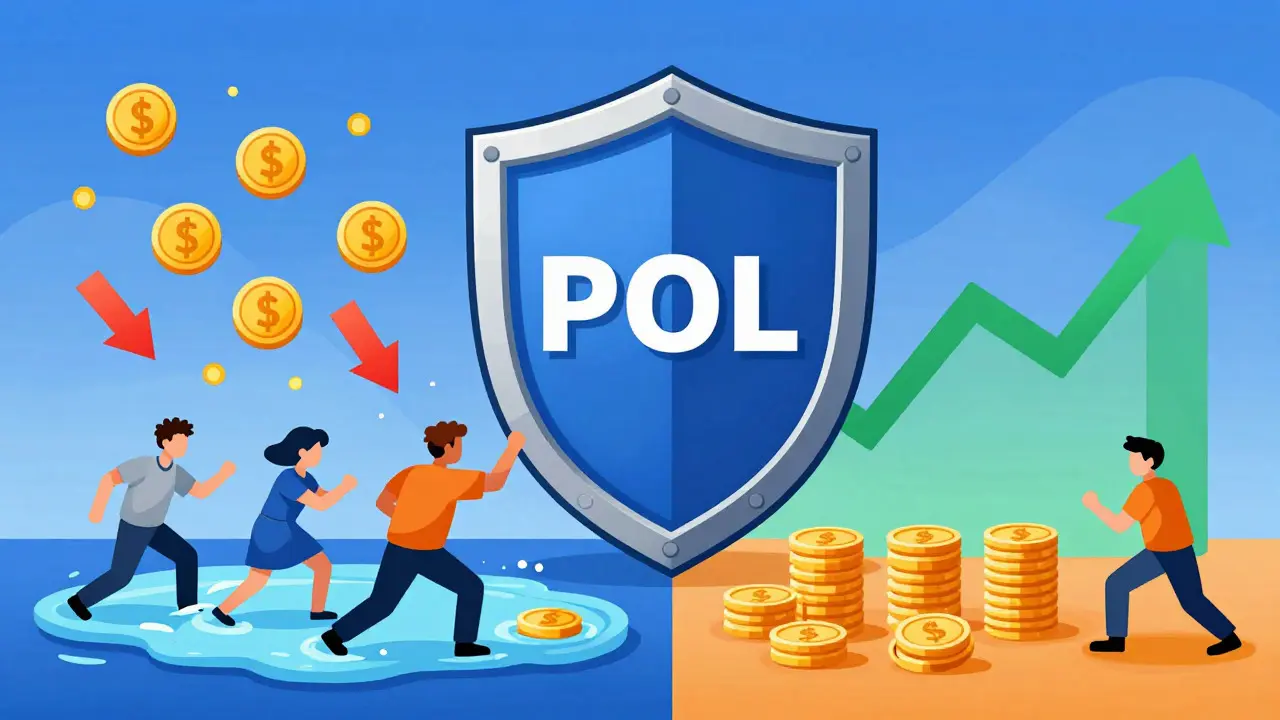
The biggest shift in 2026 is the move away from renting liquidity toward owning it. This is known as Protocol-Owned Liquidity (POL), a model where the protocol itself acquires and manages liquidity positions through bonding mechanisms rather than relying solely on external providers.
Why does this matter to you? Because POL changes the incentive structure entirely. Instead of chasing unsustainable APYs, protocols use bonding curves to sell discounted tokens in exchange for liquidity. OlympusDAO pioneered this approach, reporting that 99.8% of its OHM/DAI liquidity was protocol-owned by late 2025.
Here’s how it compares to traditional mining:
| Feature | Traditional Liquidity Mining | Protocol-Owned Liquidity (POL) |
|---|---|---|
| Primary Incentive | High token emissions (APY) | Bonding discounts + Fee sharing |
| Risk Profile | High churn (65-78% monthly) | High retention (92%+) |
| Token Supply Impact | Inflationary pressure on rewards | Controlled issuance via bonds |
| Example Protocol | SushiSwap (MAGIC emissions) | Tokemak (LaaS model) |
Dr. Guillermo Angeris from Stanford University’s DeFi Research Group warns that liquidity mining programs emitting more than 15% of total supply annually create negative net present value for 83% of protocols within 18 months. POL aims to fix this by aligning long-term protocol health with liquidity depth. However, it requires careful management. If bonding discounts are too high, you trigger a death spiral; too low, and no one participates.
Navigating Impermanent Loss and Real Returns
Let’s talk about the elephant in the room: impermanent loss (IL). This occurs when the price of your deposited assets changes relative to each other. You end up with fewer dollars than if you had just held the tokens in your wallet.
User feedback paints a clear picture. On Reddit, one LP reported losing 28.7% of their principal on an ETH/USDC pool despite earning 14.2% in rewards during market volatility. That’s a net loss. Conversely, stablecoin pairs like USDC/USDT on Curve Finance often see near-zero IL, allowing providers to pocket the full APY.
To manage this, experienced providers use specific strategies:
- Stablecoin Pairs: Stick to pegged assets. The risk is minimal, and the returns are consistent (around 9.3% net APY reported by some users).
- Concentrated Liquidity: Use tools like Uniswap V3 to narrow your price range. This boosts capital efficiency but increases IL risk if the price moves out of range.
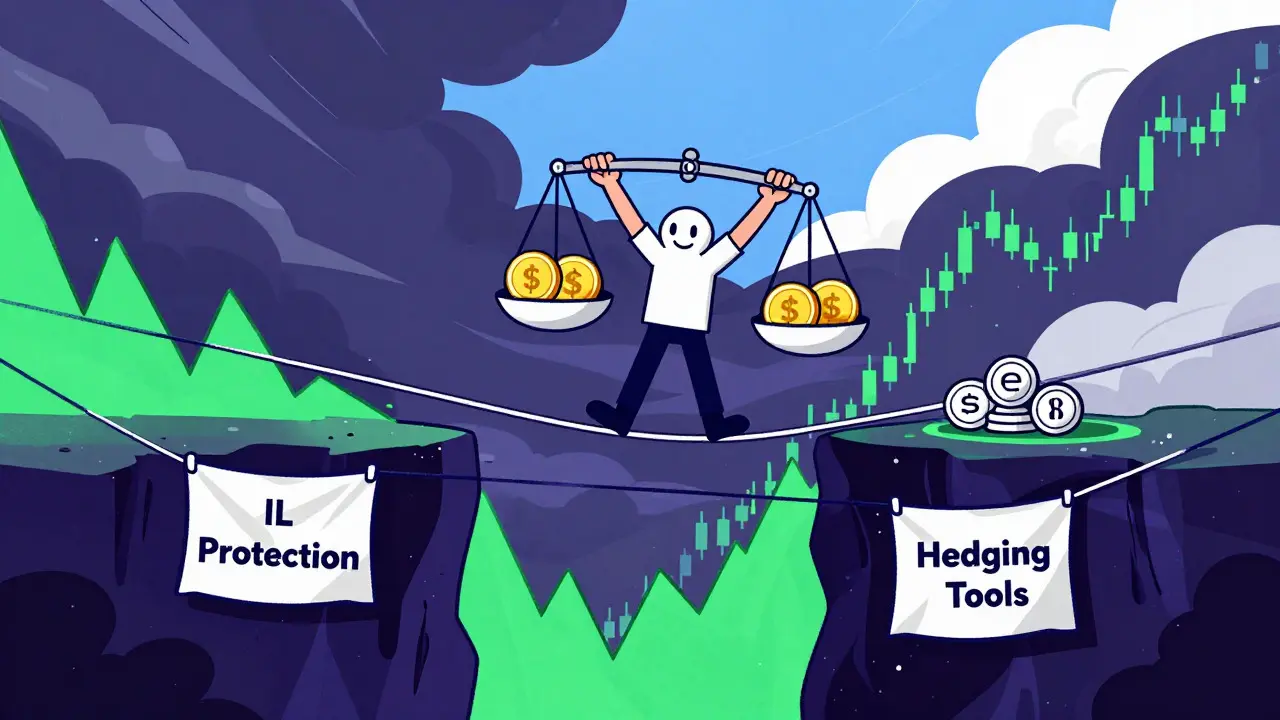
- IL Protection Tools: Platforms like Bancor offer insurance products that cover losses. While premiums cost around 0.85% annually, they can save you thousands during volatile swings.
According to Dune Analytics data from January 2026, 68% of liquidity providers allocate less than $5,000 to mining. These smaller players often lack the sophistication to manage range-based positions effectively, resulting in average monthly returns of just 1.2% before IL. The top 5% of providers, who allocate over $50,000, achieve 2.8% monthly returns by actively rebalancing and using advanced hedging techniques.
Risks Beyond Price Volatility
Impermanent loss isn’t the only threat. Smart contract risks remain significant. Even audited protocols face exploits. Immunefi’s 2025 report notes a 1.2% annual exploit rate across major DeFi platforms. If a protocol gets hacked, your liquidity is gone.
Then there’s regulatory uncertainty. The SEC’s February 2025 guidance classified certain liquidity mining rewards as securities. This forced 32% of U.S.-accessible platforms to implement KYC requirements, shrinking the pool of eligible participants. Always check if a protocol complies with current regulations in your jurisdiction.
Governance token devaluation is another silent killer. If the reward token drops 50% in value, your effective APY plummets. In 2025, 22 out of 30 analyzed protocols saw their effective APY reduced by 37-89% due to token price crashes. Don’t just look at the headline APY; calculate the real yield based on the token’s historical performance.
Best Practices for 2026
If you’re entering the space now, follow these rules to stay safe and profitable:
- Diversify Across Models: Don’t put all your eggs in one basket. Mix traditional fee-sharing pools with POL-backed positions. Tokemak’s Liquidity as a Service (LaaS) model offers 85% lower volatility in market depth compared to standard mining pools.
- Monitor Emission Rates: Avoid protocols with unsustainable emission schedules. Look for caps below 10% of annual supply. High emissions usually signal desperation, not strength.
- Use Automated Tools: Gas fees on Ethereum L1 average $1.20-$3.50 per transaction. Using automated services like Gelato Network can help you rebalance positions without manual intervention, saving time and money.
- Check Documentation Quality: Protocols with clear, mathematical explanations of their mechanics (like Uniswap, which scores 4.7/5 on documentation indices) are generally safer bets than those with vague whitepapers.
The industry is maturing. With Ethereum’s Pectra upgrade scheduled for Q2 2026, staking costs will drop by 40-60%. This makes liquidity provision more accessible. Meanwhile, cross-chain routing solutions like Tokemak’s Reactor 2.0 aim to reduce bridging costs by 75%, opening up new opportunities for arbitrage and yield generation.
What is the safest way to provide liquidity in 2026?
The safest approach is providing liquidity to stablecoin pairs (e.g., USDC/USDT) on established protocols like Curve Finance. These pools have near-zero impermanent loss and consistent fee generation. Additionally, consider Protocol-Owned Liquidity (POL) models where the protocol retains control, reducing the risk of sudden liquidity withdrawals by other users.
How do I calculate my real APY after impermanent loss?
Real APY = (Trading Fees + Token Rewards) - Impermanent Loss. You can use online calculators that input your entry prices, current prices, and reward rates. Remember that token rewards fluctuate in value, so always convert them to USD or a stable asset to get an accurate picture of your profit.
Is Protocol-Owned Liquidity better than traditional mining?
For long-term stability, yes. POL reduces churn and aligns incentives with protocol health. However, it often requires locking tokens for longer periods or participating in bonding mechanisms, which can be complex. Traditional mining offers higher short-term yields but carries greater risk of token devaluation and liquidity withdrawal.
What are the tax implications of liquidity mining rewards?
In many jurisdictions, including the US under recent SEC guidance, liquidity mining rewards may be classified as ordinary income at the time of receipt. You should track the fair market value of every reward token received. Consult a tax professional familiar with crypto regulations in your country to ensure compliance.
How much capital do I need to start?
You can start with as little as $100, though gas fees on Ethereum mainnet can eat into small profits. Layer 2 solutions like Arbitrum or Optimizer, or alternative chains like Binance Smart Chain, offer lower fees. Most successful LPs allocate at least $5,000 to diversify across multiple pools and mitigate risk.

Comments
Shawn Schaerer
The assertion that Protocol-Owned Liquidity (POL) is the panacea for market instability is, with all due respect, intellectually lazy. One must consider the centralization risks inherent in such models. When a protocol owns its liquidity, it effectively becomes a counterparty to every trade, reintroducing the very systemic risks we sought to eliminate through decentralization. Is this not merely a rebranding of centralized exchange mechanics under the guise of DeFi innovation?
michelle aguilar
Oh, please. The average retail investor doesn't have the cognitive bandwidth to understand bonding curves, let alone manage concentrated liquidity ranges without losing their shirt. It's adorable how people think they can outsmart algorithms designed by PhDs from Stanford. Most of you are just donating your capital to early adopters who actually read the whitepapers instead of skimming Reddit threads.
Zothana Pachuau
Look, I get the skepticism, but let's not throw the baby out with the bathwater. The article makes a solid point about impermanent loss being the silent killer. If you're still farming volatile pairs on Uniswap V2 expecting 20% APY without hedging, you're basically playing Russian Roulette with your savings. Maybe try stablecoin pools first? Just a thought. 🤷♂️
Kelsey Anne
POL is a scam. Always has been.
Hicham Mounir
I feel like everyone here is missing the emotional toll of watching your portfolio bleed green while the token rewards crash. It’s heartbreaking. I lost 30% on an ETH pool last month despite earning 'rewards.' The math says I should be happy, but my soul feels empty. We need more empathy in DeFi, not just cold, hard numbers and bonding curves. 💔
Ami Elizabeth
honestly just stick to curve if u want sleep at night. all this new pol stuff sounds complicated as hell and i dont wanna learn another smart contract interface when im already confused by gas fees lol
Kiran Jayaram
the whole concept of passive income in defi is a lie told by vcs to dump tokens on degens. look at the data. 68% of providers allocate less than 5k. these are small fish getting eaten by the sharks. the top 5% make money because they hedge. you do not hedge. you lose. simple as that. stop pretending its investing.
Lance Konig
It is fascinating how the narrative shifts every six months. First, it was yield farming. Then, it was LP tokens. Now, it is Protocol-Owned Liquidity. The fundamental mechanic remains unchanged: inflationary token emissions subsidizing risk. The only difference is who holds the bag longer. OlympusDAO did not fail because the model was flawed; it failed because the discount rate exceeded the cost of capital. Basic economics.
Sarah Campbell
Why do we keep trusting these foreign protocols? 😡 The SEC said what it said! If it walks like a security and quacks like a security, it IS a security. I’m sticking to US-regulated platforms even if the yields are lower. At least I know my money isn’t going to some anonymous dev team in Dubai. Protect our financial sovereignty! 🇺🇸💪
OLIVER CHRISTIAN
Great points everyone. I think the key takeaway here is diversification. Don't put all your eggs in one POL basket or one traditional mining pool. Mix them up. Also, don't forget to check the documentation quality. Protocols like Uniswap score high for a reason. It’s not just about the APY; it’s about the team's transparency. Keep learning and stay safe out there! 🚀
Jade Brown
The semantic drift in this thread is exhausting. You’re conflating 'passive income' with 'risk-free return,' which is an oxymoron in efficient markets. The alpha isn't in the yield; it's in the volatility arbitrage. If you aren't using delta-neutral strategies or basis trading, you're not providing liquidity; you're gambling. Wake up. The matrix is feeding you low-yield stablecoin pairs to keep you docile while the whales extract value via MEV bots.
Ashley Snyder
I think we can all agree that impermanent loss is scary. But maybe we shouldn't be so harsh on each other. Some of us are just trying to earn a little extra while we figure things out. Let's support each other instead of calling names. Peace and love! ✌️
Sonia Gomez Gomez
You people are so obsessed with money you've forgotten your morals. Who benefits from this complexity? The rich. Always the rich. Meanwhile, the rest of us are stuck paying KYC fees and wondering if our wallets will be frozen next week. It’s disgusting. How do you sleep at night knowing you’re part of this unregulated casino? :(
Maybe focus on helping the community instead of chasing 15% APYs.
Kate Staab
Another day, another guide telling us how to lose money efficiently. The sheer audacity of these protocols promising stability while burning through billions in incentives is laughable. I’ve seen enough drama in these charts to last a lifetime. Just hold BTC and cry me a river. 🙄
Nikki keller
I appreciate the detailed breakdown of POL vs traditional mining. It’s interesting to see how the industry is maturing. While some argue it’s too complex, others see it as necessary evolution. Perhaps the middle ground lies in education. If we can simplify the concepts of bonding curves and IL protection, more people might participate safely. What do you all think?
miranda gamboa
Let’s talk about the tech stack! 🛠️ With Ethereum’s Pectra upgrade coming, staking costs dropping by 60% is huge for LP accessibility. Plus, Tokemak’s Reactor 2.0 reducing bridging costs by 75%? That’s game-changing for cross-chain arbitrage. Stop complaining about yields and start optimizing your infrastructure. The future is multi-chain! ⚡
Mike Baca
man i dont get why everyone is so stressed about il. sure u lose some principal but if the token moons doesnt it make up for it? also spelling errors dont matter right? whats the point of life if not to take risks anyway? maybe we should just live in the moment and not worry about 18 month npv calculations lol
Rod Sidoroff
The pretension in this thread is palpable. Everyone thinks they are a macro-economist because they read one article on Dune Analytics. Let me educate you: most of you are noise. The signal is in the retention rates. POL has 92% retention. Traditional mining has 65% churn. Do the math. Or don't. Your ignorance is irrelevant to the market's efficiency.
Niall O'Rourke
pol is just ceo friendly liquidity. thats it. they lock it so they can control the price. you think you are safe but you are just trapped. the discounts are bait. once the hype dies the bond curve breaks. always does. i hate optimism but sometimes bearishness is the only sane stance
Jennifer Ulmer
I think we can find common ground here. Whether you prefer POL or traditional mining, the goal is the same: sustainable returns. Maybe we should focus on sharing resources rather than debating ideologies. There’s room for both approaches in a healthy ecosystem.
Dina Lazarova
This entire discourse is beneath the dignity of serious investors. The article is superficial at best. It fails to address the second-order effects of governance token devaluation on protocol solvency. A truly comprehensive analysis would require a stochastic modeling approach, not a listicle of bullet points. Disappointing.
Linda Leeuwesteijn
Hey friends! 👋 Just wanted to add that mental health matters too! Trading can be stressful. Take breaks! Drink water! And remember, no APY is worth losing your peace of mind over. Let’s build a supportive community where we help each other navigate these complex waters together! 🌊✨ #DeFiFamily