
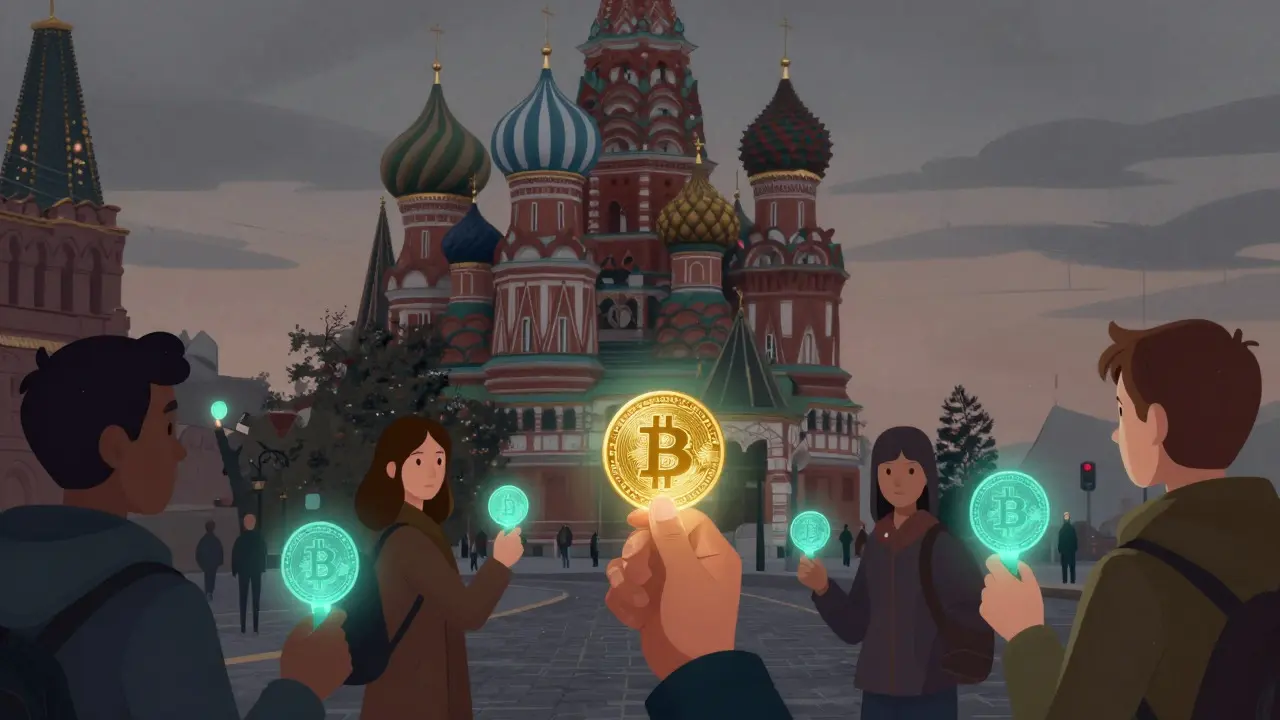
Imagine a country where using cryptocurrency is technically restricted for daily purchases, yet twenty million people are actively holding digital assets. That is the reality of crypto adoption in Russia, which is characterized by widespread retail usage despite complex regulatory frameworks. It sounds contradictory, doesn't it? You have laws that ban crypto as payment, but you also have a population that relies on it to keep their money safe from inflation and sanctions. This isn't just a niche hobby; it’s a massive economic shift. As of mid-2026, this tension between government control and citizen necessity has created one of the most dynamic crypto ecosystems in the world.
The Numbers Behind the Boom
To understand the scale, we need to look at the data. In October 2025, Deputy Finance Minister Ivan Chebeskov confirmed that approximately 20 million Russians-about 13.6% of the total population-are active crypto users. This figure wasn't pulled out of thin air; it aligns with Bank of Russia data reported by TASS. The total value held in cryptocurrency exchange wallets hit 827 billion rubles (roughly $10.15 billion USD) by March 2025. That is a 27% jump from the previous year.
What are these 20 million people buying? The asset distribution tells a clear story. Bitcoin dominates with 62.1% of holdings. Ether follows at 22%. Stablecoins like USDT and USDC make up 15.9%. This mix shows two distinct motivations: some users want long-term investment potential (Bitcoin), while others need a stable store of value to protect against ruble volatility (stablecoins).
| Metric | Value | Context |
|---|---|---|
| Total Users | 20 Million | 13.6% of population |
| Market Value | $10.15 Billion | 27% YoY growth |
| Bitcoin Share | 62.1% | Dominant asset |
| Stablecoin Share | 15.9% | Inflation hedge |
Why Restrictions Actually Helped Adoption
You might think strict rules would kill interest. In Russia, the opposite happened. The "On Digital Financial Assets" law, effective since January 2021, prohibits using crypto to pay for goods and services. However, it allows ownership. This legal gray area forced innovation. When Western payment systems blocked transactions after the 2022 invasion of Ukraine, businesses and individuals didn't stop trading-they switched to blockchain.
Chainalysis ranks Russia #10 globally in overall crypto adoption. But look closer at the sub-metrics. Russia ranks #4 in institutional centralized service value received. That means big players are using crypto heavily for cross-border transactions. Meanwhile, DeFi (Decentralized Finance) adoption lags at #52. Why? Because institutions prefer regulated or semi-regulated channels for large transfers, while the average person finds DeFi too complex or risky without clear consumer protections.
This creates a unique dynamic. Retail users turn to peer-to-peer (P2P) markets because major global exchanges aren't available. Platforms like Garantex were shut down by U.S. Treasury sanctions in 2022, leaving a gap. Domestic alternatives emerged, but they operate under constant scrutiny. The result? A market driven by necessity rather than speculation. People use crypto not because they believe in the hype, but because it works when banks don't.

The Regulatory Tightrope
The government is watching closely. For years, the stance was ambiguous. Now, it's shifting toward controlled integration. In October 2025, Vladimir Chistyukhin from the Bank of Russia announced plans to allow banks to handle cryptocurrency transactions, provided they meet strict capital and reserve requirements. This is huge. It signals a move from resistance to regulation.
But don't expect freedom overnight. The central bank is conducting a comprehensive survey of crypto investments and lending activity scheduled for early 2026. They want data before they open the floodgates. The goal is to "secure economic and technological benefits" while preventing capital flight. It’s a balancing act. Too loose, and money leaves the country. Too tight, and the black market grows.
For users, this uncertainty is stressful. According to a FinProm Analytics survey, 28% of users experienced account freezes during compliance reviews in March 2025. One user on the Banki.ru forum shared how his exchange account was frozen for three weeks, causing him to miss a critical market opportunity worth 250,000 rubles. These stories highlight the risk of operating in an evolving regulatory landscape.

How Russians Actually Use Crypto
If you can't buy groceries with Bitcoin, what do you do with it? The answer lies in cross-border utility. Small business owners report a 40% reduction in transaction costs when exporting software using USDT stablecoins. Instead of waiting 3-5 business days for traditional wire transfers with 3-5% fees, crypto transactions settle in 10-15 minutes with fees under 0.5%.
Let’s break down the typical user journey:
- Registration: Users sign up with domestic platforms like BitPrepay or EXMO. Identity verification takes 3-5 business days.
- Purchase: Most buy via P2P networks or fiat on-ramps linked to local bank cards.
- Storage: Many keep assets on exchanges for ease of access, though security experts recommend hardware wallets.
- Usage: Funds are used for international payments, saving foreign currency, or hedging against ruble devaluation.
Risks and Realities
It’s not all smooth sailing. Security remains a top concern. With fewer regulated centralized exchanges, users rely more on P2P transactions, which carry higher fraud risks. While specific hacking statistics aren't publicly reported by Russian authorities, anecdotal evidence from forums highlights frequent issues with platform reliability.
Geopolitical factors add another layer of complexity. The U.S. Treasury Department indicated heightened scrutiny of Russian crypto activities in late 2025. This could lead to further sanctions targeting infrastructure providers. For the average user, this means staying informed is part of the job. You’re not just managing assets; you’re managing political risk.
Despite these challenges, the trend is upward. Statista projects Russia's crypto market revenue will reach $2.3 billion in 2025. Chainalysis predicts user growth to 23.5 million by the end of 2026. The drivers are clear: inflation, political instability, and the need for financial sovereignty. Crypto has become a tool for survival and opportunity in equal measure.
Is cryptocurrency legal in Russia?
Ownership of cryptocurrency is legal in Russia under the "On Digital Financial Assets" law. However, using crypto as a direct payment method for goods and services within the country is prohibited. Banks are currently being considered for limited roles in handling crypto transactions under strict regulations.
Why is crypto adoption so high in Russia?
High adoption is driven by the need to circumvent international sanctions, protect savings from ruble inflation, and facilitate cross-border business transactions. With traditional banking channels restricted, crypto offers a viable alternative for preserving and moving value.
Which cryptocurrencies are most popular in Russia?
Bitcoin is the most dominant asset, holding about 62.1% of user portfolios. Ethereum follows at 22%, and stablecoins like USDT and USDC account for nearly 16%, reflecting their use as a hedge against currency volatility.
Are there any risks for Russian crypto users?
Yes, significant risks include regulatory uncertainty, potential account freezes during compliance checks, and exposure to fraud due to reliance on less-regulated P2P platforms. Geopolitical tensions may also lead to additional sanctions affecting crypto infrastructure.
Will banks in Russia start accepting crypto soon?
The Bank of Russia has signaled intent to allow banks to handle crypto transactions under strict capital requirements. A comprehensive survey is scheduled for early 2026 to inform future regulations, suggesting gradual integration rather than immediate open access.

Write a comment