

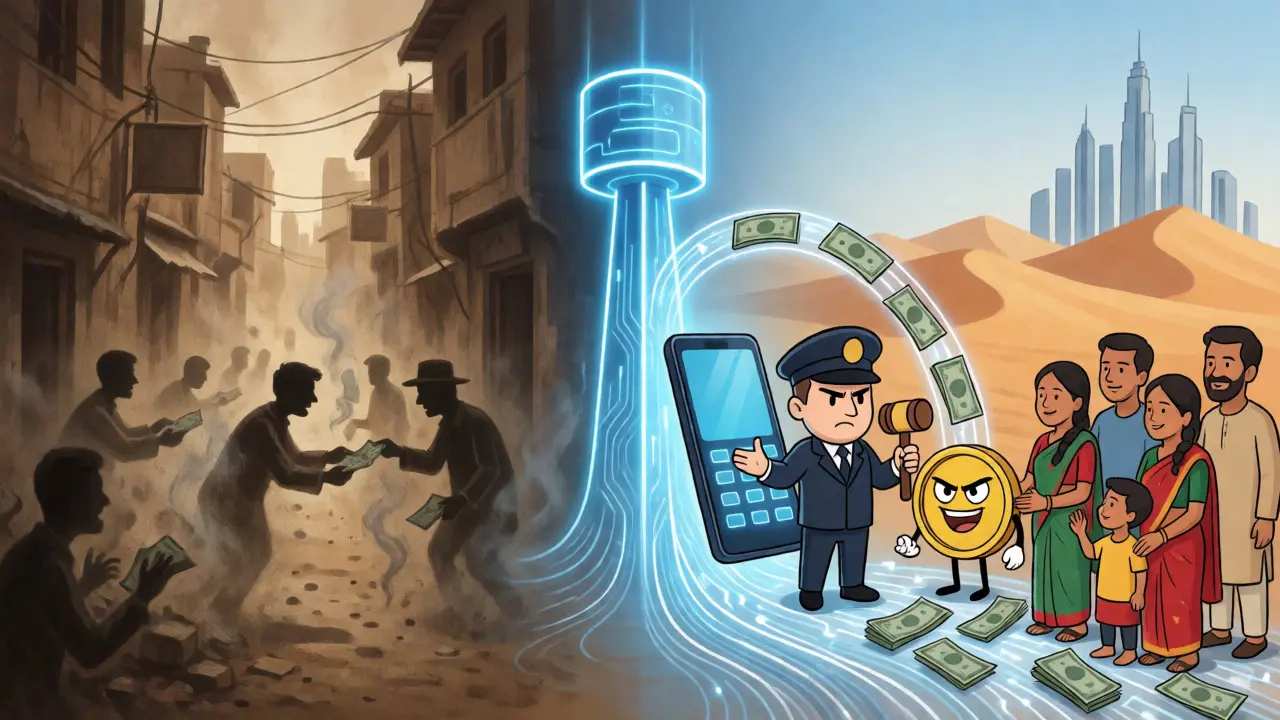
Bangladesh just hit a $30 billion remittance milestone. That’s more than its entire ready-made garment export sector. Yet, if you try to send money home using Bitcoin or USDT, you’re not just risking high fees-you’re risking jail time. The Central Bank of Bangladesh (Bangladesh Bank) has kept its iron grip on digital currencies since 2017, creating a paradox where record formal inflows coexist with a strict prohibition on the very technology many diaspora workers want to use.
The $30 Billion Boom and the End of Hundi
In fiscal year 2024-25, official remittance inflows surged by 27 percent year-on-year. March 2025 alone saw $3.29 billion enter the country, a staggering 64.7 percent jump from the previous year. This isn’t just good luck; it’s the result of deliberate policy shifts. The government dismantled the informal Hundi system, a traditional cross-border transaction network that bypassed official banking channels. By enforcing market-driven exchange rates, they made formal banking attractive again.
You might wonder why this matters for crypto. For years, Hundi was the preferred route because it offered better rates than banks. Now that banks are competitive, the incentive to use grey-market solutions has dropped. But does that mean crypto is dead in Bangladesh? Not necessarily. It means the battle has shifted from "bank vs. Hundi" to "bank vs. blockchain," with the bank currently holding all the cards.
Why Crypto Remains Banned
Cryptocurrency is explicitly prohibited for remittance purposes under Section 33 of the Foreign Exchange Regulation Act 1947. The rationale from Bangladesh Bank is clear: monetary sovereignty. Deputy Governor Mr. Ahmed Munas stated in September 2025 that private cryptocurrencies pose "unacceptable risks" to financial stability. They fear that unregulated digital flows could undermine the Taka’s value and complicate balance of payments tracking.
This stance contrasts sharply with neighbors like India and Pakistan, which have explored regulated frameworks. While Bangladesh Bank officials admit they are watching Central Bank Digital Currency (CBDC) developments closely, they draw a hard line between state-controlled digital money and decentralized assets like Bitcoin. If you’re part of the 587,000-member Facebook group "Bangladeshi Expats Worldwide," you know the frustration. Sixty-three percent of members dislike traditional channels, yet only 12 percent attempt crypto transfers due to legal fears.
The Rise of Mobile Financial Services
If crypto is out, what’s in? Mobile Financial Services (MFS). Platforms like bKash and Nagad have become the backbone of domestic remittance distribution. Today, 87 percent of remittances are accessible via mobile services, up from 62 percent in FY2023. Users report faster processing-some seeing funds arrive in 12 hours-but costs remain a pain point. Average transaction fees hover around 6.5 percent, well above the Sustainable Development Goal target of 3 percent.
The infrastructure is improving, though. The introduction of the Real-Time Gross Settlement (RTGS) expansion reduced processing times for 85 percent of transactions to under four hours. Additionally, the new "Remittance Direct" app launched in August 2025 processed $1.2 billion with average fees of 3.8 percent, undercutting the broader market average of 5.2 percent. This suggests the government is betting on centralized digital rails, not decentralized ones, to solve the efficiency problem.
| Channel | Average Fee | Processing Time | Regulatory Status | User Adoption Trend |
|---|---|---|---|---|
| Traditional Banks | 5.2% | 24-72 Hours | Fully Regulated | Stable/Growing |
| Mobile Financial Services (bKash/Nagad) | 3.8% - 6.5% | Under 4 Hours | Fully Regulated | Rapid Growth (87% penetration) |
| Hundi (Informal) | Variable (often lower) | Instant | Prohibited/Cracked Down | Declining Sharply |
| Cryptocurrency | Low Network Fees | Minutes | Prohibited (Ban) | Niche/Risky |

Diaspora Frustration and Legal Risks
For migrants in Saudi Arabia, UAE, and Qatar-who account for 68.3 percent of all inflows-the choice is stark. Use a bank and pay higher fees, or risk criminal prosecution with crypto. A recent warning notice from Bangladesh Bank threatened license revocation for any entity facilitating crypto remittances. This isn't a suggestion; it's an enforcement directive.
User experiences highlight the friction. One migrant from Chittagong reported losing $300 in fees and waiting ten days for a $500 transfer from Malaysia. Meanwhile, others praise the speed of bKash, rating it 4.2/5 on Google Play. The disconnect is real: the technology exists to make transfers cheaper and faster, but the regulatory wall prevents adoption. Until the law changes, crypto remains a shadow economy player, used quietly by those willing to accept the risk of asset seizure.
Future Outlook: CBDCs Over Bitcoin?
Don’t expect a sudden crypto liberalization. The Asian Development Bank projects continued growth in formal remittances (15-18 percent for FY2026), driven by more migrant workers entering the global labor market. Bangladesh Bank aims for 95 percent digital processing by FY2026-27, but their "Digital Payment Strategy 2025-2027" explicitly excludes private crypto.
Instead, look for integration with regional systems. A Memorandum of Understanding with India’s Reserve Bank regarding Unified Payments Interface (UPI) compatibility is expected by Q2 2026. This could streamline transfers for the 1.2 million Bangladeshi workers in India. The path forward is clearly centralized digital currency and interoperable banking apps, not decentralized tokens. If you’re sending money home, stick to the rails that are officially sanctioned-they’re getting faster, even if they aren’t free.
Is cryptocurrency illegal to hold in Bangladesh?
Yes, trading and using cryptocurrencies for payments or remittances is prohibited under the Foreign Exchange Regulation Act. While mere possession laws can be complex, any transaction involving crypto as a medium of exchange faces strict bans and potential criminal penalties.
Why did remittances to Bangladesh increase so much in 2025?
The surge was driven by three factors: implementation of competitive market-driven exchange rates, a strict crackdown on the informal Hundi system, and expanded access through mobile financial services like bKash and Nagad.
What is the Hundi system?
Hundi is a traditional, informal method of transferring money across borders without moving actual cash physically. It relies on trust networks and often offers better exchange rates than banks, but it operates outside official regulatory oversight.
Are there plans for a Central Bank Digital Currency in Bangladesh?
Bangladesh Bank is examining international developments in CBDCs. However, they distinguish this from private cryptocurrencies. Any future digital currency would likely be state-issued and controlled, aligning with their goal of maintaining monetary sovereignty.
How long do bank remittances take to reach Bangladesh now?
Thanks to the Real-Time Gross Settlement (RTGS) expansion, 85 percent of transactions now process in under 4 hours. Previously, this took 24 to 72 hours. Mobile financial services further reduce last-mile delivery time.

Write a comment