

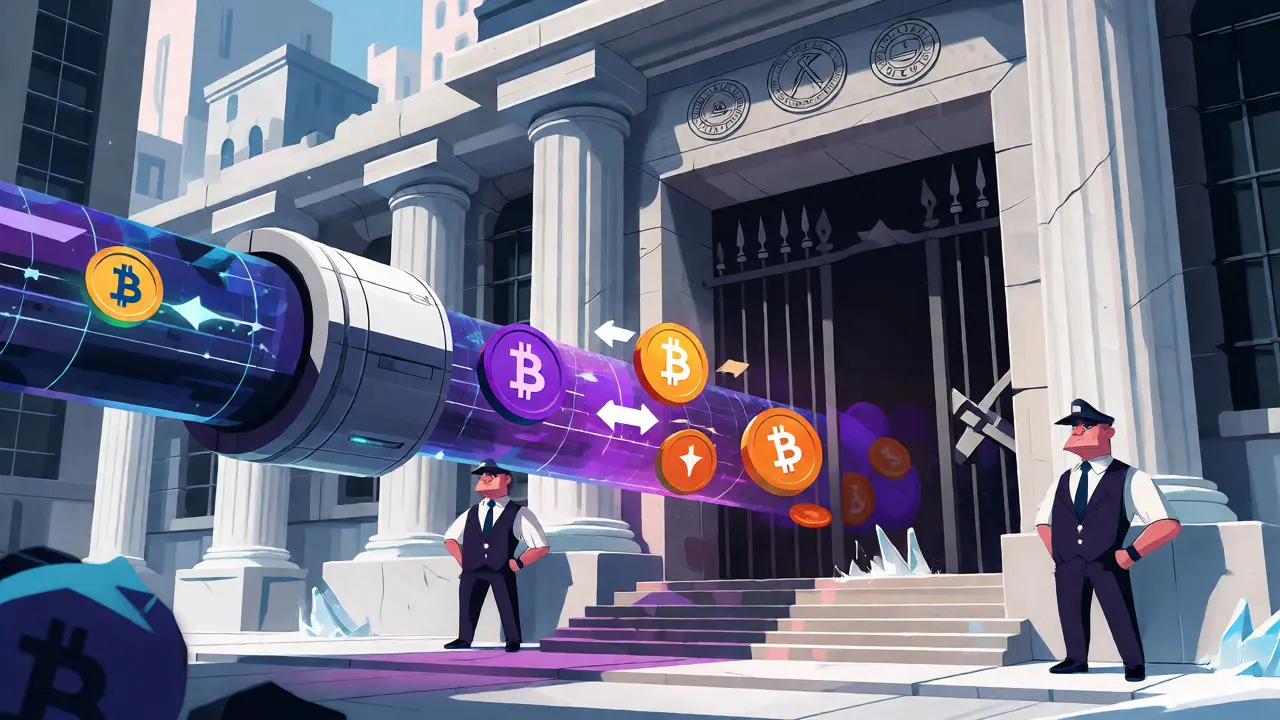
Imagine trying to buy a coffee with Bitcoin in Quito. You scan the QR code, hit send, and… nothing happens. The merchant shrugs. Your bank freezes your card. This isn't a glitch; it's the reality of cryptocurrency restrictions in Ecuador. While you can legally own digital coins, using them for daily payments is practically impossible due to strict monetary laws.
Ecuador has been dollarized since 2000, meaning the US Dollar is its official currency. This unique economic setup creates a specific friction point for digital assets. The Central Bank of Ecuador (BCE) has made its stance clear: crypto is not legal tender. But does that mean it's illegal? Not exactly. It’s more like being in a regulatory gray zone where ownership is tolerated, but integration into the formal financial system is blocked. If you’re an expat, a local investor, or just curious about how this works, understanding these rules is crucial before you move any money.
The Legal Status: Owned but Not Spendable
Let’s cut through the noise. Is crypto banned in Ecuador? No. Can you use it at Walmart? Also no. The distinction lies in the difference between holding an asset and using a payment method. Under Article 94 of the Organic Monetary and Financial Code, only the US Dollar is authorized as legal tender. Any other form of money needs explicit state approval, which crypto hasn’t received.
In August 2024, the BCE reiterated that cryptocurrencies are "not legal tender, nor an authorized means of payment." This statement wasn't new, but it served as a firm reminder to banks and merchants. For individuals, this means you can buy Bitcoin on Binance, hold it in a Ledger wallet, or trade Ethereum on OKX. The government doesn't confiscate your private keys. However, if you try to pay for groceries with stablecoins, the transaction lacks legal protection. If the merchant refuses to accept it, or if the network fails, you have no recourse under consumer protection laws designed for fiat currency.
| Action | Status | Risk Level |
|---|---|---|
| Buying/Selling Crypto | Legal | Low (if done privately) |
| Holding Assets | Legal | Low |
| Paying Merchants | Restricted | High (No legal enforcement) |
| Bank Transfers to Exchanges | Blocked/Flagged | High (Account freezes) |
| Mining | Not Banned | Medium (Grid/Energy costs) |
Why Banks Block Crypto Transactions
If you’ve ever tried to wire money from a local Ecuadorian bank to a global exchange like Coinbase or Kraken, you know the pain. Many users report their transfers getting rejected or their accounts being temporarily frozen. Why does this happen?
It comes down to compliance. The Superintendency of Banks (SB), which oversees financial institutions, maintains a list of unauthorized entities. Since most major exchanges don’t hold a local banking license, they fall into this category. Banks are legally mandated to refuse transactions involving these unlicensed platforms unless there’s a specific law granting them access. Without such a law, bank compliance officers err on the side of caution. They flag crypto-related transfers as high-risk operations to avoid penalties from regulators.
This creates a bottleneck. You might have cash in your pocket, but moving it into the digital ecosystem requires workarounds. Most locals and residents resort to peer-to-peer (P2P) trading or over-the-counter (OTC) desks. These informal channels allow you to swap USD cash for USDT or BTC without touching the formal banking rails. But remember, these deals are off-book. There’s no insurance if the counterparty disappears.
Taxes and Reporting Obligations
Just because the bank ignores your crypto doesn’t mean the taxman does. The Internal Revenue Service (SRI) treats realized gains from cryptocurrency sales as income. If you bought Bitcoin at $30,000 and sold it at $60,000, that $30,000 profit is taxable.
Ecuador uses progressive tax rates for individuals, capping out at 35%. For corporations, the rate is generally 25%. The tricky part is tracking these transactions. Since many trades happen via P2P cash swaps, paper trails are thin. If you’re audited, you need proof of cost basis and sale price. Keeping detailed logs of every trade, including dates, amounts, and counterparties, is essential. Failure to report can lead to fines, even if the transaction didn’t go through a traditional bank.
There is currently no specific crypto tax form. You report these gains alongside other capital gains or income sources. This ambiguity forces many investors to consult local accountants who specialize in international finance, adding another layer of cost and complexity to the process.
The Mining Reality Check
You might think, "If I can’t spend it, can I mine it?" Technically, yes. Mining isn’t explicitly prohibited. But let’s look at the economics. Electricity in Ecuador averages around $0.145 per kWh. That sounds cheap until you compare it to neighboring countries or consider grid stability.
The Andean power grid experiences frequent outages, averaging nearly 15 hours of downtime per month in some regions. For a miner, downtime equals lost revenue. Additionally, importing mining rigs incurs a 35% duty. Combine high energy costs, unreliable power, and expensive hardware imports, and large-scale industrial mining becomes unviable. Most activity is limited to small, residential setups in suburbs where enthusiasts run a few ASICs or GPUs. The total hash rate contributed by Ecuador is negligible on a global scale, representing less than 0.0001% of the world’s capacity.
Adoption Rates and User Experience
Despite the hurdles, people do use crypto here. According to recent data, only about 2.73% of the population owns digital assets. That’s roughly 500,000 people. Compare that to the Latin American average of 10.9%, and you see the gap.
Who are these users? Primarily, they are part of the unbanked population. Only 50% of adults in Ecuador have bank accounts. For those without access to traditional credit or savings products, crypto offers an alternative store of value. Remittances play a huge role here too. Ecuador receives billions in remittances annually, often facing fees above 6%. Sending stablecoins like USDT can bypass some of these costs, though converting back to USD cash locally still involves OTC spreads of 5-7%.
User experiences vary wildly. On forums like r/CryptoEcuador, complaints about frozen accounts are common. One user noted having three accounts frozen in a single year totaling $850. Conversely, positive stories often involve successful P2P trades in cities like Guayaquil or Quito, where community trust helps facilitate deals. The key takeaway? Success depends heavily on navigating the informal economy rather than relying on institutional support.

Regional Context: How Ecuador Compares
Ecuador’s approach stands out in South America. Look at neighbors:
- Paraguay: Passed a law in 2022 allowing crypto payments and mining with registration requirements.
- Mexico: Regulates crypto under the Fintech Law, requiring licenses for service providers.
- Peru: Recently mandated Virtual Asset Service Providers (VASPs) to register with the Financial Intelligence Unit.
Ecuador lacks this structured pathway. There’s no licensing regime for exchanges. This vacuum pushes innovation underground. While El Salvador famously adopted Bitcoin as legal tender, Ecuador chose the opposite extreme: strict monetary conservatism. The BCE argues this protects dollarization stability. Critics argue it stifles financial inclusion for the half of the population left behind by traditional banks.
Future Outlook and CBDC Possibilities
Is change coming? Signs point to gradual evolution rather than revolution. The Central Bank has explored launching a retail Central Bank Digital Currency (CBDC) pegged 1:1 to the US Dollar. This would modernize payments without introducing volatility. As of late 2024, no launch date was confirmed, but discussions continue.
New FinTech regulations taking effect in early 2025 may also impact the landscape. These rules require tech-based financial services to incorporate locally and maintain minimum capital reserves. While this targets broader fintech, it could eventually force crypto service providers to seek formal recognition. Analysts predict that if pressure from remittance businesses grows, we might see regulatory tweaks by 2026. However, the BCE remains committed to protecting the dollarized model, suggesting current restrictions will likely persist through 2027.
Practical Tips for Crypto Users in Ecuador
If you decide to engage with crypto in Ecuador, keep these heuristics in mind:
- Avoid Direct Bank Wires: Use P2P platforms or OTC desks to move funds. Expect to pay a premium for convenience.
- Keep Meticulous Records: Document every trade for tax purposes. Assume the SRI will ask for proof.
- Verify Counterparties: In P2P trades, trust is your security. Stick to established community members or verified platforms.
- Understand Fees: Cash-out spreads can be high. Calculate the real cost of converting crypto to usable USD.
- Stay Updated: Regulations are static now, but regional trends suggest movement. Follow local news and BCE announcements.
Is Bitcoin legal in Ecuador?
Yes, owning and trading Bitcoin is legal. However, it is not recognized as legal tender, meaning merchants are not obligated to accept it, and banks may restrict related transactions.
Can I pay for goods with cryptocurrency in Ecuador?
You can try, but it is rare. Since crypto is not legal tender, most businesses do not accept it. Those who do operate in a legal gray area with no consumer protection guarantees.
Do I have to pay taxes on crypto profits in Ecuador?
Yes. Realized gains from selling cryptocurrency are considered taxable income by the Internal Revenue Service (SRI). Rates range up to 35% for individuals depending on total income brackets.
Why do banks block crypto transfers?
Banks block transfers to comply with Superintendency of Banks regulations that prohibit dealings with unauthorized financial entities. Most international exchanges lack local licenses, triggering risk management protocols.
Is cryptocurrency mining profitable in Ecuador?
Generally, no. High electricity tariffs, frequent grid outages, and import duties on hardware make large-scale mining economically challenging compared to other regions.

Write a comment