
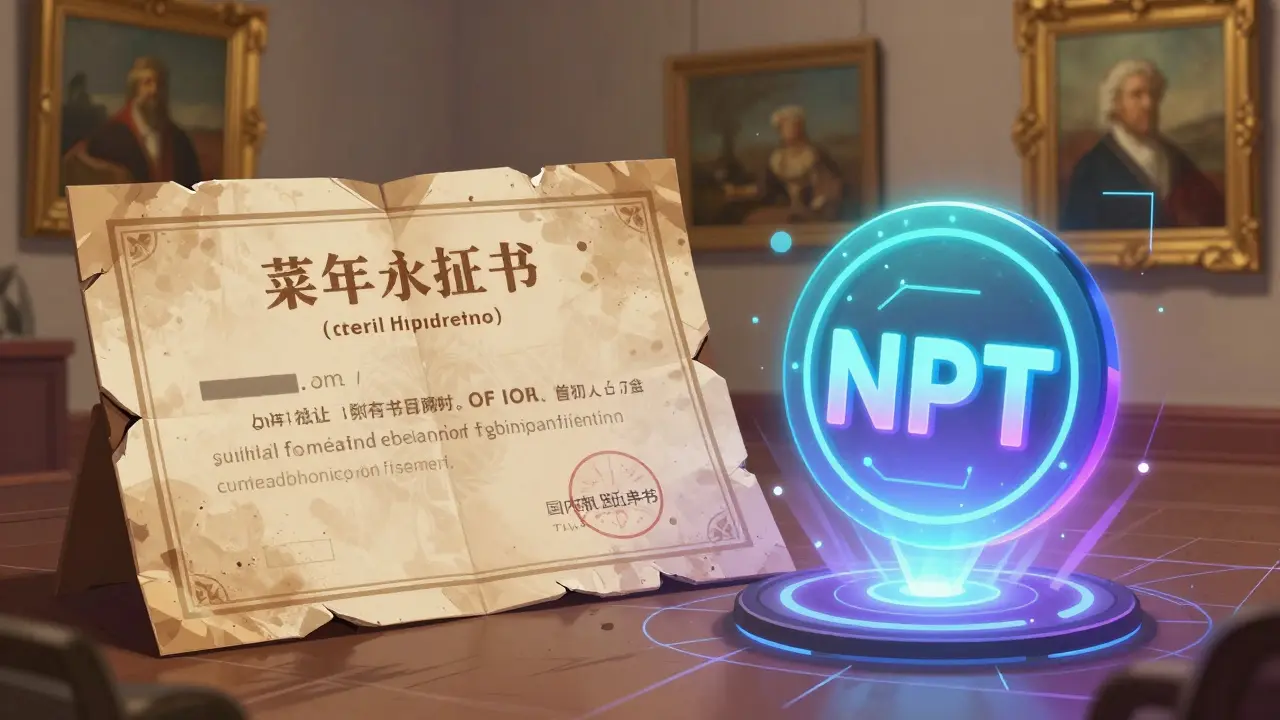
Imagine spending thousands of dollars on a masterpiece only to find out years later it's a clever fake. In the traditional art world, this is a nightmare that costs the global market roughly $6 billion every year. For a long time, we relied on paper certificates-essentially fancy pieces of paper that are surprisingly easy to forge or lose. But things have changed. By using Digital Art Authentication is the process of using blockchain technology to verify the authenticity, ownership, and history of an artwork , artists and collectors now have a way to prove a piece is original without needing to trust a middleman.
The Shift from Paper to Blockchain
For decades, the art world lived and died by the "Certificate of Authenticity." If you had the paper, you owned the art. The problem? Paper burns, fades, and can be photocopied. Enter Non-Fungible Tokens (or NFTs), which are unique digital tokens built on a blockchain that represent ownership of a specific item. Unlike Bitcoin, where every coin is the same, an NFT is one-of-a-kind.
When an artist "mints" an NFT, they aren't just making a JPEG; they are creating a permanent, timestamped record on a decentralized ledger. This record is immutable, meaning once it's written, nobody-not even the artist-can go back and change the ownership history. This creates a transparent audit trail, often called provenance, which shows exactly who owned the piece from the moment it was created to the moment it hit your digital wallet.
How It Actually Works for Physical and Digital Art
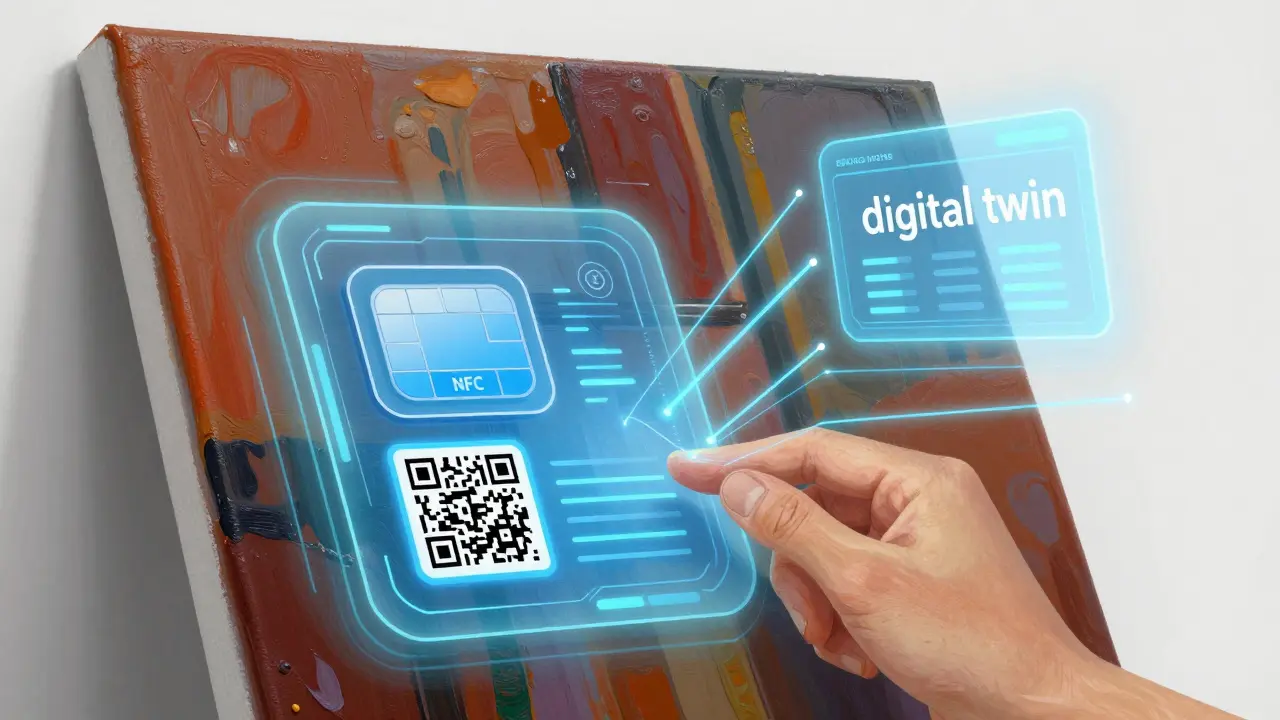
You might wonder how a digital token proves a physical painting is real. You can't exactly "upload" a canvas to the blockchain. To bridge this gap, the industry has settled on three main methods to link the physical object to its digital twin.
- QR Codes: Many artists now embed a small, discreet QR code on the back of a frame. When a buyer scans it with their phone, it pulls up the blockchain record immediately. It's fast and requires zero special equipment.
- NFC Chips: Near Field Communication (NFC) is the same tech used in tap-to-pay credit cards. A tiny, encrypted chip is embedded in the canvas or frame. Because these chips can be tamper-evident, they provide a much higher level of security than a sticker.
- Digital Watermarking: This involves invisible identifiers embedded into the artwork's pixels or fibers. These are detectable only by specialized apps and link directly to the blockchain certificate.
| Method | Security Level | User Ease | Best For |
|---|---|---|---|
| Paper Certificates | Low | High | Legacy Art |
| QR Codes | Medium | Very High | Galleries & Prints |
| NFC Chips | High | High | High-Value Physical Art |
| NFTs (Digital Only) | Very High | Medium | Digital-Native Art |
The Role of Smart Contracts and Network Choice
The real magic happens via Smart Contracts, which are self-executing contracts with the terms of the agreement directly written into lines of code. These contracts automate the transfer of ownership. When you buy an NFT-authenticated piece, the smart contract ensures the record updates instantly, removing the risk of human error or "lost" paperwork during a sale.
Most of this happens on Ethereum, which holds the lion's share of the art NFT market. However, because Ethereum can sometimes be expensive due to "gas fees" (the cost of processing a transaction), many artists are moving toward Solana or Polygon. These networks are generally faster and cheaper, though Ethereum is still seen as the "gold standard" for high-end, museum-grade pieces.
Can Blockchain Fully Replace Art Experts?
Here is the hard truth: a blockchain can tell you that a token is authentic, but it can't tell you if the paint on the canvas is actually from the 17th century. This is where the "blockchain purist" view hits a wall. A token only proves that the record is real, not necessarily the object it's attached to.
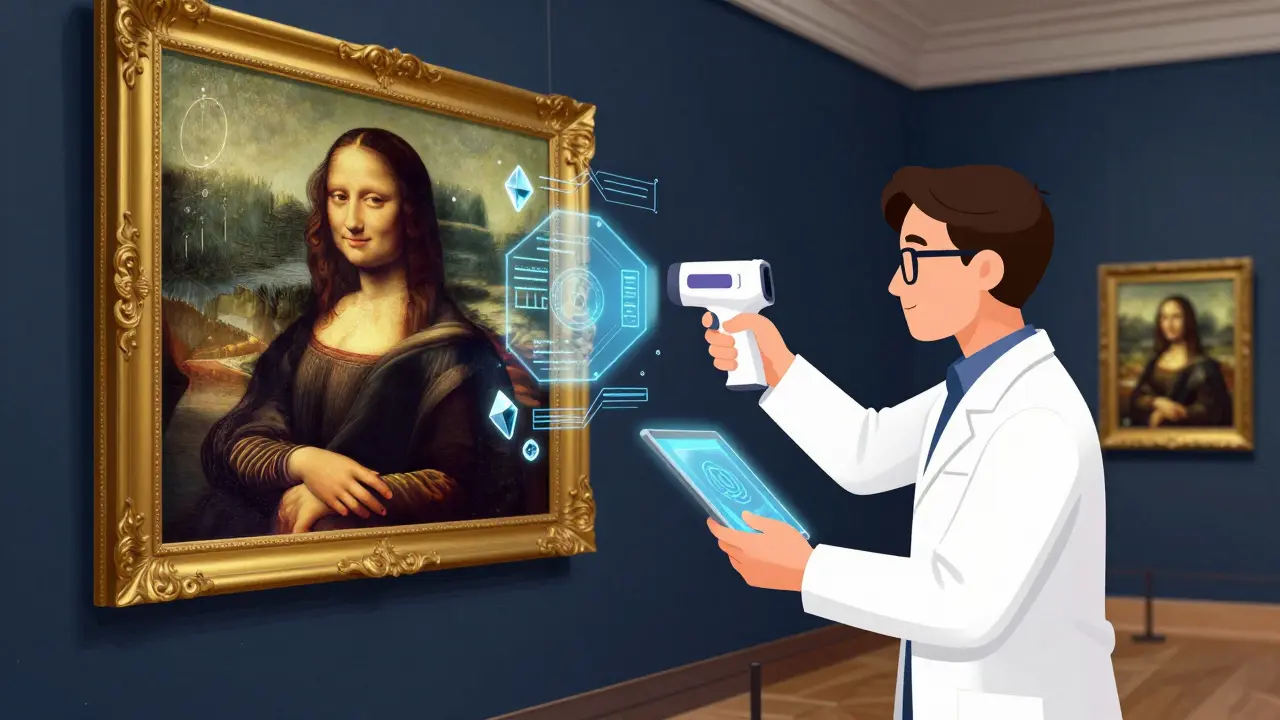
To get a complete picture, the best approach is a hybrid one. Experts use blockchain for the ownership trail, but combine it with physical science. For instance, infrared imaging can expose underdrawings, and X-ray radiography can find hidden signatures or overpainting. The future of authentication isn't AI vs. Humans; it's AI and Blockchain supporting the nuanced eye of a human expert.
Practical Steps for Artists Getting Started
If you're an artist wanting to secure your work, the learning curve depends on your tech comfort. Digital natives usually get it in a few hours, but traditional painters might need a few weekends of study to feel confident. Here is the basic workflow:
- Setup a Digital Wallet: You need a place to store your tokens. Use a hardware wallet if you're dealing with high-value work to avoid phishing attacks.
- Mint Your Work: Upload your art to a platform and create the NFT. This generates the unique ID on the blockchain.
- Link the Physical: If the work is physical, embed your chosen verification method (like an NFC chip) and link it to the NFT's contract address.
- Verify Metadata: Ensure the metadata-like creation date and artist details-is correct and locked so it cannot be altered.
Common Pitfalls and How to Avoid Them
It's not all smooth sailing. Many new collectors struggle with private key management; if you lose your keys, you essentially lose the "key" to your certificate of authenticity. Additionally, gas fee volatility on Ethereum can lead to unexpected costs during a transaction.
To stay safe, avoid trusting a single platform. Expert collectors recommend cross-checking metadata on at least two different blockchain explorers. This ensures that the information you see on a marketplace like OpenSea matches the actual data stored on the ledger.
Does an NFT prove the art is original?
An NFT proves the authenticity of the digital token and the record of ownership. For digital art, this is usually enough. For physical art, the NFT acts as a digital certificate, but you still need a physical link (like an NFC chip) and often a human expert to verify the physical object itself.
What happens if the blockchain crashes?
Blockchains are decentralized, meaning the data is stored on thousands of computers globally. While an individual website or marketplace might go down, the actual record of your art's authenticity remains safe on the network.
Can someone steal my NFT authentication?
They can't "steal" the record from the blockchain, but they can steal your access to it if they get your private keys. This is why using hardware wallets and avoiding suspicious links is critical.
Are there legal standards for NFT art?
Yes, regulations are evolving. For example, the EU's MiCA framework now requires marketplaces to follow KYC (Know Your Customer) and AML (Anti-Money Laundering) rules to prevent fraud and money laundering.
Which blockchain is best for art?
Ethereum is the most widely used for high-value art due to its security and prestige. However, Solana and Polygon are popular for artists who want lower transaction costs and faster minting times.

Comments
Robert Mosolygo
The inherent flaw here is the assumption that the ledger is actually 'immutable' in a practical sense. If the entry point is corrupted or the original minting process was fraudulent, you're simply digitizing a lie with surgical precision. It's a convenient smokescreen for the same old money laundering schemes, just wrapped in a layer of cryptographic jargon to fool the masses who don't understand how these databases actually operate.
Candace Sherrard
There is something deeply poetic, yet profoundly unsettling, about the way we are attempting to tether the ethereal nature of artistic inspiration to a rigid, mathematical sequence of zeros and ones. It makes one wonder if the value of art truly lies in the object's provenance or if we are simply projecting our collective fear of loss onto a digital ledger in a desperate attempt to quantify the unquantifiable. By shifting our gaze from the brushstroke to the blockchain, we might be inadvertently stripping the art of its aura, replacing the mystery of creation with the cold certainty of a smart contract, and in doing so, we risk turning the gallery into a mere ledger of assets where the aesthetic experience is secondary to the verifiable ownership.
Miranda Jamieson
Typical tech-bro nonsense trying to solve a problem that only exists because people are gullible enough to buy fake art in the first place. If you can't tell a fake from an original without a chip in the frame, you shouldn't be spending thousands on art.
Sara Ellis
just cool tech man
Jennifer Taylor
Wait until they tell you who actually controls the servers for these 'decentralized' networks. It is all a trap to track every single high-value asset you own for the new world order.
Yvette P
Oh sure, because adding an NFC chip to a canvas is totally the 'high-security' solution we've all been waiting for. I'm sure the sophisticated counterfeiters are just trembling in their boots knowing they have to figure out how to clone a chip that costs five cents. The sheer audacity of pretending that this solves the systemic rot of the art market while ignoring the colossal energy waste of the Ethereum mainnet is just precious. Let's just pretend the provenance is 'immutable' while the underlying asset is a JPEG that could vanish if a server goes down. Absolutely brilliant.
Guy Bianco
This is a very interesting perspective on the intersection of technology and art. I believe we should all strive to support artists in finding secure ways to protect their intellectual property. ☺
Gary Lingrel
why do we even need this stuff anyway... just trust the artist 🙄 just another way to make art about money and not soul
Gloris Young
Love seeing more tools for creators!
Kathleen Bergin
Actually, the QR code method is way too basic for high-end art because anyone can just stick a fake QR code over the original one. Everyone knows that.
Hannah Rubia
I would suggest that artists who are hesitant to adopt this technology start by researching the environmental impact of different blockchains to find one that aligns with their personal values.
Paige Raulerson
I've seen some of these 'high-value' NFT collections and frankly, the art is abysmal. Using a blockchain to authenticate a pixelated monkey doesn't make it art, it just makes it a verified piece of garbage.
Mike Krasner
imagine caring about a piece of paper or a chip lol just buy the art because it looks good
praveen subbiah
This is an incredible leap forward for the world! My country is adopting these technologies faster than anywhere else and it is a proud moment for all of us!! 🇮🇳
Alex Hunter
It's a bit of a learning curve, but once you get the hang of the wallet setup, it's actually pretty intuitive. I'd recommend a Ledger or Trezor for anyone starting out.
jill huyo-a
I wonder if there's a way to integrate this with existing museum archives to create a global registry?
Tara Aman
This is such an exciting time for digital creators! Let's get everyone on board and protect our work together!
debashish sahu
The balance between traditional expertise and new technology is the most important part of this discussion.
Jagdish Sutar
Welcome to the future of art, everyone! It's great to see how technology can help artists from all over the world get recognized and secured.
Caiaphas Konkol
The irony is that the 'gold standard' of Ethereum is essentially a centralized consensus of mining pools. It's a facade of decentralization that only the naive believe in.
Mary Tawfall
I think it's wonderful that artists have more options now to protect their hard work. It gives a lot of peace of mind.
Eric Raines
Listen, I've read a few articles on this and honestly, the whole 'immutable' thing is a joke if you actually understand how hard forks work. I can tell you exactly why this fails in the real world because I've seen it happen with early smart contract exploits. You're all just falling for the hype cycle of 2021. It's embarrassing, really.