

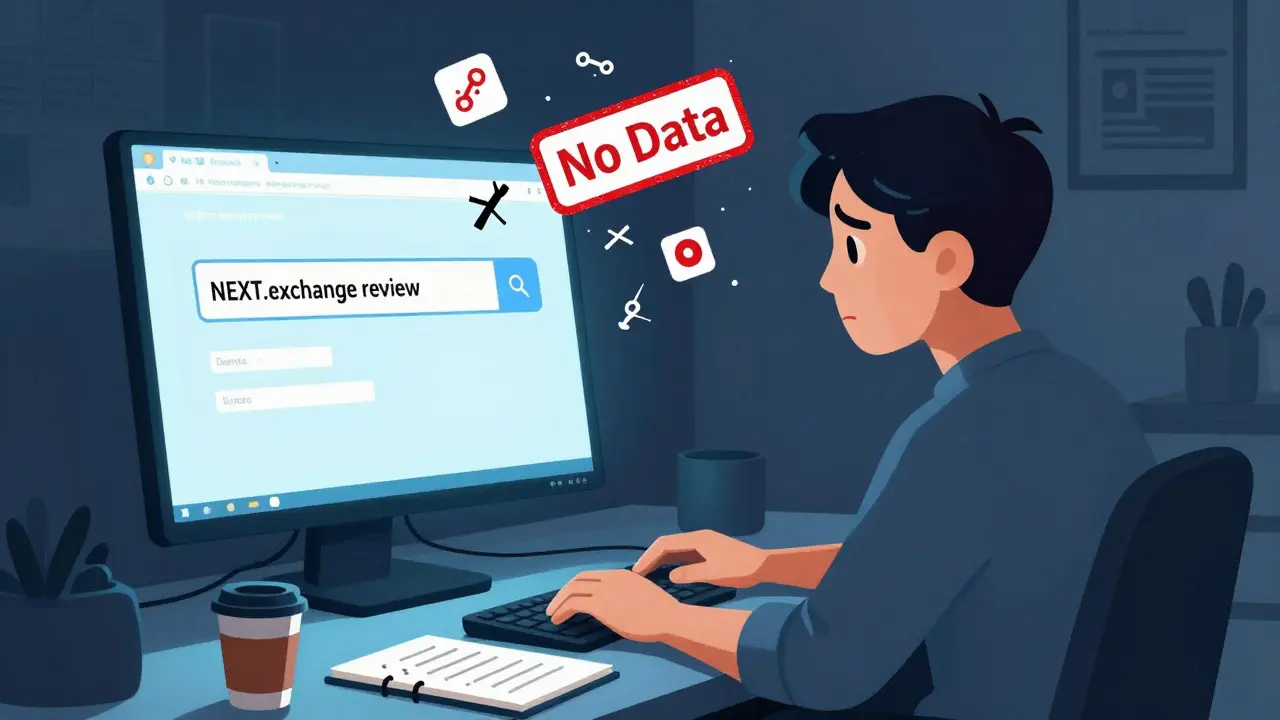
It is June 2026. You have heard whispers about NEXT.exchange, a platform that promises something the big boys like Coinbase or Kraken won't give you: privacy, low barriers to entry, and perhaps even anonymity. But when you try to find a solid, verified review of this specific exchange, you hit a wall. The search results are empty. The forums are quiet. There is no Wikipedia page. No major regulatory filing.
This silence is not an accident. In the world of cryptocurrency, obscurity is often a feature, not a bug. However, for someone looking to deposit real money, it is a massive red flag. This article cuts through the noise to explain what NEXT.exchange likely is, why information is scarce, and how you can protect yourself if you decide to interact with such platforms.
The Mystery of NEXT.exchange
Let’s be direct: there is very little public, verifiable data on NEXT.exchange as of mid-2026. Unlike established entities like Binance, Kraken, or Coinbase, which have thousands of reviews, clear corporate structures, and regulatory licenses in multiple jurisdictions, NEXT.exchange operates in the shadows. This lack of transparency is the first thing you need to understand before connecting your wallet or entering your credit card details.
In the crypto ecosystem, platforms generally fall into two categories: regulated custodial exchanges and decentralized or semi-anonymous protocols. NEXT.exchange appears to lean toward the latter, or at least markets itself as a bridge between the two. It often positions itself as a solution for users who want to trade without undergoing the rigorous Know Your Customer (KYC) processes required by traditional financial institutions. For many, this sounds appealing. For regulators, it sounds illegal.
The absence of detailed reviews suggests one of three things:
- New Launch: The platform is brand new, has not yet gained traction, and therefore has no user base to generate feedback.
- Niche Operation: It serves a very small, specific community (perhaps focused on privacy coins or specific geographic regions) that does not engage in mainstream English-language tech journalism.
- High Risk/Scam Potential: The platform may have been shut down, rebranded, or is operating as a "honeypot" where users can deposit but cannot withdraw.
Without concrete evidence pointing to legitimacy, you must assume the highest level of risk. In 2026, the global regulatory landscape has tightened significantly. Exchanges that refuse to comply with anti-money laundering (AML) standards are increasingly being blocked by payment processors and internet service providers. If NEXT.exchange is still accessible, it is likely using aggressive obfuscation tactics.
Why Information Is Scarce
You might wonder why a simple Google search yields nothing. This is a common phenomenon with offshore or privacy-focused crypto services. Search engines like Google prioritize content from authoritative, indexed domains. If a website does not link out to reputable news sources, does not receive backlinks from established blogs, and does not maintain a visible social media presence, it effectively becomes invisible to standard search algorithms.
Furthermore, many such platforms operate under dynamic URLs or use domain-fronting techniques to avoid detection. They may change their web address frequently to evade takedown notices. This means that even if a review existed last year, the link might now be broken, leading to a cycle of dead ends.
Another factor is the self-censorship of reviewers. Major crypto publications and independent auditors are hesitant to write about unregulated exchanges due to liability concerns. If they promote a platform that turns out to be a scam, they face legal repercussions and loss of credibility. Therefore, the silence is partly a protective measure by the industry.
Comparing NEXT.exchange to Established Alternatives
To understand the value proposition-and the risks-of NEXT.exchange, we need to compare it against the types of platforms you would typically use. Let’s look at the differences between a regulated exchange, a decentralized exchange (DEX), and a platform like NEXT.exchange.
| Feature | Regulated CEX (e.g., Coinbase) | Decentralized Exchange (e.g., Uniswap) | Platforms like NEXT.exchange |
|---|---|---|---|
| KYC Requirement | Mandatory (ID, Proof of Address) | None (Wallet-only) | Often None or Minimal |
| Custody | Centralized (Exchange holds keys) | Non-Custodial (You hold keys) | Variable (Often Centralized but opaque) |
| Fiat On-Ramp | Yes (Bank Transfer, Card) | No (Crypto-to-Crypto only) | Limited (Often P2P or Crypto-only) |
| Regulatory Oversight | High (Licenses in US/EU/etc.) | None (Code is law) | Low or None (Offshore) |
| Security Model | Insurance, Cold Storage | Smart Contract Audits | Unknown (No public audits) |
| Reversibility | Yes (Support can reverse errors) | No (Transactions are final) | No (Usually irreversible) |
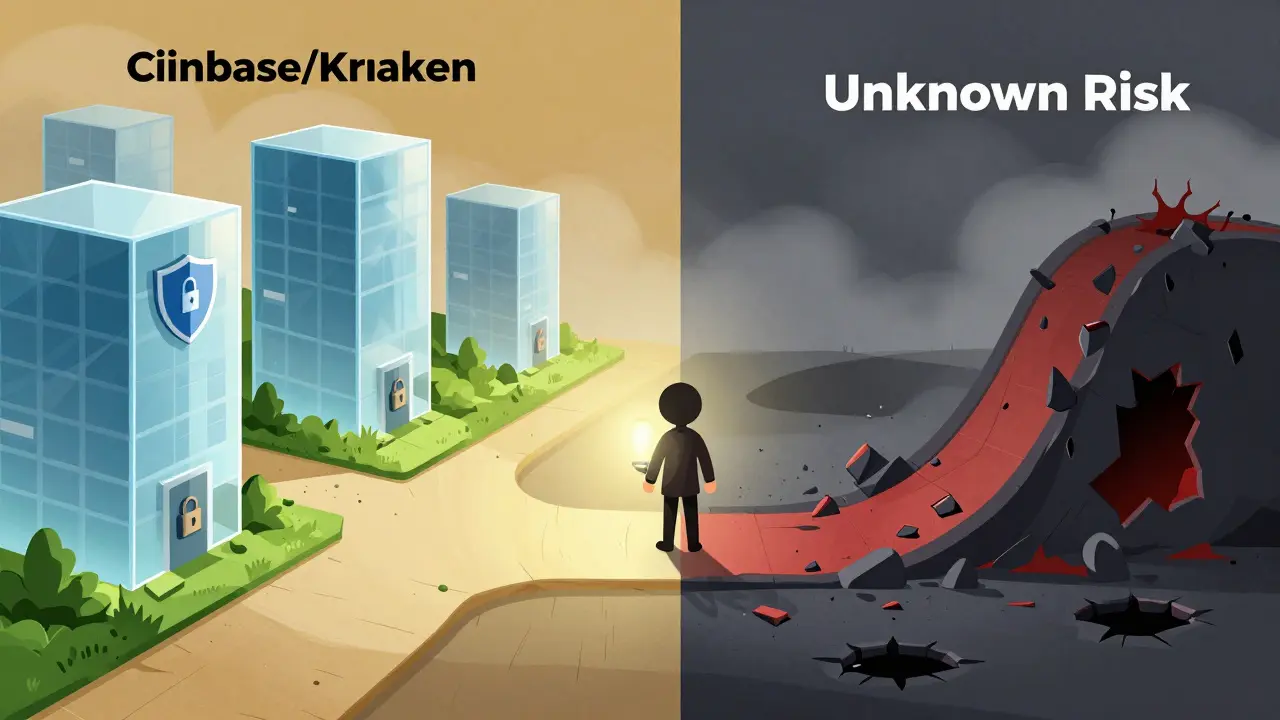
As you can see, NEXT.exchange occupies a dangerous middle ground. It offers the convenience of a centralized interface but lacks the security guarantees of a regulated entity. It promises the privacy of a DEX but may actually hold your funds in a centralized wallet, creating a single point of failure. If the operators decide to run away with the funds-a scenario known as a "rug pull"-you have no recourse. There is no insurance fund, no regulatory body to file a complaint with, and no customer support team to answer your calls.
Red Flags to Watch For
If you are determined to explore NEXT.exchange, you need to approach it with extreme caution. Here are the specific warning signs that indicate a platform is unsafe:
- Anonymity of Ownership: Legitimate businesses disclose their founders and corporate structure. If NEXT.exchange lists no team members, or uses pseudonyms, this is a major risk. Who do you sue if they steal your money?
- Lack of Public Audits: Reputable exchanges undergo regular security audits by firms like CertiK or Trail of Bits. These reports are published publicly. If NEXT.exchange has no audit history, its code could contain backdoors.
- Aggressive Marketing Promises: Be wary of claims like "guaranteed high returns," "zero fees forever," or "exclusive access." These are classic tactics used to lure inexperienced investors into scams.
- Poor Website Quality: Look for spelling errors, broken links, and generic stock photos. Professional platforms invest heavily in UX/UI design. A sloppy website often reflects a sloppy operation.
- No Community Presence: Check Reddit, Twitter, and Telegram. Are there real people discussing their experiences? Or is the community filled with bots posting generic praise? A healthy exchange has a diverse, critical community.
- Pressure to Deposit: If the platform urges you to deposit large amounts quickly to "lock in" benefits, walk away. Legitimate businesses do not pressure customers.
How to Verify Any Crypto Exchange in 2026
Since specific data on NEXT.exchange is unavailable, here is a universal checklist you can apply to any obscure crypto platform. This process will help you determine if a service is trustworthy before you risk a single cent.
1. Check Regulatory Licenses
Visit the official websites of financial regulators in major jurisdictions. For example, check the Financial Conduct Authority (FCA) register in the UK, the Securities and Exchange Commission (SEC) database in the US, or the Australian Securities and Investments Commission (ASIC). If NEXT.exchange claims to be licensed, verify the license number directly on the regulator's site. Do not trust screenshots provided by the exchange.
2. Investigate Domain Age and History
Use tools like WHOIS to check when the domain was registered. New domains (less than a year old) are higher risk. Also, check if the domain has changed hands recently. Frequent ownership changes can indicate a scam operation moving from one name to another after burning bridges.
3. Test Customer Support
Contact their support team with a simple question. Note the response time and quality. If they take days to reply, give generic answers, or ignore you entirely, this is a bad sign. In a crisis, you need responsive support.
4. Start Small
If you decide to proceed, never deposit more than you can afford to lose. Start with a minimal amount. Try to make a withdrawal immediately. Many scams allow deposits but block withdrawals. If you can successfully withdraw your initial test deposit, it is a slightly better sign, but not a guarantee of long-term safety.
5. Use Hardware Wallets
Never leave significant amounts of cryptocurrency on any exchange, especially an unverified one like NEXT.exchange. Use a hardware wallet like Ledger or Trezor for storage. Only transfer funds to the exchange when you are actively trading, and move them back to cold storage immediately afterward.
The Risks of Offshore and Anonymous Trading
Many users are drawn to platforms like NEXT.exchange because they want to avoid KYC. While privacy is a valid concern, trading on unregulated offshore platforms carries severe risks beyond just losing your money.
First, there is the risk of account freezing. Even if the exchange itself is legitimate, if it interacts with the traditional banking system, it may suddenly enforce KYC rules retroactively. Users who deposited fiat currency without verification may find their accounts frozen indefinitely until they provide ID, or worse, permanently locked.
Second, tax implications. In most countries, including New Zealand, the US, and EU nations, you are legally required to report crypto gains. Using an anonymous exchange does not exempt you from tax obligations. If you cannot produce records of your transactions, you may face penalties from tax authorities. Regulated exchanges provide tax reports; anonymous ones do not.
Third, exposure to illicit activity. Unregulated exchanges are often used for money laundering and terrorist financing. By using such platforms, you may inadvertently become part of these networks, potentially attracting unwanted attention from law enforcement.
Alternatives to NEXT.exchange
If your goal is privacy, low fees, or ease of use, there are safer alternatives that balance these needs with security.
For Privacy-Focused Trading: Consider using decentralized exchanges (DEXs) like Uniswap, SushiSwap, or PancakeSwap. These platforms allow you to trade directly from your wallet without KYC. While not completely anonymous (blockchain analysis can sometimes trace transactions), they offer significantly more control over your data than centralized exchanges.
For Low Fees: Platforms like Kraken or Binance offer competitive fee structures for high-volume traders. They are regulated, insured, and have proven track records. You can also use limit orders to reduce trading costs further.
For Ease of Use: Coinbase and Crypto.com provide user-friendly interfaces and educational resources. While they require KYC, they are safe for beginners and offer strong customer support.
For Self-Custody: Learn to use non-custodial wallets like MetaMask or Trust Wallet combined with DEXs. This gives you full control over your assets and eliminates counterparty risk.
Conclusion: Proceed with Extreme Caution
In the absence of credible reviews, transparent ownership, and regulatory compliance, NEXT.exchange represents a high-risk venture. The crypto market is filled with sophisticated scams designed to exploit curiosity and greed. The fact that you cannot find basic information about this platform should be enough to deter you.
Your capital is hard-earned. Do not gamble it on a black box. Stick to established, regulated exchanges for significant holdings, and use decentralized protocols for privacy-sensitive transactions. Always prioritize security over convenience. In 2026, the tools for safe, private, and efficient crypto trading are available-you just need to know where to look.
Is NEXT.exchange a legitimate crypto exchange?
There is insufficient public evidence to confirm the legitimacy of NEXT.exchange. The lack of reviews, regulatory information, and transparent ownership makes it highly risky. Users should exercise extreme caution and assume it may be unsafe until proven otherwise.
Does NEXT.exchange require KYC?
While specific policies for NEXT.exchange are not publicly documented, platforms of this nature often market themselves as non-KYC. However, this lack of identity verification increases the risk of fraud and regulatory action. Be aware that they may request KYC later, potentially locking your funds.
What are the fees on NEXT.exchange?
Fee structures for NEXT.exchange are not clearly published. Unregulated exchanges often hide fees in spread differences or charge unexpected withdrawal fees. Always read the terms carefully, but be skeptical of any claims of "zero fees" as these are rarely sustainable.
Can I withdraw my funds from NEXT.exchange?
Withdrawal reliability is unknown. Many shady exchanges allow deposits but restrict withdrawals. Before depositing significant funds, always perform a small test transaction to ensure you can withdraw successfully. If you encounter delays or excuses, stop using the platform immediately.
Are there safer alternatives to NEXT.exchange?
Yes. For privacy, consider decentralized exchanges (DEXs) like Uniswap. For security and regulation, use established platforms like Kraken, Coinbase, or Binance. These alternatives offer transparency, insurance, and customer support, reducing the risk of loss.
Why is there so little information about NEXT.exchange?
The scarcity of information suggests the platform is either very new, operates in a niche market, or is intentionally obscure to avoid scrutiny. In the crypto space, obscurity is often correlated with higher risk, as legitimate businesses strive for visibility and trust.
Is NEXT.exchange available in New Zealand?
Availability is unclear. However, New Zealand residents should prefer exchanges registered with the FMA (Financial Markets Authority) or globally recognized regulated entities to ensure consumer protection and compliance with local laws.
How can I protect myself when using unknown crypto exchanges?
Start with small amounts, never leave large balances on the exchange, use two-factor authentication (2FA), and verify all information independently. Prefer platforms with public audits, clear ownership, and regulatory licenses. When in doubt, don't buy.

Write a comment