

Paying 30% or more of your portfolio to the government in capital gains tax feels like a punch to the gut, especially after a massive bull run. But what if you didn't have to? While you can't just ignore the tax man, many high-net-worth holders are choosing a more strategic route: moving their life to a place that doesn't tax crypto. This isn't about hiding money in a secret account; it's about crypto tax migration, the legal process of changing your tax residency to a jurisdiction with more favorable rules.
If you're considering a move, you need to understand that this isn't as simple as buying a plane ticket. You aren't just changing your address; you're changing your legal relationship with multiple governments. Do it wrong, and you could end up with a massive bill for "exit taxes" from your home country or a residency audit in your new home. Do it right, and you could potentially bring your crypto tax bill down to zero.
Quick Summary: The Best Crypto Tax Jurisdictions
Before we get into the weeds, here is a snapshot of where crypto holders are actually moving in 2026.
| Country/Region | Tax Rate on Crypto Gains | Key Requirement | Best For |
|---|---|---|---|
| Dubai (UAE) | 0% | Property or 183+ days | Maximum tax savings |
| Portugal | 0% (Personal) | 183+ days or property | EU lifestyle and community |
| Germany | 0% (after 1 year) | Hold asset > 12 months | Long-term HODLers |
| United Kingdom | Varies (FIG Regime) | New resident status | Strategic entry into the UK |
The Heavy Hitters: Where to Move for Zero Tax
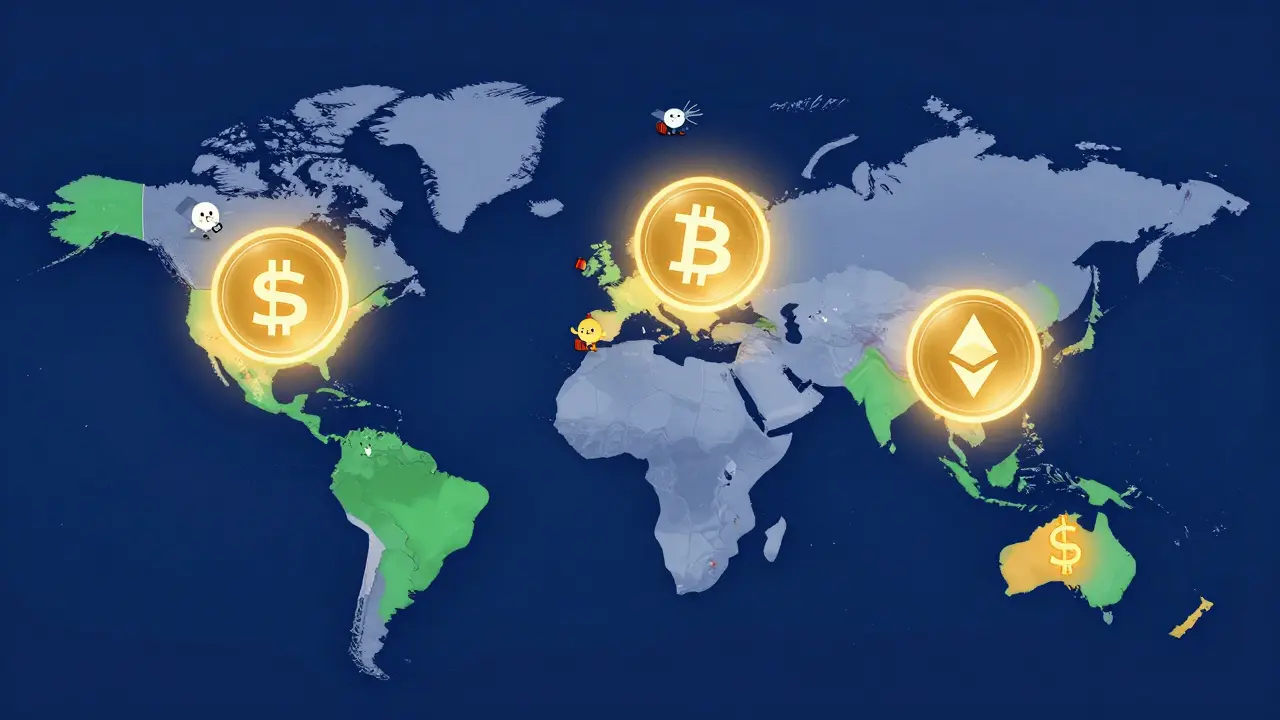
If your goal is a total wipeout of your tax bill, Dubai is the gold standard. In the UAE, there is currently no capital gains tax for individual residents. You don't have to worry about whether you're a "trader" or an "investor"-the gain is simply not taxed. However, you can't just visit for a week. To be a legal tax resident, you generally need to own property or spend at least 183 days a year there. This "economic substance" is what keeps you from getting flagged by your home country for tax evasion.
Then there is Portugal, which has become a sanctuary for the "crypto-nomad" crowd. For individuals, gains from crypto trading are often exempt from income tax and VAT. The catch? This applies to personal gains. If you run your trading as a business, the Portuguese government will want their cut. This is a crucial distinction: being a "hobbyist" investor vs. a "professional" trader can be the difference between 0% and 48% tax.
If you aren't looking to leave Europe but prefer a more stable, industrial environment, Germany offers a brilliant loophole for the patient. If you hold your coins for more than one year, the gains are typically tax-exempt for individuals. This creates a massive incentive to stop day-trading and start long-term investing. Just keep your records tight; the German authorities will want to see the exact date you acquired every single satoshi.
The Hidden Trap: Exit Taxes and "Tails"
Here is where most people mess up. They find a 0% tax paradise, move there, sell all their Bitcoin, and think they've won. Then they get a letter from their old government claiming they owe an "exit tax." An exit tax is essentially a final bill for all the unrealized gains you made while living in your home country, triggered the moment you leave.
For example, if you're a Canadian or an Australian, your home country might treat your departure as a "deemed disposition." This means the government pretends you sold everything the day you left and taxes you on that imaginary sale. To avoid this, you need to time your move perfectly. Some people sell a portion of their assets *before* moving to utilize lower tax brackets, while others move first and wait for the "tax tail" of their previous residency to expire.
And if you're an American? You're playing the game on "Hard Mode." The IRS taxes based on citizenship, not residency. You could live on a beach in the Maldives for 50 years, but the US will still want its cut of your global crypto gains. The only real way out for US citizens is renouncing citizenship-a permanent and drastic step that requires specialized legal counsel.
Setting Up Your New Life: A Step-by-Step Guide
You can't just claim you live somewhere; you have to prove it. Tax authorities are increasingly using "substance tests" to make sure you aren't just using a PO Box in Dubai. Here is how to actually execute the move:
- Portfolio Audit: Calculate your current unrealized gains. If you have $10 million in gains, paying $20k for a top-tier tax lawyer is a rounding error. Do not DIY this.
- Jurisdiction Selection: Choose based on your lifestyle. Do you want the EU's MiCA regulations and safety? Go for Portugal or Germany. Do you want absolute zero tax and luxury? Dubai is your spot.
- Establish Legal Residency: Buy a property or sign a long-term lease. Get your residency visa. Open a local bank account. The goal is to create a "paper trail" of your new life.
- The 183-Day Rule: Most countries use the 183-day mark to determine tax residency. Keep your passport stamps, flight tickets, and credit card statements to prove you actually spent the time there.
- Coordinate Your Filings: You will likely have to file taxes in two countries for the year you move. You'll need to use foreign tax credits to ensure you aren't paying the same tax twice on the same coin.
Tools for Staying Compliant
Manual spreadsheets are the fastest way to get audited. When you move across borders, your transaction history becomes a legal document. You need a system that can handle multiple currencies and jurisdictional rules. Tools like Koinly or CoinTracker are essential here. They allow you to generate reports specifically tailored to different countries' tax laws, which makes your accountant's life much easier (and your bill cheaper).
Remember, a crypto-to-crypto swap (like trading BTC for ETH) is a taxable event in many countries. If you're in a high-tax zone, swapping coins before you move could trigger a massive bill. Waiting until you've established residency in a 0% zone before doing your rebalancing is often the smartest play.
Can I just move my residency on paper without actually living there?
This is called a "paper residency" and it is incredibly risky. Modern tax authorities share information via the OECD's Common Reporting Standard (CRS). If you claim to live in Dubai but your credit card spend is all in London and your phone pings are in the UK, the UK government will argue you never actually left, and you'll be hit with back taxes, interest, and heavy penalties for evasion.
Does moving to Portugal mean I pay zero tax on all crypto?
Mostly, but there's a catch. The 0% exemption typically applies to individuals. If the tax authorities decide your trading volume and frequency make you a "professional trader" or a business, you could be subject to standard income tax rates. Always have a local lawyer classify your activity correctly before you start selling.
What is the "Foreign Income and Gains" (FIG) regime in the UK?
Introduced in April 2025, the FIG regime replaces the old remittance basis. It allows new residents to get a four-year exemption on income and gains from foreign assets. For crypto holders, this means if your assets are considered "foreign situs," you may not have to pay UK tax on them for the first few years of your residency.
How long does the whole relocation process take?
Expect a window of 12 to 18 months. This includes the time for legal consultation, securing a property, applying for visas, and strategically timing your asset sales to avoid exit taxes. Rushing this process often leads to costly legal mistakes.
Do I still have to report my crypto if it's in a 0% tax country?
Yes. Reporting and paying are two different things. Even in 0% jurisdictions, you may need to declare your holdings for AML (Anti-Money Laundering) and KYC (Know Your Customer) purposes. Failing to report can lead to frozen accounts or accusations of money laundering, even if no tax is actually owed.
Next Steps for Different Personas
The Day Trader: Focus on Dubai. Because your volume is high, any tax percentage will eat your profits. You need a jurisdiction that doesn't distinguish between investing and trading.
The Long-term HODLer: Look at Germany. If you're happy holding for a year, you get the benefit of a high-quality EU lifestyle and zero tax on your gains without needing to move to a desert.
The Digital Nomad: Portugal is your best bet. The combination of a welcoming crypto community, affordable cost of living, and friendly personal tax laws makes it the easiest transition for those who work remotely.
The US Citizen: Stop looking at residency and start looking at "Citizenship by Investment" or the legal process of renunciation. Until you sever the tie to the US, moving to a tax haven is mostly a lifestyle choice, not a tax strategy.

Comments
Findlay Duncan Lyon
The FIG regime in the UK is a game changer for new arrivals.
Benjamin Forg
classic trap just another way for the global elite to shuffle chairs on the titanic while the oecd monitors every single cent you move they probably already have the lists and this is just a honeypot to see who's actually trying to leave the system
Robert Mosolygo
The analysis here is superficial at best. It completely ignores the geopolitical instability of the UAE, which is essentially a corporate city-state with no real long-term legal protections for foreigners. Furthermore, the assumption that the IRS will simply stand by while you renounce citizenship is laughably naive. The US government is increasingly utilizing exit taxes and tracking digital footprints through the Common Reporting Standard to ensure that no one escapes the tax net. You are essentially suggesting that people walk directly into a surveillance trap under the guise of financial optimization. The systemic risk of being labeled a tax evader far outweighs the perceived benefit of a 0% rate in a jurisdiction that could change its laws on a whim tomorrow morning.
Matthew Morse
didnt realize people actually pay for lawyers to move to dubai lol just buy a place and vibe
Kathleen Bergin
Everyone knows that the 183-day rule is the only thing that actually matters here. If you aren't physically there, the whole thing is fake and you'll get caught anyway.
Candace Sherrard
It is fascinating to consider how the concept of nationality is becoming an obsolete tether in the digital age, almost as if we are transitioning into a global society where the only real borders are the ones created by tax codes and banking regulations. While the logistical hurdles of moving to Portugal or Germany seem daunting, the underlying desire is really about autonomy and the reclamation of one's own labor from entities that provide dwindling returns in exchange for our wealth. I wonder if the true value of these migrations isn't even the money saved, but the mental shift that occurs when you realize your existence isn't bound to the geography of your birth, allowing for a more fluid way of living that prioritizes personal freedom over institutional loyalty.
Paige Raulerson
Imagine actually thinking Germany is a "brilliant loophole" when the bureaucracy there is literally designed to make you want to give up on life. It's cute that some people think a 12-month hold is a strategic masterstroke.
Larry Yang
honestly the arivval of FIG is just basic tax arbitrage for those who can afford it and the rest of us just get the leftovers while the IRS plays games with the reporting dates. typical.
Greg Reynolds
Actually, the 12-month rule in Germany is far more restrictive than this post implies. You need to be extremely careful about how you document your trade history because any hint of commercial activity will invalidate the exemption immediately.
Sarah Fisher
I agree that the lifestyle aspect is just as important as the tax side. Moving for money is one thing, but finding a community that shares your values makes the transition much easier.
Guy Bianco
It is highly advisable to consult a certified public accountant before making such drastic life changes. 🌟 Proper documentation is the key to a stress-free transition. 🌟
praveen subbiah
My country is becoming a powerhouse and we will see more people returning home soon because the opportunities here are simply unmatched by any desert city!
Alex Wan
I am so excitid to see people taking control of there finances! It is truly an inspiratonal journey to move across the world for freedom!!
debashish sahu
Many people in my region are starting to look at these options but the cultural shift is always the hardest part of the move.