
You are staring at a chart that looks like it flatlined three years ago. The price is missing on some trackers, and the community chat is quieter than a library on a Sunday. That’s the reality for many niche decentralized exchanges (DEXs) today, including Leonicorn Swap. If you’re wondering whether this Binance Smart Chain platform is still alive or just a ghost in the machine, you’re asking the right question. Most users assume all DEXs are created equal, but liquidity depth and developer activity matter more than flashy names.
This review cuts through the noise. We aren’t here to hype you up with promises of moonshots. Instead, we’ll look at what Leonicorn Swap actually offers, where it falls short compared to giants like PancakeSwap, and who-if anyone-should bother connecting their wallet today. By the end, you’ll know if this platform deserves your gas fees or if your money is better parked elsewhere.
What Exactly Is Leonicorn Swap?
Leonicorn Swap is a decentralized exchange operating on the Binance Smart Chain (BSC). Unlike centralized exchanges like Coinbase or Binance.com, you keep custody of your keys. You trade directly from your wallet using smart contracts. The platform launched around 2021-2022, riding the wave of DeFi summer when everyone wanted lower fees than Ethereum could offer.
The core mechanic is an Automated Market Maker (AMM). Think of it as a giant pot of tokens. When you want to swap Token A for Token B, you don’t match with another person. You trade against the pool. The price adjusts automatically based on supply and demand within that pool. This model removes order books but introduces something called "slippage," which we’ll discuss later.
What sets it apart-or tries to-is its hybrid approach. It’s not just a swap interface; it integrates an NFT marketplace. The idea was to let users earn tokens through various activities, not just providing liquidity. However, in practice, this feature set feels dated by 2026 standards. Modern DEXs focus heavily on cross-chain bridges and Layer 2 scaling, while Leonicorn remains firmly rooted in the BSC ecosystem.
The Native Token: LEOS vs. LEONS Confusion
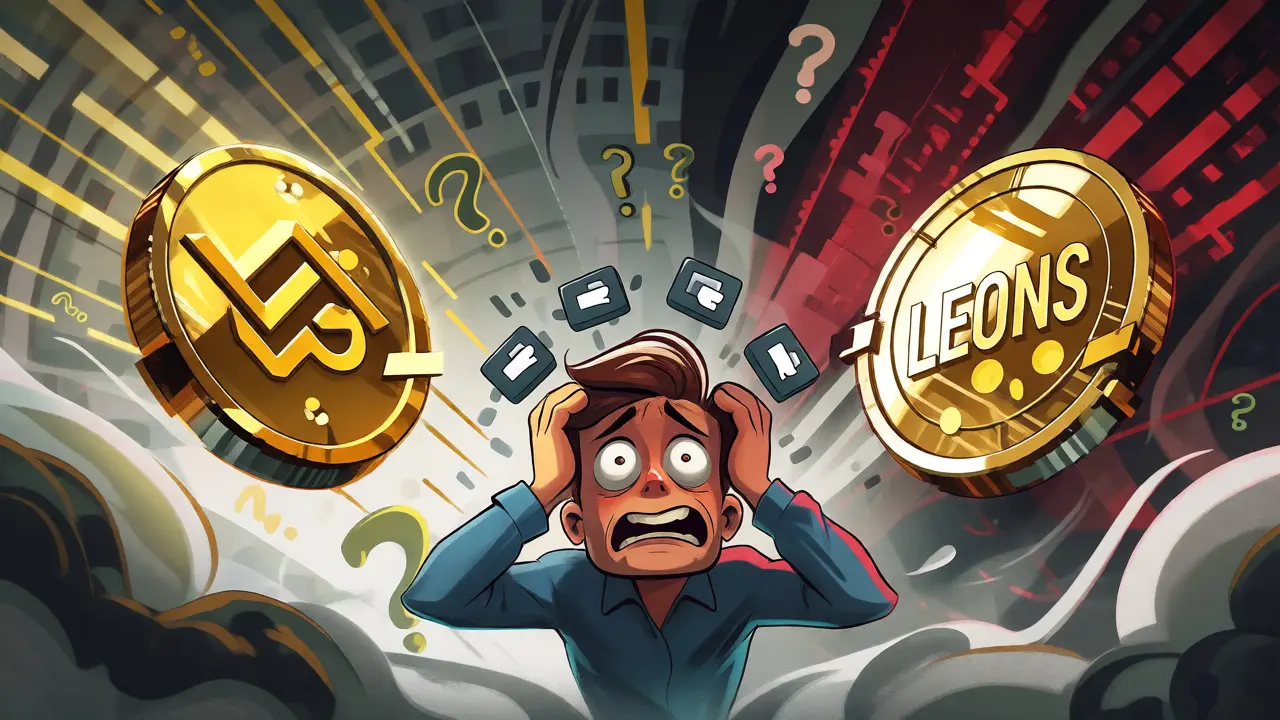
Here is where things get messy. If you try to buy the native token, you might see two different symbols: LEOS and LEONS. On CoinMarketCap and CryptoRank, it’s listed as LEOS. But Kriptomat lists it as LEONS. This isn’t just a typo; it reflects branding inconsistencies that plague smaller projects.
Why does this matter? Because confusion kills trust. When a project can’t keep its own ticker straight across major data aggregators, it raises red flags about operational discipline. Furthermore, the token’s performance has been lackluster. Recent data shows negative 24-hour price changes, hovering around -4.60% in some snapshots. More concerning is the "Price N/A" status on some platforms, suggesting low volume or potential delisting risks.
Do not confuse the token utility with the platform’s health. Holding LEOS gives you governance rights and fee discounts, but if the platform sees minimal traffic, those perks lose value. Always check the contract address before buying. Scammers love creating fake tokens with similar names during periods of uncertainty.
How It Stacks Up Against Competitors
To understand Leonicorn’s place, you have to look at the elephant in the room: PancakeSwap. As of recent quarters, PancakeSwap commanded over 60% of all DEX volume on Binance Smart Chain. Leonicorn Swap operates in the long tail, capturing a fraction of a percent.
| Feature | Leonicorn Swap | PancakeSwap | Biswap |
|---|---|---|---|
| Network | Binance Smart Chain | BSC, Ethereum, Solana, etc. | Binance Smart Chain |
| Token Symbol | LEOS / LEONS | CAKE | BSW |
| Avg. Trade Fee | ~$0.01 - $0.10 | ~$0.05 - $0.15 | ~$0.05 - $0.10 |
| Liquidity Depth | Low | Very High | Moderate |
| NFT Integration | Yes | Yes | No |
| Security Audits | Not Publicly Detailed | CertiK, PeckShield | PeckShield |
The table tells a clear story. Leonicorn wins on nothing except perhaps niche appeal. Its transaction fees are competitive because they rely on BSC’s inherent cheapness, not because of any unique protocol efficiency. PancakeSwap dominates due to sheer liquidity. Higher liquidity means less slippage. If you trade $1,000 worth of a obscure meme coin on Leonicorn, you might lose 2-3% just moving the price. On PancakeSwap, that same trade might cost you 0.1%.
Security and Trust: The Missing Pieces
In the world of DeFi, code is law. But who checks the law? For Leonicorn Swap, detailed public security audits are hard to find. Reputable firms like CertiK or PeckShield usually publish reports for established protocols. Their absence here is a significant risk factor. According to industry data, nearly 80% of DeFi exploits in recent years originated from unaudited or poorly audited code.
Does this mean it’s a scam? Not necessarily. Many small projects skip audits to save money. But it means you carry higher technical risk. If a bug exists in their smart contracts, there’s no third-party guarantee it was caught. Always start with small amounts if you decide to test the waters. Never send funds you can’t afford to lose into a protocol without verified audit trails.
Another concern is the founder’s background. Mofassair Hossain, identified as the CEO, has a strong marketing pedigree, having raised substantial capital for multiple projects. While marketing chops help visibility, they don’t guarantee technical robustness. In crypto, hype often outpaces engineering. Be wary of projects that talk big but show little on-chain activity.
User Experience and Community Health
Try searching for active user discussions. Compare Leonicorn’s Telegram or Discord presence to PancakeSwap’s 145,000+ members. The difference is stark. A quiet community often signals one of two things: either the product is so simple people don’t need to ask questions, or nobody is using it. Given the low trading volumes, the latter is more likely.
The interface itself is functional but basic. Connecting a wallet like MetaMask or Trust Wallet works smoothly. Swapping tokens is intuitive. But documentation is sparse. Beginners might struggle to find tutorials on how to provide liquidity or stake LP tokens. Advanced users won’t find deep analytics tools or API access comparable to larger competitors.
If you are a beginner, the learning curve is moderate. If you’ve used Uniswap or PancakeSwap, you’ll feel at home. If you are new to DeFi, the lack of guided tours or comprehensive FAQs might leave you frustrated. Support response times are unknown, but typically, smaller teams respond slower during market volatility.

Who Should Use Leonicorn Swap?
So, who is this actually for? It’s not for high-frequency traders or whales looking for deep liquidity. You will bleed money on slippage.
- Holders of Specific Low-Cap Tokens: If a token only lists on Leonicorn, you have no choice. Check if the listing is legitimate and not a honeypot.
- Speculators Seeking New Listings: Sometimes, early gems appear on smaller DEXs before migrating to bigger ones. Monitor new pools carefully.
- NFT Enthusiasts on BSC: If you specifically want to trade NFTs alongside tokens in one interface, this integration might appeal, though dedicated NFT marketplaces are usually superior.
Conversely, avoid Leonicorn if:
- You trade large volumes (>$1,000 per transaction).
- You prioritize security above all else (stick to audited giants).
- You want reliable customer support.
Final Verdict: Alive but Struggling
As of September 2026, Leonicorn Swap appears to be a zombie project-technically online, but barely breathing. The inconsistent token naming, lack of prominent audits, and negligible market share paint a picture of a platform struggling to retain relevance in a consolidating market. The broader trend in DeFi favors consolidation. Users flock to platforms with the deepest liquidity and strongest brand recognition.
Is it safe? Moderately, assuming the smart contracts haven’t changed since launch. Is it profitable? Unlikely, unless you catch a specific micro-cap gem before it dies. The opportunity cost of parking capital here versus a stable yield farm on a major DEX is high.
If you must use it, treat it as experimental. Keep positions small. Monitor the on-chain data daily. If volume drops to zero, exit immediately. Don’t fall in love with the UI; follow the liquidity.
Is Leonicorn Swap safe to use?
It carries moderate risk. While it operates on the secure Binance Smart Chain, the lack of widely publicized third-party security audits (like CertiK) increases vulnerability to smart contract bugs. Always verify contract addresses and start with small trades.
What is the difference between LEOS and LEONS?
This is a branding inconsistency. LEOS is the primary ticker found on most aggregators like CoinMarketCap, while LEONS appears on some other platforms. They refer to the same native token of the Leonicorn Swap ecosystem. Always double-check the contract address to ensure you are buying the correct asset.
Can I buy Leonicorn Swap tokens on Binance?
Direct spot trading of LEOS on the main Binance exchange is limited or non-existent depending on current listings. However, you can often purchase it via the Binance Web3 Wallet or through decentralized exchanges connected to the Binance Smart Chain network.
Why is the liquidity so low?
Liquidity follows volume. As a smaller competitor to dominant players like PancakeSwap, Leonicorn Swap attracts fewer traders. Fewer traders mean fewer incentives for liquidity providers to lock their funds, creating a cycle of low depth and high slippage.
Does Leonicorn Swap have an NFT marketplace?
Yes, it integrates an NFT marketplace allowing users to mint and trade non-fungible tokens directly within the platform. However, the selection and volume are significantly lower than specialized NFT platforms like OpenSea or Binance NFT.

Write a comment