

Imagine sending money to a friend, but the bank can’t see who sent it, how much was sent, or where it went. That’s the promise of privacy coins, cryptocurrencies designed to keep financial transactions anonymous. For years, projects like Monero and Zcash operated in a regulatory gray area. But as of mid-2026, that gray area has turned stark white under the glare of global scrutiny. Governments are no longer just watching; they are acting. The era of unchecked anonymity is ending, replaced by a complex web of compliance rules that threaten to reshape-or even erase-the very purpose these coins were built for.
The shift hasn't been subtle. Since early 2024, we’ve seen a 34% surge in regulatory actions targeting anonymous cryptocurrencies across 97 countries. By 2025, privacy coins accounted for 11.4% of all cryptocurrency transactions globally, handling over $250 billion in volume. Yet, this growth came with a heavy price tag: delistings from major exchanges, stricter reporting requirements, and a fundamental clash between cryptographic privacy and government transparency demands. If you hold or trade Monero (XMR) or Zcash (ZEC), understanding these new rules isn't just legal advice-it's survival strategy.
The Technical Divide: Mandatory vs. Optional Privacy
To understand why regulators treat these coins differently, you first need to look at how they work. Not all privacy coins are created equal. The core difference lies in whether privacy is a choice or a requirement.
Monero (XMR) takes a hardline approach. Privacy is mandatory. Every single transaction uses ring signatures to hide the sender, stealth addresses to obscure the recipient, and RingCT (Ring Confidential Transactions) to mask the amount. You cannot accidentally send a public transaction on Monero. It is baked into the protocol. This makes Monero incredibly effective for privacy but also makes it a prime target for regulators who view total anonymity as a threat to financial oversight.
In contrast, Zcash (ZEC) offers optional privacy. Using zk-SNARKs (Zero-Knowledge Succinct Non-Interactive Arguments of Knowledge), Zcash allows users to choose between "shielded" (private) and "transparent" (public) transactions. This flexibility was originally marketed as a feature, allowing businesses to comply with audits while individuals kept their data private. However, in the current regulatory climate, this optionality is a double-edged sword. Regulators prefer the transparent pool, which provides them with visibility, while critics argue that the small number of shielded transactions actually makes those users *more* identifiable because they stand out against the background of public transactions.
| Feature | Monero (XMR) | Zcash (ZEC) |
|---|---|---|
| Privacy Model | Mandatory (Default) | Optional (User Choice) |
| Cryptographic Tech | Ring Signatures, Stealth Addresses, RingCT | zk-SNARKs |
| Regulatory Friction | High (Total Anonymity) | Medium (Compliance Pathways Available) |
| Exchange Listings (2026) | Limited (Delisted from many major venues) | Moderate (Available on compliant exchanges) |
The Regulatory Hammer: FATF and MiCA
Two major frameworks have driven the recent crackdown: the Financial Action Task Force (FATF) and the European Union’s Markets in Crypto-Assets (MiCA) regulation.
The FATF Travel Rule, extended and tightened in 2025, requires Virtual Asset Service Providers (VASPs) to share sender and receiver information for transactions above certain thresholds. This directly impacts 57% of privacy coin transactions. For Monero, this is nearly impossible to implement without breaking its core functionality. Exchanges cannot provide the required data if the blockchain itself hides it. Consequently, many platforms simply removed Monero listings to avoid massive fines.
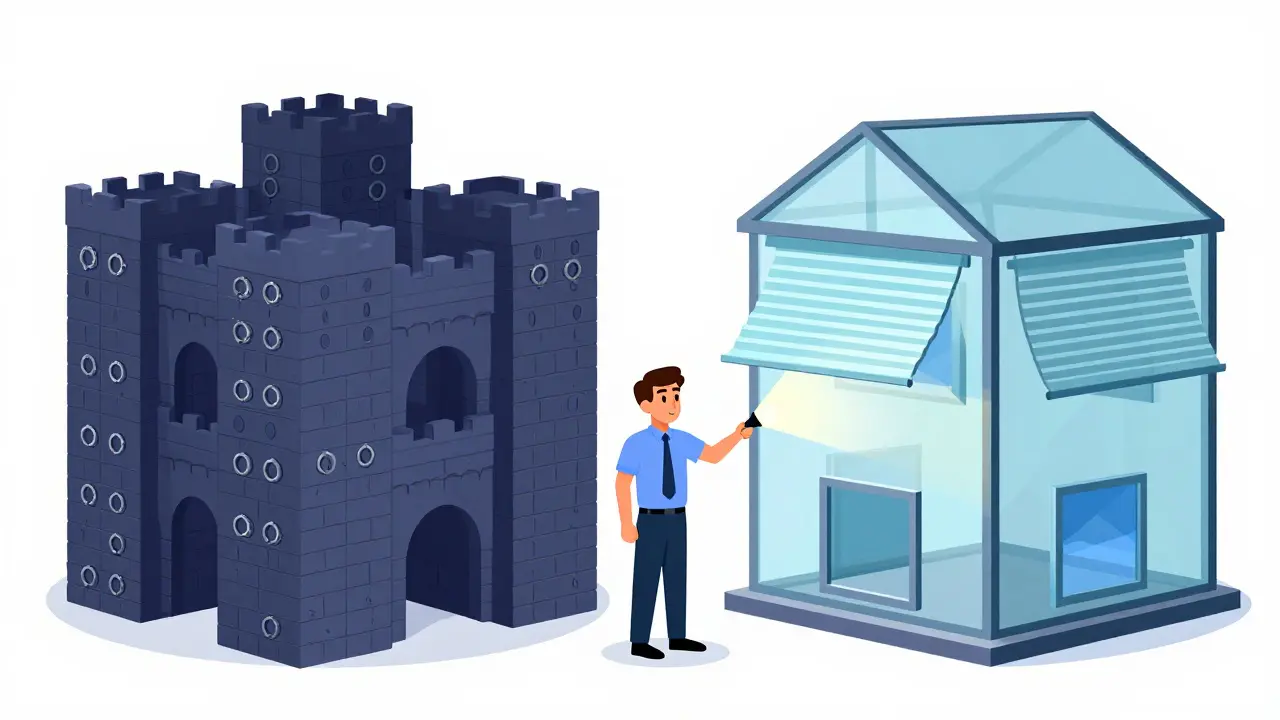
In Europe, MiCA has introduced strict transparency requirements for crypto-asset issuers and service providers. Under MiCA, privacy coins face significant hurdles. The regulation effectively reduced privacy coin offerings by 22% in the EU region. While MiCA doesn't explicitly ban privacy coins, it imposes such high compliance costs and reporting standards that most legitimate businesses find it unviable to support them. This has created a chilling effect, pushing development and trading activity away from regulated European markets.
Market Impact: Delistings and the Rise of P2P
The immediate result of these regulations? Mass delistings. In 2025, major exchanges like Binance and Kraken pulled the plug on several privacy coin pairs in specific jurisdictions to maintain their banking relationships and licenses. This didn't kill demand; it just moved it underground.
We’ve seen a 19% growth in peer-to-peer (P2P) platform usage in economically unstable regions following these delistings. Users who previously bought Monero or Zcash on centralized exchanges now turn to decentralized swaps, local meetups, or niche P2P networks. This shift increases risk for buyers, who must vet counterparties manually, but it preserves access to privacy tools for those willing to navigate a less convenient market.
Interestingly, this regulatory pressure has also impacted user behavior within the coins themselves. Zcash experienced an 8% decline in active addresses after strict KYC measures were implemented on key exchange partners. Many users opted for transparent transactions to avoid friction, inadvertently weakening the network's overall privacy set. When fewer people use the private features, the remaining private transactions become easier to analyze statistically-a phenomenon known as "anonymity set reduction."

Safe Havens: Where Can You Still Trade?
Not all regions are closing the door. Some jurisdictions are positioning themselves as innovation-friendly sandboxes for privacy technology.
Singapore and Switzerland have emerged as notable exceptions. They offer regulated environments where privacy coin development and trading can occur under controlled conditions. These countries allow for experimentation with zero-knowledge proofs and selective disclosure mechanisms, aiming to balance privacy rights with anti-money laundering (AML) obligations. If you are a developer or institutional investor looking for regulatory clarity, these markets are currently the most viable options.
However, for the average retail trader in the US, UK, or EU, the path remains difficult. Traditional financial centers continue to implement stricter restrictions, often designating privacy coins as "Anonymity-Enhanced Cryptocurrencies" (AECs). This label subjects holders to additional reporting protocols, making it harder to move funds in and out of fiat currencies without triggering alerts.
The Future: Bridging Privacy and Compliance
Is there a middle ground? Technologists believe so. The next wave of innovation focuses on "selective disclosure" and hybrid solutions. Imagine a system where you can prove you are not involved in illegal activity without revealing your identity or transaction details. Zero-knowledge proofs are evolving to enable exactly this-allowing AML compliance checks without compromising full anonymity.
Zcash developers are actively working on these implementations, though they face significant computational challenges. These advanced proofs require more processing power than traditional models, raising questions about scalability and energy efficiency. Meanwhile, Monero’s community remains divided on whether to adopt any form of traceability, fearing that any compromise will undermine the coin’s value proposition.
As we move through 2026, the trend is clear: pure anonymity is becoming a liability in the eyes of regulators. Success for privacy coins will depend on their ability to integrate with existing financial oversight frameworks while preserving enough privacy to remain useful. Until then, traders must stay informed, adapt to shifting exchange policies, and be prepared for a landscape where convenience comes at the cost of visibility.
Are Monero and Zcash banned in 2026?
They are not universally banned, but they are heavily restricted. Major exchanges in the EU, US, and UK have delisted them or limited trading due to FATF and MiCA regulations. However, they remain accessible via peer-to-peer networks and in jurisdictions like Singapore and Switzerland that offer regulatory sandboxes.
Why is Monero targeted more than Zcash?
Monero enforces mandatory privacy on every transaction, making it impossible for exchanges to provide the sender/receiver data required by the FATF Travel Rule. Zcash offers optional privacy, allowing users to make transparent transactions that satisfy some compliance requirements, giving it a slight edge in regulatory acceptance.
What is the FATF Travel Rule impact on privacy coins?
The FATF Travel Rule requires exchanges to share customer information for transactions. Since privacy coins hide this data by design, exchanges cannot comply. This has led to widespread delistings of privacy coins from regulated platforms to avoid penalties, impacting 57% of privacy coin transaction volumes.
Can I still buy Monero legally?
Yes, buying Monero is not inherently illegal in most countries. However, selling it for fiat currency through regulated banks or exchanges is increasingly difficult due to AML/KYC restrictions. Most users now acquire it through P2P platforms or decentralized exchanges, which carry higher counterparty risks.
How does MiCA affect privacy coins in Europe?
MiCA imposes strict transparency and reporting requirements on crypto asset service providers. Because privacy coins conflict with these transparency goals, many European exchanges have stopped offering them. This has reduced privacy coin availability in the EU by 22% since implementation.

Comments
Carl Hanzel
Privacy is a luxury for criminals and tax evaders. The rest of us can handle the surveillance state because we have nothing to hide. These coins are just tools for money laundering and you know it.
John Curry
The philosophical tension here is fascinating. We are witnessing the death of the concept of private property in the digital age. If the state can see every transaction, then ownership is merely a permission granted by the government. It is a dramatic shift from the libertarian ideals that birthed crypto. We must ask ourselves if convenience is worth the total erosion of individual autonomy.
Fiona Ellis
I find this whole situation incredibly distressing 😟. Why does the government need to know how much I spend on coffee? It feels like they are invading my personal space 🏠. The lack of privacy is suffocating and I really wish people would understand the basic human right to anonymity 🙄.
Nicole Woessner
in my culture we value community trust over blind compliance so seeing these regulations feel very alien but i get why governments want control its just sad that technology meant to empower is being crushed
Jon Milton
You people are missing the point entirely! This isn't about crime, it's about freedom. The fact that exchanges are delisting Monero proves they are scared of the truth. We need to fight back against this bureaucratic nonsense or we will be living in a cashless dystopia where every purchase is tracked by some algorithm. Stop whining and start using P2P networks!
Sajjad Ghorbani Moghaddam
Hey folks, just wanted to chime in with a bit of perspective. While the regulatory pressure is real, it's also creating opportunities for decentralized solutions. If you're new to this, don't panic. Just learn how to use local swap meets or trusted peer networks. It's a bit more work, but it keeps the spirit of privacy alive. Let me know if you need tips on getting started safely.
Rebecca Shoniker
Let’s be intellectually honest here; the cryptographic integrity of Monero is precisely why it is being targeted. The ring signatures and stealth addresses are not 'features' for the average consumer; they are obfuscation mechanisms designed to evade the FATF Travel Rule. To suggest otherwise is to ignore the fundamental purpose of AML/KYC frameworks. The market is correcting itself by removing non-compliant assets. It is simply efficient regulation at work.
Jay Sharma
they want to kill privacy because they are planning to launch cbdc next year think about it the travel rule is just a test run for total control soon your bank account will freeze if you say the wrong word wake up sheeple
Maurice Flynn
I guess we just roll with the punches. It's interesting to watch the dance between tech and law. Maybe optional privacy like Zcash is the way forward after all. No need to get too worked up about it though. Life goes on.
nancy jarecki
It is quite amusing watching the plebeians mourn the loss of their illicit tools. The zk-SNARKs implementation in Zcash was always a half-measure anyway. True financial sovereignty requires institutional backing, not some anonymous ledger hidden in the dark net. You are all trading in irrelevance.
Robert Hundley
Come on guys let's keep the energy positive! 💪 Even if the big exchanges drop them we still have each other. Community is key! Let's support the devs who are working on selective disclosure. We got this! 🔥
Melissa L
i dont really get all the tech stuff but it sounds scary that they might ban it completly i just want to send money to my cousin without fees so this is bad news i guess
Rob Morton
What is the long-term implication for the anonymity set if everyone moves to transparent transactions? It seems like a self-fulfilling prophecy where privacy becomes less secure because fewer people use it. Has anyone looked into the statistical models for this yet?
Routh Middaugh
We should probably consider both sides of the argument here; on one hand, privacy is essential for civil liberties, but on the other hand, unregulated finance does facilitate criminal activity. Perhaps a middle ground exists where we can maintain some level of confidentiality without enabling illicit behavior. It is a complex issue that requires nuanced discussion rather than polarized shouting matches.
Ryan Peters
This is exactly what happens when you let foreign ideologies infect our financial system. We need American banks to stick to American rules. Privacy coins are just a vehicle for globalists to move dirty money around. Ban them all and put the regulators out of a job. Simple as that.
ross harris
The regulatory hammer is swinging like a drunk pendulum in a clock shop made of glass. They think they can crush the hydra of privacy with paper laws. But the code is the constitution now. Watch them squirm when the zero-knowledge proofs become too computationally expensive for their bloated bureaucracies to parse. It is a beautiful disaster unfolding in real-time.
Carl Belgrave
Stop acting like victims. If you can't comply with the law, you don't deserve to participate in the economy. These privacy coins are a threat to national security and economic stability. We need strict enforcement and no exceptions. Anyone hiding their finances is an enemy of the state.