
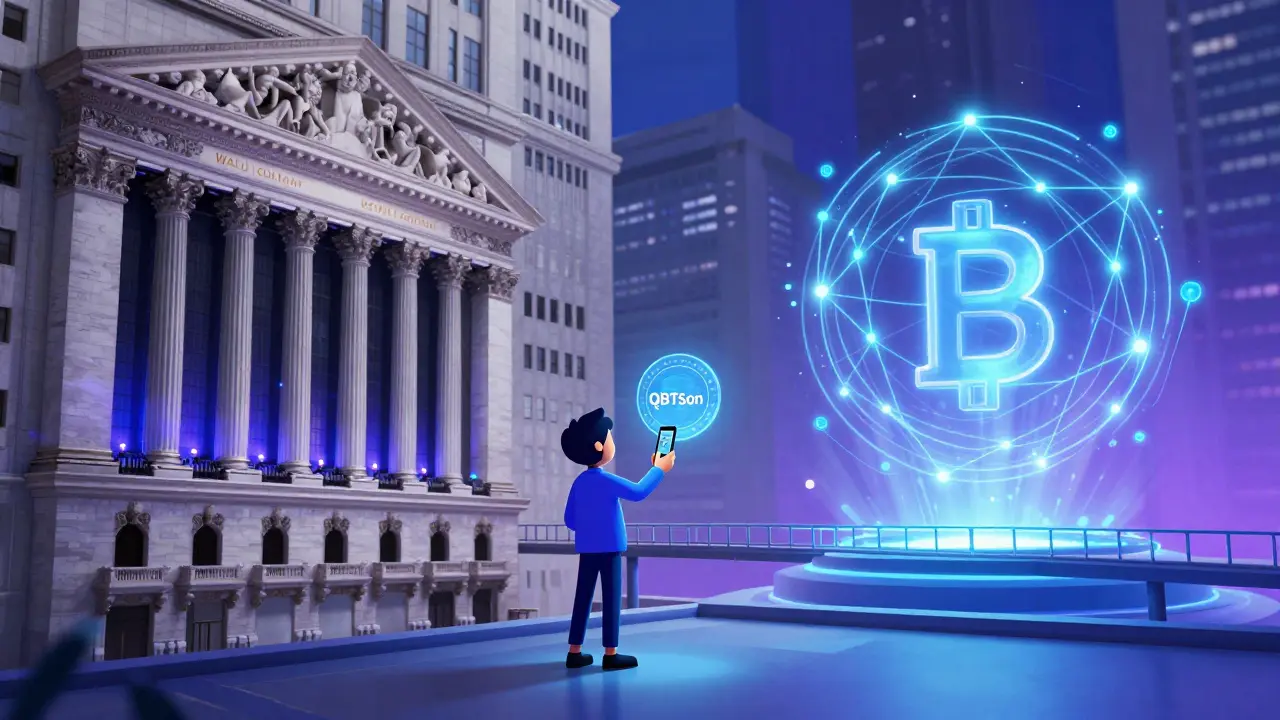
You want exposure to D-Wave Quantum, a leader in quantum computing, but traditional brokerage hours and high fees get in the way. Enter QBTSon, a blockchain-based token that tracks D-Wave Quantum Inc. (NYSE:QBTS) stock created by Ondo Finance. It lets you trade this specific tech stock 24/7 using cryptocurrency.
This isn't just another meme coin or speculative altcoin. QBTSon belongs to a growing class of assets called Real World Assets (RWAs). It bridges the gap between Wall Street and Web3. If you are outside the U.S., or if you hate waiting for market open bells, this token might be exactly what you need. But it comes with rules, risks, and quirks you must understand before buying.
How QBTSon Works: The Bridge Between Crypto and Stocks
At its core, QBTSon is an ERC-20 token. This means it lives on the Ethereum blockchain and can also be found on BNB Chain. When you buy QBTSon, you aren't buying actual shares of D-Wave directly in your wallet. Instead, you hold a digital receipt that represents ownership of those shares held by a regulated custodian.
Ondo Finance acts as the issuer. They handle the heavy lifting: buying the real stock, storing it safely, and issuing the corresponding tokens to you. The system is built under U.S. Securities Act Regulation S. This legal framework allows non-U.S. investors to participate in U.S. markets without violating securities laws. The jurisdiction is based in the British Virgin Islands, adding another layer of regulatory structure.
Here is the practical flow:
- You complete KYC (Know Your Customer) verification on Ondo’s platform.
- You send stablecoins like USDC to Ondo’s designated wallet.
- Ondo mints QBTSon tokens and sends them to your wallet within about 15 minutes.
- You can trade these tokens on supported exchanges or hold them.
- To cash out, you redeem tokens for actual D-Wave shares or stablecoins, which takes T+2 settlement time.
The magic here is accessibility. You don’t need a U.S. bank account or a traditional brokerage. You just need a crypto wallet and internet access. For someone in Auckland, London, or Singapore, this removes massive friction from investing in American tech giants.
Key Specs and Market Data for QBTSon
Let’s look at the hard numbers. As of late May 2026, QBTSon has established itself as a niche but active asset. Understanding these metrics helps you gauge liquidity and risk.
| Metric | Value | Note |
|---|---|---|
| Ticker | QBTSon | Trades on multiple platforms |
| Underlying Asset | D-Wave Quantum Inc. (QBTS) | Nasdaq-listed quantum computing firm |
| Networks | Ethereum, BNB Chain | ERC-20 standard |
| Circulating Supply | ~28,578 tokens | Limited supply drives scarcity |
| Market Cap | $760k - $940k | Varies by exchange data source |
| All-Time High | $46.68 | Reached Oct 15, 2025 |
| All-Time Low | $14.91 | Reached Sep 4, 2025 |
| Fees | 0.5% - 1.0% | For minting and redeeming |
Notice the price discrepancies across platforms. CoinMarketCap might show $24.83, while Binance lists it at $32.87. This fragmentation is common in early-stage RWA tokens. It creates arbitrage opportunities for traders who can move funds quickly, but it adds confusion for casual holders. Always check the price on the specific exchange where you plan to trade.
Who Should Use QBTSon? Pros and Cons
Not every investor needs a tokenized stock. QBTSon solves specific problems for specific people. Let’s break down who benefits and who should stay away.
The Pros:
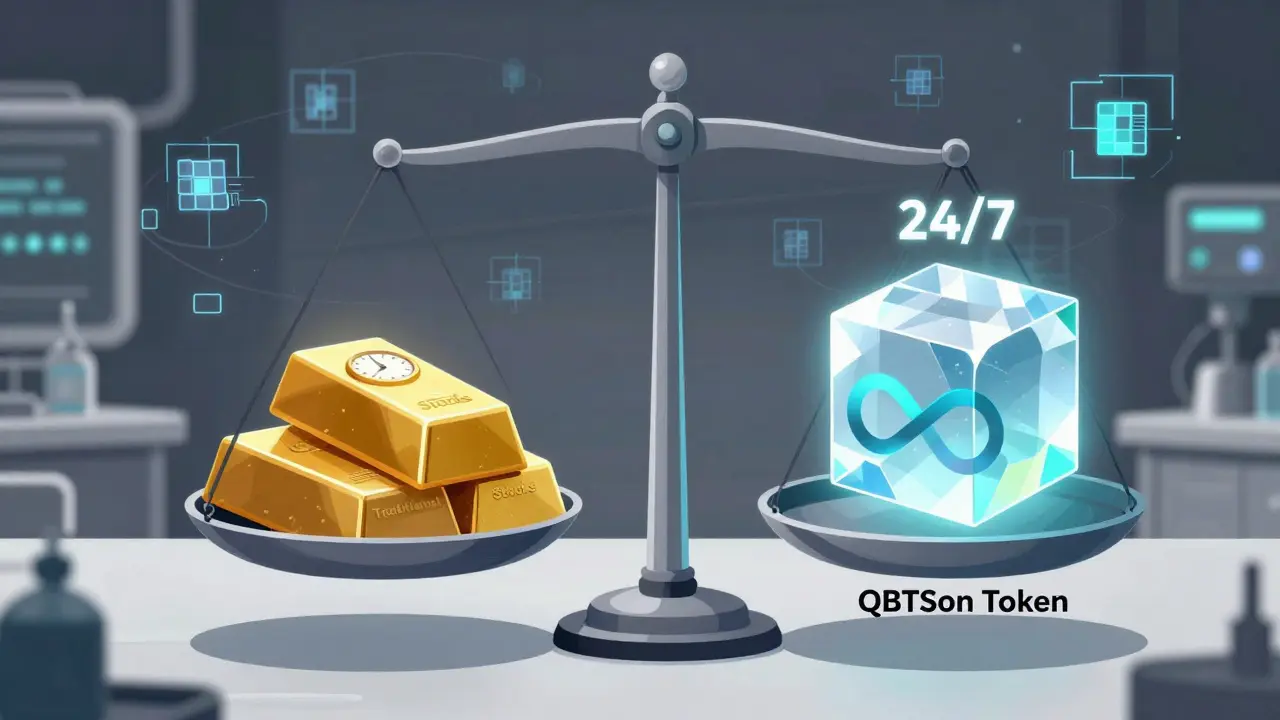
- 24/7 Trading: Traditional stock markets close at 4 PM EST. Crypto never sleeps. If D-Wave news breaks at 2 AM in New Zealand, you can react immediately.
- Low Entry Barrier: Minimum investments start around $25. Compare this to some institutional alternatives requiring $10,000+. This democratizes access to high-growth tech stocks.
- Dividend Reinvestment: QBTSon automatically reinvests any dividends from D-Wave into more tokens, compounding your growth without manual effort.
- Speed: Minting takes minutes. Redemption takes days. While not instant, it’s faster than many traditional ADR (American Depositary Receipt) conversions.
The Cons:
- Liquidity Risks: With a market cap under $1 million, large trades can slip prices significantly. You might struggle to sell a huge position quickly without impacting the price.
- Regulatory Limits: U.S. residents generally cannot use QBTSon due to Reg S exemptions. This limits the buyer pool and potential demand.
- Custodial Risk: You rely on Ondo Finance and their custodians to hold the actual shares. If they fail, your token becomes worthless. This is counter to the "not your keys, not your coins" ethos of pure crypto.
- Price Discrepancies: As noted, prices vary wildly between aggregators and exchanges. You need to do extra homework to ensure you’re getting a fair deal.

QBTSon vs. Traditional Investing and Competitors
Why choose QBTSon over just buying D-Wave stock on Robinhood or E*TRADE? Or why not use other tokenization platforms?
Traditional brokers charge commissions, have limited trading hours, and often require complex setup for international users. QBTSon charges a flat 0.5-1.0% fee for minting/redeeming, which is competitive against ADR fees that can hit 1-3%. More importantly, it integrates seamlessly with your existing DeFi stack. You can potentially use QBTSon as collateral in future lending protocols, something impossible with traditional shares.
Compared to competitors like Matrixdock or ADDX, Ondo Finance currently holds about 12.7% of the tokenized equity market share. They are behind Matrixdock (34.2%) but offer a more user-friendly interface for retail investors. Matrixdock often targets larger institutional clients with higher minimums. QBTSon sits in the sweet spot for mid-tier retail investors who want exposure without jumping through hoops.
Risks and Regulatory Reality Check
We need to talk about the elephant in the room: regulation. The SEC has been clear that tokens like QBTSon are securities. Commissioner Caroline Crenshaw warned in late 2025 that such structures could create "regulatory arbitrage." While Ondo operates legally under Reg S, the landscape is shifting.
If regulations tighten further, non-U.S. access could become harder, or fees could rise to cover compliance costs. Additionally, the underlying asset is D-Wave Quantum. Quantum computing is a volatile, high-risk sector. D-Wave’s stock price swings dramatically based on technical breakthroughs or setbacks. QBTSon mirrors this volatility perfectly. Don’t expect stability; expect movement.
There is also smart contract risk. Although Ondo’s contracts are audited, no code is immune to bugs. Always verify contract addresses yourself. The Ethereum address starts with `0x3807...` and the BNB Chain address with `0x8c7...`. Never trust links from random DMs.
How to Buy and Redeem QBTSon: A Step-by-Step Guide
Ready to dive in? Here is how you actually execute this.
- Choose a Platform: Currently, QBTSon is available on Ondo Global Exchange, Binance, and select others like Crypto.com. Check CoinGecko for the most up-to-date list.
- Create and Verify Account: Sign up on Ondo Finance. Complete KYC. Expect this to take 1-3 business days. Have your ID and proof of address ready.
- Fund Your Wallet: Transfer USDC (on Ethereum or BNB Chain) to your Ondo wallet. Ensure you use the correct network to avoid lost funds.
- Mint Tokens: Navigate to the QBTSon section. Enter the amount of USDC you want to convert. Review the 0.5-1.0% fee. Confirm the transaction.
- Receive QBTSon: Within 15 minutes, the tokens appear in your wallet. You can now hold them or transfer them to a supported exchange for trading.
- Redeem (When Ready): To exit, initiate a redemption request. Note the T+2 settlement cycle. You will receive either stablecoins back or actual D-Wave shares sent to your linked brokerage account.
User feedback suggests the process is smooth for experienced crypto users, taking about 2-3 hours to learn. However, new users often stumble on the KYC step or network selection. Take your time there.
Future Outlook: Is QBTSon Worth It?
The broader trend is undeniable. Messari reports that tokenized real-world assets reached $11.3 billion in TVL by late 2025. Standard Chartered predicts this segment could capture 5-7% of global equity trading by 2030. If that happens, QBTSon’s market cap could grow tenfold.
However, skeptics like the Bank for International Settlements warn that fragmented regulation might keep these tokens niche. Galaxy Digital rates QBTSon a "B-" for moderate viability. It’s not a guaranteed moonshot. It’s a utility tool for accessing specific equities.
Your decision should hinge on two factors: Do you believe in D-Wave Quantum’s long-term potential? And do you value the convenience of 24/7 crypto trading over traditional brokerage simplicity? If yes, QBTSon offers a unique bridge. If you seek passive, low-effort investing, stick to ETFs. QBTSon requires active management and awareness of crypto-specific risks.
Can US citizens buy QBTSon?
Generally, no. QBTSon operates under U.S. Securities Act Regulation S, which restricts sales to non-U.S. persons. Attempting to bypass this may violate securities laws.
What happens if D-Wave goes bankrupt?
If D-Wave Quantum Inc. goes bankrupt, the underlying shares lose value. Consequently, QBTSon would likely drop to near zero, mirroring the fate of the physical stock.
Is QBTSon safe from hacks?
While Ondo uses regulated custodians and audited smart contracts, no digital asset is 100% hack-proof. Risks include smart contract vulnerabilities and custodial failure. Diversify your holdings.
How does QBTSon compare to holding actual D-Wave shares?
QBTSon offers 24/7 trading and easier access for non-US investors but carries higher fees and custodial risk. Actual shares offer direct voting rights and simpler regulatory clarity for US residents.
Where can I find the official QBTSon contract address?
Always verify via Ondo Finance’s official documentation or reputable trackers like CoinMarketCap. The Ethereum address begins with 0x3807 and BNB Chain with 0x8c7. Never trust unsolicited links.

Write a comment