
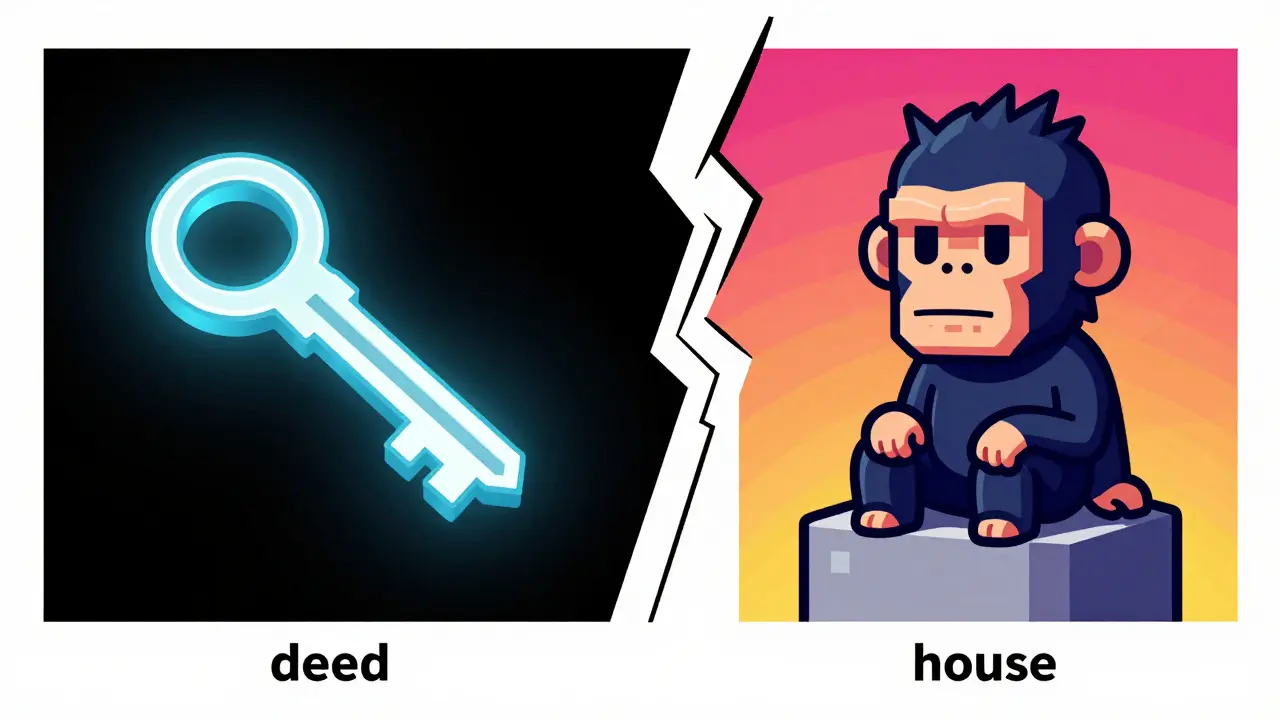
You bought that digital artwork. You paid the gas fees. The token is sitting in your wallet, glowing with a sense of prestige. But here is the uncomfortable truth that most marketplaces hide in their terms of service: owning an NFT is not the same as owning the art itself.
This distinction isn't just legal jargon; it’s the single biggest source of confusion and financial loss in the crypto art world. When you buy a physical painting from a gallery, you usually get the canvas, the frame, and often the right to display it publicly or even reproduce images of it for personal use. In the digital realm, that automatic transfer of rights rarely happens. Instead, you are buying a receipt-a cryptographic proof of ownership for a specific token on a blockchain-while the artist often retains full control over the image attached to it.
The Token vs. The Image: Understanding the Split
To understand why this split exists, we need to look at how blockchain technology handles data. An NFT is essentially a unique identifier stored on a distributed ledger. It points to a file, but it does not contain the file itself. Think of it like buying a deed to a house. The deed proves you own the property, but the deed isn’t the house. More importantly, the deed doesn’t give you the right to tear down the neighbor’s fence or change the architectural plans if those rights weren’t explicitly transferred.
In the context of digital art, the "house" is the JPEG, GIF, or MP4 file. The "deed" is the NFT. Legal experts consistently point out that purchasing the NFT grants you ownership of the token, not the intellectual property (IP) rights associated with the underlying media. This means that unless the project’s smart contract or terms of service say otherwise, the creator still holds the copyright. They can decide who prints the image on t-shirts, who uses it in advertisements, and whether you can modify it at all.
This separation creates a fascinating legal paradox. You might be the sole owner of a rare CryptoPunk or Bored Ape, yet you cannot legally sell merchandise featuring that character without permission from the project creators. This was a major point of contention in early NFT projects, where buyers assumed they had full commercial rights simply because they held the token.
Three Types of Licensing Models
Not all NFT projects are created equal when it comes to rights. Over the last few years, the industry has settled into three distinct licensing models. Knowing which one applies to your purchase is crucial for determining what you can actually do with your asset.
- No Rights / Silence: Many older or less sophisticated projects are silent on IP rights. In these cases, the default legal assumption is that the creator retains all copyrights. As a buyer, you likely only have an implied license to display the image for personal use. Printing it on a mug for your kitchen? Probably fine. Selling mugs online? That’s copyright infringement.
- Broad Personal and Commercial Rights: Some projects, like the famous Bored Ape Yacht Club (BAYC), explicitly grant holders the right to use their specific NFT image for commercial purposes. This includes creating derivative works, selling merchandise, and sublicensing rights. These collections often command higher floor prices because the utility extends beyond speculation.
- CC0 (Creative Commons Zero): Projects like CryptoPunks initially adopted a CC0 license, effectively waiving all copyright claims and placing the work in the public domain. This meant anyone could use the images, but it also meant no one owned them exclusively. Later, some projects shifted back to granting rights only to token holders to maintain scarcity and value.
| Model | Commercial Use Allowed? | Derivative Works? | Risk Level for Buyers |
|---|---|---|---|
| No Rights / Silence | No | No | High (Legal ambiguity) |
| Broad Rights (e.g., BAYC) | Yes | Yes | Low (Clear terms) |
| CC0 (Public Domain) | Yes (for everyone) | Yes (for everyone) | Medium (Loss of exclusivity) |
The Jack Dorsey Tweet Case Study
Nothing illustrates the gap between perceived value and actual rights better than the sale of Jack Dorsey’s first tweet. In 2021, the tweet was sold as an NFT for $2.9 million. The buyer didn’t just pay for a piece of history; they paid for the cultural significance of the moment. However, the platform made it clear: the purchase was an "autographed certificate" of the tweet. It did not transfer the copyright.
This means the buyer couldn’t print that tweet on billboards, license it for a movie, or create a line of apparel featuring the text without asking Twitter (now X) or Dorsey for permission. The value was entirely speculative and social, not functional. If you’re buying an NFT expecting to monetize the content, this case serves as a stark warning. Always read the fine print. If the terms don’t explicitly state you have commercial rights, assume you don’t.
Why Creators Retain Copyright
From the artist’s perspective, retaining copyright is a rational business decision. If every buyer of an NFT could mass-produce t-shirts featuring the artwork, the original collector’s exclusive status would be diluted. By keeping the IP, artists can control brand integrity and potentially license the imagery themselves for broader campaigns.
However, this model requires trust. Buyers must rely on the project team to honor any verbal promises or community guidelines that aren’t codified in the smart contract. This is where disputes arise. There have been numerous cases where collectors felt misled by marketing materials that suggested broad usage rights, only to find out later that the terms of service restricted them to personal display only.
How to Verify Your Rights Before Buying
Don’t guess. Do your due diligence. Here is a practical checklist to ensure you know exactly what you’re getting into:
- Check the Project Website: Look for a "Terms of Service" or "Licensing" page. Reputable projects will clearly outline whether holders get commercial rights.
- Read the Smart Contract: If you’re technically inclined, or if you’re spending significant money, consider having a lawyer review the smart contract code. It may contain clauses about IP transfer that aren’t visible on the marketplace listing.
- Look for Explicit Grants: Phrases like "perpetual, irrevocable, worldwide license" are good signs. Vague language like "you own the token" is not enough.
- Community Discord: Sometimes, rights are granted through community agreements rather than legal documents. Check the official Discord server for announcements regarding merchandising and commercial use.
The Future of NFT Ownership
The landscape is evolving. Regulatory bodies like the U.S. Copyright Office and international organizations like WIPO are beginning to address the complexities of digital asset ownership. We are seeing a trend toward more standardized licensing agreements, with many new projects adopting explicit commercial rights to attract serious collectors and brands.
As the market matures, the distinction between owning the token and owning the IP will become clearer. For now, however, the burden of understanding falls on the buyer. Treat every NFT purchase like a software license agreement. Read the terms, understand the limitations, and never assume that possession equals permission.
Does buying an NFT give me the copyright to the artwork?
No, not automatically. In most cases, buying an NFT only gives you ownership of the token on the blockchain. The copyright to the underlying digital artwork usually remains with the creator unless explicitly transferred in writing via a license agreement or smart contract clause.
Can I sell merchandise featuring my NFT?
Only if the project’s terms of service grant you commercial rights. Projects like Bored Ape Yacht Club allow this, but many others do not. Always check the specific licensing terms of the collection before producing or selling any derivative products.
What is a CC0 license in NFTs?
CC0 stands for Creative Commons Zero. It means the creator has waived all copyright and related rights to the work, placing it in the public domain. Anyone can use, modify, and distribute the artwork, including those who do not own the NFT. This reduces exclusivity but increases accessibility.
Is it illegal to screenshot an NFT and post it on social media?
Generally, no. Most jurisdictions allow for "fair use" or personal display rights. Posting an image of your NFT on social media to show off your collection is typically considered acceptable personal use, provided you are not using it for commercial gain or implying endorsement by the artist.
How do I know if an NFT project grants commercial rights?
You must review the project’s Terms of Service, website documentation, or smart contract code. Look for explicit statements granting "commercial use," "derivative works," or "licensing rights." If the terms are silent or vague, assume you do not have commercial rights.

Write a comment