
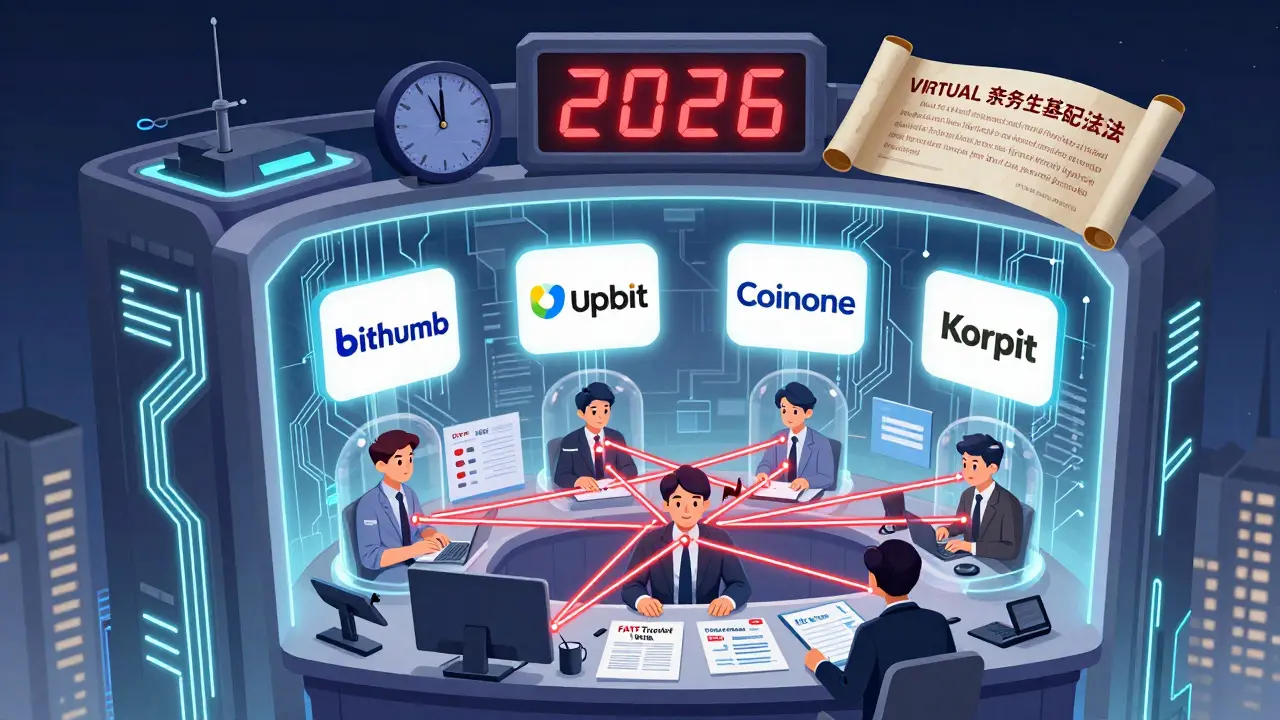
South Korea doesn’t just allow cryptocurrency trading - it controls it. Unlike countries where crypto exists in a legal gray zone, South Korea’s Financial Services Commission (FSC) has built one of the most detailed, enforced, and institution-ready crypto frameworks in Asia. If you’re trading, investing, or even just holding crypto in Korea, you’re operating inside a system that demands proof of identity, security certifications, and full transparency. And as of 2026, that system is changing - fast.
How Crypto Became Legal - and Strictly Regulated
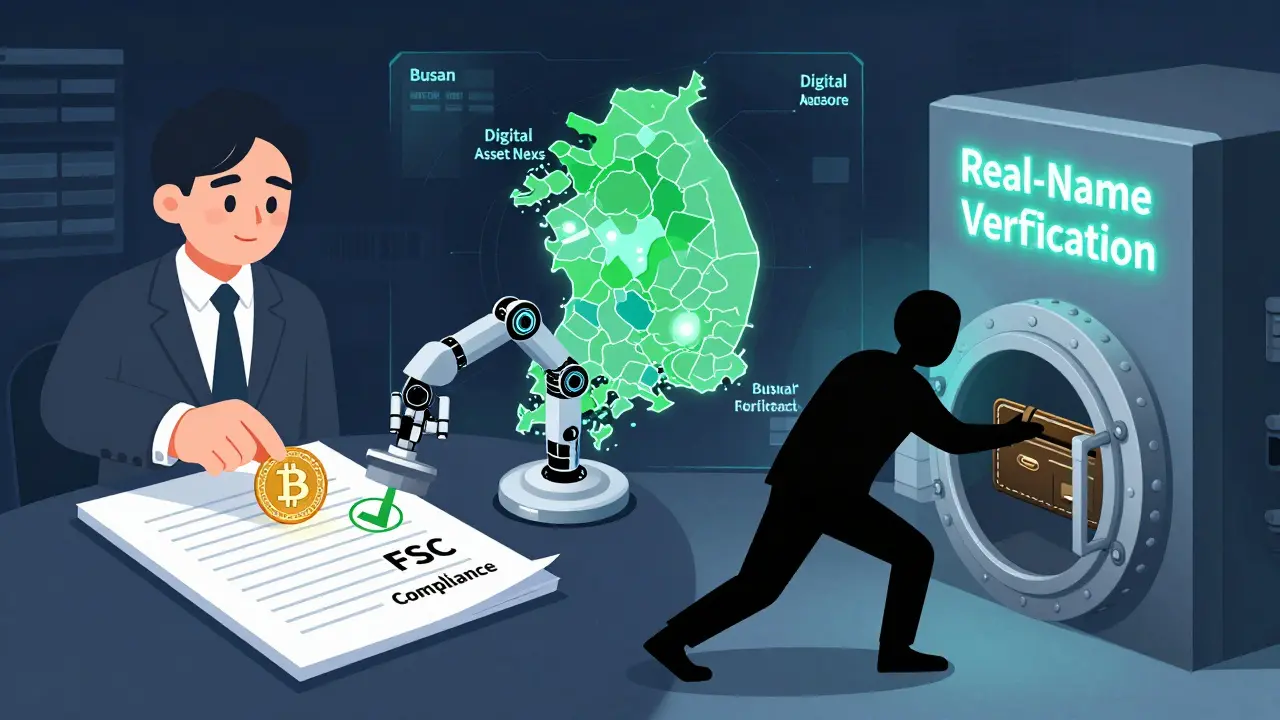
Crypto wasn’t always legal in South Korea. Back in 2017, the government banned ICOs and shut down unregulated exchanges. For years, trading happened in the shadows. But by 2020, the FSC flipped the script. Instead of banning crypto, they decided to regulate it - hard. The big move? Requiring every exchange to use real-name bank accounts. You can’t just deposit crypto into a Korean exchange unless your bank account is linked to your real ID. No aliases. No anonymous wallets. No workarounds. If you’re buying Bitcoin on Upbit or selling Ethereum on Bithumb, the FSC knows exactly who you are - and which bank you use. This wasn’t just about tracking criminals. It was about building trust. By forcing exchanges to tie every transaction to a real person, the FSC made it nearly impossible for money launderers to slip through. It also gave ordinary users confidence that the platforms they used were legitimate.The Four Big Exchanges - and Everyone Else
When the rules first rolled out, only four exchanges had the resources to comply: Bithumb, Upbit, Coinone, and Korbit. These weren’t just the biggest - they were the only ones approved by the FSC to operate under the new rules. Today, every crypto exchange operating in South Korea must meet the same standard. That means even small players have to:- Verify every user with government-issued ID and bank account
- Get certified by the Korea Internet Security Agency (KISA) for ISMS compliance
- Report suspicious transactions to the Korean Financial Intelligence Unit (KoFIU)
- Follow the FATF Travel Rule: share sender and receiver info for any transaction over KRW 1 million (about $750 USD)
The FATF Travel Rule - And Why It Matters
The FATF Travel Rule isn’t unique to Korea. But Korea’s version is among the strictest in the world. When you send $750 or more in crypto from one exchange to another - even if it’s to your own wallet on a different platform - the sending exchange must share your name, account number, and the recipient’s details. The receiving exchange must verify it. This isn’t optional. It’s automated. And it’s logged. Why? Because the FSC doesn’t just want to stop money laundering. They want to make crypto traceable like bank transfers. That means if someone uses crypto to pay for illegal goods, the trail leads straight back to a real person with a Korean ID. This has made Korea one of the few countries where crypto exchanges can prove they’re not being used for crime. It’s also why global institutions are starting to take notice.The 2025 Revolution: Spot Crypto ETFs and Corporate Crypto
The biggest shift didn’t come from cracking down. It came from opening up. In early 2025, the FSC announced two game-changing moves:- Spot crypto ETFs - for the first time, Koreans can invest in Bitcoin and Ethereum through regulated exchange-traded funds. These aren’t futures. They’re actual crypto held in secure custody. Pensions, mutual funds, and retail investors can now buy them through regular brokerage accounts. The Korea Exchange started listing the first ETFs in late 2025.
- Corporate crypto holdings - since 2017, Korean companies couldn’t hold crypto on their balance sheets. That changed in 2025. Now, businesses can open KYC-verified accounts and hold digital assets - but only up to a set limit. A tech startup can now keep 5% of its treasury in Bitcoin. A manufacturing firm can use crypto for cross-border payments. It’s not free-for-all. It’s controlled.
NFTs and DeFi - Where the Rules Get Murky
Not all digital assets are treated the same. NFTs? If your NFT is just a digital art piece - like a profile picture or collectible - the FSC doesn’t care. But if it’s sold as an investment, promises future returns, or acts like a security token, it’s treated as a virtual asset. That means it’s subject to the same rules as Bitcoin: KYC, reporting, and compliance. DeFi? That’s the next frontier. The FSC hasn’t banned it. But they’re watching. Platforms that offer lending, staking, or yield farming must now register as VASPs if they’re based in Korea. If they’re offshore but serve Korean users, they’re still required to comply - or risk being blocked. The FSC’s stance is clear: innovation is fine. But not if it bypasses investor protection.Taxes - For Now, Nothing
Here’s one thing that still surprises people: there’s no capital gains tax on crypto in South Korea as of 2026. The government had planned to introduce a 20% tax on crypto profits starting in 2025. But in late 2024, they delayed it - indefinitely. Why? Because they’re waiting for the Virtual Asset Basic Law to pass. They don’t want to tax crypto until the rules are settled. When the tax does come, it will likely allow losses to offset gains within the same year. That means if you lost $10,000 trading altcoins but made $15,000 on Bitcoin, you’d only pay tax on $5,000. For now, though? Profit from crypto trading is tax-free. That’s a major incentive for retail investors.Regional Hubs: Busan, Jeju, and the Future
South Korea isn’t just regulating crypto from Seoul. It’s experimenting with regional hubs. The Busan Digital Asset Nexus is the most ambitious. It’s a special zone where companies can test Security Token Offerings (STOs) under relaxed but monitored rules. Foreign investors can participate. Startups can issue tokens tied to real assets - real estate, equipment, even carbon credits. Jeju Island and Incheon are watching closely. If Busan succeeds, they’ll launch their own zones. This isn’t just about crypto. It’s about turning South Korea into a global digital asset hub - with rules that work.
Why This Matters Outside Korea
Most countries struggle to balance crypto innovation with consumer protection. The U.S. is fragmented. The EU is slow. China banned it outright. South Korea did something different. They didn’t wait. They built a system that’s:- Transparent
- Enforceable
- Institution-ready
What’s Next? The Virtual Asset Basic Law
The big one is coming. The Virtual Asset Basic Law is scheduled to be finalized by September 2026. It will be South Korea’s first comprehensive crypto law - replacing patchwork rules with a single legal framework. It will define:- What counts as a virtual asset
- Who needs a license
- How investor protection works
- How DeFi and NFTs are treated
- What penalties apply for violations
Final Take: Crypto in Korea Is Not a Wild West - It’s a Controlled Lab
South Korea didn’t ban crypto. It didn’t ignore it. It didn’t half-measure it. It took the most volatile, unpredictable asset class on the planet - and turned it into something predictable, regulated, and institutional. If you’re trading crypto in Korea, you’re not gambling. You’re participating in a system that demands accountability. And that’s why, in 2026, Korea is one of the few places in the world where you can feel confident that your crypto isn’t just legal - it’s protected.Is crypto legal in South Korea?
Yes, crypto is fully legal in South Korea, but only when traded through FSC-licensed exchanges. The government banned anonymous trading and ICOs in 2017, but since 2020, crypto has operated under a strict regulatory framework that requires real-name verification, security certifications, and transaction reporting.
Which crypto exchanges are allowed in South Korea?
Only exchanges that meet FSC’s full compliance requirements are allowed to operate. As of 2026, the major licensed exchanges are Bithumb, Upbit, Coinone, and Korbit. All other platforms - even if based overseas - must comply with Korean rules if they serve Korean users, or risk being blocked.
Do I have to pay tax on crypto gains in South Korea?
As of 2026, there is no capital gains tax on cryptocurrency profits in South Korea. The government postponed its planned 20% tax on crypto gains until after the Virtual Asset Basic Law is passed. When it returns, losses may be used to offset gains within the same tax year.
Can Korean companies hold Bitcoin or other crypto?
Yes. Since early 2025, Korean corporations can hold crypto on their balance sheets through FSC-approved exchanges. They must use KYC-verified accounts and stay within exposure limits set by regulators. This change allows companies to use crypto for treasury management, cross-border payments, and asset diversification.
What is the FATF Travel Rule in South Korea?
South Korea enforces the FATF Travel Rule at a threshold of KRW 1 million (about $750 USD). Any crypto transfer above this amount requires the sending exchange to share the sender’s and receiver’s full names, account numbers, and wallet addresses. The receiving exchange must verify the information. This applies to all transactions between exchanges and wallets.
Are NFTs regulated in South Korea?
NFTs are regulated only if they function as investment vehicles or payment tools. Collectible NFTs - like digital art or profile pictures - are generally exempt. But if an NFT promises royalties, profit-sharing, or represents ownership in an asset, it’s treated as a virtual asset and must comply with FSC’s KYC, reporting, and licensing rules.
Can I buy a crypto ETF in South Korea?
Yes. Starting in late 2025, South Korea launched its first spot cryptocurrency ETFs on the Korea Exchange. These ETFs track diversified crypto indices and are available through licensed brokers. They allow retail and institutional investors to gain exposure to Bitcoin and Ethereum without holding the actual assets, with full transparency and auditability required.
What is the Virtual Asset Basic Law?
The Virtual Asset Basic Law is South Korea’s upcoming comprehensive crypto law, expected to be finalized by September 2026. It will replace fragmented regulations with a single legal framework defining virtual assets, licensing requirements, investor protections, DeFi rules, and penalties for violations. It’s designed to position Korea as a global leader in regulated digital asset markets.

Write a comment