
Form 8938: What It Is, Who Needs It, and How Crypto Fits In
When the IRS asks you to file Form 8938, a tax form used to report foreign financial assets exceeding certain thresholds. Also known as Statement of Specified Foreign Financial Assets, it’s not optional if you hold crypto outside the U.S. and meet the value limits. This isn’t about your local exchange account—it’s about wallets, exchanges, or custody services based in other countries. If you’ve ever sent Bitcoin to a foreign exchange, stored ETH in a non-U.S. wallet, or used a DeFi protocol hosted overseas, you could be in scope.
Form 8938 is closely tied to FBAR, the Report of Foreign Bank and Financial Accounts, filed separately with the Treasury. Many people confuse the two. FBAR kicks in at $10,000 in total foreign account value across all accounts in a year. Form 8938 has higher thresholds: $50,000 for single filers living in the U.S., or $200,000 at year-end. But here’s the catch: crypto counts. The IRS treats digital assets like property, and if they’re held on a foreign platform, they’re foreign financial assets. That means your Binance account in Malta, your Kraken wallet in Switzerland, or even a crypto staking pool based in Singapore could trigger reporting.
And it’s not just about holding. If you’ve traded crypto on a non-U.S. exchange, earned yield from a foreign DeFi protocol, or received a token airdrop from a project based abroad, those activities can create reporting obligations. You don’t need to report every small transaction, but if your total foreign crypto holdings cross the threshold at any point during the year, you must disclose them. The IRS started cracking down on crypto in 2020, and since then, penalties for missing Form 8938 have climbed—up to $10,000 for non-willful failures, and much more if they think you’re hiding something.
What you’ll find in this collection are real-world examples of how crypto intersects with U.S. tax law. You’ll see breakdowns of exchanges like BXTEN and WeDEX that operate outside U.S. oversight, stories of scams tied to offshore operations in Myanmar, and deep dives into how wrapped tokens like WBTC create custodial risk that could trigger reporting. You’ll also learn why platforms like Binance and KuCoin are blocked for Indian users—not just for regulation, but because they complicate IRS tracking. This isn’t theoretical. People are getting audited. People are paying fines. And most don’t even realize they were supposed to file Form 8938 until it’s too late.
Whether you’re holding crypto on a foreign exchange, using a non-U.S. wallet service, or just curious about how your digital assets fit into U.S. tax law, this page gives you the facts—no fluff, no jargon, just what you need to know to stay compliant.
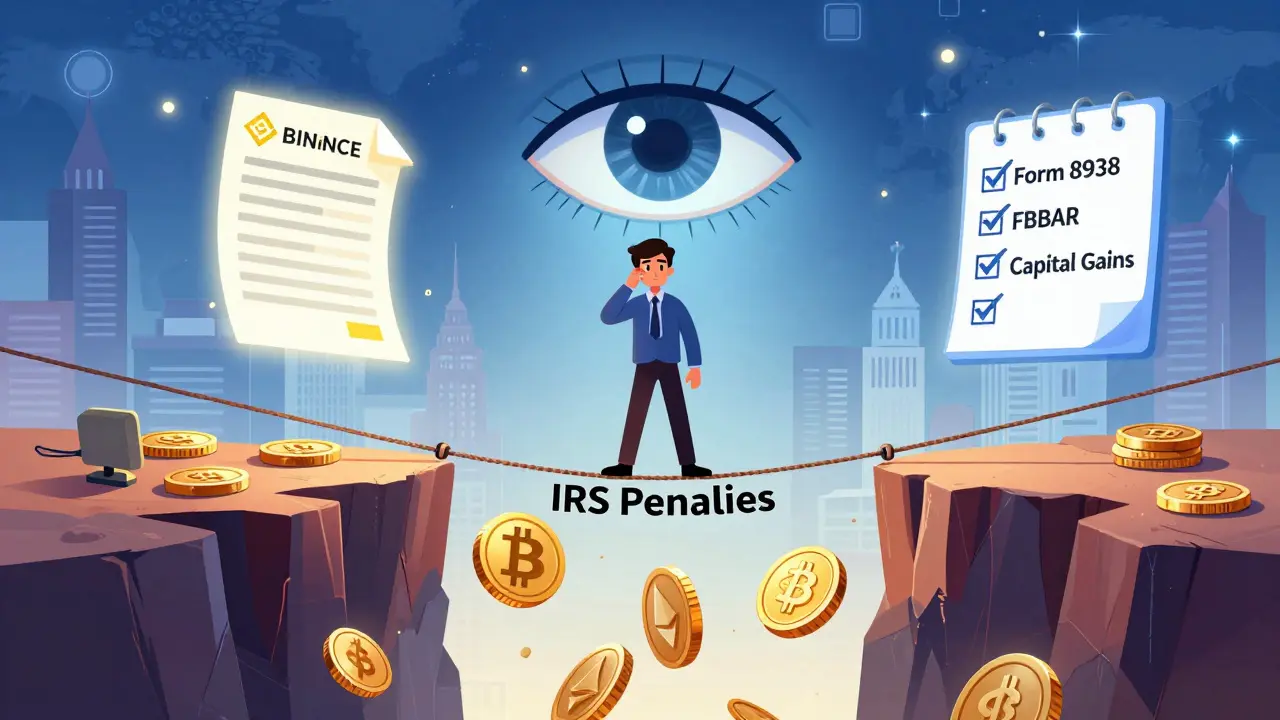
FATCA and Cryptocurrency Reporting for US Citizens: What You Must Know in 2025
U.S. citizens with foreign cryptocurrency must report holdings under FATCA if they exceed $50,000. FBAR rules are changing in 2025 - crypto may soon be included. Know your thresholds, how to value assets, and how to avoid penalties.
read more