
VASP Pakistan: What You Need to Know About Crypto Regulations and Compliance
When you hear VASP, a Virtual Asset Service Provider, is any company that offers services like exchanging, transferring, or storing digital assets like Bitcoin or Ethereum. Also known as crypto service provider, it’s the legal term used by governments to bring crypto businesses under financial oversight. In Pakistan, VASP rules aren’t just paperwork—they’re changing how people trade, invest, and even send money across borders.
Pakistan’s State Bank and FIU-IND started requiring VASPs to register in 2021, forcing exchanges to prove they know who their users are, block suspicious transactions, and report activity. This wasn’t just about control—it was about stopping money laundering and terrorism financing. But here’s the catch: many local users still rely on unregistered platforms because licensed ones often lack altcoins, have slow withdrawals, or charge high fees. Meanwhile, peer-to-peer trading on platforms like LocalBitcoins and Paxful exploded, turning Pakistan into one of the top P2P crypto markets in Asia—even after the official ban on banks processing crypto payments.
What does this mean for you? If you’re running a crypto business in Pakistan, you need to be a registered VASP—or risk fines and legal action. If you’re just trading, you’re not breaking the law by holding crypto, but using an unregistered exchange puts your funds at risk. There’s no safety net. No deposit insurance. No way to dispute a hack. And if the government cracks down harder in 2025, as expected, your access to global markets could vanish overnight.
Related entities like FIU-IND, Pakistan’s Financial Intelligence Unit that monitors crypto transactions for illegal activity, and crypto tax compliance, the requirement to report gains even if no formal tax law exists yet are now part of daily crypto life here. Even though Pakistan doesn’t have a clear crypto tax code, the tax authority has started demanding records from high-volume traders. And with over 10 million crypto users in the country, regulators aren’t ignoring this anymore.
You’ll find posts below that dig into real cases: how Pakistani traders bypass restrictions, which exchanges are actually licensed, why some tokens get flagged as high-risk, and how VASP rules in Pakistan compare to India or Nigeria. These aren’t theoretical guides—they’re reports from people who’ve been blocked, frozen, or had their accounts shut down. If you’re trying to navigate crypto in Pakistan, you need to know what’s real, what’s risky, and what’s just hype.
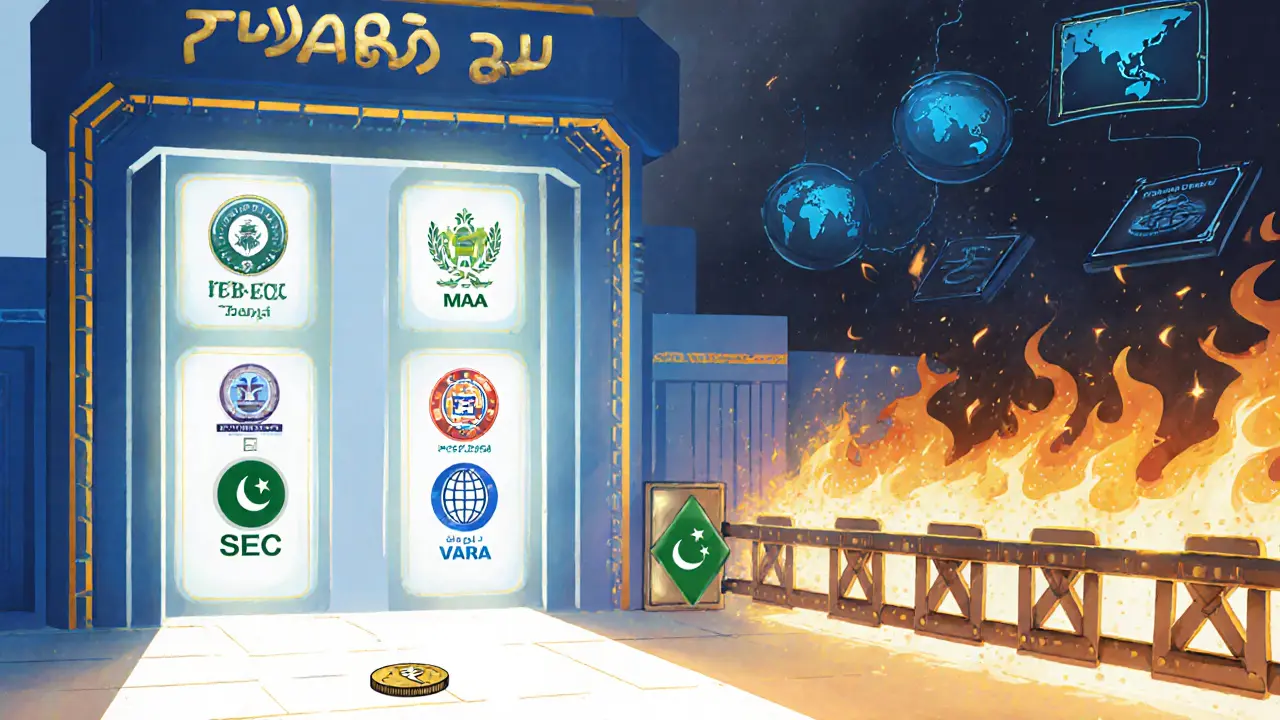
Pakistani Crypto Exchange Licensing Requirements and Process in 2025
Pakistan's new PVARA licensing system in 2025 lets only globally regulated crypto exchanges operate legally. Learn the strict requirements, compliance rules, and the big contradiction with the central bank.
read more