
The landscape for cryptocurrency in Russia is not a simple list of banned websites. It is a shifting minefield of international sanctions, domestic regulatory crackdowns, and state-controlled loopholes. If you are looking for a clear answer on what is illegal to use or access from within the Russian Federation as of May 2026, the reality is more complex than just blocking IP addresses. The government does not ban all crypto; it bans specific behaviors-primarily sanctions evasion-and targets platforms that facilitate them.
Understanding which exchanges are effectively "banned" requires distinguishing between platforms blocked by Roskomnadzor (the federal internet regulator), those sanctioned by the US Treasury’s OFAC (which makes using them legally risky for anyone globally), and those that have voluntarily exited or been forced out due to banking restrictions. This guide breaks down the current status of major players like Garantex, Grinex, and BestChange, and explains how ordinary users navigate this restricted environment.
The Sanctioned Platforms: Garantex and Grinex
The most prominent names associated with "banned" crypto exchanges in Russia are actually victims of international law enforcement rather than direct domestic bans by Moscow. However, their status creates significant legal and operational risks for users.
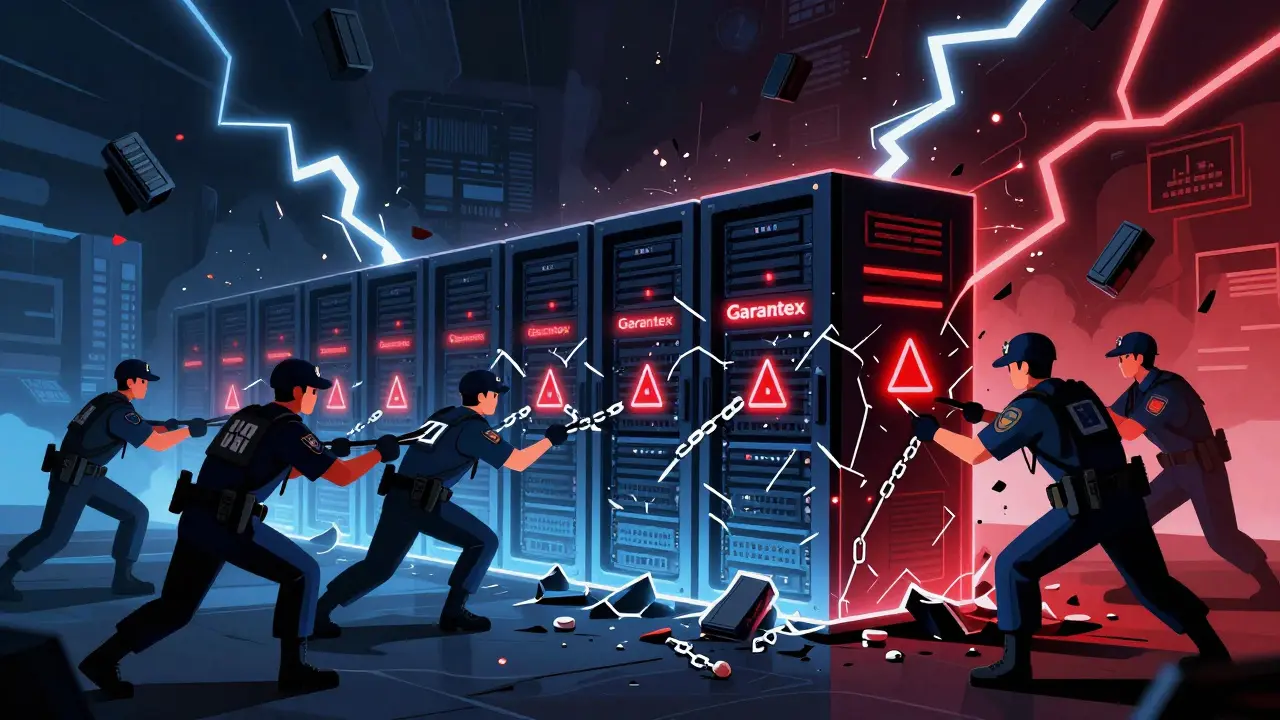
Garantex is a cryptocurrency exchange platform that was designated under US sanctions for facilitating sanctions evasion. Since 2022, Garantex has been under heavy scrutiny. In March 2025, the situation escalated dramatically when the U.S. Secret Service, working with German and Finnish authorities, seized its web domain and froze over $26 million in cryptocurrency assets. By spring 2025, Garantex’s formal operations were effectively ended. However, intelligence suggests the network evolved into a decentralized money laundering structure operating across the UAE, Brazil, Kyrgyzstan, and other jurisdictions. For a user in Russia, accessing Garantex is not just technically difficult but carries severe legal liability due to its designation as a sanctions-evasion tool.
Grinex is a cryptocurrency exchange created by former Garantex employees to continue operations after the original platform faced enforcement actions. The Office of Foreign Assets Control (OFAC) explicitly designated Grinex as part of the sanctions targeting crypto exchanges used for sanctions evasion. After the March 2025 disruption of Garantex, many customers and funds moved to Grinex. The Department of Justice has unsealed indictments against key figures, including Aleksandr Mira Serda and Aleksej Besciokov, offering rewards up to $5 million for information leading to arrests. Using Grinex is considered high-risk because it is directly linked to sanctioned entities and ongoing criminal investigations.
| Platform | Status (May 2026) | Primary Risk | Enforcement Action |
|---|---|---|---|
| Garantex | Operations ceased/formally ended | US Sanctions (OFAC) | Domain seizure, $26M frozen (March 2025) |
| Grinex | Active but sanctioned | US Sanctions (OFAC), Criminal Indictments | Executive arrests/rewards offered |
| Exved | Active (Payment Service) | Linked to Garantex founders | Under monitoring |
The Case of BestChange: From Ban to Compliance
Not all restrictions result in permanent bans. BestChange is a major cryptocurrency aggregation platform that experienced a temporary ban before being unblocked in 2025. For years, BestChange operated in a gray area, allowing users to find peer-to-peer (P2P) offers for rubles and other currencies. The Central Bank of Russia pressured the platform to remove ruble-based foreign currency exchange information and restrict listings for certain international currencies, including the Kazakhstani tenge.
In 2025, after substantial regulatory adjustments and collaboration with legal experts, Roskomnadzor officially removed BestChange from its restricted sites list. This case demonstrates that the Russian government prefers compliance over prohibition. If an exchange agrees to filter out transactions that look like sanctions evasion or unauthorized capital flight, it can remain accessible. BestChange now operates under strict guidelines, removing features that conflict with the Central Bank’s anti-money laundering (AML) directives.
International Exchanges: De Facto Restrictions
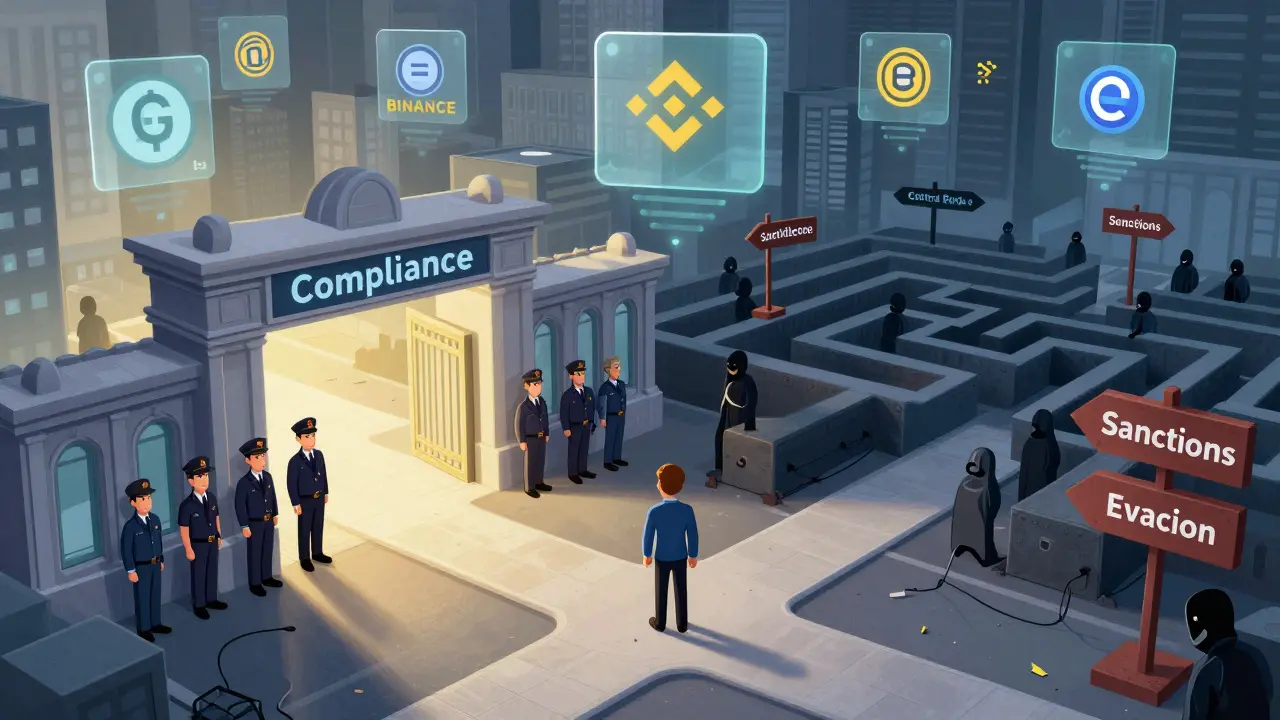
Major global exchanges such as Binance, Coinbase, and Kraken are not explicitly "banned" by Russian law in the same way Garantex is sanctioned. However, they face de facto restrictions that make them unusable for most residents.
The primary barrier is banking integration. Russian financial institutions are prohibited from investing in cryptocurrencies and cannot process payments for most crypto transactions. This means you cannot easily deposit rubles via bank card to these platforms. Additionally, these exchanges comply with US and EU sanctions, meaning they block IP addresses from Russia and refuse service to users who identify as residing there. While Roskomnadzor does not actively block Binance’s website, the lack of payment rails and KYC (Know Your Customer) rejections render them inaccessible for practical trading.
Russia’s New Regulatory Framework: State-Controlled Crypto
The direction of Russian crypto policy shifted significantly in summer 2024 and continued into 2025. Legislation passed in July 2020 had legalized crypto transactions but banned their use for domestic payments. The new laws permit digital currency payments in international trade, creating specific loopholes for companies conducting foreign business.
On October 4, 2025, Deputy Finance Minister Ivan Chebeskov announced the development of dedicated national infrastructure for cryptocurrency activities. This experimental framework, developed with the Bank of Russia, aims to create a state-controlled ecosystem. The goal is not to eliminate crypto but to bring it under strict government oversight. This includes:
- Limited Access: Trading may be restricted to "especially qualified" investors meeting high financial thresholds.
- Enhanced Monitoring: Credit institutions must identify and report suspicious activities, particularly focusing on P2P transactions.
- Taxation: Improved information exchange between tax and financial authorities to track crypto-related income.
This approach mirrors trends seen in China’s digital yuan and the EU’s exploration of a digital euro. For the average citizen, this means fewer anonymous options and more reliance on licensed, compliant platforms that integrate with the state’s monitoring systems.
How Users Navigate the Restrictions
If you are in Russia and need to interact with cryptocurrency, the options are narrowing. The era of unrestricted P2P trading is ending. Here is what the current environment looks like for different user types:
- Compliant Platforms: Use exchanges that have adapted to local regulations, like the updated BestChange. These platforms will require stricter KYC verification and may limit transaction volumes.
- P2P Trading: Peer-to-peer trading remains popular but is under intense scrutiny. Banks are freezing accounts linked to suspicious crypto trades. Users must be extremely cautious about counterparty selection and transaction transparency.
- Avoid Sanctioned Entities: Do not use Garantex, Grinex, or any platform listed by OFAC. Even if they are accessible via VPN, using them exposes you to legal risks and potential asset freezes.
- International Trade: Companies engaged in import/export may utilize the new legal frameworks for digital currency payments, but this requires specialized licensing and compliance with the Bank of Russia’s methodological recommendations.
Future Outlook: Tightening Control
The trend is clear: Russia is moving toward a sovereign, state-monitored crypto ecosystem. The Bank of Russia continues to emphasize security and taxation over freedom. As the experimental infrastructure rolls out, expect more private exchanges to either leave the market or undergo rigorous licensing processes. The distinction between "banned" and "restricted" will blur, as non-compliant platforms will simply lose access to the banking system needed to operate.
For individuals, this means greater caution. The days of anonymous, high-volume crypto arbitrage are likely over. Future developments will likely focus on integrating crypto with the state’s digital financial identity systems, further reducing privacy but increasing legal certainty for compliant users.
Is Bitcoin illegal in Russia?
No, Bitcoin and other cryptocurrencies are not illegal to own in Russia. However, using them for domestic payments (buying goods or services within Russia) is prohibited. They are recognized as property, not currency.
Why was Garantex banned?
Garantex was not banned by Russia but was sanctioned by the US Treasury (OFAC) for facilitating sanctions evasion. International law enforcement actions in 2025 led to the seizure of its domains and assets, effectively ending its formal operations.
Can I still use Binance in Russia?
Practically, no. While not explicitly blocked by Roskomnadzor, Binance complies with international sanctions and blocks Russian IPs. Furthermore, Russian banks cannot process transactions to Binance, making deposits and withdrawals nearly impossible.
Was BestChange unbanned?
Yes. BestChange was temporarily restricted but was unblocked in 2025 after complying with Central Bank requirements, including removing ruble-based foreign exchange info and restricting certain currency pairs.
What happens if I use a sanctioned exchange like Grinex?
Using sanctioned exchanges like Grinex carries significant legal risk. You may face account freezes, loss of funds, and potential investigation by both international and domestic authorities for involvement in sanctions evasion.
Are P2P crypto trades safe in Russia?
P2P trades are legal but under heavy monitoring. Banks frequently freeze accounts involved in suspicious crypto transactions. Users must ensure full transparency and compliance with AML regulations to avoid penalties.

Comments
Felix Eduardo Velasquez
The distinction between a domestic ban and international sanctions is often lost on the general public, yet it is the most critical factor here. Garantex was not merely blocked by Roskomnadzor; it was dismantled by a coordinated effort involving the US Secret Service and European authorities. This highlights a shift in how global powers are treating crypto platforms that facilitate illicit flows. The seizure of domains and freezing of assets sends a clear message to operators hiding behind decentralized narratives. Users who continued to use these platforms after the warnings were essentially volunteering for legal exposure. The evolution into a money laundering structure across multiple jurisdictions shows resilience but also increases the risk profile exponentially. One must understand that compliance is no longer optional for anyone dealing with significant capital.
Robert Smith
So basically if you touch Grinex you get frozen out 😬
Emily A
You have fundamentally misunderstood the regulatory landscape described in this article. The text explicitly states that BestChange was unblocked after complying with Central Bank requirements. To suggest otherwise is factually incorrect and demonstrates a lack of attention to detail. The government prefers compliance over prohibition, as evidenced by the removal of BestChange from the restricted list. Furthermore, your dismissal of the nuances regarding P2P trading ignores the severe risks associated with bank account freezes. One cannot simply ignore the AML directives without facing consequences. It is imperative to read the source material thoroughly before offering such reductive commentary.
Gabby Puche
I really appreciate how clear this breakdown is 🌟 It helps so much to know that BestChange is back online and safe to use if you follow the rules. It feels like there is finally some stability in the market after all the chaos with Garantex. I think many people just need to be patient and stick to the compliant options rather than trying to find loopholes. Staying informed is half the battle when it comes to navigating these financial restrictions.
Lynne Teperman
the state control angle is fascinating in a way that mirrors what we see in other regions with digital currencies. it is not about banning the technology but about harnessing it for national economic goals. the focus on qualified investors suggests a tiered system where privacy is traded for access. this could mean a future where only those with significant resources can participate in the broader crypto ecosystem while the rest are left with limited options.
Rachel S
It is truly dramatic how quickly the landscape has shifted from open P2P trading to this heavily monitored environment. The implications for everyday users are profound and often overlooked. We are seeing a systematic erosion of anonymity that was once a cornerstone of cryptocurrency adoption. The new laws permitting digital currency payments in international trade create specific loopholes for corporations, leaving individuals with fewer avenues. This disparity raises serious questions about equity in financial access. The emphasis on taxation and monitoring indicates that the state views crypto primarily as a tool for revenue collection rather than a means of financial freedom.
Jan Conrad
I am curious about the practical implementation of the 'especially qualified' investor criteria mentioned in the new framework. How will the Bank of Russia verify these qualifications? Will it require proof of income or existing asset holdings? This seems like it could create a two-tier system where wealth determines access to financial tools. It would be interesting to see if this leads to a surge in offshore accounts for those who do not meet the threshold.
Rushell Perry
it is good to see that there are still ways to navigate this without breaking the law. using compliant platforms like bestchange is definitely the safest route. i always tell people to prioritize their safety and avoid any platform that has been sanctioned. staying calm and informed is key during these times of change.
its me
you people are so naive if you think the government cares about your financial freedom. they want control and that is all that matters. the idea that you can just comply and be happy is laughable. they will squeeze every last bit of data from you until you have nothing left. it is better to go dark and disappear than to play their little game.
Ipsita Seal
this whole thing is just exhausting to read. why do they make it so complicated for regular people? i just want to buy something without filling out ten forms. it is stupid and annoying.
Jimmy vasquez
Hey everyone, just wanted to add that the banking integration issue is the real bottleneck here. Even if an exchange is not banned, if you cannot deposit rubles, it is useless for most locals. That is why local compliant exchanges are becoming more important. They bridge the gap between traditional finance and crypto. It is a tricky balance but necessary for survival in the current market.
Andrew Todd
america wins again by crushing these russian scams. they should have banned them years ago. now everyone knows that crypto is just a tool for criminals unless you follow our rules. simple as that.
Sri Astuti
the fact that garantex evolved into a decentralized money laundering structure shows that enforcement is an endless cat and mouse game. however, the legal risks for users remain high because the underlying intent is still tied to sanctions evasion. one might argue that the technology itself is neutral, but the application here is clearly malicious. therefore, avoiding these platforms is not just a legal necessity but a moral one. the involvement of multiple jurisdictions like uae and brazil complicates recovery efforts further.
Elle Kharitou
from a cultural perspective, this shift towards state-controlled crypto reflects a broader trend in authoritarian systems where individual autonomy is subordinated to state security. it is reminiscent of historical precedents where financial instruments were tightly regulated to prevent capital flight. the use of emojis in discussions about such serious topics might seem incongruous, but it highlights the human desire to maintain normalcy amidst uncertainty. we must recognize that these regulations impact not just finances but social trust in institutions.
Wayne Gillis
who else is tired of reading long articles just to find out you cant do anything anyway 🤷♂️ maybe i should just move to kyrgyzstan where they say the network moved. sounds like a adventure right?
Noel Mandotah
oh great. another day another restriction. surprise surprise. the elites get their loopholes while the rest of us get monitored. brilliant planning.
edie rosa
people who use sanctioned platforms deserve whatever happens to them. it is their own fault for trying to cheat the system. morality is dead in this space. i hope they lose everything.
Michael Repak
i agree with the sentiment that compliance is key. it is important to remember that following the rules protects not just the individual but the integrity of the entire financial system. let us all strive to be responsible participants in this evolving landscape. thank you for sharing this detailed information.
Livvy Cooper
everyone is so worried about bans but nobody talks about how terrible the customer service is on these exchanges. it is a joke. i would rather pay fees than deal with the hassle.
Rain Richardsson
i hear you on the complexity. it is a lot to take in. but focusing on the compliant options makes it manageable. let us support each other in navigating this safely.
Iestyn Lloyd
the comparison to china's digital yuan is apt. both systems prioritize surveillance and control over user privacy. however, the russian approach seems more fragmented due to the reliance on existing infrastructure. this could lead to inconsistencies in enforcement. it is crucial for users to stay updated on local regulations as they evolve.
April D Thompson
woah! the speed at which this is changing is wild. one minute you are trading freely and the next you need a license. it is like living in a movie. we have to adapt or get left behind. let us keep learning together!
debra hoskins
the narrative of compliance is just a veil for total control. they call it safety but it is really surveillance. i refuse to participate in such a dystopian setup. creativity finds a way even in the darkest cracks.
Pramendra Singh
let us remain positive and focused on the solutions available. there are still opportunities for growth within the legal framework. patience and diligence will pay off in the end.