
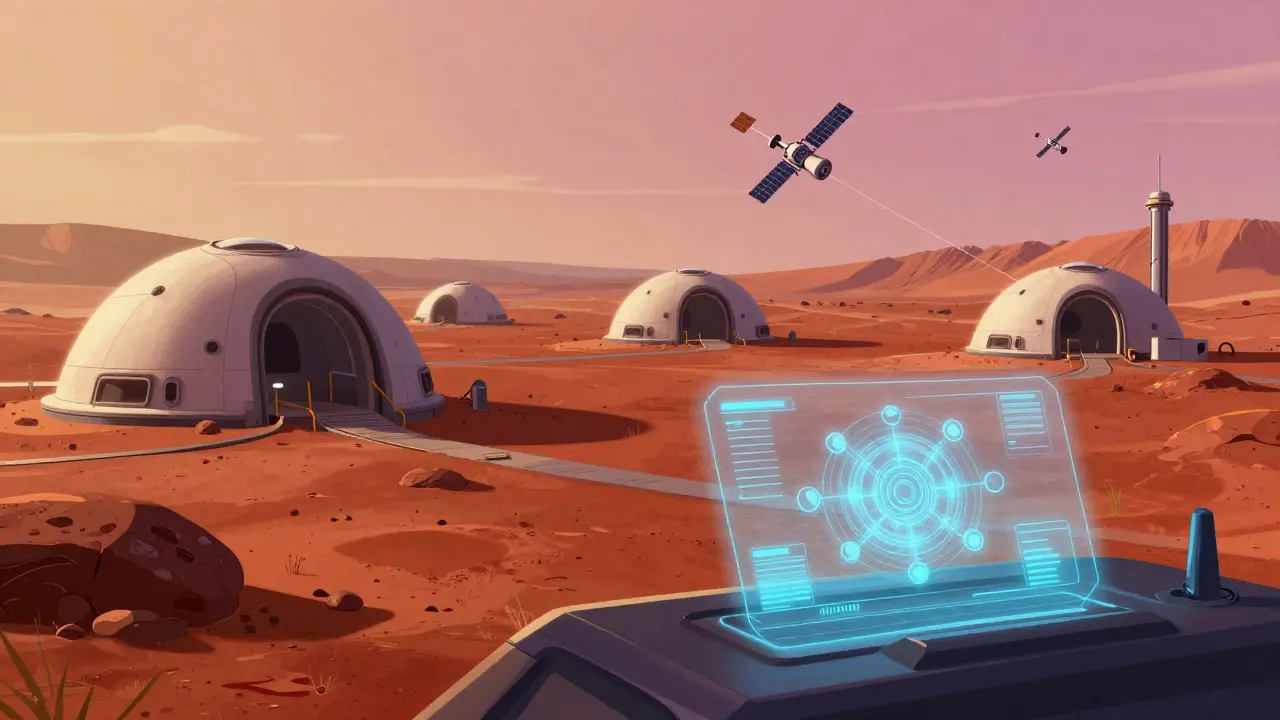
Imagine trying to buy coffee on Mars using Bitcoin. It sounds like a sci-fi plot, but it’s actually the core problem Marscoin (MARS) is a proof-of-work cryptocurrency designed specifically to serve as the financial and governance infrastructure for a future permanent human settlement on Mars. Launched way back in January 2014, this isn’t your typical meme coin chasing trends. It’s an old-school blockchain project with a very specific, long-term goal: creating an independent economic system for off-world colonies.
If you’ve seen the ticker "MARS" pop up on exchange charts or heard whispers about "space crypto," you might be wondering if this is the next big thing or just another niche experiment. The truth is somewhere in between. Marscoin has survived for over twelve years while many of its contemporaries vanished. But before you buy, you need to understand exactly what you’re holding, how it differs from tokens like Dogelon Mars, and whether its ambitious vision holds any water in 2026.
The Origin Story: Why Build Crypto for Mars?
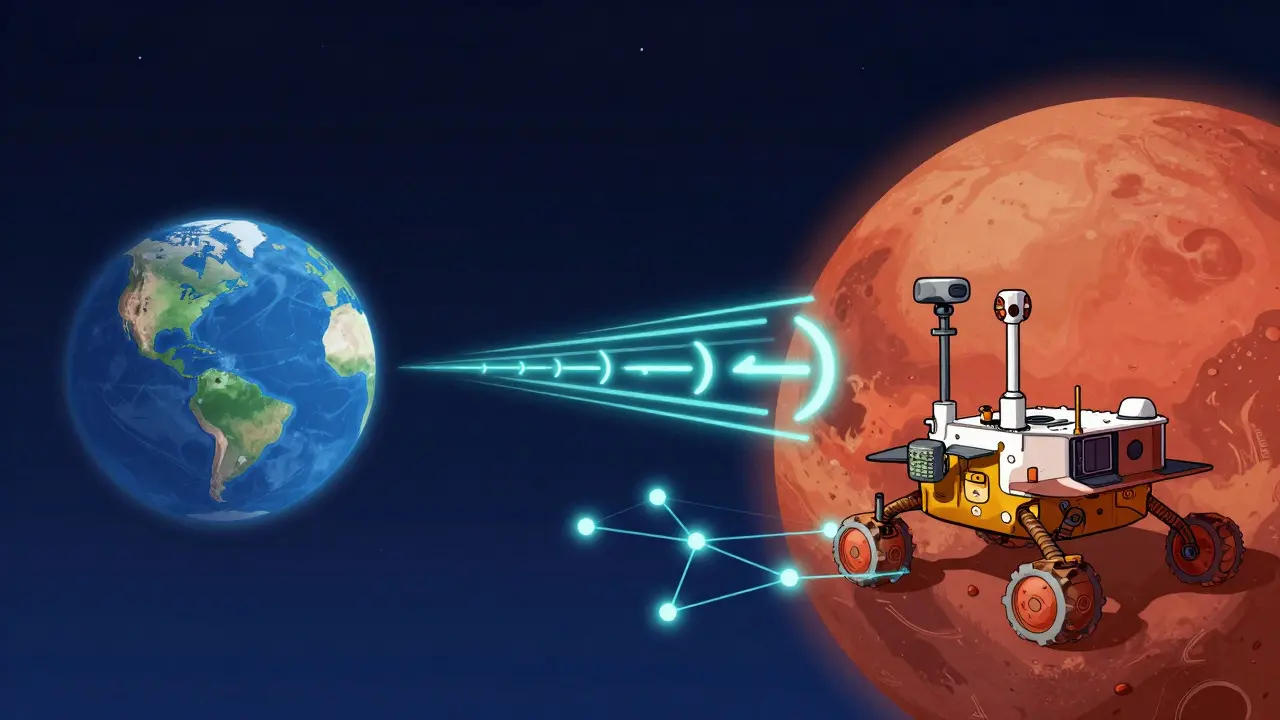
To get why Marscoin exists, you have to look at the physics of space travel. Communication between Earth and Mars suffers from a significant delay-anywhere from 4 to 24 minutes one-way, depending on planetary alignment. This latency makes real-time centralized banking impossible. If a colony on Mars needed to verify a transaction with a bank on Earth, they’d wait hours for confirmation. That’s too slow for a functioning economy.
The Mars Society is a global non-profit organization dedicated to advocating for human exploration and settlement of Mars. Marscoin was built with close cooperation from this scientific community. The idea is simple: a decentralized blockchain can reach consensus locally on Mars without needing permission from Earth. This creates a layer of autonomy essential for any self-sustaining civilization. Unlike modern tokens launched for speculation, Marscoin started as a serious technical proposal for interplanetary independence.
The project claims twelve years of unbroken development since its genesis block was mined on January 1, 2014. In the fast-paced world of crypto, that longevity is rare. Most coins from that era are dead. Marscoin is still running, with nodes distributed globally, maintaining its status as one of the earliest "space-themed" blockchains.
Technical Specs: How Marscoin Works
Under the hood, Marscoin is not a smart contract token sitting on Ethereum or Solana. It is its own independent blockchain. Here are the key technical attributes you need to know:
- Consensus Mechanism: Proof-of-Work (PoW). This means miners use computing power to secure the network and validate transactions.
- Algorithm: Scrypt. This is the same algorithm used by Litecoin. It makes the coin resistant to certain types of mining centralization compared to SHA-256 coins like Bitcoin, though ASICs still dominate.
- Total Supply: Hard-capped at 39.6 million MARS. This scarcity model is similar to early altcoins and contrasts sharply with inflationary meme coins.
- Infrastructure: The project provides its own wallets, mining clients, and governance tools, rather than relying on third-party platforms.
Because it uses Scrypt PoW, you can mine MARS using hardware compatible with other Scrypt coins. However, given the low market cap and trading volume, profitability for new miners is likely negligible unless you already have idle Scrypt-mining rigs. The network difficulty adjusts based on hashrate, ensuring blocks are found at regular intervals regardless of how many miners are active.
| Feature | Marscoin (MARS) | Dogelon Mars (ELON) | Solana MARSCOIN |
|---|---|---|---|
| Launch Year | 2014 | 2021 | ~2025 |
| Blockchain Type | Independent PoW Chain | Ethereum/Polygon (ERC-20) | Solana (SPL) |
| Total Supply | 39.6 Million | 1 Quadrillion | 997.05 Million |
| Primary Narrative | Interplanetary Governance & Finance | Meme Culture & Speculation | Speculative Meme |
| Affiliation | The Mars Society | Anonymous Team / Community | Unrelated / Independent |
Marscoin vs. Other "Mars" Tokens
This is where most people get confused. Just because a token has "Mars" in the name doesn’t mean it’s the same project. You need to distinguish between Marscoin (MARS), Dogelon Mars (ELON), and various other copycats.
Dogelon Mars (ELON) is a popular ERC-20 meme coin that combines references to Dogecoin, Elon Musk, and Mars colonization. Launched in 2021, ELON exploded in popularity due to social media hype. It has a massive supply of 1 quadrillion tokens and relies entirely on community sentiment and liquidity pools. It has no connection to actual space infrastructure or The Mars Society. Its value is driven purely by speculation and viral marketing.
Then there’s the Solana-based "MARSCOIN." As of mid-2026, this token has a tiny market cap (around $32,000) and essentially zero utility. It’s a separate asset on a different blockchain entirely. If you see "MarsCoin" on a Solana wallet like Phantom, double-check the contract address. It is not the original 2014 Marscoin.
Marscoin (MARS) stands apart because it predates the meme coin boom by seven years. It wasn’t created to cash in on Elon Musk’s tweets; it was created to solve a theoretical logistical problem for future settlers. While Dogelon Mars has a much higher market capitalization (often hovering around $36-$38 million) and trading volume, Marscoin remains a micro-cap asset with a focused, technical narrative.
Use Cases: Beyond Speculation
So, what do you actually *do* with MARS today? Since humans haven’t landed on Mars yet, the immediate utility is limited to Earth-based experiments and simulations.
- Governance Simulations: The project promotes the "Martian Republic," a toolkit for simulating political and economic structures of Martian settlements on-chain. Users can experiment with voting systems and resource allocation models.
- Metaverse Integration: Developers are exploring Marscoin as the internal financial system for gaming metaverses set in space themes. This provides transactional volume and user engagement while waiting for real-world adoption.
- Decentralized Finance (DeFi): As a standalone chain, it supports basic peer-to-peer transfers without intermediary fees, serving as a testbed for autonomous economic protocols.
These use cases are niche. You won’t find MARS integrated into major DeFi protocols like Uniswap or Aave. Its ecosystem is small, maintained by a dedicated group of developers and enthusiasts who believe in the long-term vision of interplanetary sovereignty.
How to Buy and Store Marscoin
Buying MARS is straightforward if you’re familiar with centralized exchanges. It is listed on platforms like LBank is a global cryptocurrency exchange that lists Marscoin among its supported assets. Here is the typical process:
- Create an Account: Sign up on LBank using your email or phone number.
- Complete KYC: Verify your identity to unlock trading and withdrawal limits. This is standard regulatory compliance.
- Fund Your Wallet: Deposit fiat currency (via credit card, bank transfer, or Apple Pay) or deposit another crypto like USDT or BTC.
- Trade for MARS: Search for the MARS pair and execute a buy order. LBank offers a "One-Click Buy" feature for simplicity.
Once purchased, you can leave your MARS on the exchange for short-term holding. For long-term storage, however, you should use a dedicated wallet. Since Marscoin is its own blockchain, generic multi-currency wallets may not support it. The official Marscoin website provides links to their native wallet software for Windows, macOS, and Linux. Always download wallet software from the official source to avoid malware.
Risks and Market Reality
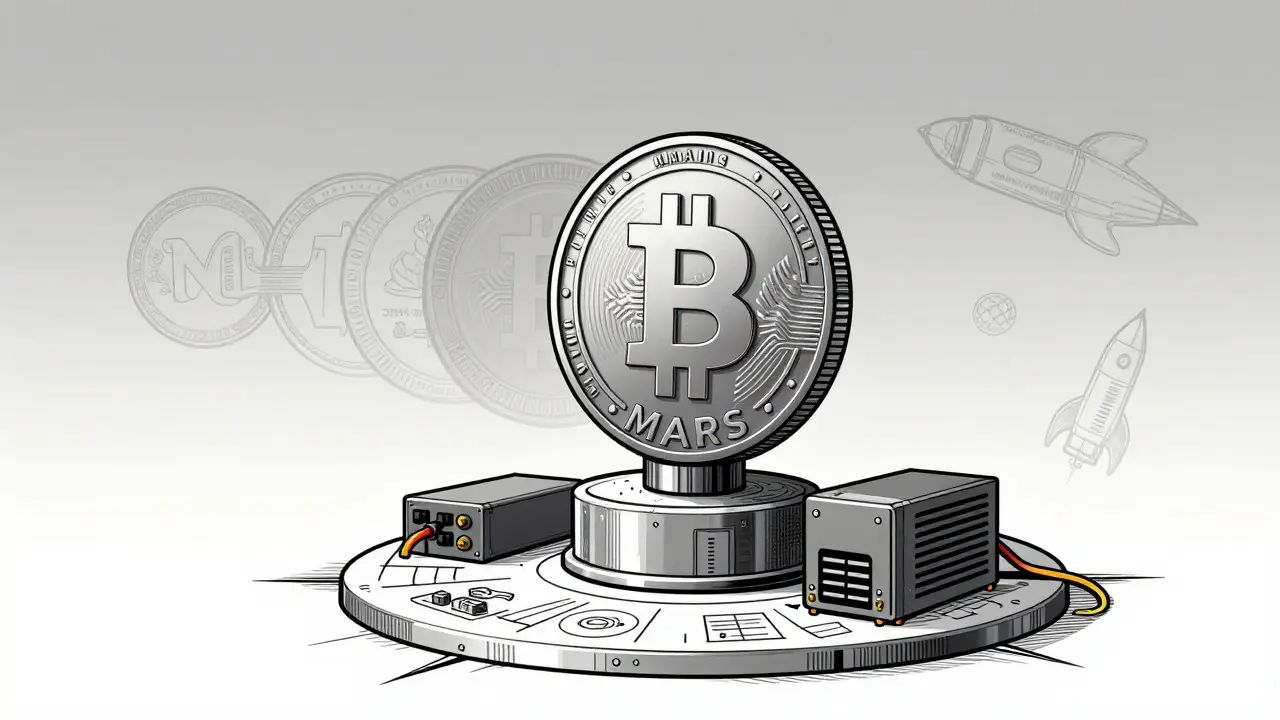
Let’s keep it real. Marscoin is a high-risk, low-liquidity asset. As of recent data, its daily trading volume hovers around $12,000 to $30,000 across exchanges. Compare that to Bitcoin’s billions in daily volume, and you’ll see the challenge: entering or exiting large positions can cause significant price slippage.
The price is volatile. On some days, it moves less than 1%; on others, it can swing double digits due to thin order books. There is also the risk of confusion. Because multiple tokens share similar names, accidental purchases happen frequently. Always verify the ticker symbol (MARS) and the blockchain type (Scrypt PoW) before confirming any trade.
Furthermore, the "Mars settlement" narrative is decades away from becoming a primary driver of value. Until SpaceX or other agencies establish a permanent presence, Marscoin’s value will remain tied to speculative interest, niche community activity, and its status as a historical artifact in crypto history. It is not a guaranteed investment, nor is it a mainstream payment method.
Future Outlook
Will Marscoin survive another decade? Given its track record since 2014, yes, it’s possible. The team maintains the codebase, updates wallets, and keeps the nodes running. Its partnership with The Mars Society gives it credibility within the space advocacy community, even if that doesn’t translate to mass retail adoption.
The long-term bet is on technological relevance. If Mars colonies eventually require localized, latency-resistant financial networks, Marscoin’s architecture aligns perfectly with that need. But that’s a distant horizon. For now, it serves as a unique case study in thematic cryptocurrency design-a bridge between hard science fiction and practical blockchain engineering.
Is Marscoin (MARS) the same as Dogelon Mars (ELON)?
No, they are completely different. Marscoin (MARS) launched in 2014 as a Proof-of-Work coin with a 39.6 million supply cap, focused on space settlement infrastructure. Dogelon Mars (ELON) launched in 2021 as an ERC-20 meme token with a 1 quadrillion supply, driven by social media hype and speculation.
Can I mine Marscoin with my computer?
Technically yes, as it uses the Scrypt algorithm. However, due to low profitability and competition from specialized ASIC miners, mining MARS with a standard CPU or GPU is likely not cost-effective for most users.
Where can I buy Marscoin?
Marscoin is primarily available on centralized exchanges like LBank. You can also check price tracking on platforms like Crypto.com. Always verify the listing details to ensure you are buying the correct MARS token.
What is the total supply of Marscoin?
The total supply of Marscoin is hard-capped at 39.6 million MARS. This fixed supply is designed to create scarcity and mimic traditional commodity economics for future Martian settlements.
Is Marscoin affiliated with Elon Musk?
No. Marscoin is affiliated with The Mars Society, a scientific advocacy group. It has no official connection to Elon Musk or Tesla/SpaceX, unlike some meme coins that leverage his name for marketing.
Why does Marscoin exist?
It was created to solve the problem of communication latency between Earth and Mars. Centralized banks cannot function efficiently with 4-24 minute delays, so a decentralized, locally-consensus blockchain is proposed as the solution for an autonomous Martian economy.

Write a comment